 Sudden Valley Siding
 Siding Built for the Silver Beach Microclimate
Silver Beach sits along Lake Whatcom, tucked into the tree line just west of Sudden Valley, and homes here live in a climate that's a little different from a house sitting out in the open in Bellingham or Ferndale. Between the lake's humidity, the surrounding tree canopy, and the marine-influenced air that moves in off Bellingham Bay and Puget Sound, exteriors in this pocket of Whatcom County take on a steady, year-round moisture load that doesn't let up for long. We've worked on homes throughout this area long enough to know what that combination does to siding, trim, roofing, and decking over time — and what actually holds up against it.
This page is about what we see specifically in Silver Beach and the surrounding Sudden Valley area, and how our siding, roofing, window, and deck work is built around those conditions rather than a generic install.
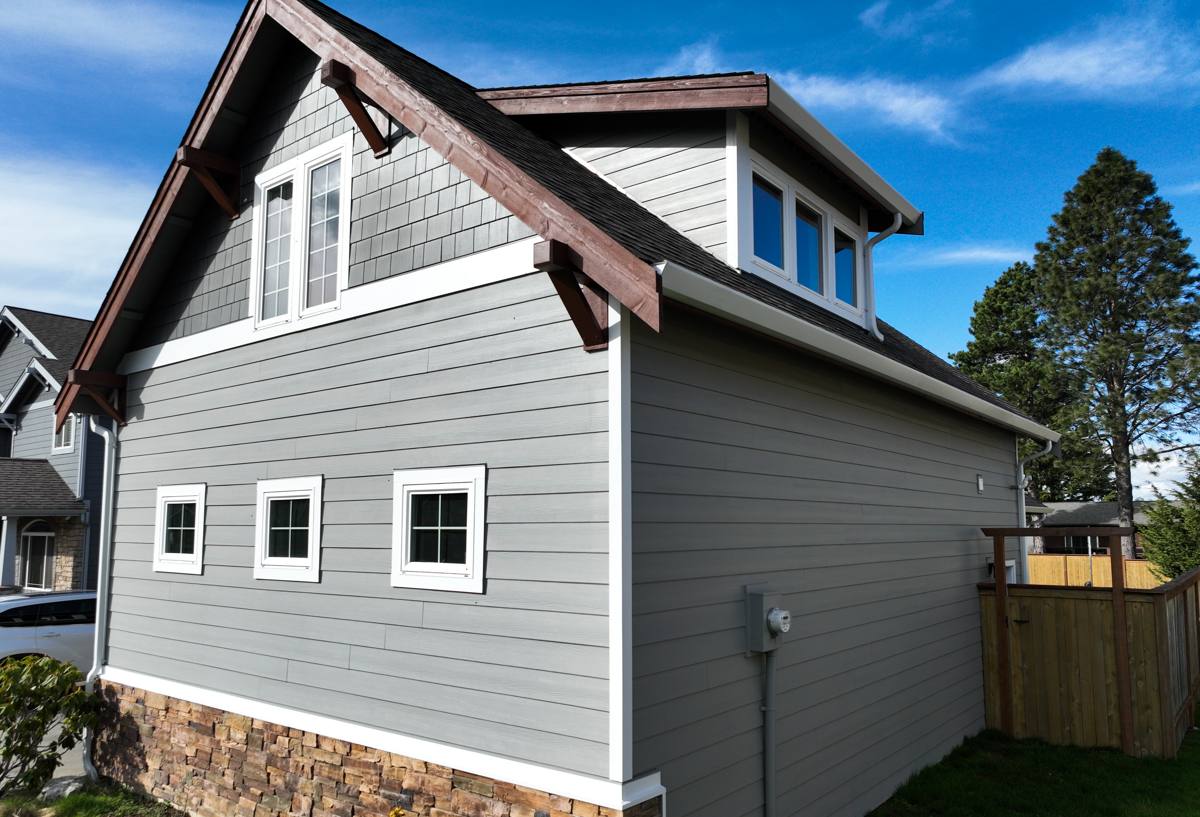
What Silver Beach Homes Are Up Against
Driving Rain and Wind-Driven Moisture
Whatcom County gets a lot of rain, but the way it arrives matters more than the total inches. Storms coming off the water tend to push rain sideways as much as down, which means siding isn't just shedding water off a flat surface — it's fighting moisture that's being driven up under laps, around trim, and into any seam that isn't properly flashed. Houses with more exposed elevations, or that catch wind funneling off the lake, take the brunt of this.
A Long Moss and Algae Season
Tree cover is part of what makes Silver Beach a nice place to live, and it's also exactly what keeps north- and east-facing walls damp and shaded for months at a time. That's the recipe for moss, algae, and mildew growth on siding, roofing, and even deck boards. Once organic growth gets a foothold on a porous or degraded surface, it holds moisture against the material and accelerates whatever damage is already starting underneath.
Salt-Tinged Marine Air
Even set back from open water, homes in this part of the county sit within reach of the marine air that moves inland off the Sound. That air carries fine salt content that, over years, contributes to the slow breakdown of paint films, corrodes exposed fasteners, and speeds up wear on materials that weren't engineered with coastal-adjacent exposure in mind.
None of this is unique to any one street or property — it's the baseline climate reality for this stretch of the lake, and it's why "what worked on a house in a drier part of the state" isn't a reliable guide for what will hold up here.
Why We Standardized on James Hardie Fiber Cement
We install James Hardie fiber cement siding exclusively. We don't install vinyl, LP SmartSide, Cemplank, Allura, or primed wood species like cedar or spruce, and that's a deliberate standard, not a lack of options.
Vinyl softens, warps, and can crack in cold snaps, and its seams give wind-driven rain an easier path inward — a real liability on exposed lake-facing elevations. Wood-based products, including engineered wood siding, depend on an intact factory coating to keep moisture out; once that coating is compromised at a cut edge, fastener hole, or years of UV and moisture exposure, the wood substrate underneath is vulnerable to swelling and rot, and a moss- and shade-heavy environment like Silver Beach doesn't give a compromised coating much time to be forgiven. Real cedar is a beautiful material, but it's a maintenance-intensive one — regular refinishing, vigilance about moisture, and a shorter realistic lifespan in a wet, shaded climate before boards need attention.
Fiber cement doesn't have those weaknesses. It's non-combustible, it doesn't swell or rot the way wood-based products can, and James Hardie's ColorPlus factory finish is baked on and warranted against fading and peeling — which matters a lot in an area where marine air is already working against paint film. It's not that other products are without merit; it's that after years of exterior work in this specific climate, Hardie is what we're willing to warranty our labor on.
How We Approach a Siding Project Here
Every project starts with a look at the whole exterior system, not just the siding panels themselves, because in a climate like this the details around the siding are often what determine whether it lasts.
- Inspecting existing wall sheathing and framing for hidden moisture damage before anything new goes up
- Installing a code-compliant weather-resistive barrier and correct flashing at every window, door, and penetration
- Using rainscreen or proper drainage gaps where the wall assembly and exposure call for it
- Selecting the right James Hardie HZ product line for the home's specific sun, shade, and wind exposure
- Fastening and sealing to Hardie's published installation specifications, which is what keeps the manufacturer warranty valid
- Coordinating trim, soffit, and fascia details so water has a clear, intended path off the building
Skipping any one of these steps is usually where "the siding failed early" stories start — not because of the siding material itself, but because of what was or wasn't done underneath it.
James Hardie Product Lines We Install
James Hardie makes climate-engineered product lines, and part of doing this correctly is matching the right one to the home. For lake-adjacent, shaded, higher-moisture properties like much of Silver Beach, we generally lean toward Hardie's HZ5 product line, engineered for wetter, colder climate zones, though the right choice depends on the specific home's exposure and elevation.
Beyond the panel itself, ColorPlus finishes give homeowners a factory-applied, baked-on color coat that resists the fading and peeling that field-applied paint struggles with in this climate, backed by its own finish warranty separate from the substrate warranty. We'll walk through lap siding, shingle-style panels, and trim options during an estimate, and talk through which profile and color approach fits the home and the neighborhood.
Cost Factors for a Siding Project in This Area
Every home is different, but these are the factors that most often move the price of a project up or down in the Silver Beach / Sudden Valley area specifically.
| Factor | Why It Matters Here |
|---|---|
| Existing sheathing condition | Long-term moisture exposure near the lake sometimes means hidden repair work is needed before new siding goes on |
| Home elevation and tree exposure | Shaded, wind-exposed, or lake-facing walls may need different HZ product selection or extra flashing detail |
| Access and site terrain | Sloped lots and tree-lined driveways common in this area can affect staging, scaffolding, and material handling |
| Tear-off vs. install over existing siding | Full tear-off allows a full inspection of the wall assembly, which matters more in a persistently damp climate |
| Trim and detail complexity | Homes with more architectural detail take more time to flash and finish correctly |
We give straightforward, itemized estimates so homeowners can see exactly what's driving the number, rather than a flat lump sum.
Signs a Silver Beach Home May Need Siding Attention
Because of the shade and moisture load in this area, problems can develop quietly behind the surface before they're obvious from the yard. Worth checking for:
- Persistent moss, algae, or dark streaking on north- or east-facing walls that keeps returning after cleaning
- Soft spots, bubbling, or visible swelling anywhere on the siding, especially near the ground or roofline
- Paint that's peeling, chalking, or failing faster than it should for its age
- Gaps, warping, or separation at seams and trim joints
- A musty smell or visible staining on interior walls that share an exterior wall with a shaded, damp-prone elevation
- Fastener corrosion or rust streaking below nail heads
Any one of these on its own isn't necessarily an emergency, but in this climate they're worth having looked at before the next wet season adds to the problem.
Roofing, Windows, and Decks in the Same Climate
Siding doesn't work in isolation — the roof, windows, and any exterior decking on a Silver Beach property are dealing with the same rain, shade, and moss pressure. A roof that's shedding water poorly or losing granules will eventually push moisture problems down into the wall assembly below it. Windows with failing seals or old flashing let wind-driven rain in around the frame, regardless of how good the siding is. Decks built from softer or less weather-resistant materials show the effects of this climate faster than almost anything else on the property, since they're horizontal and exposed to standing moisture and shade at the same time.
We handle all four — siding, roofing, windows, and decks — because on a home in this environment, they genuinely function as one connected exterior system, not four separate projects.
Why a Local Crew Matters
A crew that works Whatcom County regularly knows that a house tucked into trees on the north side of Lake Whatcom needs different flashing and product decisions than one sitting in the open closer to Bellingham Bay, even though they're only a few miles apart. That local knowledge — which elevations hold moisture longest, where moss comes back fastest, how wind behaves along the lake — shapes real decisions on a project: product line selection, drainage detail, and where to spend extra care during installation. It's the difference between a generic install and one that's actually built for the site.
If you're in Silver Beach, Sudden Valley, or anywhere along Lake Whatcom and want a straight answer about your siding, roof, windows, or deck, we're glad to come take a look. There's no pressure and no obligation — just an honest assessment and a clear estimate, using the form below.