 Sudden Valley Siding
 Why Decks Near Silver Beach Need a Different Approach
A custom deck built for a home in Silver Beach has to survive conditions that a lot of national deck-building advice simply doesn't account for. Between the salt-laden air coming off the water, long stretches of driving rain, and a moss season that can stretch for months, this part of Whatcom County is hard on exterior wood and hardware in ways that inland builds never have to deal with. A deck design that works fine in a dry climate, or even in a milder coastal spot, can start showing problems here within a few seasons if it wasn't built with this specific environment in mind.
We build custom decks for homes throughout Sudden Valley and the surrounding Whatcom County area, and Silver Beach comes with its own set of considerations — exposure to weather off the water, tree cover that keeps surfaces damp longer, and in many cases sloped or wooded lots that change how a deck needs to be framed and supported. This page focuses specifically on what that means for a deck built here, not generic deck-building advice.
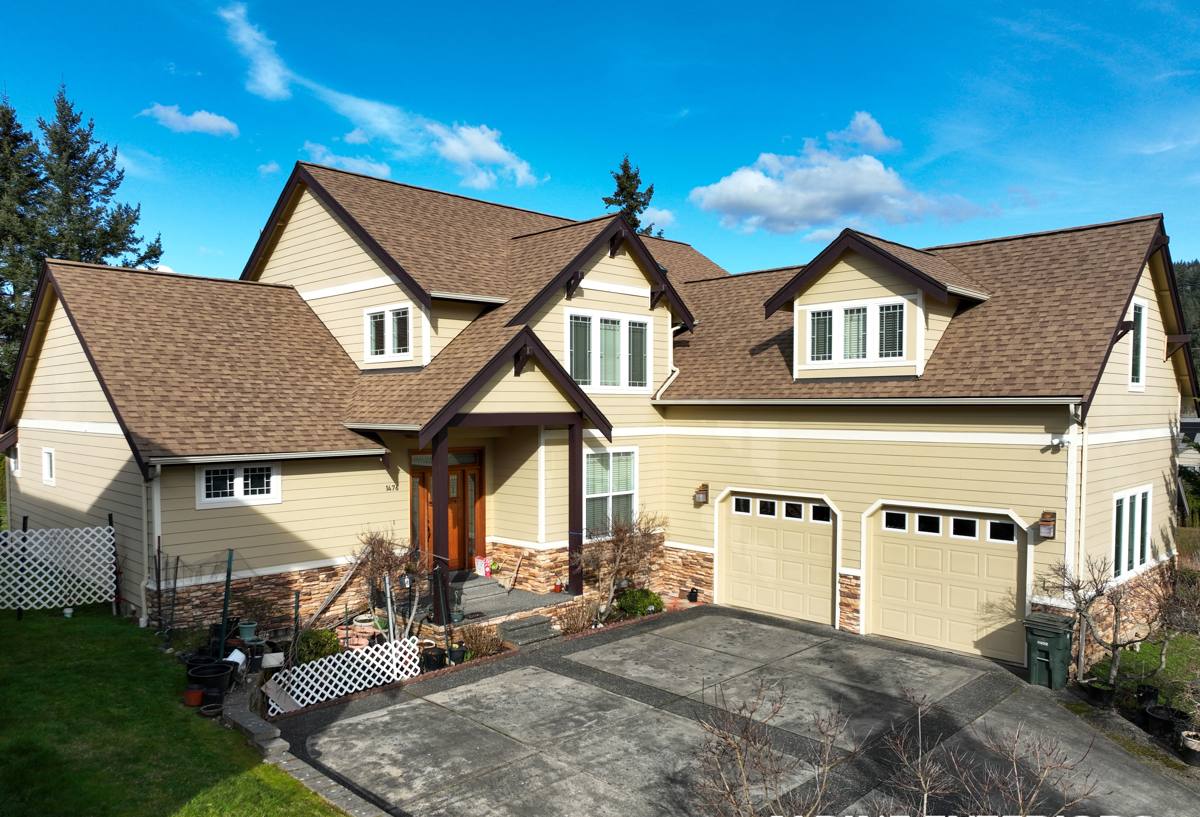
What Salt Air, Rain, and Moss Actually Do to a Deck
Corrosion of fasteners and hardware
Salt air accelerates corrosion in any metal that isn't rated for it. Standard galvanized screws, joist hangers, and bolts can start rusting and staining decking boards years before the wood itself would fail. Once a fastener starts to corrode, it loses holding strength — and on a structure people stand on, that's not a cosmetic issue.
Moisture trapped in wood and framing
Driving rain doesn't just fall straight down here — wind pushes it sideways and up under railings, into end grain, and behind ledger boards. Wood that can't dry out between rain events starts to rot from the inside, often well before any visible sign appears on the surface.
Moss, algae, and surface buildup
A long moss season means shaded or low-airflow deck surfaces stay damp for extended stretches. Moss holds moisture against the decking, and it makes boards genuinely slippery — a real safety issue on stairs and walking surfaces, not just an appearance problem.
Choosing the Right Decking Material for This Climate
There's no single "best" decking material for every home — it depends on budget, how much maintenance the homeowner wants to do, and how exposed the deck is. Here's how the common options actually perform under Silver Beach conditions:
| Material | How It Handles Rain & Moisture | Moss/Algae Resistance | Maintenance |
|---|---|---|---|
| Pressure-treated wood | Good if properly sealed and gapped; end grain is the weak point | Needs regular cleaning and re-sealing to resist buildup | Annual cleaning, re-staining every 2-3 years |
| Cedar | Naturally moisture- and rot-resistant, but softer surface | Still needs periodic cleaning in shaded areas | Regular sealing to maintain color and resistance |
| Composite decking | Doesn't absorb water or rot like wood | Can still grow surface moss/algae if never cleaned; capped composites resist it better than uncapped | Occasional washing, no staining or sealing |
| PVC/capped composite | Fully sealed surface, best moisture resistance | Best resistance to staining and organic buildup | Lowest maintenance of the group |
We'll walk through these trade-offs honestly during an estimate — including where a lower-maintenance material costs more upfront but saves work (and money) over the life of the deck.
What's Underneath Matters More Than What's On Top
The decking boards are the part homeowners see, but the framing, footings, and fasteners underneath are what determine whether a deck lasts fifteen years or forty. For a property like a Silver Beach home, three things matter more than usual:
Footings sized for the site
Sloped or wooded lots common around Sudden Valley often need deeper or differently placed footings than a flat, open lot would. Footing depth and bearing also need to account for local soil and frost conditions, which is part of why we look at the actual site rather than applying a one-size template.
Framing hardware rated for exposure
We use stainless steel or coated fasteners and connectors rated for exterior, high-moisture use rather than standard-grade hardware, specifically because of how quickly ordinary hardware corrodes with salt air in the mix.
Airflow underneath the deck
Ground-level or low-clearance decks trap moisture and encourage moss and rot if there's no airflow underneath. Proper joist spacing, ventilation gaps, and grading beneath the structure make a real difference in how long the framing lasts.
The Ledger Connection: Where Most Deck Failures Start
If a deck is going to fail structurally, it's most often at the ledger board — the framing member that attaches the deck to the house. This is the single most common point of water intrusion and rot on any deck, and it's made worse by driving rain that gets pushed sideways against the house wall.
A correct ledger connection includes proper flashing that directs water away from the house structure, a water-resistant barrier between the ledger and the siding, and fasteners sized and spaced to code for the loads involved. This is not an area to cut corners or guess — it's the connection that keeps a deck attached to the house, and it's also the connection most likely to hide a moisture problem until it's serious.
Railings, Stairs, and Hardware Choices
Railings and stair components see more direct weather exposure than decking because they're vertical and catch wind-driven rain from more angles. For homes in this area, we typically recommend:
- Stainless or coated fasteners for all railing hardware, not just the decking screws
- Baluster and post materials matched to the decking material's moisture behavior
- Non-slip stair tread detailing, since stairs are where moss buildup becomes a real safety hazard
- Post bases that shed water rather than trap it against the base of the post
Railing height and spacing also need to meet current code, which we handle as part of design rather than leaving it to be caught at inspection.
Permits and Site Conditions Around Sudden Valley
Most custom deck projects require a building permit, and elevated or attached decks typically need engineered footing and framing details submitted as part of that permit. We handle the permit process as part of the project rather than leaving homeowners to navigate it alone.
Lots in and around Sudden Valley and Silver Beach are frequently sloped, wooded, or both. That affects where a deck can be sited, how footings are engineered, and sometimes whether tree roots or drainage patterns need to be worked around during construction. We assess this on-site before finalizing a design, rather than pricing off a generic plan.
Our Process for a Silver Beach Deck Project
Every project runs through the same core steps, adjusted for the specific lot and home:
- On-site visit to assess slope, drainage, sun/shade exposure, and existing structure condition
- Material and design discussion based on your maintenance preferences and budget
- Permit drawings and submission, including engineered footing details where required
- Ledger connection and flashing done first and correctly, before any decking goes down
- Framing with corrosion-rated hardware sized for the actual site conditions
- Decking, railing, and stair installation to code
- Final walkthrough covering maintenance expectations specific to the material chosen
A quick maintenance checklist we give every Silver Beach deck customer, regardless of material:
- Clear leaves and debris from between boards before wet season sets in
- Check and re-tighten railing hardware annually
- Wash shaded areas periodically to slow moss and algae buildup
- Inspect the ledger flashing area yearly for any signs of water staining
- Re-seal wood decking on the schedule appropriate to the product used
Cost Factors: What Actually Changes the Price
We don't publish flat pricing because every lot and design is different, but these are the factors that most affect what a custom deck project costs:
| Factor | Why It Matters | Typical Cost Impact |
|---|---|---|
| Decking material | Composite and PVC cost more upfront than wood but reduce long-term maintenance | Moderate to High |
| Height/elevation | Elevated decks need engineered railings, stairs, and additional footing depth | High |
| Site slope and access | Sloped or wooded lots require more excavation and specialized footing work | Moderate to High |
| Size and footprint | Larger square footage means more material, framing, and labor | High |
| Railing and stair complexity | Custom railing styles and multiple stair runs add labor and hardware cost | Moderate |
| Permit and engineering requirements | Elevated or attached structures often need stamped engineering details | Low to Moderate |
Why Hiring a Crew That Already Works Silver Beach Matters
A deck built by a crew unfamiliar with this specific environment can look identical to a properly built one on the day it's finished — the differences show up two, five, and ten years later, when fasteners start staining, the ledger connection starts leaking, or moss makes the stairs unsafe. Working regularly in Sudden Valley and the Whatcom County area means we've already seen how salt air, driving rain, and moss season affect deck materials and hardware over time, and we build with that in mind from the first footing rather than learning it the hard way on someone's project.
If you're planning a custom deck for a Silver Beach home, we're happy to walk the site, talk through material options honestly, and put together a straightforward estimate — no pressure, no hard sell. Use the form below to request a free estimate and we'll go from there.