 Sudden Valley Siding
 What Primed Spruce Siding Is
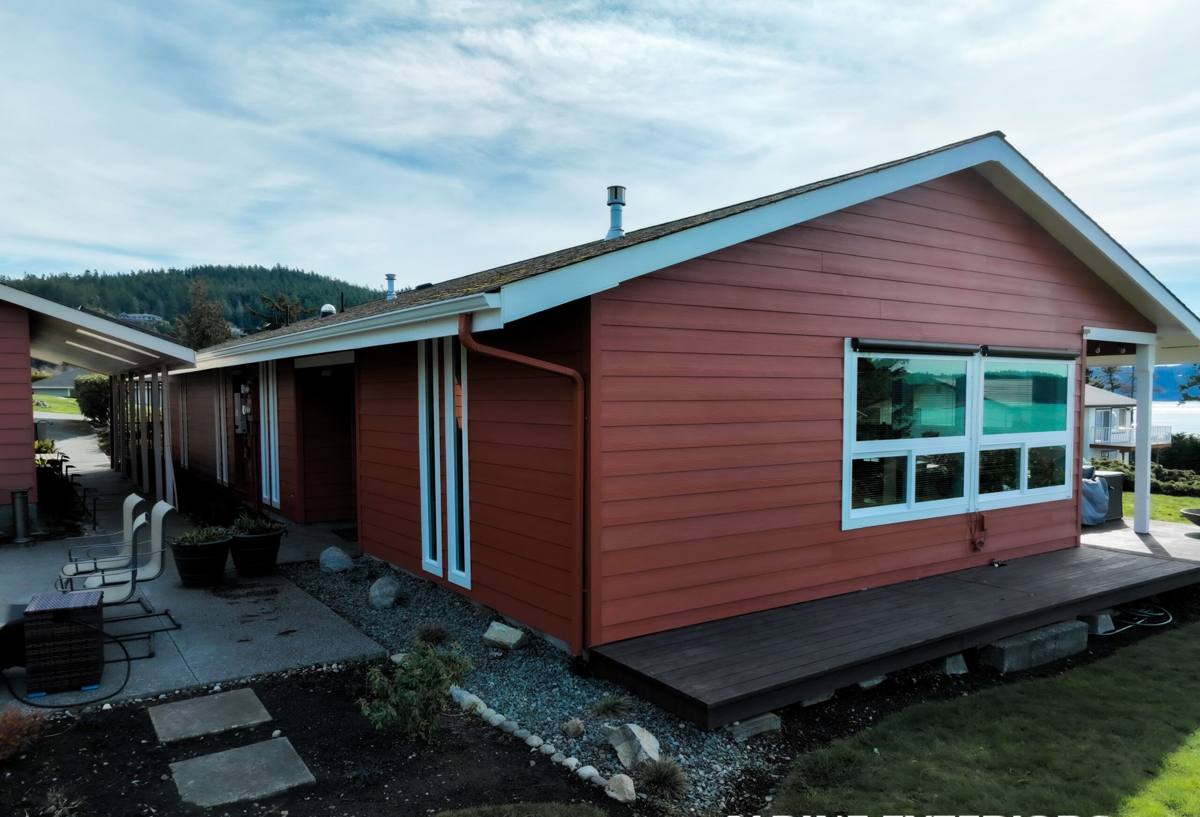
Primed spruce siding is solid wood lap siding — usually finger-jointed spruce or pine boards — that arrives from the mill with a factory-applied primer coat. It's been a staple of Pacific Northwest home building for decades, prized for its clean, traditional look and the fact that it's real wood, not a composite or manufactured product. A lot of homes around Whatcom County, including plenty here in Sudden Valley, still wear it.
We get asked to bid on primed spruce replacement and touch-up work fairly often. What we don't do is install new primed spruce siding on a home. This page explains why, honestly and without exaggeration, because homeowners deserve to understand the trade-offs before they commit to a siding material that will be on their house for the next 20-plus years.
What Primed Spruce Gets Right
Before we get into why we walked away from it, credit where it's due:
- Real wood grain and texture — it looks and feels like solid lumber because it is, which some homeowners specifically want over a manufactured product.
- Lower material cost — spruce siding is generally less expensive per square foot than fiber cement, at least on the initial material invoice.
- Easy to work with — it cuts, nails, and fits like standard lumber, which historically made it fast and familiar for crews to install.
- Paintable in any color — since it's field-finished, homeowners aren't limited to a factory color palette.
Those are legitimate strengths. They're just not the whole story, especially in a climate like ours.
The Core Problem: Wood Is Still Wood
Primer doesn't change what the material underneath is. Spruce is a softwood, and softwood is hygroscopic — it absorbs and releases moisture with the seasons, swelling and shrinking as it does. That movement is normal for solid lumber used as framing or trim, but it's a liability on an exterior wall surface that has to shed water for decades without cracking, cupping, or rotting.
Primer and paint create a moisture-resistant film on top of the wood, but that film is only as good as its weakest point — a nail hole, a cut end, a hairline check in the grain, a spot where caulk has pulled away. Once water gets past the film and into the wood fiber, it doesn't dry out quickly, especially on a wall that doesn't get much direct sun. That's where rot starts, and it usually starts from the inside of the board outward, so it's not visible until it's already established.
Why This Matters More Here Than in Drier Climates
In an arid climate, a primed wood product can go years between real wetting cycles. Whatcom County isn't that climate. Sudden Valley sits close enough to the water that homes deal with salt-laden air, long stretches of driving rain off the Sound, and a moss season that can run from fall through spring. Moss and lichen hold moisture against a wall surface far longer than open air would, and salt air is corrosive to fasteners and hard on paint film integrity over time. Put those three factors together — salt air, driving rain, extended moss season — and you have a climate that's actively working against a moisture-sensitive material almost year-round.
The Maintenance Burden Primed Spruce Puts on the Homeowner
This is the part that actually drives most of our conversations with homeowners who are re-siding after a primed wood product failed early. Primed spruce isn't a "install and forget" product — it's a product that requires an ongoing maintenance relationship to perform as intended:
- Repainting on a cycle, typically every 5–8 years in a wet coastal climate, sooner on sun-exposed or splash-zone walls.
- Regular caulk inspection and re-caulking at joints, corners, and butt seams as the wood moves seasonally.
- Moss and algae removal from siding surfaces, not just roofs, to keep organic growth from holding moisture against the wall.
- Prompt touch-up of any chip, scrape, or nail pop before it becomes a water entry point.
- Periodic inspection of lower courses and any area near sprinklers, downspouts, or grade for early rot.
None of that is unreasonable to ask of a homeowner in isolation. But stacked together, it's a real, recurring cost and time commitment — and it's the kind of maintenance that's easy to fall behind on, especially for a rental property, a second home, or simply a busy household. Miss a cycle or two and the material starts working against you.
Paint Film Failure and the Repaint Cycle
Even a well-maintained primed spruce installation is only as good as its paint job, and paint film has a finite service life on wood — it chalks, hairline-cracks, and eventually fails at the grain. When it fails, it doesn't fail evenly; it tends to go first at butt joints, board ends, and south- and west-facing exposures. In our climate, driving rain accelerates that breakdown on windward walls, and the long damp season slows down drying between rain events, which shortens the effective life of each paint cycle.
| Factor | Primed Spruce (Field-Painted) | James Hardie (ColorPlus Factory Finish) |
|---|---|---|
| Finish origin | Field-applied paint over factory primer | Baked-on factory finish, engineered for UV and moisture exposure |
| Typical repaint interval, wet coastal climate | 5–8 years | Not required for the finish warranty period; touch-up only |
| Moisture response | Absorbs, swells, and shrinks with seasonal moisture | Fiber cement composition resists swelling and moisture-driven warping |
| Combustibility | Combustible, like any solid wood product | Non-combustible material |
| Insect/rot vulnerability | Vulnerable if paint film breaches | Not a food source for insects; resists rot |
| Warranty structure | Typically limited to the primer manufacturer, not full-system | Strong transferable manufacturer warranty on the plank itself |
This isn't a claim that primed spruce is a bad product in the abstract — it's a claim that the maintenance and repaint burden it carries in our specific climate is a real, ongoing cost that a lot of homeowners underestimate at the time of installation.
Installation Sensitivity Most Homeowners Never See
Even when a homeowner is committed to the maintenance schedule, primed spruce is unforgiving of installation shortcuts, and those shortcuts are common because the material is fast and familiar to work with:
- Cut ends need field priming. Every board that's trimmed on site exposes raw, unprimed wood at the cut — if that end isn't back-primed before installation, it becomes a moisture entry point on day one.
- Back-priming the full board is often skipped. Factory primer on the face and edges doesn't protect the back of the board against moisture wicking up from behind the cladding.
- Fastener placement matters. Nails driven too tight or through the wrong zone of the board can split the wood or create a path for water.
- Caulk joints need to be right the first time. A gap or a joint that isn't properly backed will telegraph a leak straight to the sheathing.
These aren't defects in the product — they're places where correct installation practice has to compensate for the fact that the material itself is moisture-sensitive. When it's done right, it buys time. When any of it is rushed, the clock on rot starts a lot sooner than the paint film would suggest.
Why We Standardized on James Hardie Instead
We made a decision as a company to install one exterior product — James Hardie fiber cement — rather than offer a menu of options with wildly different maintenance profiles. Fiber cement doesn't share wood's moisture-driven expansion and contraction, it isn't a food source for insects, and it's non-combustible, which matters in a region where wildfire smoke and defensible-space conversations have become part of normal homeownership. Hardie's ColorPlus factory finish is baked on and engineered specifically for exposure, not applied on a jobsite under whatever weather happened to show up that week, and the HZ5 product line is engineered for the freeze-thaw and moisture conditions typical of our region. It also carries a strong, transferable manufacturer warranty on the plank itself — not just the surface coating.
We're not installing Hardie because it's trendy. We're installing it because, after years of doing exterior work in a climate defined by salt air, driving rain, and a moss season that doesn't really end, it's the product that holds up with the least ongoing maintenance burden placed back on the homeowner.
Before You Choose a Wood-Based Siding, Ask These Questions
- Who is responsible for repainting on schedule, and is that written into your budget for the next 10–20 years?
- Does the installer back-prime every cut end and board face, not just rely on factory primer?
- What's the manufacturer warranty structure — is it on the substrate, the finish, or both, and does it survive a change of ownership?
- How exposed is your specific elevation to driving rain and prevailing wind off the water?
- Is there a moss or algae maintenance plan for the siding itself, not just the roof?
- What's the real, all-in cost over 20 years — material plus every repaint cycle — compared to a factory-finished alternative?
Get a Straight Answer for Your Home
Every home in Sudden Valley sits a little differently relative to wind, rain exposure, and shade, and that changes how hard a given siding material has to work. If you're weighing options for a re-side or new build, we're happy to walk your specific property, talk through what we see, and give you a straightforward, no-pressure estimate for a James Hardie installation — no sales pitch, just an honest look at what your home needs.