 Sudden Valley Siding
 Why the Color Decision Deserves More Than a Glance at a Paint Chip
Most homeowners treat siding color like a paint decision — pick something you like, move on. On a James Hardie fiber cement home, that's a mistake, because color isn't separate from the finish system, the board, or how the whole assembly is going to perform on your specific lot for the next couple of decades. A ColorPlus finish is engineered to hold up far longer than the interior wall you repaint on a whim, which means getting the color right the first time actually matters.
We install James Hardie exclusively, and a large share of our conversations with Sudden Valley homeowners aren't about whether to go with Hardie — most have already landed there — but about which color, which product line, and how it's going to look and hold up on a home that deals with Whatcom County's salt air, driving rain off the Strait, and a moss season that stretches most of the year on the shaded, tree-lined lots around Lake Whatcom. This page walks through how the ColorPlus system actually works, which choices tend to hold up here, and how to land on a color you'll still like in year ten.
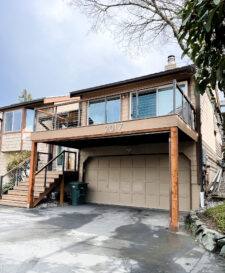
ColorPlus Technology: The Finish Is Half the Product
The color you see on most Hardie homes today comes from ColorPlus Technology — a finish applied at the factory, under controlled conditions, before the board ever reaches your driveway. That's fundamentally different from a painter working a brush and roller on-site after installation. The factory process bakes on multiple coats under conditions no jobsite can match: no rain interruption mid-coat, no wind-blown dust settling into wet paint, no temperature swings between coats. The result resists fading, chipping, and cracking meaningfully better than typical field-applied paint.
ColorPlus boards also carry a finish warranty that's distinct from the warranty on the fiber cement substrate itself — worth understanding, because color and material are really two separate products bundled onto one board. Hardie does still sell primed boards meant for field painting, and there are legitimate reasons to go that route (matching a very specific existing trim color, for example), but for most homes in this area the factory finish is the stronger long-term choice, especially given how hard our climate is on field-applied coatings.
What Field Paint Struggles With Around Lake Whatcom
Whatcom County's mix of salt-tinged marine air, long wet stretches, and short drying windows makes life difficult for any coating applied on-site. Field paint depends on weather conditions at the moment of application and on even, full coverage into every cut edge and joint — both hard to guarantee on a real jobsite here, especially on shaded lots around Sudden Valley where a wall can stay damp for days after a storm passes through. A factory-cured finish sidesteps nearly all of that variability.
Reading the James Hardie Color Palette
Hardie organizes its ColorPlus palette into families, and it's more useful to think in terms of undertone and desired contrast against trim and roof than to pick one chip in isolation. The table below groups commonly chosen colors and how each tends to read once it's covering an actual house rather than a small sample.
| Color Family | Examples | How It Tends to Read |
|---|---|---|
| Whites & Off-Whites | Arctic White, Sail Cloth | Clean and classic; needs a contrasting roof or trim accent or it can look flat under our overcast skies |
| Grays | Iron Gray, Pearl Gray, Aged Pewter, Cobble Stone | The most requested family locally; pairs cleanly with black or white trim, forgiving of mixed light |
| Blues | Boothbay Blue, Evening Blue | Reads calm and coastal without feeling trendy; suits the craftsman and traditional styles common around Sudden Valley |
| Browns & Tans | Khaki Brown, Navajo Beige, Monterey Taupe | Blends into the evergreen tree cover that surrounds most lots here; forgiving of pollen and dust between washings |
| Deep & Warm Tones | Rich Espresso, Timber Bark, Countrylane Red | Strong curb presence; best used with restraint, often as an accent rather than the full field |
| Greens | Mountain Sage | Muted and settles into mature landscaping and fir-lined lots rather than standing out from them |
None of these are wrong on their own. The mismatches we run into usually come from picking a color in isolation from the roof, the stone or masonry, the trim, and the tree line the house actually sits in — a color that looks sharp on a small chip can read completely differently once it's the full field of a home tucked into a wooded lot above the lake.
Texture and Product Line Change How Color Reads
Hardie's texture options — smooth, cedarmill, and various shingle profiles — shift how a given color behaves in real light. A smooth panel in a deep color shows more sheen and throws back more light off a flat surface; cedarmill in that same color reads more matte and traditional because the wood-grain texture breaks the light up. In a climate where direct sun is inconsistent and much of the year is overcast, texture ends up mattering nearly as much as the hue for how "warm" or "cold" a color feels on the wall.
For Whatcom County, we install Hardie's HZ5 product line, engineered for colder, wetter climate zones like the Pacific Northwest. Color and finish selection is the same across panel styles, but the board itself is formulated for the moisture cycling this region sees — a separate decision from color, but one worth knowing is already built into the product before color enters the conversation.
Lap, Panel, or Shingle
- HardiePlank lap siding: the most common choice around Sudden Valley; the horizontal reveal shows color as long, even bands
- HardiePanel vertical siding: often used as a gable or entry accent; reads bolder in darker colors because the vertical lines run unbroken
- HardieShingle: the shadow lines from the shingle profile soften color intensity, worth knowing if you like a deep tone but worry it'll feel heavy on the whole elevation
Trim, Fascia, and Accent Strategy
The field color is usually the easy decision. The harder one is how trim, fascia, window casings, and any accent panels relate to it. A few approaches hold up reliably on homes in this area:
High Contrast
A darker or mid-tone field (Iron Gray, Khaki Brown, Timber Bark) with crisp white or Arctic White trim gives strong definition to windows, corners, and rooflines — it holds up visually even under the flatter, diffused daylight typical of a Whatcom County winter.
Low Contrast, Monochrome
Keeping trim close to the field color — a Pearl Gray field with a slightly lighter or darker gray trim — reads more contemporary and lets the home settle into a wooded lot rather than standing apart from it, which suits a lot of the terrain around the lake.
Accent Panels
A bolder color — Boothbay Blue, Mountain Sage, Countrylane Red — used only on a gable, entry surround, or dormer gives a home some personality without committing the entire exterior to a strong statement, and it's a lower-cost way to test a bold choice before deciding it belongs on the whole house.
How Whatcom County's Climate Actually Affects Color
Salt Air and Fading
Homes with more direct exposure to marine air off the Strait of Georgia and Bellingham Bay see faster fading and chalking on lower-quality or field-applied finishes than homes further inland. ColorPlus finishes are formulated to resist that better than standard paint, but it's still worth factoring your home's exposure into how conservative or bold you go, particularly on west- and south-facing walls that catch the most direct weather.
Moss on Shaded, Tree-Covered Walls
North-facing walls and homes tucked under the fir and cedar canopy that surrounds much of Sudden Valley stay damp longer and are more prone to moss and algae growth regardless of what color the siding is. Lighter colors tend to show that discoloration more visibly than mid-tone grays and browns, which is a practical reason a lot of homeowners on heavily wooded lots here lean toward the gray and brown families instead of white.
Driving Rain and Heat Gain
Sustained driving rain off the lake and the Strait puts real pressure on any exterior finish, which is another reason the factory-cured ColorPlus process outperforms field paint here. On the flip side, very dark colors absorb more heat, and on a south- or west-facing wall with real summer sun exposure that can add stress to the siding and anything mounted directly to it over time. It's rarely a disqualifying issue on a properly installed Hardie system, but if you're set on a near-black or deep espresso tone, it's worth talking through wall orientation with your contractor first.
Neighborhood Fit and HOA Guidelines
Sudden Valley has an active homeowners association with architectural guidelines that can affect approved exterior colors, and it's a step worth taking before you order material rather than after. Check your covenants, and if you're unsure how a color reads against what's typically approved, your contractor can usually help cross-reference it before the order goes in — a far cheaper step than reordering material once a mismatch turns up.
Color and Resale Value
Neutral grays, warm browns, and classic whites tend to have the broadest buyer appeal if resale within the next several years matters to you, since bold or unusual colors can be a taste-specific pick for a future buyer even when they're well-executed. That's not an argument against a bold color — plenty of homeowners are siding a house they plan to live in for decades and should choose what they'll actually enjoy — but it's worth naming honestly rather than pretending color choice has no bearing on resale.
A Practical Checklist Before You Choose
- View physical color samples outdoors, in both overcast and direct light — Whatcom County gives you plenty of both, and colors shift noticeably between them
- Check your HOA covenants or neighborhood guidelines before finalizing anything
- Consider your wall orientation — south- and west-facing walls take more sun, rain, and salt exposure than north-facing walls
- Decide on trim and accent strategy alongside the field color, not as an afterthought
- Confirm whether your chosen color is available in ColorPlus factory finish or would require field painting instead
- Factor in texture (smooth vs. cedarmill vs. shingle) as part of the color decision, not a separate one
- Walk your street and take note of what's already there — not to copy it, but to avoid a jarring mismatch on a shared road
Getting It Right the First Time
Color is one of the few siding decisions that's genuinely hard to walk back once material is ordered and installed. Repainting a ColorPlus finish later is possible, but it works against the entire point of the factory process, and reordering material mid-project is expensive and slow. That's why we spend real time on this step with Sudden Valley homeowners instead of rushing to a quick pick — pulling large-format samples, holding them against your actual roof and trim, and talking through how a specific color is going to behave on your specific lot, with its own tree cover, wall orientation, and exposure to the lake and the weather that moves across it.
If you're planning a Hardie re-side or new install and want to see how these colors actually look against your home rather than a small chip under showroom lights, we're happy to walk the property with you and put together a free, no-pressure estimate.