 Sudden Valley Siding
 Why Moisture Is the Real Enemy of Siding in Whatcom County
Siding takes more abuse in Whatcom County than in most parts of the country. Sudden Valley sits close to Lake Whatcom, but the broader region — from Bellingham Bay out to the coastline — deals with a long wet season, driving rain that comes in sideways off frequent windstorms, and enough humidity that surfaces rarely get a full chance to dry out between rain events. Add in salt-laden air moving inland off the Sound and a moss season that can run eight or nine months, and you have a climate that's genuinely tough on exterior building materials.
None of that means siding is doomed to fail here. It means the margin for error is smaller. A siding product or installation detail that would hold up fine in a drier climate can start failing within a few years in Whatcom County if it wasn't built to handle sustained moisture exposure. Understanding how that failure actually happens is the first step to avoiding it.
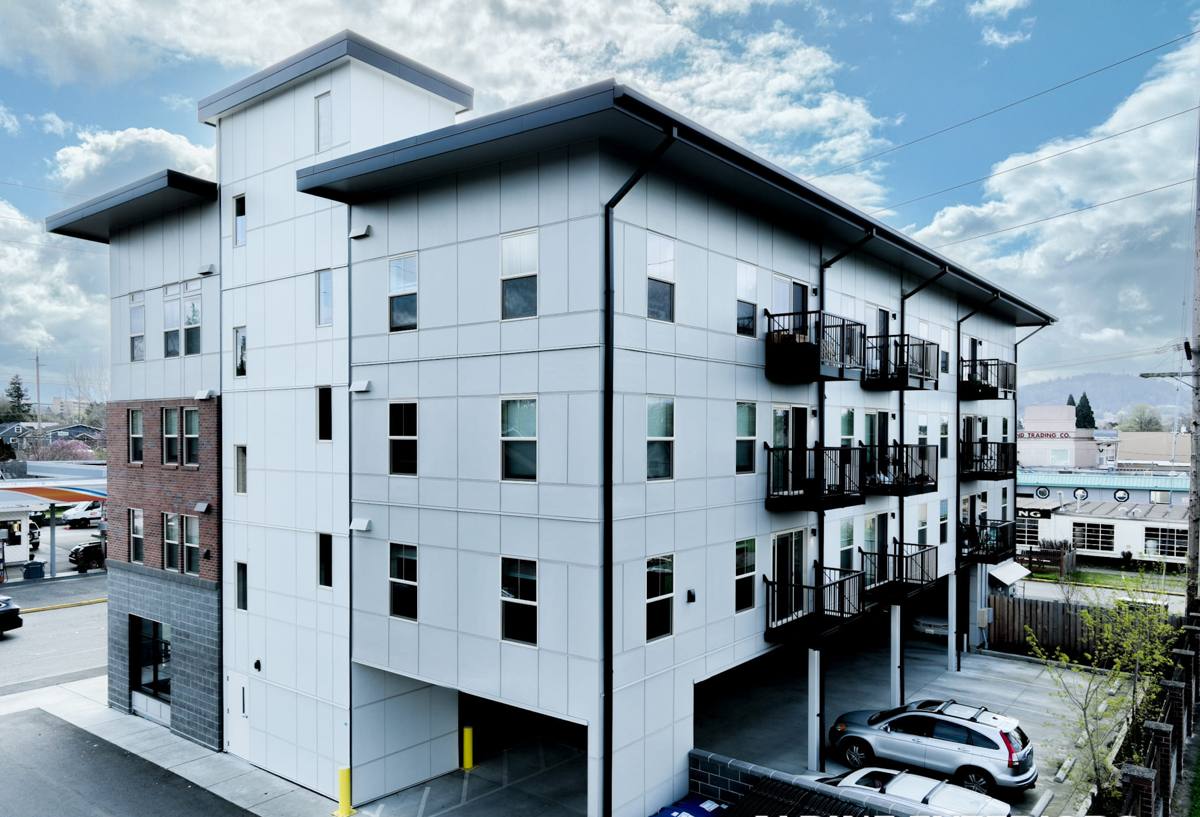
How Rot Actually Starts Behind Your Siding
Most homeowners assume rot starts when siding looks bad on the surface — peeling paint, dark staining, soft spots you can press with a thumb. In reality, by the time you can see damage from the street, moisture has usually been working behind the siding for a while.
Vapor Drive and Trapped Moisture
Houses breathe. Warm, moist air from inside a home migrates outward through walls, especially in winter when indoor heating creates a strong temperature difference between inside and outside. If a wall assembly doesn't have a way to let that moisture escape — or if housewrap and siding are installed too tightly against each other with no drainage plane — water gets trapped between layers. Combine that with a wet exterior climate pushing moisture in from the outside too, and sheathing and framing can stay damp for months at a time. Wood-based products, whether that's the sheathing behind the siding or the siding itself, don't tolerate sustained dampness well.
The Failure Points Nobody Notices Until It's Too Late
Rot rarely starts in the middle of a wall panel. It starts at the details: butt joints where two pieces of siding meet, inside and outside corners, window and door flashing, and anywhere siding contacts a horizontal surface like a deck ledger or roofline. These are the places where water can get behind the cladding if flashing, caulking, or overlap details weren't done correctly. A siding product can be excellent and still fail prematurely if these transitions were rushed or done wrong.
How Different Siding Materials Handle Moisture
Not all siding responds to moisture the same way. Some of this is inherent to the material; some of it depends on the manufacturer's coating and engineering. Here's an honest comparison of the products most commonly discussed by homeowners in this region.
| Material | How It Responds to Moisture | Long-Term Concern in This Climate |
|---|---|---|
| Cedar / primed spruce | Wood absorbs and releases moisture with humidity swings; needs paint or stain to stay sealed | Cupping, checking, and rot at joints once the finish breaks down; repainting cycle is frequent here |
| Vinyl siding | Doesn't absorb water itself, but isn't a water barrier — moisture can travel behind it through gaps and laps | Doesn't address what's happening behind the panel; can trap moisture against sheathing if the drainage plane underneath is poor |
| LP SmartSide (engineered wood) | Wood strand product with a resin-treated core and factory coating; performs better than raw wood but is still wood-based | Edge and cut-end sealing becomes critical — any breach in the factory treatment exposes the wood core to moisture |
| Fiber cement (James Hardie) | Cement, sand, and cellulose fiber — dimensionally stable and does not swell, rot, or feed mold when wet | Correct installation (clearances, flashing, caulking) still matters, but the base material itself isn't the failure point |
The pattern that matters most: wood-based products depend heavily on an intact factory or field-applied coating to keep water out of the material itself. Once that coating is compromised — by a cut edge, a scratch, or years of UV exposure — the underlying wood is vulnerable. Fiber cement doesn't have that vulnerability built in, which is a meaningful difference in a climate where siding rarely gets a long dry stretch to recover.
Moss, Algae, and the Long Wet Season
Moss and algae growth on siding isn't just cosmetic — it's a moisture indicator. If moss is establishing itself on a wall surface, that surface is staying damp long enough for spores to take hold, which typically means poor sun exposure, inadequate overhangs, or a siding surface holding moisture rather than shedding it. North-facing walls and areas shaded by mature trees are the most common problem spots we see around Sudden Valley and the surrounding lake and forest terrain.
Moss itself can accelerate damage by holding water against the siding surface even after rain stops. On wood-based siding, that prolonged contact time is exactly what breaks down paint and finish coatings faster than the manufacturer's warranty assumes. On fiber cement with a factory ColorPlus finish, moss can still grow but doesn't have the same access to vulnerable material underneath.
Warning Signs Homeowners Can Check Themselves
You don't need to climb a ladder to catch most early rot indicators. A simple visual walk-around a couple of times a year, especially after the wettest months, catches most problems while they're still cheap to fix.
- Soft or spongy spots when pressed gently — especially near the bottom edge of siding boards
- Paint that's bubbling, peeling, or alligatoring rather than just fading
- Dark staining or streaking below butt joints, corners, or window trim
- Visible gaps, warping, or cupping in individual boards
- Persistent moss or black algae growth that returns quickly after cleaning
- A musty smell in interior rooms along an exterior wall
- Swelling or delamination at cut ends and seams
Any one of these on its own might be minor. Several together, or any sign paired with visible damage, is worth a professional look before it spreads to framing.
Why We Standardized on James Hardie Fiber Cement
We made a deliberate decision to install only James Hardie siding — not vinyl, not LP SmartSide, not Cemplank or Allura, not primed spruce or cedar. That's not a marketing preference; it's a response to what we consistently see happen to siding in this climate over a 10-, 15-, and 20-year horizon.
Fiber cement's core advantage in a wet, moss-prone climate is that its structural material isn't organic. It won't feed rot, it won't swell when saturated, and it holds paint and factory finishes far longer because it isn't expanding and contracting with every humidity swing the way wood does. James Hardie's HZ5 product line is specifically engineered for climates with sustained moisture and freeze-thaw cycling, which describes Whatcom County well. The ColorPlus factory finish is baked on under controlled conditions rather than applied on site, which matters because field-applied paint is one of the more common points of early failure we see on wood-based siding here.
Hardie is also non-combustible, which is a genuine safety consideration, and it carries a strong transferable warranty — useful if you sell the home before the siding's functional life is up. None of this means Hardie is maintenance-free or immune to installation mistakes. It means the material itself isn't the weak link, so long-term performance comes down almost entirely to installation quality — which we control.
What Correct Installation Actually Involves
Because so much of siding failure traces back to installation details rather than the material, it's worth explaining what correct fiber cement installation actually requires:
Clearances and Flashing
Hardie's specifications call for specific clearances from grade, roof lines, decks, and other horizontal surfaces, plus proper flashing at every window, door, and penetration. Skipping these details is the single most common cause of moisture intrusion behind any siding product, fiber cement included.
Fastening and Joint Treatment
Butt joints need to be properly sealed or flashed, fasteners need to be set to the manufacturer's spec (not overdriven, which can crack the board and create a water entry point), and cut ends need factory-recommended sealant applied before installation, not after.
The Drainage Plane Behind the Siding
A functioning water-resistive barrier and drainage gap behind the siding matters as much as the siding itself. This is the layer that gives any incidental moisture a path to drain and dry rather than sitting against the sheathing.
Repair vs. Replacement: What Drives the Decision
When we're called out to assess moisture damage, the honest answer is sometimes a repair and sometimes a full replacement. The factors below are what actually drive that recommendation, rather than a blanket rule.
| Factor | Leans Toward Repair | Leans Toward Replacement |
|---|---|---|
| Extent of damage | Isolated to one or two boards or a single wall section | Recurring damage across multiple elevations |
| Sheathing condition | Sheathing underneath is still sound | Sheathing shows rot, softness, or delamination |
| Age of existing siding | Siding is younger and otherwise performing well | Siding is near or past its expected service life |
| Root cause | A fixable detail (one bad flashing, one gap) | Systemic issue — poor drainage plane, wrong product for the exposure |
Patching damaged siding without addressing the underlying moisture path just delays the same failure. That's why any repair estimate we give starts with identifying why the damage happened in the first place, not just what board needs to be swapped out.
Maintaining Siding Once It's Replaced
Even a moisture-resistant material benefits from basic upkeep, especially given how long the wet season runs here. A yearly rinse to clear moss, algae, and debris out of butt joints and corners; keeping gutters clear so overflow doesn't run down the wall face; trimming back vegetation that shades and dampens a wall section; and a periodic visual check of caulking around windows and trim will meaningfully extend the life of any siding system, fiber cement included.
If you're seeing early signs of moisture damage on your current siding, or you're planning ahead for a replacement and want a straight answer about what's actually happening behind your walls, we're happy to come take a look. We offer free, no-pressure estimates and can walk you through exactly what we find — no obligation either way.