 Sudden Valley Siding
 Living on Lake Whatcom: What Your Exterior Is Up Against
Homes around Lake Whatcom sit in one of the wetter, greener corners of Whatcom County, and that setting is beautiful right up until you look closely at your siding, trim, and roofline. Tree cover holds moisture close to the house. Slopes and lakeside exposure mean wind-driven rain hits some walls far harder than others. And the long, mild, damp stretch that runs from fall through spring gives moss, algae, and mildew months at a time to get established on anything that stays wet.
None of that is unusual for this part of Washington. But it does mean an exterior built for a drier climate — or installed without much thought to how water actually moves across a wall — tends to show problems here years before it would somewhere else. Swollen trim, dark streaking, soft spots at butt joints, moss creeping up from the ground line: these are the signs we see over and over on Lake Whatcom homes with the wrong products or a rushed install.
We work this area regularly, which matters more than it sounds like it should. A crew that knows which walls around Sudden Valley catch the worst of the weather, how deep the moss problem gets on north-facing siding under fir trees, and how the freeze-thaw swings in the surrounding hills stress exterior materials is going to make better calls on flashing, ventilation, and product selection than a crew seeing the neighborhood for the first time.
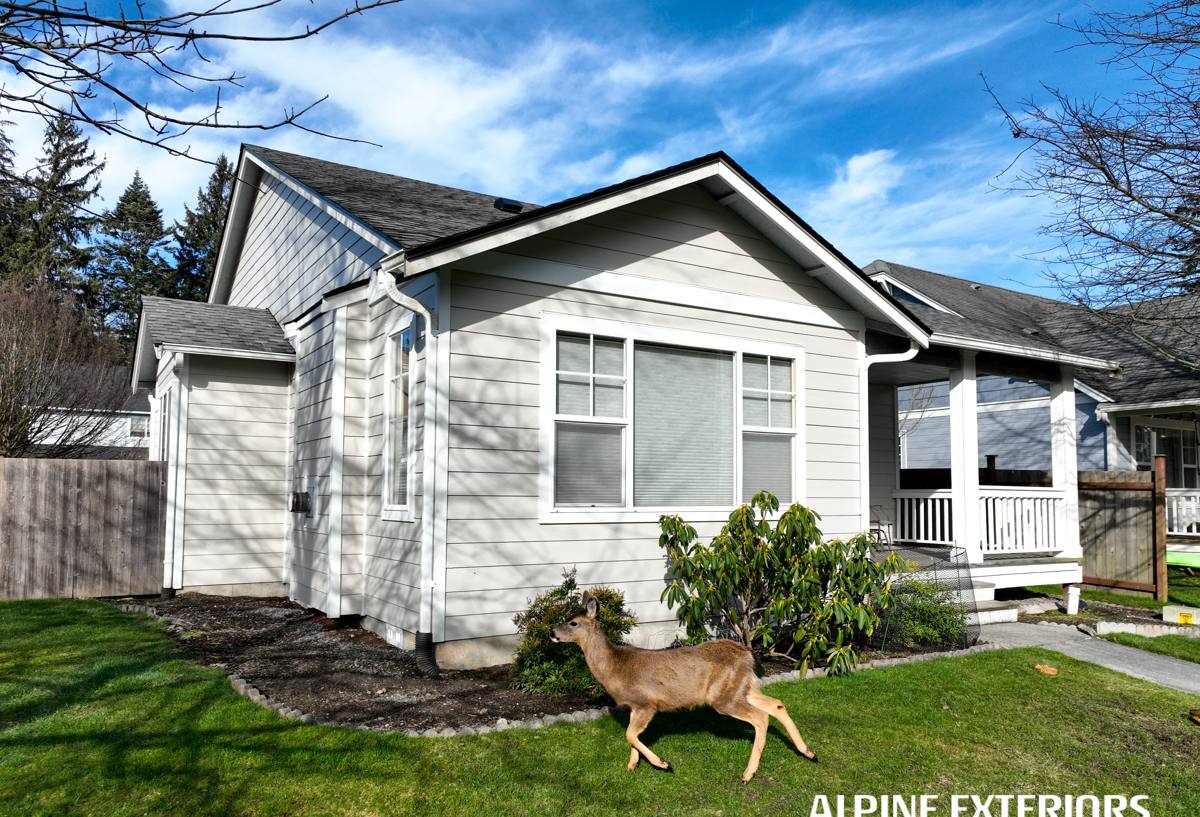
Siding: Why the Product Choice Matters More Here Than Most Places
Siding is the single biggest exterior surface on your house, and around Lake Whatcom it's also the surface doing the most work. It has to shed driving rain, resist the moisture that sits in the air under tree canopy, and hold its finish through repeated wet-dry cycles without cracking, cupping, or feeding mold.
We install James Hardie fiber cement siding exclusively. That's not a marketing position — it's a standard we hold because we've seen what happens to other materials in exactly this climate:
- Vinyl siding can warp, buckle, or crack in temperature swings, and its seams give moisture more opportunities to work behind the panel over time.
- Wood products like cedar or primed spruce look great on day one but need consistent refinishing to keep water out; skip a cycle in a wet year and rot can set in fast, especially at butt joints and lower courses near grade.
- LP SmartSide is an engineered wood product, which means it's still wood at its core — it depends heavily on intact factory coating and correct field sealing at every cut edge to keep moisture out.
- Other fiber cement brands (Cemplank, Allura) can be reasonable products, but we've standardized on one system so our crews install it the same way, every time, with warranty coverage we can actually stand behind.
Fiber cement is non-combustible, dimensionally stable, and doesn't feed mold the way wood-based products can. James Hardie's ColorPlus factory finish is baked on rather than field-applied, which matters a lot in a climate that doesn't give paint much time to cure between rain events. And Hardie engineers regional HZ5 products specifically for climates like ours, with moisture and freeze-thaw performance built into the formulation rather than added on as an afterthought.
What Correct Installation Actually Involves
Good siding material installed poorly will still fail. Around the lake, the details that matter most are the ones that control water: proper flashing above windows and doors, correct starter strip height off the foundation, weather-resistant barrier lapped correctly behind the panels, and gapping at butt joints per manufacturer spec so panels aren't fighting each other as they expand and contract. We follow Hardie's published installation instructions to the letter because that's what keeps the warranty valid and the wall dry.
Roofing: Keeping the Water Out From Above
A roof around Lake Whatcom earns its keep. Between the rain volume and the moss pressure from overhanging trees, roofing here needs solid underlayment, properly integrated flashing at every valley and penetration, and a maintenance rhythm that keeps moss from taking hold and lifting shingles. We handle roof repair and full roof installation as part of the same exterior scope as siding, which matters because roof and wall drainage are connected systems — flashing done wrong at the roofline is one of the most common causes of siding damage we find on older homes in this area.
Windows: The Weak Point in Most Older Homes
Original windows on lake-area homes are frequently the first thing to show age — fogged double panes, soft sills, drafts you can feel on a windy night off the water. When we replace windows, we're paying close attention to the same thing we watch on siding jobs: flashing and sealing at the rough opening. A new window installed without correct flashing integration into the wall system just relocates the moisture problem instead of fixing it.
Decks: Built for a Climate That Doesn't Dry Out
Decks around Lake Whatcom deal with standing moisture, shade, and organic debris more than almost any other exterior feature on the property. We build and repair decks with attention to drainage, ledger flashing, and material choices that hold up to a long wet season rather than a short one — because a deck board that would be fine in a drier climate can stay damp here for weeks at a stretch.
Why We Standardized on James Hardie
We used to install a wider range of siding products. We narrowed to James Hardie because it's the one system that consistently performed the way it was supposed to years after installation, in this exact climate — not just in a showroom or a sales brochure. The reasons come down to a few concrete facts:
| Factor | What It Means for a Lake Whatcom Home |
|---|---|
| Non-combustible core | Fiber cement doesn't feed fire or contribute fuel load, unlike wood-based siding |
| Factory-applied ColorPlus finish | Cures under controlled conditions rather than depending on dry weather windows during install |
| Climate-engineered HZ5 formulation | Built for regions with sustained moisture and freeze-thaw cycling |
| Dimensional stability | Resists the swelling and cupping that wood and engineered-wood panels can show after repeated wet seasons |
| Transferable warranty | Backed by the manufacturer, which matters if you sell the home down the road |
We're upfront that this means we say no to some jobs — homeowners who specifically want vinyl or cedar will need a different contractor. We'd rather turn down work than install something we don't believe will hold up on your wall.
What Working With a Local Crew Looks Like
For a service-area job around the lake, that usually means:
- A walkaround to look at drainage patterns, tree cover, sun exposure per wall, and existing moisture or moss damage
- An honest assessment of what's actually failing versus what's cosmetic
- A written estimate that separates material, labor, and any structural repair needed before new siding, roofing, or windows go on
- A install crew that follows manufacturer flashing and fastening specs, not shortcuts
We're not a national outfit dispatching a rotating crew from out of the area — we know the roads, the seasonal weather patterns, and the way this particular part of the county behaves differently from drier stretches of Washington.
Cost Factors Worth Understanding Before You Get Quotes
| Factor | Why It Affects Price |
|---|---|
| Existing damage / rot repair | Hidden sheathing or framing damage found during tear-off adds labor and material |
| Home size and wall complexity | More corners, gables, and trim details mean more cutting and fitting time |
| Tree and access conditions | Limited access or heavy canopy near the home can slow staging and cleanup |
| Siding profile and color | Some ColorPlus colors and plank widths carry different material costs |
| Scope bundling | Combining siding with roofing, window, or deck work in one project can reduce overall mobilization costs |
A Simple Maintenance Checklist for Lake-Area Homes
- Rinse siding and trim of debris and moss growth once or twice a year, especially on shaded, north-facing walls
- Keep gutters clear so overflow doesn't run directly down siding or foundation lines
- Trim back branches that hold moisture against the wall or roof
- Check window and door flashing and caulking annually for gaps
- Look at deck ledger boards and fasteners each spring for early rot or corrosion
If your home is on or near Lake Whatcom and you're weighing siding, roofing, window, or deck work, we're glad to come take an honest look. A free estimate comes with no pressure and no obligation — just a straight assessment of what your exterior actually needs.