 Sudden Valley Siding
 Local Exterior Work for the Alger Area
Homes around Alger sit in a stretch of Whatcom and Skagit County where the weather off the water shapes everything about how a house ages. Salt-tinged air drifts in off the bay, rain comes sideways more often than straight down, and the shoulder seasons stretch long and damp enough to keep moss growing on anything that holds moisture. Sudden Valley Siding Company works this kind of exterior all the time, and we've built our process around what actually holds up here rather than what looks good on a spec sheet in a dry climate.
This page covers what we see on homes in and around Alger, how our siding, roofing, window, and deck work fits together as one exterior system, and why we install only James Hardie fiber cement siding rather than the vinyl, LP SmartSide, or cedar products some other crews still put up.
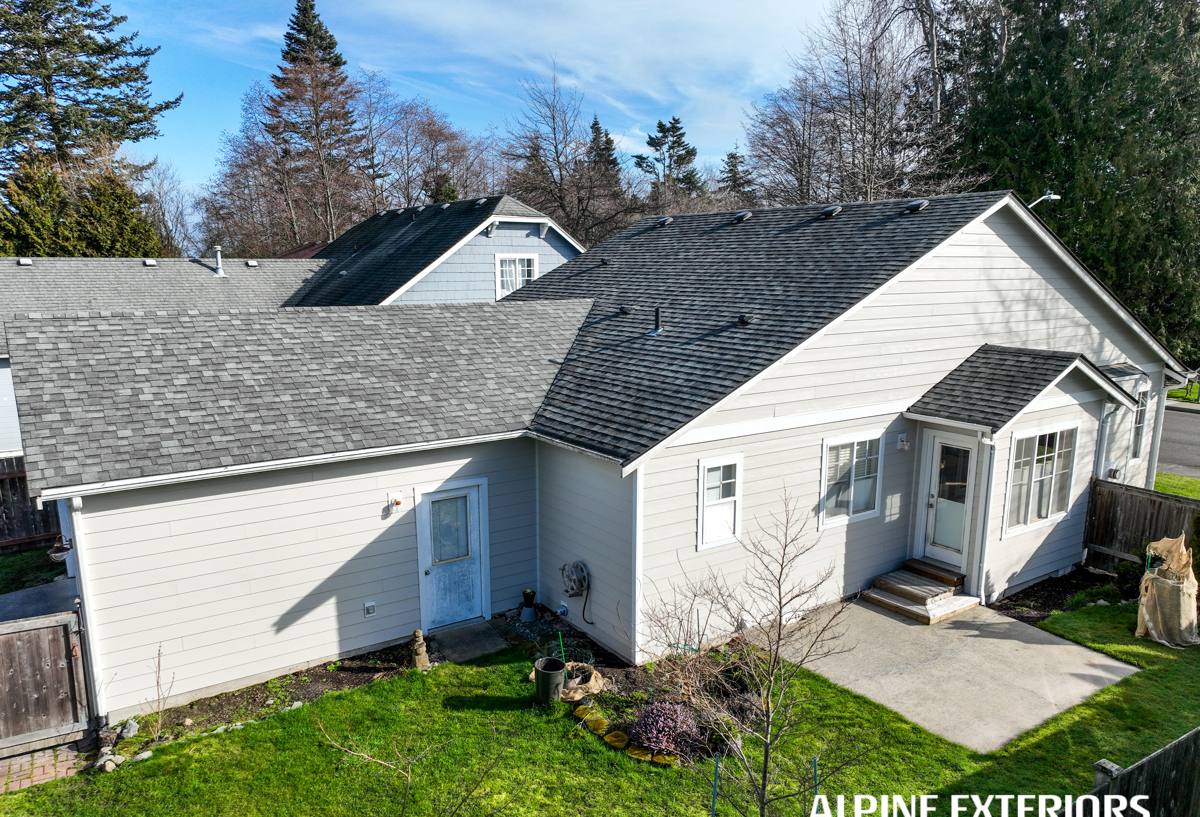
What the Climate Does to Siding Out Here
Three things drive most of the exterior problems we get called out to fix in this area:
Salt Air
Proximity to the water means airborne salt settles on siding, trim, and fasteners year-round. It's slow and unglamorous damage — no single storm causes it — but over years it accelerates corrosion on exposed metal fasteners and speeds up the breakdown of paint films and less durable siding materials. Products that aren't engineered for coastal exposure tend to show it first at the fastener heads and at panel edges.
Driving Rain
Wind-driven rain doesn't just fall on a wall, it gets pushed into it — behind trim, under laps, into any gap that wasn't sealed or flashed correctly. A siding job that looks fine on a calm, dry install day can fail within a few winters if the water management details (flashing, weather-resistant barrier, proper lap and gap spacing) were rushed.
Long Moss Season
Cool, damp conditions for a large part of the year mean moss and algae get a real foothold on north-facing walls, under eaves, and anywhere airflow is limited. Some siding materials resist this better than others based on surface texture and how much moisture the material itself absorbs.
None of this is unique to Alger specifically, but it's the reality of building envelope performance anywhere near Bellingham Bay and the Skagit County coastline, and it's why we treat siding selection and installation detail as more than a cosmetic decision.
Why We Install Only James Hardie Fiber Cement
We used to install a broader range of siding products. Over time, watching how different materials actually performed on homes in this climate — not in a showroom, but ten and twenty years out — we narrowed our lineup to one: James Hardie fiber cement. Here's the honest reasoning, not a sales pitch.
Vinyl
Vinyl is inexpensive and fast to install, and for a lot of the country it's a reasonable choice. In this climate, wind-driven rain works behind loose-fitting panels more easily than it does behind a properly installed fiber cement lap, and vinyl can warp or become brittle with age and temperature swings. It's also a petroleum-based product with a look that reads as vinyl up close, which matters to a lot of homeowners investing in curb appeal.
LP SmartSide and Other Engineered Wood
Engineered wood siding has improved a lot over the years, and it has real strengths — it's lighter than fiber cement and easier on installers. But it's still a wood-based product at its core, which means moisture is its primary long-term enemy. In a region with our rain totals and humidity, any breach in the factory coating — a scratch, an unsealed cut edge, a caulking failure — gives moisture a path into the substrate. We've replaced enough swollen, delaminating engineered wood siding on damp-climate homes that we stopped installing it.
Cedar and Primed Spruce
Real wood siding has a warmth that manufactured products still try to imitate, and we understand the appeal. It also asks a lot of a homeowner: regular refinishing, vigilant caulking, and constant vigilance against rot, especially on the shaded, damp-prone sides of a house. That's a maintenance commitment most of our clients don't want to sign up for indefinitely.
Why Hardie
James Hardie fiber cement is non-combustible, dimensionally stable (it doesn't expand and contract with moisture the way wood-based products do), and comes with a factory-applied ColorPlus finish that's engineered to hold color and resist fading, chipping, and cracking far longer than field-applied paint. It's also engineered in climate-specific formulations, which matters more here than most homeowners realize.
Side-by-Side Comparison
| Factor | James Hardie Fiber Cement | Vinyl | LP SmartSide / Engineered Wood |
|---|---|---|---|
| Moisture Resistance | Engineered for wet climates; won't rot or swell | Doesn't rot, but water can pool behind loose panels | Vulnerable once coating is breached |
| Fire Resistance | Non-combustible | Melts/deforms under heat | Combustible (wood-based core) |
| Coastal/Salt Air Durability | Strong; formulated for regional exposure | Can become brittle over time | Moderate; coating wears with exposure |
| Finish Longevity | Factory ColorPlus finish, long fade resistance | Color molded in, can fade and chalk | Factory-primed, needs maintenance over time |
| Typical Maintenance | Low — occasional wash, recaulk as needed | Low, but repairs are visible and hard to color-match | Moderate — coating and caulk need monitoring |
The James Hardie System We Install
Hardie isn't one product — it's a system, and we spec it based on the exposure of the specific home. For coastal and high-moisture areas like Alger, that typically means their HZ5 climate-engineered formulation, which is built for wetter, harsher weather conditions rather than the drier HZ10 formulation used elsewhere in the country.
- HardiePlank lap siding — the most common choice, available in several exposure widths and textures
- HardiePanel vertical siding — used for board-and-batten looks or accent sections
- HardieShingle siding — for a shingle-style look without the maintenance of cedar shakes
- HardieTrim boards — matched trim for a consistent, factory-finished appearance
- ColorPlus Technology — factory-baked color finish backed by its own finish warranty, separate from the substrate warranty
Hardie also backs its products with a strong transferable limited warranty, which matters if you ever sell the home — it's a selling point buyers and their inspectors recognize.
Roofing, Windows, and Decks: Treating the Whole Exterior as One System
Siding doesn't work in isolation. Water that gets past a roof edge, a window flashing, or a deck ledger board can travel and show up as a siding problem years later, which is why we handle the full exterior envelope rather than just one piece of it.
Roofing
Roof-to-wall transitions, valleys, and flashing details are where a lot of water intrusion actually originates. We look at roof condition as part of any siding estimate, because it's a wasted investment to put new siding under a roof that's still leaking at the eaves.
Windows
Old or poorly flashed windows are a common source of hidden moisture damage around the rough opening. When we replace siding around existing windows, we check and correct flashing details so the new siding isn't just covering up an existing leak path.
Decks
Ledger board connections and deck-to-house flashing are another frequent point of water intrusion in this climate. A deck built or attached without proper flashing can quietly rot the wall structure behind it for years before it's visible from outside.
What Correct Installation Actually Involves
Material choice only gets you halfway. Fiber cement siding installed with the wrong gaps, missing flashing, or poor fastener placement will still leak and fail early. Details we hold to on every job:
- Proper weather-resistant barrier installed and lapped correctly before any siding goes up
- Flashing at every window, door, and roof-to-wall intersection, not just caulk
- Correct nail placement and fastener spacing per Hardie's engineering specifications, not shortcuts
- Minimum clearance between siding and grade, decks, patios, and roof lines to avoid wicking moisture
- Factory-cut edges kept intact wherever possible, and field cuts sealed per manufacturer spec
- Proper caulking at joints — enough to seal, not so much that it traps moisture
These are the details that separate a siding job that looks good on install day from one that still looks good in fifteen years.
Cost Factors to Expect
Every home is different, but the same handful of factors drive most of the variation in a siding project's cost:
| Factor | How It Affects Cost |
|---|---|
| Home size and stories | More square footage and taller walls mean more material and more labor, including staging or lift access |
| Existing siding removal | Tear-off of old siding, especially if it involves hazardous material testing, adds time and disposal cost |
| Trim and architectural detail | Homes with more corners, trim boards, and accent details take longer to fit and finish |
| Underlying damage | Rot or water damage found once old siding comes off needs repair before new siding goes up |
| Siding profile and finish | Shingle-style and vertical panel accents typically run higher than standard lap siding |
We give straightforward, itemized estimates so you can see exactly what's driving the number, not a single lump figure.
Choosing a Contractor for This Area
Not every crew that shows up with a quote understands what this climate actually asks of an exterior. A few things worth asking before you hire anyone for siding, roofing, window, or deck work in the Alger area:
- Are they a manufacturer-recognized installer for the specific siding product they're proposing?
- Will they show you the flashing and water-management plan, not just the finished-look renderings?
- Do they carry current liability insurance and workers' comp, and can they provide proof?
- Is the estimate itemized, or is it a single number with no breakdown?
- Do they inspect the sheathing and structure once old siding is removed, or just cover over whatever's there?
- Can they explain, specifically, why they recommend the product they're proposing for your home's exposure?
A local crew that works this climate regularly will have direct, unhedged answers to all of these. Vague answers on flashing and water management are a red flag no matter how competitive the price looks.
Ready When You Are
If you're weighing a siding, roofing, window, or deck project for a home in the Alger area, we're glad to come take a look and give you a straightforward, no-pressure estimate. Use the form below to get started — we'll walk the exterior with you and tell you plainly what we see.