 Sudden Valley Siding
 Siding in Sunnyland: Built for a Wet, Wooded Corner of Whatcom County
Sunnyland sits in the kind of Whatcom County terrain that's beautiful to live in and hard on a house. Between the tree cover, the humidity that never fully leaves the air, and the wind-driven rain that comes off the water in fall and winter, exterior surfaces here take a slower but steadier beating than they would in a drier climate. Siding doesn't usually fail all at once out here. It fails in inches — a soft corner behind a downspout, a moss-covered north wall, a seam that's been wicking moisture for a few winters without anyone noticing.
We work this area regularly, which matters more than it sounds. A crew that knows how water moves across a Sunnyland-area roofline, where moss tends to establish first, and how much clearance a wall needs from landscaping in this climate is going to make different decisions than a crew passing through once. Those decisions show up ten years later as either a house that's still solid or one that's due for another remodel.
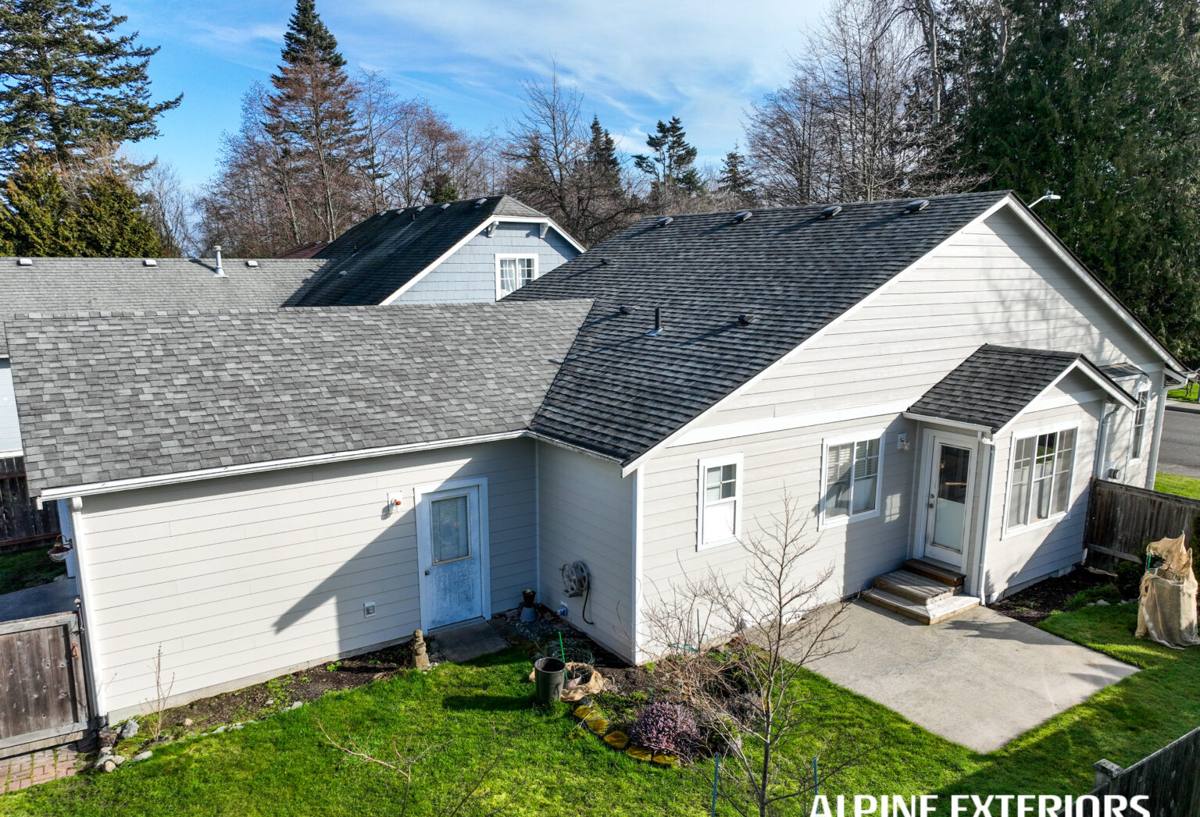
What the Local Climate Does to Siding Over Time
Three factors do most of the damage to exteriors in this part of Whatcom County, and they compound each other:
Salt Air
Proximity to Puget Sound and the Salish Sea means airborne salt is a real factor here, even inland. Salt-laden moisture accelerates corrosion on fasteners, flashing, and metal trim, and it can degrade lower-quality paint and coatings faster than a straightforward "rain climate" would on its own. Materials and finishes that aren't engineered for it tend to chalk, fade, or corrode ahead of schedule.
Driving Rain
This region doesn't just get a lot of rain — it gets rain pushed sideways by wind off the water, which finds every weak lap, seam, and fastener point in a siding system. Materials that swell, warp, or lose dimensional stability when wet are working against the climate from day one. Correct lap and flashing detail matters as much as the material itself.
A Long Moss Season
Shaded walls, tree cover, and near-constant ambient moisture give moss and algae a long runway to establish on roofs and siding — often eight or nine months of the year rather than just a rainy stretch in winter. Once organic growth gets a foothold in a seam or behind a panel, it holds moisture against the material and accelerates rot, especially on wood-based products.
None of this is unique to any one street in Sunnyland — it's the character of living this close to the water and under this much tree canopy. It's also exactly why material choice matters more here than it would in a milder, drier region.
Why We Only Install James Hardie Fiber Cement
We install one siding system: James Hardie fiber cement. Not vinyl, not LP SmartSide, not primed spruce or cedar, not other fiber cement brands. That's a standard we hold across every job, and in a climate like this one, the reasoning is straightforward.
- Non-combustible. Fiber cement doesn't feed a fire the way wood-based sidings can, which matters in a state that takes wildfire exposure seriously even west of the Cascades.
- Doesn't rot or swell from moisture. Wood-based products, including engineered wood siding, are dimensionally sensitive to the kind of sustained wet exposure this area sees. Fiber cement is cement-based and doesn't share that vulnerability.
- Factory-applied finish. Hardie's ColorPlus finish is baked on under controlled conditions, not brushed or sprayed on-site. That finish holds up to UV, salt air, and repeated wet-dry cycles far better than field-applied paint typically does.
- Climate-engineered product lines. Hardie makes region-specific formulations (its "HZ" lines) built for different moisture and temperature profiles, which is directly relevant to a marine climate like this one.
- Warranty structure. Hardie's warranty is transferable and backed by a large, established manufacturer — a meaningful factor if you plan to sell the home down the road.
Vinyl, LP SmartSide, and similar products all have legitimate uses and reasonable price points, and we're not going to tell you they're junk — they're not. But we've made a professional call that in this specific climate, fiber cement's moisture behavior, fire performance, and finish durability are worth the difference in upfront cost, and we'd rather stand behind one system we trust completely than install several we have reservations about.
Material Comparison at a Glance
| Material | Moisture behavior in wet climates | Fire rating | Typical finish life |
|---|---|---|---|
| James Hardie fiber cement | Dimensionally stable, doesn't swell or rot | Non-combustible | Factory finish, long-lasting |
| Vinyl siding | Doesn't rot, but can warp/crack with age and temperature swings | Combustible | Color molded in, fades over time |
| LP SmartSide (engineered wood) | Treated but still wood-based; sensitive to sustained moisture exposure | Combustible | Factory or field finish, needs maintenance |
| Cedar / primed spruce | Natural wood; requires diligent maintenance in wet climates | Combustible | Field-applied, shortest maintenance interval |
James Hardie Product Lines We Install
Not every Hardie product fits every home, and part of doing this job right is matching the product line to the house and the exposure it faces.
HardiePlank Lap Siding
The most common choice for single-family homes — available in multiple textures (smooth, cedarmill) and widths, giving a traditional lap look with none of the moisture vulnerability of wood.
HardiePanel Vertical Siding
Used for board-and-batten looks or as an accent alongside lap siding — common on garages, gables, and modern-leaning exteriors.
HardieShingle
A shingle-profile option for homes that want a shingled or cottage look without the maintenance burden of cedar shingles in a wet climate.
HZ5 Engineering
Hardie's HZ5 product formulation is built for climates with more moisture and freeze-thaw cycling — a relevant consideration for homes in this part of Whatcom County, and something we account for during product selection rather than defaulting to whatever's cheapest to stock.
Roofing, Windows, and Decks: The Rest of the Envelope
Siding doesn't work in isolation. Water that gets past a bad roof, a leaking window, or a rotting deck ledger doesn't care how good the wall cladding is — it'll find its way in regardless. We handle all four trades for a reason: it lets one crew look at a home's whole exterior envelope and catch problems that get missed when siding, roofing, windows, and decks are handled by four separate companies who never talk to each other.
- Roofing — the first line of defense against this area's rain and moss; roof condition directly affects how much moisture ends up running down your walls.
- Windows — flashing and window integration is one of the most common failure points behind siding, and it's easy to get wrong if it's not coordinated with the siding install.
- Decks — ledger boards and deck-to-house connections are a classic hidden-rot spot in wet climates, especially on shaded or north-facing exposures.
What a Local Crew Adds
A lot of what separates a good exterior job from a mediocre one in this region isn't the material — it's the detailing: flashing laps, kick-out flashing at roof-wall intersections, ground clearance, ventilation behind the cladding, and fastener spacing that accounts for wind-driven rain rather than just following a generic install sheet. Crews that work this area regularly build habits around those details because they've seen what happens when they're skipped. That's the value a local, experienced crew brings that a low-bid out-of-town crew often can't match, regardless of what material ends up on the wall.
What Siding Replacement Looks Like, Start to Finish
- On-site assessment. We look at your current siding, trim, flashing, and any signs of moisture intrusion — not just the surface material.
- Product and color selection. We walk through Hardie profiles, textures, and ColorPlus color options based on your home's exposure and your preferences.
- Tear-off and sheathing check. Old siding comes off and we inspect the sheathing underneath — this is often where hidden problems surface.
- Weather barrier and flashing. Proper house wrap and flashing detail is installed before a single piece of siding goes up; this step is where most long-term failures either get prevented or get baked in.
- Installation to manufacturer spec. Fastener pattern, clearances, and laps installed to Hardie's specifications, not shortcuts.
- Final walkthrough. We review the finished work with you before calling the job done.
Cost Factors Worth Knowing
| Factor | Why it affects price |
|---|---|
| Home size and wall complexity | More corners, gables, and dormers mean more cutting, flashing, and labor time |
| Current siding condition | Rotted sheathing found during tear-off adds repair scope |
| Product line and profile | HardiePlank, panel, and shingle profiles carry different material costs |
| Trim and accent work | Custom trim details add labor beyond flat wall coverage |
| Access and site conditions | Steep lots, tree cover, and tight access can affect scaffolding and staging time |
Signs Your Siding May Be Due for a Look
- Persistent moss or algae streaking that comes back shortly after cleaning
- Soft spots, especially near ground level, downspouts, or under windows
- Visible warping, cupping, or gaps at seams
- Peeling or bubbling paint that keeps recurring in the same spots
- Rising energy bills that might point to a failing weather barrier behind the siding
- Visible daylight or drafts around window and door trim
If you're seeing more than one of these, it's worth having someone look at the whole wall assembly, not just patch the visible symptom.
Get a Local, No-Pressure Estimate
If you're weighing siding, roofing, window, or deck work on a home in the Sunnyland or greater Sudden Valley area, we're glad to come take a look and walk you through what we see — no obligation, no pressure. Use the form below to request a free estimate.