 Sudden Valley Siding
 Cordata and the Sudden Valley Exterior Climate
Cordata sits within the broader Sudden Valley and Whatcom County service area we work in year-round, and the exterior of a house here takes a different kind of beating than it would further inland or further south. It's not one dramatic event that wears a home down — it's the accumulation of a long wet season, a steady drift of salt-laden air off the water, and shade patterns that never quite let siding, trim, or roofing dry out completely. We've built our whole approach around that reality rather than around what happens to work in a drier climate.
Homeowners moving here from other parts of the country are often surprised by how much the exterior maintenance conversation changes. A product that performs fine in Arizona or even in a drier part of Washington can behave very differently after a few winters of Pacific Northwest rain and Whatcom County's grey, low-sun months.
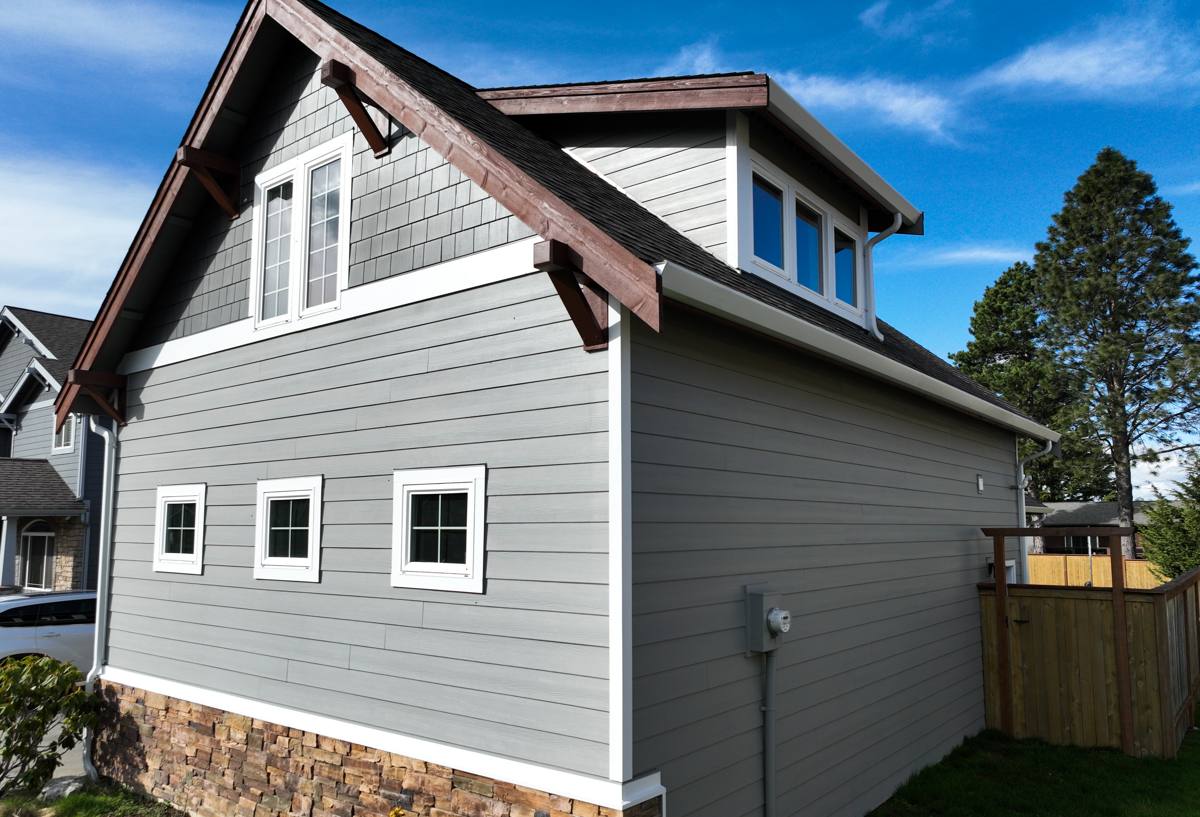
Salt Air, Driving Rain, and the Long Moss Season
Three things define exterior wear in this area, and they compound each other:
Salt Air
Proximity to Puget Sound and the Strait of Georgia means airborne salt is a constant, low-level presence. It accelerates corrosion on fasteners, flashing, and metal trim, and it interacts with certain paint and coating systems in ways that shorten their service life. Materials and finishes matter more here than they would in a landlocked climate.
Driving Rain
Whatcom County storms frequently come in sideways off the water rather than falling straight down. That means rain gets driven into laps, seams, and butt joints that a vertical-only rain assumption would never stress. Siding systems and installation details that aren't built for wind-driven rain are the first to show staining, swelling, or water intrusion at joints.
The Long Moss Season
Shaded north walls, tree cover, and months of damp, mild temperatures give moss and algae an unusually long growing window here — often close to nine or ten months of the year. Moss holds moisture against a surface, and on the wrong siding material that sustained dampness is exactly what leads to swelling, delamination, or rot underneath. On the right material, it's a cosmetic issue you can wash off rather than a structural one.
Why We Only Install James Hardie Fiber Cement
We made a decision early on to standardize on James Hardie fiber cement siding and not offer alternatives like vinyl, LP SmartSide, Cemplank, Allura, or unprimed cedar and spruce. That's not a marketing angle — it's a response to what we consistently see happen to exteriors in this specific climate over a 10-, 15-, and 20-year horizon.
Fiber cement is non-combustible and dimensionally stable, meaning it doesn't expand and contract with moisture the way wood-based products do. That stability matters directly in a moss-and-rain climate: a product that swells slightly every time it gets wet and shrinks back when it dries eventually opens gaps at seams and fasteners, which is where water intrusion starts. Hardie's ColorPlus factory finish is also baked on and cured under controlled conditions, which holds up better against the combination of UV, salt air, and driving rain than field-applied paint typically does over time.
We're not going to tell you other siding products are junk — plenty of homes around the region were built with vinyl or engineered wood siding and get by fine with regular upkeep. What we will say honestly: those products ask more of the climate and the maintenance schedule than we're comfortable standing behind with our name on the installation. Hardie's HZ5 product line is specifically engineered for climates like ours — freeze-thaw cycling, sustained moisture, and coastal exposure — and it comes with a strong transferable warranty that reflects the manufacturer's own confidence in how it performs here.
Quick Comparison: What Changes in a Wet, Salt-Air Climate
| Factor | Vinyl / Engineered Wood | James Hardie Fiber Cement |
|---|---|---|
| Moisture response | Can swell, warp, or delaminate with sustained damp exposure | Dimensionally stable; engineered fiber cement resists swelling |
| Moss/algae staining | Can trap moisture against the substrate | Surface can be cleaned without compromising the material underneath |
| Salt air / coastal exposure | Fasteners and seams more exposed to corrosion effects | Corrosion-resistant fastening details and factory finish built for exposure |
| Finish longevity | Field-applied or factory paint varies in UV/moisture resistance | ColorPlus factory finish backed by its own warranty |
| Fire exposure | Combustible (wood-based products) | Non-combustible fiber cement |
Beyond Siding: Roofing, Windows, and Decks Facing the Same Conditions
Siding doesn't fail in isolation — it fails alongside the rest of the exterior envelope, so we handle roofing, windows, and decks with the same climate logic in mind.
Roofing
A roof in this area needs to shed driving rain at the ridge, valleys, and penetrations, and resist the same moss growth that affects walls. Ventilation and moisture management at the roof deck matter as much as the shingle or panel choice itself, especially under heavy tree canopy common around Sudden Valley properties.
Windows
Window flashing and sealing details are where a lot of hidden water damage originates. Wind-driven rain will find any gap in flashing tape, sill pan, or head flashing over enough winters. Correct window integration with the surrounding siding is as important as the window unit itself.
Decks
Decks here are exposed to the same standing moisture and moss growth as walls, plus foot traffic and UV. Framing, fastener choice, and drainage beneath the decking all affect how long a deck stays sound versus soft and slippery.
Why a Local Crew Matters for Cordata Homes
A lot of exterior problems in this climate are installation problems, not product problems. Flashing sequence, house wrap lap direction, fastener placement, and clearance at grade all have to be done correctly for any siding — including Hardie — to perform the way it's engineered to. A crew that works exclusively in Whatcom County's wet, salt-air, moss-heavy conditions builds habits around those details that a crew unfamiliar with this specific climate might not prioritize the same way.
There's also the practical side: being local means we're available for warranty follow-up, seasonal questions, and the occasional storm-damage check without a long drive or a scheduling gap. For a homeowner in Cordata or elsewhere in the Sudden Valley area, that responsiveness is part of what you're actually paying for.
Signs Your Current Siding Is Already Losing the Fight
- Persistent moss or algae staining that returns quickly after cleaning
- Soft spots, bubbling, or visible swelling along seams or panel edges
- Paint that's peeling, chalking, or fading faster than expected on sun- or rain-exposed walls
- Visible gaps opening at butt joints or around trim and window edges
- A musty smell or interior staining on walls that back onto exterior siding
- Rust streaking from fasteners or trim, especially on walls facing prevailing weather
Any one of these on its own isn't necessarily an emergency, but together they usually mean moisture is getting past the surface and into the assembly behind it.
What to Expect When You Call Us
We start with a walk-around inspection of the exterior — siding, trim, roof edges, window flashing, and any deck structure — so we're looking at the whole envelope rather than just the piece you called about. From there we'll tell you plainly what's cosmetic, what's a maintenance item, and what actually needs replacement, along with a realistic cost range and timeline. We don't upsell a full re-side when a repair will genuinely hold, and we don't downplay a problem that's going to get worse with another wet season.
General Cost Factors to Expect
| Factor | Why It Affects Price |
|---|---|
| Home size and wall complexity | More corners, gables, and trim detail mean more labor and material cuts |
| Extent of hidden damage | Rot or moisture found once old siding is removed can add scope |
| Siding profile and finish choice | Lap width, texture, and factory color options shift material cost |
| Access and site conditions | Steep grades, tree cover, or tight lot lines affect setup and staging time |
| Scope bundling | Combining siding with roofing, window, or deck work can be more efficient than separate projects |
Planning Ahead in a Climate Like This
Because of the moss season and rain exposure here, timing matters more than in drier climates. Late spring through early fall generally gives the most workable, driest stretch for tear-off and installation, which reduces the chance of trapped moisture during the build itself. That said, we work with what a homeowner's schedule and budget allow, and we'll be direct if a particular time of year isn't ideal for a given scope of work.
If you're noticing wear on your siding, roofing, windows, or deck, or you're just planning ahead for a home in the Cordata or greater Sudden Valley area, we're happy to come take a look. The estimate is free, there's no pressure, and you'll get a straight answer about what your home actually needs.