 Sudden Valley Siding
 Siding Built for South Hill's Weather, Not Against It
South Hill homes sit inside a stretch of Whatcom County where the weather doesn't take a season off. Salt-laden air drifts in off the water, driving rain comes sideways for months at a time, and the shaded, damp stretches of the year turn into a long moss season that coats roofs, decks, and siding alike. None of that is unusual for this part of Washington — but it does mean the exterior materials on a South Hill home are working harder, year-round, than they would almost anywhere else in the country. Siding here isn't just a cosmetic choice. It's the first line of defense between a house and a climate that stays wet, salty, and shaded for large parts of the year.
Sudden Valley Siding Company works this area regularly, and we've seen what that climate does to different siding materials over five, ten, and twenty years. That experience is a big part of why we made the decision, as a company, to install only James Hardie fiber cement siding. This page walks through what South Hill homes tend to face, how our services work for this specific area, and why we stand behind the product we put on every job.
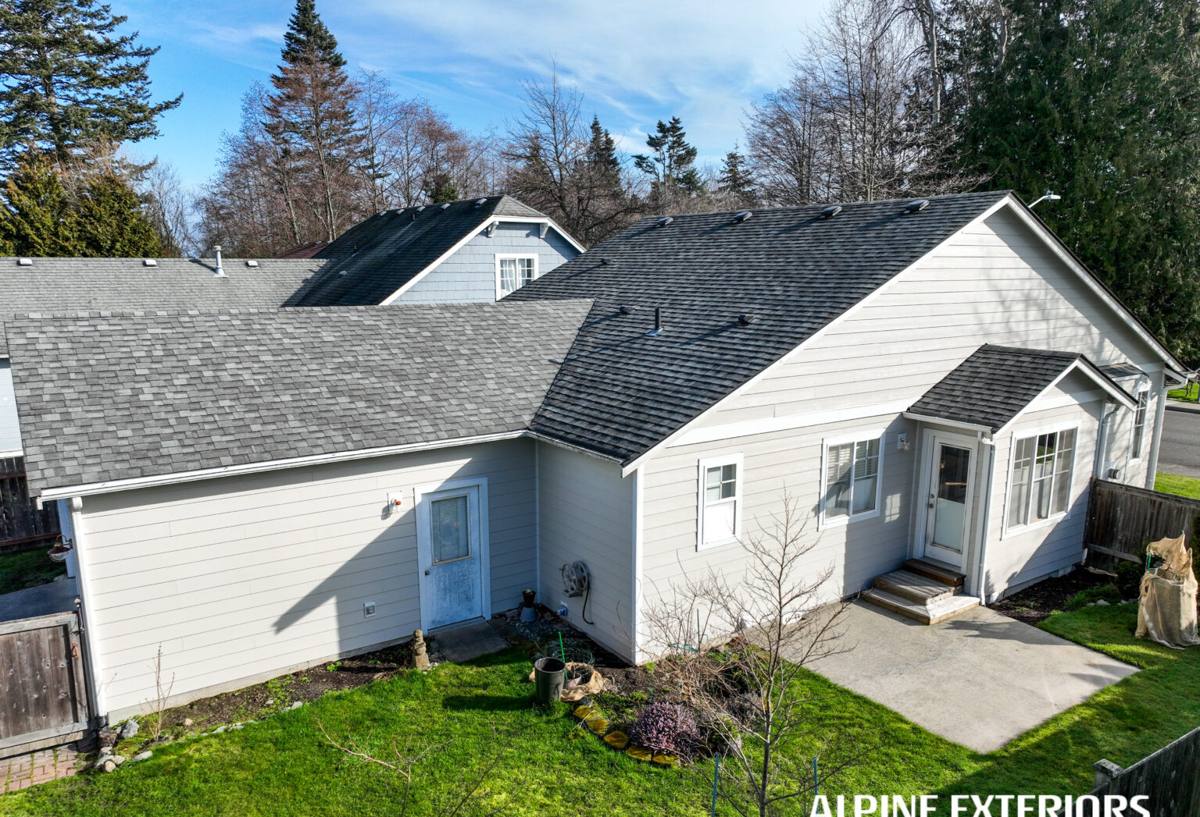
What the Local Climate Does to Exterior Materials Over Time
Salt Air
Even homes set back from the water pick up salt-bearing moisture carried on the wind. Over years, that salt air accelerates corrosion on exposed metal fasteners and trim, and it speeds up the breakdown of finishes that aren't built to handle it. Paint films chalk and fade faster near the coast than they do inland, and materials with less dimensional stability tend to show stress at seams and joints sooner.
Driving Rain
Whatcom County doesn't get gentle, straight-down rain for most of the wet season — it gets wind-driven rain that hits siding at an angle and pushes water into laps, seams, and fastener penetrations. Any siding product with weak water management at the joints, or a factory finish that isn't fully sealed on all six sides, is going to take on moisture faster in this kind of weather pattern than it would in a drier climate.
Moss and Sustained Shade
Trees, cloud cover, and the general dampness of the region mean moss and algae get a long runway to establish themselves on north-facing walls, under eaves, and anywhere airflow and sun exposure are limited. Moss holds moisture against the surface it's growing on. On a wood-based or wood-composite product, that's a direct path to swelling and rot. On a non-combustible fiber cement product with a factory-applied finish, it's a surface issue that pressure-washing and normal upkeep can manage without touching the substrate underneath.
Why Sudden Valley Siding Company Installs Only James Hardie
We get asked fairly often why we don't offer LP SmartSide, vinyl, Cemplank, Allura, or primed wood siding like cedar or spruce. It's a fair question, and the honest answer is that we looked at how those products perform in exactly the conditions South Hill deals with — sustained moisture, salt exposure, and moss — and decided we didn't want to warranty our work on materials that ask homeowners to stay on top of maintenance schedules just to avoid moisture problems.
- Vinyl is affordable and low-maintenance, but it can warp or distort in direct heat, its color is baked in rather than a refinishable surface, and it doesn't offer the same fire resistance or impact durability as fiber cement.
- Engineered wood products like LP SmartSide use treated wood strand substrates that perform well when installation and caulking are kept up perfectly, but any breach at a cut edge or fastener can let moisture into the substrate, and once that starts, repair means replacement, not a simple patch.
- Cemplank and Allura are also fiber cement, and they're reasonable products — but we've standardized on one manufacturer so our crews install one system, know its details cold, and can back every job with a single, consistent warranty conversation rather than juggling installation specs across brands.
- Primed cedar or spruce looks great on day one, but in a climate with this much sustained moisture and moss pressure, bare wood siding needs a repainting and caulking cycle that most homeowners don't want to keep up with, and any lapse shows up as rot.
James Hardie fiber cement is non-combustible, dimensionally stable in wet-dry cycling, and comes with a factory-applied ColorPlus finish that's baked on rather than field-painted — which matters directly in an environment where UV and salt air chew through ordinary paint film faster than they would inland.
The James Hardie Lines We Install
Hardie builds regional product lines specifically because siding performance requirements aren't the same in Phoenix as they are on Puget Sound. For South Hill and the surrounding Sudden Valley area, we install from Hardie's HZ5 climate-engineered line, formulated for wetter, harsher climates.
| Product | Common Use | Why It Fits This Climate |
|---|---|---|
| HardiePlank lap siding | Primary wall cladding | Traditional lap profile with engineered water management at each course |
| HardiePanel vertical siding | Accent walls, gables, modern facades | Clean vertical lines with the same moisture-resistant substrate |
| HardieTrim boards | Corners, window and door trim, fascia | Resists the swelling and splitting that plague wood trim in wet climates |
| HardieSoffit panels | Eaves and overhangs | Holds up in the shaded, damp conditions where moss and mildew take hold first |
Every line comes in Hardie's ColorPlus finish options, which carry their own finish warranty separate from the product warranty — a distinction we walk homeowners through during the estimate, since it's often misunderstood.
Full Exterior Services for South Hill Homes
Siding is our specialty, but a house's exterior works as a system, and we handle the other pieces that interact directly with it:
Roofing
Roof condition affects siding condition. A roof shedding water correctly, with clean gutters and properly extended downspouts, keeps runoff away from the wall assembly below. When we're on a South Hill property for a siding estimate, we'll flag roof issues we notice — clogged valleys, moss buildup, failing flashing — because they end up as moisture problems on the siding if left alone.
Windows
Window flashing and integration with the siding plane is one of the most common failure points on any exterior, regardless of brand. When we replace siding around existing windows, or install new siding-and-window packages together, we pay close attention to flashing details at the head, jambs, and sill — the exact spots where driving rain finds its way in if the sequencing is wrong.
Decks
Decks in this area face the same driving rain and moss pressure as walls, plus standing water and foot traffic. We build and repair decks with attention to drainage, ledger flashing, and material choices that hold up to sustained Pacific Northwest moisture rather than just looking good the first summer.
What a South Hill Project Looks Like With a Local Crew
A crew that works Whatcom County regularly already knows what this climate does to a house before they pull a tape measure. That matters at every stage of a job:
- Assessment: we look for moisture damage, rot, and moss patterns that point to drainage or ventilation problems, not just cosmetic wear
- Product selection: HZ5 Hardie products and ColorPlus finish colors chosen with this area's sun exposure and moisture in mind
- Installation sequencing: proper water-resistive barrier, flashing, and fastener spacing done to manufacturer spec — the details that determine whether a Hardie installation lives up to its warranty
- Cleanup and walkthrough: a final review so homeowners know what maintenance (if any) their new siding actually needs going forward
What Affects the Cost of a Siding Project Here
| Factor | How It Affects the Project |
|---|---|
| House size and wall complexity | More corners, gables, and dormers mean more trim work and labor time |
| Extent of existing damage | Rot or moisture damage found once old siding comes off adds repair scope |
| Siding profile and accessories | Lap width, trim style, and soffit choices shift material cost |
| Access and site conditions | Slopes, tree cover, and tight lot lines around Sudden Valley affect staging and labor |
| Paired work | Bundling roofing, window, or trim work with siding can reduce overall labor overlap |
We give a firm, itemized number after an in-person look at the house — not a phone estimate — because the condition under the old siding is often the biggest variable in the final price.
Maintenance: What Hardie Siding Actually Needs
Part of why we like recommending Hardie in this climate is how little upkeep it asks for compared to wood-based alternatives. A reasonable annual routine:
- Rinse the siding with a garden hose or low-pressure wash to clear pollen, salt residue, and light grime
- Check north-facing and shaded walls for moss or algae buildup and treat early rather than letting it establish
- Inspect caulking at trim joints and window returns for cracking or separation
- Keep gutters clear so roof runoff isn't sheeting down the wall face
- Trim back vegetation that keeps a wall shaded and damp longer than the rest of the house
That's a meaningfully shorter list than what wood siding or engineered wood products typically require in this climate, and it's a big part of the long-term value case for Hardie on a South Hill home.
Get a Straightforward Look at Your Home's Exterior
If your South Hill home's siding is showing its age — fading, soft spots, moss that keeps coming back, or trim that's starting to separate — we're happy to come take a look. There's no pressure and no sales script, just an honest read on what's going on and what it would take to fix it right. Use the form below to request a free estimate.