 Sudden Valley Siding
 Siding Built for Yew Street's Corner of Sudden Valley
Yew Street sits inside one of the more distinct microclimates in Whatcom County. Homes here deal with the same wet Pacific Northwest weather as the rest of Sudden Valley, but the combination of lake proximity, tree cover, and shifting wind patterns off the water creates its own set of demands on exterior materials. Sudden Valley Siding Company works this area regularly, and we've built our approach around what actually happens to siding, trim, and fascia here over years of exposure — not what a spec sheet says should happen in a lab.
We install one siding product: James Hardie fiber cement. That's not a marketing angle, it's a standard we hold ourselves to because we've seen what the alternatives do to homes in exactly this kind of climate. Later in this page we'll walk through why, along with what a siding, roofing, window, or deck project actually looks like when a local crew handles it.
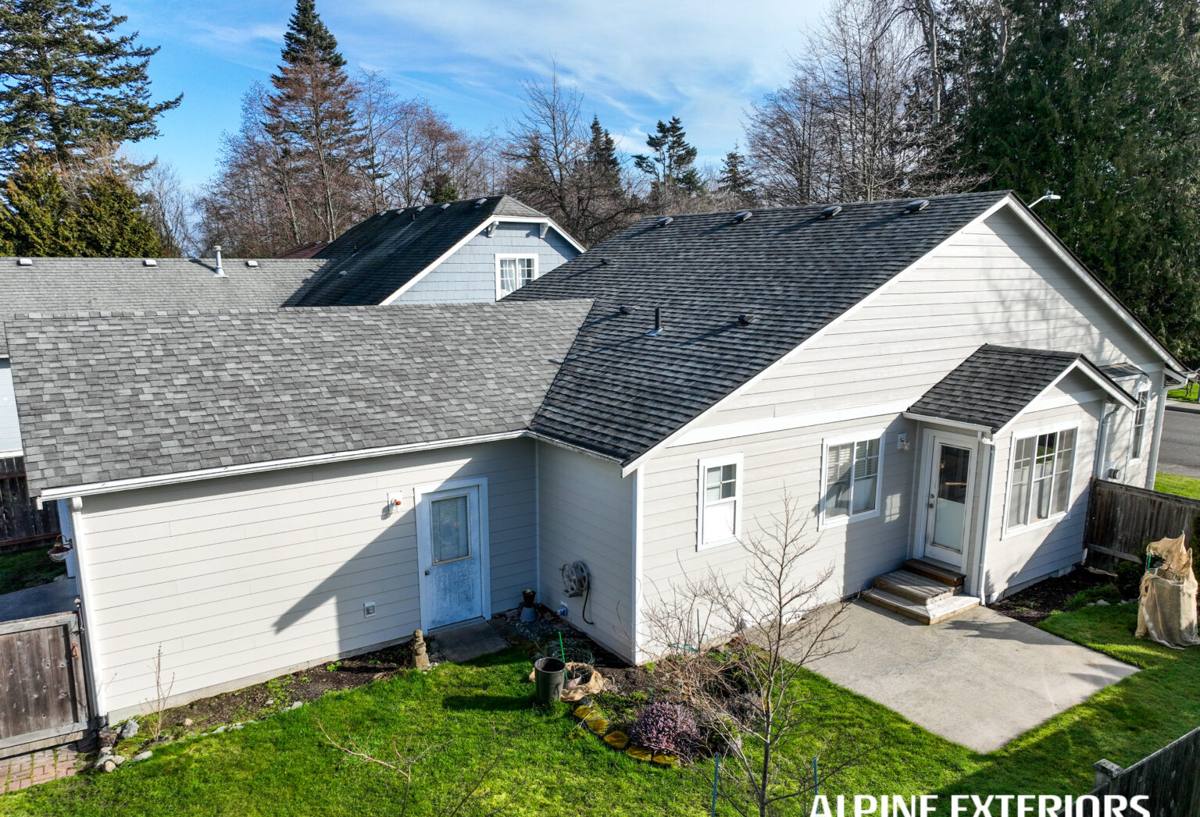
What the Local Climate Does to a House
Whatcom County's marine climate means Yew Street homes are rarely dealing with extreme heat or hard freezes. The damage here is slower and less dramatic — which is exactly why it catches homeowners off guard. A few things stand out:
Salt Air and Moisture-Laden Wind
Proximity to the water means the air carries more moisture and mineral content than you'd find further inland. Over time, that air accelerates corrosion on unprotected metal fasteners, fading on lower-grade paint finishes, and slow saturation of any siding material that isn't fully sealed on all six sides.
Driving Rain
Rain in this region doesn't just fall — wind pushes it sideways into wall assemblies, especially on gable ends and any wall facing open exposure. Siding that isn't installed with correct flashing, drainage gaps, and butt-joint treatment will eventually let water track behind the cladding, where it does damage nobody sees until the wall is opened up.
A Long Moss and Mildew Season
Shade from mature trees, combined with months of damp conditions, means moss, algae, and mildew have a long runway to establish themselves on north-facing walls, under eaves, and anywhere airflow is limited. Some siding materials resist this better than others — and some finishes make it far easier to clean off without stripping the color underneath.
Why We Only Install James Hardie Fiber Cement
Homeowners in this area are usually offered a choice between vinyl, engineered wood (LP SmartSide), fiber cement from a few different manufacturers, or in some cases primed wood species like spruce or cedar. Each of those products has legitimate uses somewhere. We don't think any of them are the right call for the climate Yew Street sits in, and here's the honest reasoning:
- Vinyl expands and contracts with temperature swings, can crack in cold snaps, and fades under UV exposure over the years. It also can't be painted a different color down the road without specialty coatings.
- LP SmartSide and other engineered wood products use a wood-strand core. If the factory coating is ever compromised — a nail hole, a cut edge left unsealed, a scratch from a ladder — moisture can wick into that core and swell it. In a climate with this much sustained dampness, that's a real long-term risk, not a hypothetical one.
- Primed spruce or cedar is a real wood product, which means it's genuinely vulnerable to rot, insect activity, and moisture absorption unless it's maintained on a strict repainting schedule. That's a heavier ongoing commitment than most homeowners want to sign up for.
- Other fiber cement brands (Cemplank, Allura) are chemically similar to Hardie in that they're cement-based composites, but we've standardized on Hardie specifically for its factory-applied ColorPlus finish, its HZ5 product engineering for wet climates, and the depth of its installer network and warranty support in this region.
Fiber cement itself — the category James Hardie pioneered — is the material we trust for this climate for a simple reason: it's non-combustible, it doesn't have an organic core that rots, and it holds paint and factory finish far longer than wood-based alternatives because the material itself doesn't move much with humidity swings. That stability matters more here than in a drier climate, because the humidity swings never really stop.
What James Hardie Brings to a Yew Street Home Specifically
| Concern | How Hardie Addresses It |
|---|---|
| Moisture from driving rain | Fiber cement doesn't swell or wick moisture like wood-based products; correct installation with rainscreen gapping and flashing keeps water moving out, not in |
| Salt-laden air and fading | ColorPlus factory finish is baked on and warrantied against fading and chipping far longer than field-applied paint typically holds up |
| Moss and mildew growth | Hard, non-porous cement surface is easier to clean without damaging the finish, unlike raw wood or some engineered products |
| Wildfire and ember exposure | Non-combustible material — a meaningful consideration as regional wildfire smoke seasons have become more common even in wetter counties |
| Long-term ownership | Backed by a strong transferable limited warranty, which matters if the home changes hands |
Why a Local Crew Matters More Than It Sounds
Siding installation is not a generic skill that transfers identically from region to region. A crew that mostly works dry-climate jobs can make correct-looking cuts and still get water management wrong for a house that sits in Whatcom County's rain and wind pattern. A few things we pay close attention to on every Sudden Valley-area project:
- Correct rainscreen or drainage gap behind the siding, so any moisture that does get past the cladding has somewhere to go besides the sheathing
- Flashing details at every window, door, and roof-to-wall transition — the places where the vast majority of real-world leaks actually start
- Fastener spacing and type matched to Hardie's published installation instructions, not generic fastener schedules
- Caulking and joint treatment chosen for a climate that stays damp for months at a time, not a few weeks
- Site-specific exposure assessment — a wall facing open wind and rain gets treated differently than a sheltered wall under tree cover
We also know what "normal" looks like for homes in this specific area — what a typical roofline, siding profile, and trim package looks like on a Sudden Valley home, and where the older housing stock tends to have shortcuts from a prior remodel that are worth catching before new siding goes over them.
Beyond Siding: Roofing, Windows, and Decks
Most exterior projects in this area don't stay confined to one system, because the same climate stresses that wear out siding are working on the roof, windows, and any exposed deck at the same time. We handle all four, which lets us look at a house as one connected system rather than four separate contracts.
Roofing
A roof in poor condition undermines even a perfect siding job, since water that gets past a failing roofline can travel down behind wall assemblies. When we're on a property for siding, we'll flag roofing issues we see rather than ignore them because they're outside the scope of the quote.
Windows
Window flashing and siding termination points are one of the most common failure spots on homes in wet climates. Replacing siding is a natural point to also address windows that are past their service life, since the flashing work can be done correctly in one pass instead of two.
Decks
Decks in this climate face constant damp-dry cycling, standing moisture, and the same moss growth pressure as north-facing walls. Ledger board attachment and proper flashing where a deck meets the house are frequent problem areas we look at closely, since a poorly flashed ledger board is a direct path for water into the wall behind it.
What a Project Timeline Actually Looks Like
Homeowners generally want to know how disruptive a siding project will be. Here's the honest shape of it:
- Assessment and estimate: we walk the exterior, look at existing siding condition, trim, flashing, and any moisture damage, then put together a written scope and estimate.
- Prep and removal: old siding comes off, sheathing is inspected for hidden rot or moisture damage before anything new goes on — this is the step that catches problems a quick visual estimate can't.
- Weather barrier and drainage plane: a correctly lapped weather-resistive barrier and drainage gap go in before a single piece of Hardie siding is installed.
- Installation: Hardie panels, planks, or shingles go up per manufacturer specification, with attention to fastener pattern, joint treatment, and flashing at every penetration.
- Trim, caulking, and touch-up: factory-finished ColorPlus product needs minimal field painting, which is part of why it holds its finish so much longer than field-painted alternatives.
- Final walkthrough: we go over the finished work with the homeowner before calling the job complete.
A Homeowner's Checklist Before Committing to a Siding Contractor
- Ask specifically what siding product they install and why — a contractor who installs everything usually isn't specializing in the installation details any one product requires
- Confirm they're a licensed, insured contractor in Washington State
- Ask how they handle flashing at windows, doors, and roof transitions — this is where most real leaks start
- Ask whether they inspect sheathing for existing moisture damage before installing new siding, or just cover what's there
- Get the warranty terms in writing — both the manufacturer's product warranty and the contractor's labor warranty
- Ask for a written, itemized estimate rather than a rough verbal number
Signs Your Yew Street Home May Need Siding Attention
A few warning signs are common enough in this area that they're worth checking for directly, especially on walls that face prevailing wind and rain:
- Soft or spongy spots when you press on siding, especially near the bottom courses close to grade
- Paint that's peeling, bubbling, or chalking well before you'd expect a repaint to be due
- Persistent moss or algae staining that comes back quickly after cleaning
- Visible gaps, cracking, or warping at panel joints and corners
- Musty smells or discoloration on interior walls that back up to exterior siding
None of these automatically mean a full replacement is needed — sometimes it's a localized repair or a flashing fix. That's exactly what an honest assessment is for.
Let's Take a Look at Your Home
If you're on Yew Street or elsewhere in Sudden Valley and want a straight answer about what your siding, roof, windows, or deck actually need — not a sales pitch — we're happy to come take a look. Estimates are free, there's no pressure, and you'll get a clear, written scope of what we'd recommend and why. Reach out below to get started.