 Sudden Valley Siding
 Acme's Exterior Challenge: Wet, Shaded, and Salt-Touched
Acme sits in the rolling, tree-covered country east of Lake Whatcom, part of the greater Sudden Valley community in Whatcom County. It's a beautiful place to own a home, but the same features that make it beautiful — heavy tree canopy, close proximity to water, and a marine-influenced climate — are hard on exterior building materials. Homes here deal with a long, wet shoulder season, dense shade that keeps siding damp for hours after a storm passes, and a steady drift of salt-laced air moving inland off the Puget Sound weather system. None of that is dramatic on any single day. It's the cumulative effect, year after year, that separates a siding job that lasts two decades from one that starts failing in five.
We've worked on homes throughout this stretch of Whatcom County long enough to know that "siding" isn't one job — it's a system that has to handle moisture intrusion, UV cycling, wind-driven rain, and the slow biological creep of moss and algae, all at once. That's the lens we bring to every estimate in Acme.
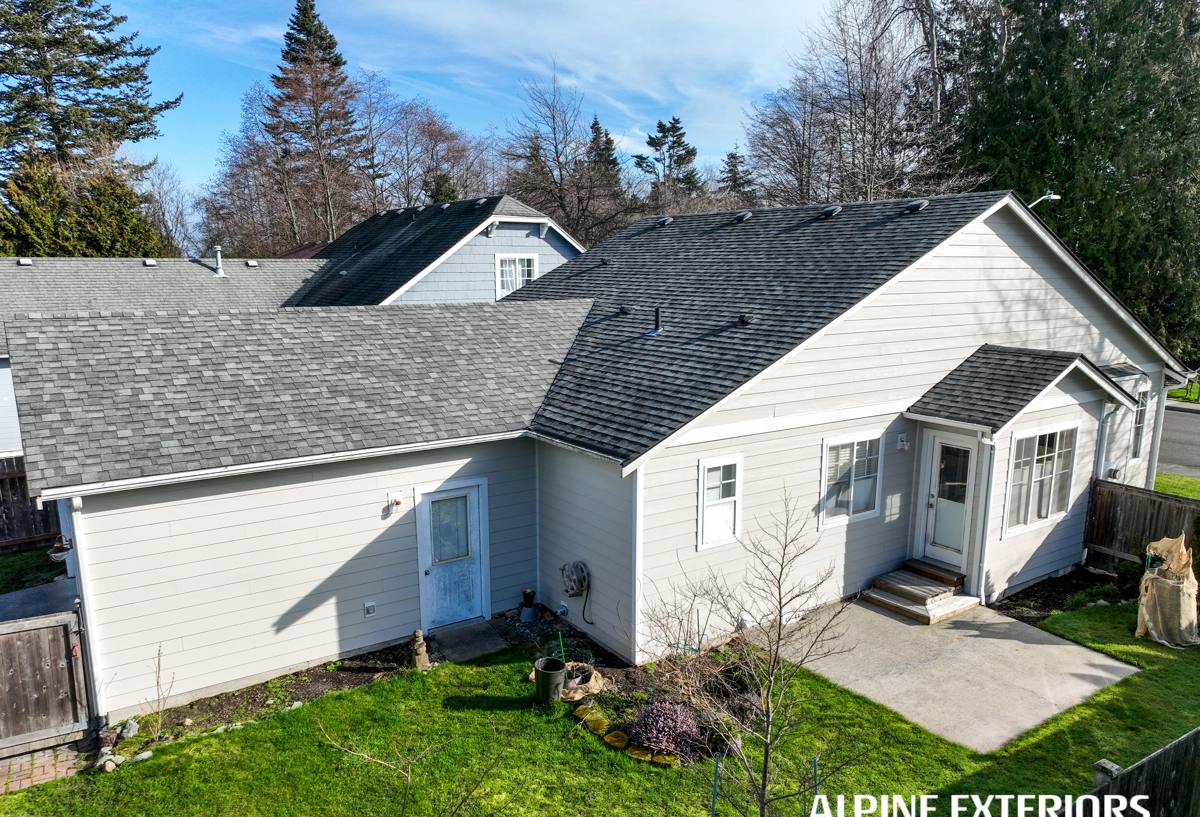
What Driving Rain and Moss Actually Do to a House
Driving rain and wind-driven moisture
Whatcom County storms rarely come straight down. Wind pushes rain sideways into wall assemblies, and on the exposed sides of a home — especially west- and southwest-facing walls — that means water finds every seam, lap joint, and fastener hole that isn't properly flashed or caulked. Over time, materials that absorb water (rather than shed it) swell, warp, or start to rot from the inside out, often before any damage is visible from the ground.
The long moss season
Because so much of the Acme area sits under mature tree cover, siding and roofing surfaces often stay shaded and damp far longer after a rain event than a home out in the open. That extended damp period is exactly what moss, algae, and lichen need to establish. Once organic growth takes hold on a wall or roof surface, it holds moisture against the material continuously, accelerates decay in wood-based products, and is genuinely difficult to remove without damaging paint or coatings.
Salt air's slow corrosion
Homes closer to the water — including much of the Sudden Valley and greater Lake Whatcom corridor — see airborne salt that accelerates corrosion of fasteners, flashing, and any metal trim components. It also degrades lower-quality paint finishes faster than inland homes experience, which is part of why factory-applied, baked-on finishes matter so much more here than they would somewhere dry and landlocked.
Why We Install Only James Hardie Fiber Cement
We made a deliberate decision as a company to install James Hardie fiber cement siding exclusively — not vinyl, not LP SmartSide, not Cemplank, not Allura, not primed spruce or cedar. That's not a marketing angle; it's a standard we hold because of what we've seen play out on homes in exactly this climate.
Fiber cement is fundamentally different from wood-based siding products: it's made from cement, sand, and cellulose fibers, which means it doesn't feed moss and algae the way wood fiber does, doesn't swell and rot when it takes on moisture at a cut edge, and doesn't require the same repainting cycle every few years. It's also non-combustible, which matters increasingly to insurers and homeowners alike.
Where wood-based and vinyl products fall short here
Engineered wood siding (like LP SmartSide) uses treated wood strand material that performs reasonably in dry climates, but wood fiber is still wood fiber — it can absorb moisture at unsealed edges and cut ends, and in a climate with Acme's rain totals and shade cover, that's a real long-term maintenance burden. Cedar and primed spruce carry the same core issue, plus the ongoing cost of refinishing. Vinyl siding is low-maintenance in a different sense, but it expands and contracts significantly with temperature swings, can crack in cold snaps, and offers essentially no fire resistance — and its appearance and color range read differently than a factory-finished fiber cement product up close.
We're not here to tell anyone those products are junk — plenty of homes across the country are sided in them without issue. We're saying that for our climate, our standards, and the warranty we want to be able to stand behind, James Hardie is the product we trust enough to put our name on.
The James Hardie Product System
James Hardie's HZ5 product line is engineered specifically for climates like ours — cold, wet, and humidity-heavy for much of the year. The ColorPlus factory finish is baked on in a controlled environment, which gives it more consistent coverage and better fade and chip resistance than field-applied paint, and it comes with its own finish warranty separate from the substrate warranty.
| Feature | What It Means for an Acme Home |
|---|---|
| Fiber cement composition | Doesn't feed moss/algae growth the way wood fiber does; holds up to repeated wet-dry cycling |
| HZ5 climate engineering | Formulated for moisture and freeze-thaw exposure typical of Whatcom County winters |
| ColorPlus factory finish | Consistent, baked-on color that resists fading from UV and doesn't require repainting on the same cycle as wood |
| Non-combustible material | Adds a layer of fire resistance that vinyl and wood products can't offer |
| Transferable warranty | Protects resale value if the home changes hands during the coverage period |
More Than Siding: The Whole Exterior Envelope
Siding doesn't work in isolation — it's one piece of an envelope that includes the roof, windows, and any attached structures like decks. We handle all four because they're interdependent: a roof leak can show up as a stained wall, a failed window flashing can rot the siding around it, and a deck ledger board tied poorly into the wall assembly can become the entry point for water that damages siding well beyond the deck itself.
Roofing
In a moss-prone area like Acme, roof condition and siding condition are connected. Moss and debris buildup on a roof holds moisture against the structure and can direct runoff onto wall sections in ways the original design didn't intend. We look at roof drainage and moss exposure as part of any siding estimate.
Windows
Window flashing and integration with the siding plane is one of the most common failure points we find on older homes. Replacement windows installed without proper flashing detail into new fiber cement siding are a leading cause of hidden moisture damage.
Decks
Decks attached to the home need proper ledger flashing where they meet the wall — an area that, if done wrong, channels water directly behind the siding rather than away from it.
What a Local Crew Actually Changes
A crew that works this specific stretch of Whatcom County regularly develops a feel for which walls take the worst weather exposure on a given lot, how much shade cover a property has and what that means for drying time, and how local permitting and inspection processes run. That's different from a crew passing through the region once. It shows up in small decisions — where extra flashing detail gets added, how ventilation gaps are handled behind the siding, how joints are sequenced to shed water rather than trap it — that don't show up on a spec sheet but matter enormously over a 20- or 30-year timeline.
Cost Factors for an Acme Siding Project
Every home is different, but the factors that most often move a project's scope and cost are consistent across the area:
| Factor | Why It Matters |
|---|---|
| Existing siding removal/disposal | Tear-off complexity varies with layers and substrate condition underneath |
| Moisture damage found during removal | Rotted sheathing or framing found once old siding comes off adds repair scope |
| Home size and wall complexity | More corners, dormers, and trim detail add labor time |
| Siding profile and color | Lap width, shingle-style panels, and custom ColorPlus selections vary in material cost |
| Trim and accessory work | Fascia, soffit, and trim board replacement is often bundled with siding for a consistent finish |
| Site access and tree cover | Heavy landscaping or limited access can add setup and protection time |
Signs an Acme Home May Need Siding Attention Soon
- Visible moss or algae streaking on siding, especially on shaded or north-facing walls
- Soft spots, bubbling, or a chalky texture when you run a hand across painted wood siding
- Cracking or warping along seams and butt joints
- Paint that's peeling or failing faster than the typical repaint cycle
- Staining below window sills or around deck ledger connections
- Visible daylight or drafts around window and door trim
- A roof with heavy moss buildup that hasn't been addressed in several years
What to Expect From an Estimate
We walk the exterior, check for hidden moisture issues around windows, deck attachments, and roof-wall intersections, and talk through what we're seeing in plain terms — no pressure, no inflated urgency. If James Hardie fiber cement is the right fit for the project (it almost always is, for the reasons above), we'll walk through product lines, ColorPlus color options, and a realistic scope and cost range based on what the home actually needs.
If you're in Acme or anywhere else in the Sudden Valley area and want an honest look at your home's exterior, we're happy to come take a look. The estimate is free, and there's no obligation attached to it — just a straight assessment from a crew that knows this climate.