 Sudden Valley Siding
 Siding in Deming: Built for a Tough Corner of Whatcom County
Deming sits along the Nooksack River corridor, close enough to the water and the mountains that homes here take a beating most siding products were never engineered to handle. Between the salt-tinged air drifting in from the Sound, the driving rain that comes sideways off the foothills, and a moss season that can stretch nearly eight months out of the year, exterior cladding in this part of Whatcom County has to do more than look good on installation day. It has to hold up, year after year, without becoming a maintenance project you're managing every spring and fall.
Sudden Valley Siding Company works throughout the Deming area, and we've built our entire business around one material: James Hardie fiber cement siding. We don't install vinyl, LP SmartSide, Cemplank, Allura, primed spruce, or cedar. That's not a marketing angle — it's a decision we made after years of seeing which products actually survive a Pacific Northwest exterior and which ones need constant attention or fail early. Below, we'll walk through what makes Deming's climate hard on siding, how our process works, and why Hardie is the only product we're willing to put our name behind.
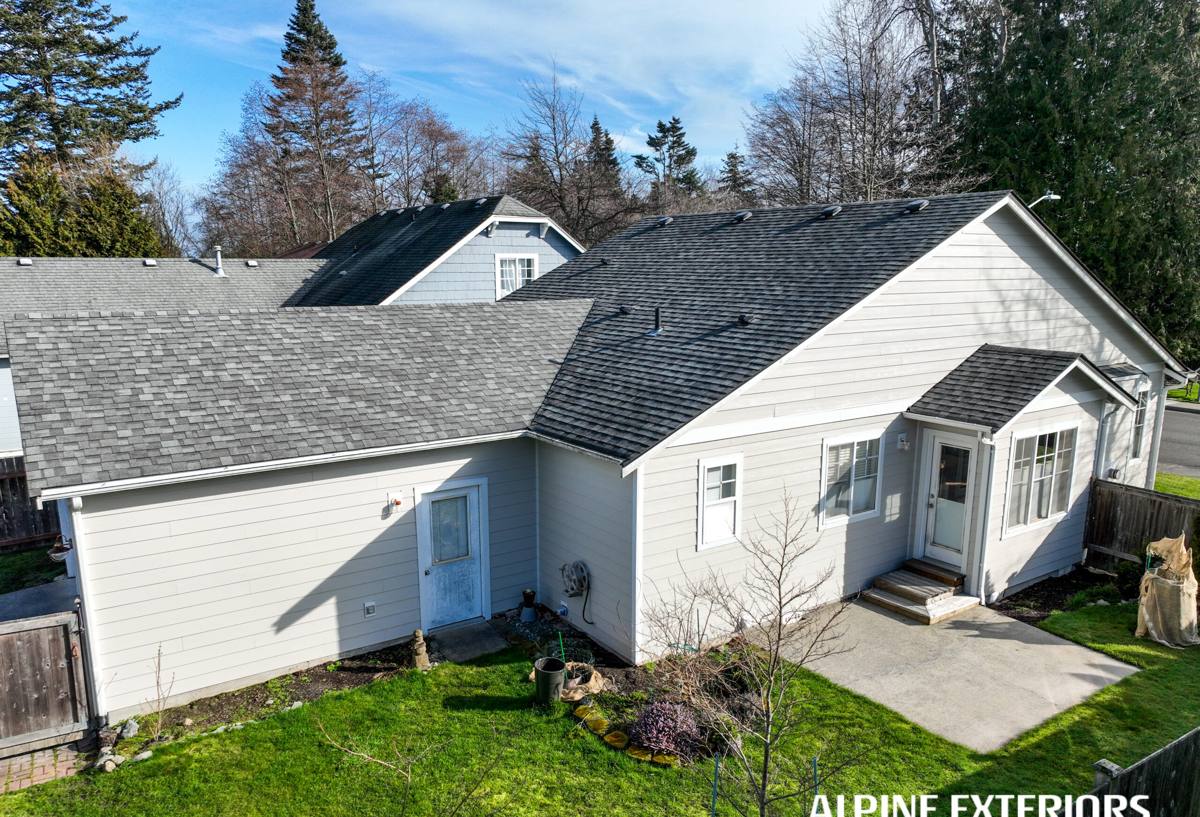
What Deming's Climate Actually Does to a House
Moisture That Never Really Leaves
Whatcom County doesn't get the kind of dramatic storms that make headlines, but it gets something arguably harder on a building: sustained, low-grade moisture exposure for most of the year. Rain that blows in at an angle finds its way into lap joints, corner trim, and any siding seam that wasn't sealed or flashed correctly. Add in morning fog and dew that settles on exterior walls even during dry stretches, and you've got a wall assembly that's rarely fully dry.
Moss, Algae, and Organic Growth
Shaded lots near tree lines and north-facing walls in Deming are especially prone to moss and algae growth. This isn't just cosmetic — organic growth holds moisture against the siding surface, which accelerates rot in wood-based products and can stain or degrade coatings that weren't designed to resist biological growth in the first place.
Salt Air and Coastal Influence
While Deming is inland compared to Bellingham's waterfront, the region still sees salt-laden air move through the lowlands, especially during winter storm patterns. Salt exposure accelerates corrosion of fasteners and can degrade certain coatings and finishes faster than manufacturers' published life expectancy would suggest.
Temperature Swings and Freeze-Thaw
Deming sees more temperature variation than the immediate coast, with colder overnight lows in the foothills. Repeated freeze-thaw cycles put stress on any siding material that absorbs water, because that trapped moisture expands when it freezes — a slow, cumulative process that shows up as cracking, warping, or delamination over several seasons.
Why We Only Install James Hardie
James Hardie fiber cement is engineered specifically to resist the conditions that define a Pacific Northwest exterior. It's a cement-based composite, not wood or wood byproduct, which means it doesn't feed rot fungus and doesn't swell or delaminate the way engineered wood products can when they take on sustained moisture. Hardie's HZ5 product line is formulated for exactly the freeze-thaw and moisture cycling that Whatcom County homes experience.
Just as important is the factory-applied ColorPlus finish. Instead of a job-site paint job that starts breaking down within a few years in this climate, ColorPlus is baked on in a controlled factory environment, resists fading and moss-friendly surface breakdown far longer than field-applied paint, and comes with its own finish warranty separate from the product warranty. For a house in a moss-heavy, low-sun pocket like parts of Deming, that finish durability matters more than it does in a drier climate.
Fiber cement is also non-combustible, which is increasingly relevant as wildfire risk and insurance underwriting standards shift across Washington. It won't ignite from embers or radiant heat the way wood siding can, and that's a real, practical difference — not a marketing point.
Why We Say No to the Alternatives
Vinyl Siding
Vinyl is inexpensive and low-maintenance in mild climates, and we understand the appeal of the upfront cost. But vinyl expands and contracts significantly with temperature swings, which over years can loosen fastening and create gaps at seams — exactly where wind-driven rain wants to get in. It also doesn't hold up well to impact in cold weather, when it becomes more brittle. In a climate with real freeze-thaw cycling, we don't think it's the right long-term investment for most homeowners.
LP SmartSide, Cemplank, and Allura
LP SmartSide is an engineered wood product — better than raw wood in many respects, but still wood-based, meaning it's more vulnerable to moisture intrusion at cut edges and joints than true fiber cement, especially over a long Whatcom County wet season. Cemplank and Allura are also fiber cement, and reasonable products, but we've standardized on Hardie specifically because of its factory finish system, its regional-specific HZ engineering, and the strength of its transferable warranty — advantages we haven't seen matched by other fiber cement brands.
Primed Spruce and Cedar
Cedar has real aesthetic appeal, and we won't pretend otherwise. But solid wood siding requires an ongoing maintenance commitment — refinishing, caulking, moisture monitoring — that most homeowners underestimate when they choose it. In a climate this wet, with moss pressure this consistent, that maintenance burden compounds quickly. Primed spruce carries similar risks with even less inherent rot resistance than cedar.
Comparing Siding Options for a Deming Home
| Material | Moisture Resistance | Maintenance | Fire Rating | Typical Lifespan |
|---|---|---|---|---|
| James Hardie Fiber Cement | Excellent | Low | Non-combustible | 30-50 years |
| Vinyl | Fair (seam-dependent) | Low | Combustible, melts under heat | 20-30 years |
| LP SmartSide / Engineered Wood | Good if sealed properly | Moderate | Combustible | 20-30 years |
| Cedar / Primed Spruce | Fair, moisture-sensitive | High | Combustible | 15-25 years with upkeep |
These are general industry ranges, not guarantees — actual performance always depends on installation quality, site conditions, and maintenance follow-through. But the pattern holds across the Pacific Northwest: materials that resist moisture and don't require a repainting cycle consistently outperform the alternatives in wet, shaded, coastal-influenced climates like Deming's.
How Our Siding Process Works
Inspection and Assessment
We start with a walk-around of the home, checking existing siding condition, trim and flashing details, and any signs of moisture intrusion at windows, corners, and the base of walls. In a wooded or shaded Deming lot, we pay particular attention to north-facing walls and any areas with visible moss or algae staining.
Moisture and Substrate Check
Before any new siding goes on, we check the sheathing and framing underneath for hidden rot or water damage — a step that's easy to skip but critical in a climate where moisture problems often start behind the old siding, not on the surface.
Water-Resistive Barrier and Flashing
Correct installation means a properly lapped weather-resistive barrier, correctly flashed windows and doors, and rainscreen or drainage detailing where appropriate — details that matter more here than in drier climates, because Deming's homes get more cumulative wet-weather exposure per year than most of the country.
Hardie Installation to Spec
James Hardie siding has manufacturer installation requirements around fastening, clearances, and joint treatment that directly affect both performance and warranty coverage. We install to those specifications, not to a shortcut version of them — because a Hardie warranty is only as good as the installation behind it.
Final Walkthrough
We finish with a walkthrough covering trim details, caulking points, and any transition areas — the places where a rushed job typically shows problems first.
Beyond Siding: Roofing, Windows, and Decks
Siding doesn't work in isolation — it's one part of a home's overall exterior envelope. We also handle roofing, window replacement, and deck construction, because a siding job that ignores a failing roof edge or a leaking window flashing is only solving part of the problem. A coordinated approach to a home's exterior, especially one facing Deming's rain and moss exposure, tends to hold up better than treating each component as a separate project.
What to Look for When Hiring a Siding Contractor Here
- Manufacturer training or certification specific to the fiber cement product being installed
- A clear explanation of flashing and water-resistive barrier details, not just "we'll side your house"
- Willingness to inspect and address substrate condition before covering it back up
- Local experience with Whatcom County's wet, moss-prone conditions specifically
- Transparent written estimates that separate material, labor, and any repair contingencies
- Proper licensing and insurance, verifiable through the state contractor registry
Why a Local Crew Matters in Deming
A lot of siding problems in this region trace back to installation details that work fine in a dry climate but fail here — insufficient flashing overlap, wrong fastener spacing, siding installed too close to grade or hardscape. A crew that works primarily in Whatcom County sees these failure patterns repeatedly and builds installation habits around avoiding them. That regional knowledge is hard to replace with a crew that mostly works elsewhere and treats a Deming job as one more stop.
We're also positioned to respond quickly if something needs attention after installation — a caulking touch-up, a trim question, a warranty item — without the homeowner waiting on a crew based hours away.
Get a Free, No-Pressure Estimate
If your Deming home's siding is showing its age, or you're planning ahead for a replacement before moss and moisture damage become bigger problems, we're happy to take a look and walk you through your options. There's no obligation and no pressure — just a straightforward assessment and an honest recommendation, using the form below.