 Sudden Valley Siding
 Why South Hill Windows Wear Differently Than Windows Inland
South Hill sits close enough to the water and the weather patterns that roll through Whatcom County that its homes take a different kind of beating than a house twenty miles inland. It's not one dramatic storm that does the damage — it's the steady combination of salt-laden air, wind-driven rain that hits window walls at an angle instead of straight down, and a moss season that stretches for months every year. Old single-pane or early-generation vinyl windows in this area often show their age in the same predictable spots: black staining at the bottom corners, soft wood under the sill, and seals that fogged years before the glass itself gave out.
None of that means South Hill is a hard place to keep windows looking good — it just means the installation has to account for moisture management from day one, not as an afterthought. A window that's a perfectly good product on paper can still fail early here if it's installed without the right flashing sequence or the wrong caulk is used in the wrong place.
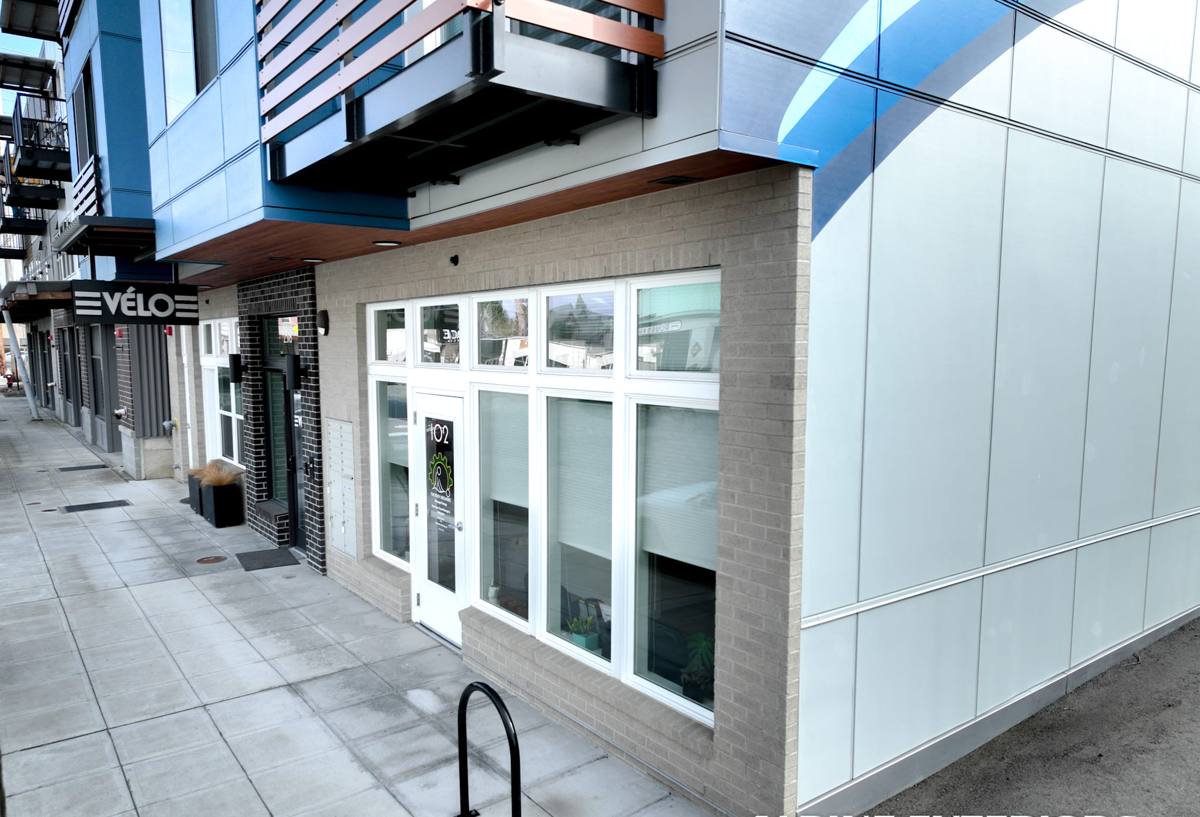
Signs a South Hill Home Needs Window Replacement, Not Just a Repair
Not every problem window needs full replacement. But there are signs that tell us the frame or seal has failed beyond what caulking or weatherstripping can fix:
- Fogging or a permanent haze between panes — the gas seal has failed and can't be restored
- Soft, spongy, or darkened wood at the sill or bottom corners of the frame
- Visible daylight or a draft you can feel with your hand along the frame edge
- Windows that are difficult to open, close, or lock — often a sign the frame has swelled or shifted
- Paint or finish that keeps failing in the same spot no matter how often it's touched up
- Persistent moss, algae, or black streaking below the window that keeps coming back after cleaning
If you're only seeing one of these on an otherwise sound window, a repair or resealing may be the right call. When we see two or more together, especially soft wood combined with fogging, that's usually a sign moisture has been getting behind the window for a while and replacement is the more honest recommendation.
What Driving Rain Does That Straight-Down Rain Doesn't
A lot of window failures in this part of Washington trace back to wind-driven rain rather than volume of rain. When wind pushes water sideways into a wall, it finds every gap in flashing, every under-caulked joint, and every spot where the original builder relied on sealant alone instead of a proper drainage path. That's why we pay as much attention to the flashing and water management around a window as we do to the window unit itself.
What a Correct Window Replacement Job Actually Involves
Swapping an old window for a new one sounds simple, and the window itself often is. The part that determines whether it lasts fifteen years or thirty is everything around it:
Removal Without Hidden Damage
We remove the old unit carefully and inspect the rough opening before anything new goes in. This is where we find out if there's been slow water intrusion — soft framing, stained sheathing, or insulation that's compressed and wet. Any of that gets addressed before a new window goes in, not covered up behind it.
Flashing and Weather Barrier Integration
The window has to be integrated into the home's existing weather-resistive barrier correctly — flashing tape or pan flashing at the sill, proper lapping at the sides and head so water sheds outward and down, never into the wall cavity. This step is invisible once the job is done, which is exactly why it's the step that gets skipped on rushed installs and why it's the step that matters most in a climate like this one.
Air Sealing and Insulation
The gap between the new window frame and the rough opening gets sealed with the right combination of low-expansion foam and backer material — enough to stop air movement and reduce drafts without bowing the frame out of square, which can cause the window to bind or operate poorly.
Interior and Exterior Finish Work
Trim, caulking, and paint or stain get finished to match the home, and every exterior joint gets sealed with a caulk rated for exterior exposure and UV.
Choosing Materials That Hold Up to Salt Air and Moss Season
There's no single "best" window material for every home — the right choice depends on your home's exposure, your maintenance preferences, and your budget. Here's how the common options actually perform in a coastal Whatcom County setting:
| Material | Performance in Salt Air / Wet Climate | Maintenance | Typical Trade-Off |
|---|---|---|---|
| Vinyl | Good — won't rust or rot, handles moisture well | Low — occasional cleaning | Frame color/finish options are more limited than wood or fiberglass |
| Fiberglass | Very good — dimensionally stable, resists warping in temperature swings | Low | Higher upfront cost than vinyl |
| Wood (clad exterior) | Good if the exterior cladding is intact — the wood interior offers a traditional look | Higher — any breach in the cladding exposes wood to rot | We recommend these selectively and only where exterior detailing can be maintained |
| Aluminum | Poor to fair — conducts cold, and older aluminum frames are prone to corrosion near salt air over time | Moderate | We generally don't recommend uncladded aluminum for this area |
For most South Hill homes, we steer clients toward vinyl or fiberglass because both shrug off the salt-air and moisture cycle without the ongoing upkeep that wood-frame windows demand near the coast. That's a maintenance and moisture-behavior recommendation, not a knock on wood windows generally — they're a fine product in the right setting, just a bigger commitment here.
Full-Frame Replacement vs. Insert Replacement
This is one of the most important decisions in the whole project, and it depends on the condition of your existing frame:
| Approach | What It Involves | Best For |
|---|---|---|
| Insert (pocket) replacement | New window fits inside the existing frame; original exterior trim stays in place | Frames that are still square, dry, and structurally sound |
| Full-frame replacement | Old frame is removed down to the rough opening; new flashing and frame installed from scratch | Frames with rot, water damage, or where the opening needs to be corrected |
Insert replacements are faster and less invasive, but they only make sense when the existing frame is genuinely sound — putting a new window into a frame that's already compromised just hides the problem behind new glass. We'll tell you honestly which situation you're in before we recommend either approach.
Our Window Replacement Process
- On-site assessment — we look at every window being considered, check for rot, drafts, and flashing issues, and take accurate measurements
- Straightforward recommendation — insert vs. full-frame, material options, and honest pricing with no pressure to upsell beyond what your home needs
- Scheduling around weather — we plan install windows to minimize the time your wall is open, which matters more here than in drier climates
- Removal and inspection — old windows come out, framing is inspected and repaired if needed
- Proper flashing and installation — the step that determines long-term performance
- Finish work and walkthrough — trim, caulking, cleanup, and a walkthrough so you know how to operate and maintain the new windows
Why a Crew That Already Works South Hill Makes a Difference
Window installation technique doesn't change much from town to town, but judgment does. A crew that regularly works homes in Sudden Valley and South Hill has already seen how the local exposure plays out — which elevations tend to take the worst of the wind-driven rain, how quickly moss reestablishes on north-facing trim, and which older housing stock in the area tends to have the same flashing shortcuts from their original builders. That experience shows up in small decisions on your job: where to add an extra course of flashing tape, which sills need a slightly more aggressive slope, and where a caulk joint needs to be backed up with real flashing instead of relied on alone.
It also means realistic scheduling. We work around Whatcom County's wetter stretches instead of pretending they don't exist, which protects your home's interior during the install rather than risking an open wall during a rainy week.
Keeping New Windows Performing for the Long Run
A correctly installed window still benefits from basic upkeep, especially in a climate that pushes moss and algae growth most of the year:
- Rinse frames and sills a couple of times a year to clear salt residue and organic buildup before it stains or holds moisture
- Check and refresh exterior caulk joints periodically — sealant is a wear item, not a permanent fix
- Keep gutters and downspouts clear so water isn't sheeting down across window heads
- Trim back vegetation that shades window areas and keeps them damp longer than they need to be
- Operate locks and hardware a few times a year, even on windows you don't open often, to keep mechanisms from seizing
None of this is labor-intensive, but it's the difference between windows that look and perform well at year fifteen and ones that start showing the same problems the old ones had.
Get a Straightforward Estimate
If you're noticing drafts, fogged glass, or soft wood around your windows, or you just want an honest read on whether repair or replacement makes more sense for your South Hill home, we're glad to take a look. The estimate is free, there's no pressure, and you'll get a clear explanation of what we find and why — use the form below to get started.