 Sudden Valley Siding
 Composite Decking Built for Silver Beach's Climate
Silver Beach sits close to the water, tucked into the trees along Lake Whatcom, and that setting is exactly why so many decks out here fail early. Homes in this pocket of Whatcom County deal with a longer wet season than folks a few miles inland, more shade from mature evergreens, and the kind of persistent moisture that turns untreated wood green by the second summer. Composite decking was built to handle that combination, but only when it's specified and installed correctly for the site. A deck that's right for a sunny, open lot in Bellingham isn't automatically right for a shaded, damp lot near the lake.
We install and repair composite decking throughout Sudden Valley and the surrounding lake communities, including Silver Beach. This page covers what actually matters for a deck in this specific area — not generic composite decking marketing, but the details that decide whether a deck here lasts fifteen years or needs board replacements in five.
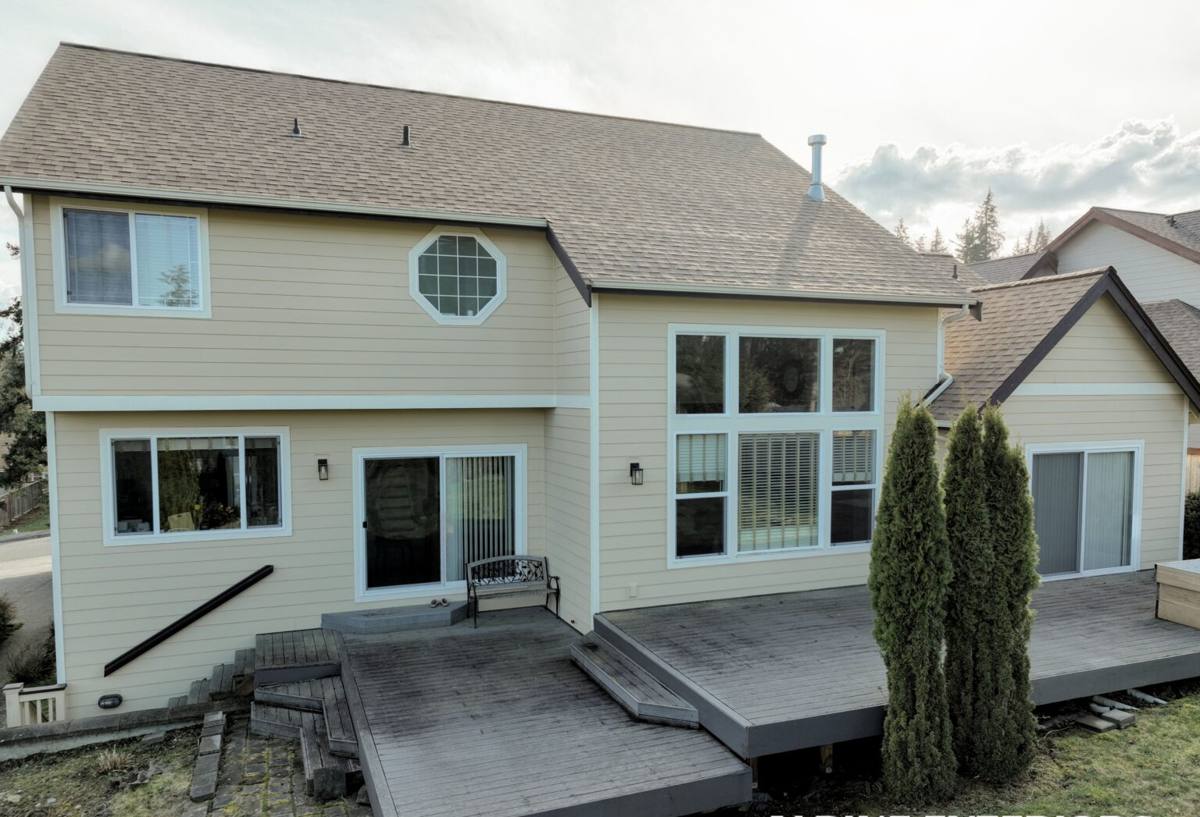
Why Silver Beach Decks Take More Abuse Than Most
Three things stack up against decking here: salt-tinged air moving off the water, driving rain that comes in sideways during winter storms, and a moss season that can run from October well into April. Individually, none of those is unusual for Western Washington. Together, on a lake-adjacent lot with tree cover, they create a deck surface that rarely gets a chance to fully dry out.
- Prolonged surface moisture: shaded decks and those close to the water lose their afternoon sun window, so boards that would dry out by evening on an open lot stay damp overnight — and moss loves that.
- Wind-driven rain: horizontal rain during Whatcom County storms pushes water into joints, fastener holes, and ledger connections that a straight-down rain would never reach.
- Organic debris load: needles, leaves, and pollen collect in board grooves and against fascia, holding moisture against the material and feeding moss and algae growth.
- Freeze-thaw cycling: even mild winters here bring enough freeze-thaw swings to stress trapped moisture in fasteners, framing connections, and any wood substructure that isn't properly protected.
None of this means composite decking is a bad fit for Silver Beach — it's actually one of the better answers to this exact problem. But it means the product choice, the fastening method, and the substructure underneath all need to be treated as a system, not picked separately.
Moss Isn't Cosmetic — It's a Maintenance and Safety Issue
A mossy deck isn't just an eyesore. Moss holds water against the board surface far longer than the board would hold it on its own, and on composite decking that moisture cycling can eventually work into fastener holes and cut edges if they weren't sealed during installation. Moss also gets slick fast, which matters more on a lakeside deck used for foot traffic down to the water. Choosing a composite with a textured, embossed surface — rather than a smooth cap — makes a real difference in how much moss gets a foothold and how the deck feels underfoot when it's wet.
What a Correct Composite Deck Build Looks Like Here
The composite boards themselves get most of the attention, but on a Silver Beach lot the parts you don't see decide whether the deck holds up. We build every composite deck around a few non-negotiables for this area:
Substructure and Ventilation
Composite boards don't rot, but the framing underneath can if it's not protected and ventilated. On shaded, damp lots we pay close attention to joist spacing, ground clearance, and airflow under the deck — a low-clearance deck tucked against a hillside or foundation wall needs more attention here than a deck with open air underneath. Where budget allows, composite or capped-composite joists remove the wood-rot risk entirely; where standard lumber framing is used, it gets properly protected with joist tape and correctly flashed at the ledger.
Fastening Method
Hidden fastener clip systems are worth the extra labor on a lake-adjacent deck. Face-screwing through the board creates a puncture point where water can sit and work its way into the composite core over time, and it leaves an exposed screw head that's one more thing to maintain. Hidden clips keep the surface clean and reduce the number of penetration points exposed to standing moisture.
Board Spacing and Drainage
Correct gapping between boards isn't just for expansion — it's drainage. Boards installed too tight trap water and debris in the seams, which is exactly where moss and algae get started. We set spacing to the manufacturer's spec, adjusted slightly for the season and moisture content at time of install, so the deck sheds water instead of holding it.
Picture-Framing and Cut-Edge Sealing
Any cut end of a composite board exposes the core material, and an unsealed cut edge is the single most common place we see early moisture damage on composite decks that were installed by crews in a hurry. Picture-framed edges (using solid-color trim boards to cap the visible ends) both look better and protect every exposed cut on the perimeter of the deck.
Composite vs. Other Decking Options for This Lot Type
Homeowners near the lake often ask us to compare composite against pressure-treated wood and against cedar, since both are common on older Silver Beach decks. Here's the honest trade-off breakdown for this specific climate:
| Material | Moss/Algae Resistance | Maintenance | Typical Lifespan Here |
|---|---|---|---|
| Composite (capped) | Good, especially with textured surface | Periodic wash-down, no staining or sealing | 20-30 years |
| Pressure-treated wood | Poor without regular sealing | Annual cleaning, re-sealing every 1-2 years | 10-15 years with upkeep |
| Cedar | Fair, needs regular treatment | Sealing and staining every 1-2 years | 15-20 years with upkeep |
Composite costs more upfront than pressure-treated lumber, and that's a real consideration on a rebuild. But on a shaded, moisture-heavy lot near the lake, the maintenance gap is the bigger story — a wood deck here needs real attention every year to keep moss and rot at bay, and skipping a season or two is where we see the most damage. Composite trades a higher install cost for a lot less ongoing labor on your part.
Our Process for Silver Beach Projects
Every deck project starts with a site visit, not a phone estimate. Because so much of what determines a good outcome here is specific to the lot — shade pattern, slope, proximity to the water, existing framing condition — we walk the site before quoting anything.
- On-site assessment: we check existing framing (for repairs or replacements), grade and drainage around the deck footprint, and sun/shade exposure through the day.
- Material selection: we walk through composite board options with moss and moisture resistance as a real factor in the recommendation, not just color and price.
- Written estimate: a clear scope covering framing work, fastening method, board selection, and edge treatment — no vague allowances.
- Build: proper flashing, ventilation, and hidden-fastener installation, with cut edges sealed as we go.
- Walkthrough: we go over basic seasonal care with you before we consider the job finished.
Simple Seasonal Care That Actually Extends the Deck's Life
- Sweep needles and leaves out of board grooves before they sit through a wet stretch
- Rinse the deck surface a few times a year, more often on shaded sections, to slow moss establishment
- Keep gutters and downspouts near the deck clear so runoff isn't dumping directly onto the surface
- Trim back overhanging branches where practical to let more light and air reach shaded boards
- Check fastener clips and edge trim yearly for any that have worked loose
Why Hire a Crew That Already Works Silver Beach
A lot of decking problems we get called to fix started with a good product installed by a crew unfamiliar with lake-adjacent, shaded-lot conditions. The board itself usually isn't the issue — it's spacing set for a dry climate, fastener choices that ignored the moisture load, or framing that wasn't protected because the crew was used to sunnier lots elsewhere in the county. Working Sudden Valley and Silver Beach regularly means we're not guessing at how a given lot behaves through a wet Whatcom County winter — we've built and maintained decks through it.
We're also not going to recommend a smooth, unembossed composite for a shaded lake lot just because it's the cheaper option on the shelf. If a product isn't the right fit for how wet and shaded a particular yard is, we'll say so and explain why, along with what the trade-offs actually are — maintenance load, moisture behavior, and how the warranty is structured for that product.
Repairs and Replacements on Existing Decks
Not every project here is a new build. We also handle repairs and full tear-offs on older wood decks that have reached the point of no return, and on composite decks that were installed without the moisture-management details above. Common repair calls we get in this area include soft or spongy board sections near the ground, moss buildup that's gone past a simple wash, loose or corroded fasteners, and framing damage discovered once the old boards come up. If you're not sure whether your deck needs a repair or a full replacement, that's exactly what the site visit is for — we'll give you a straight answer either way.
If you're planning a new deck, replacing an aging one, or just want an honest read on what's going on underneath the boards you already have in Silver Beach, we're happy to take a look. Reach out for a free, no-pressure estimate using the form below.