 Sudden Valley Siding
 Exteriors Built for Ferndale's Climate
Ferndale sits close enough to the water and open farmland of Whatcom County that homes here take a different kind of beating than houses further inland. Salt-tinged air off the Strait, wind-driven rain that comes in sideways during the fall and winter storm cycles, and a moss season that can stretch from October through May all put steady pressure on siding, trim, roofing, and anything wood-based on the exterior of a house. Sudden Valley Siding Company works throughout this part of the county, and Ferndale is one of the communities where we see this combination of stressors show up again and again on older homes.
None of this means a house here is doomed to constant repairs. It means the materials and the installation details matter more than they would in a drier, calmer climate. That's the lens we bring to every siding, roofing, window, and deck project we take on in the area.
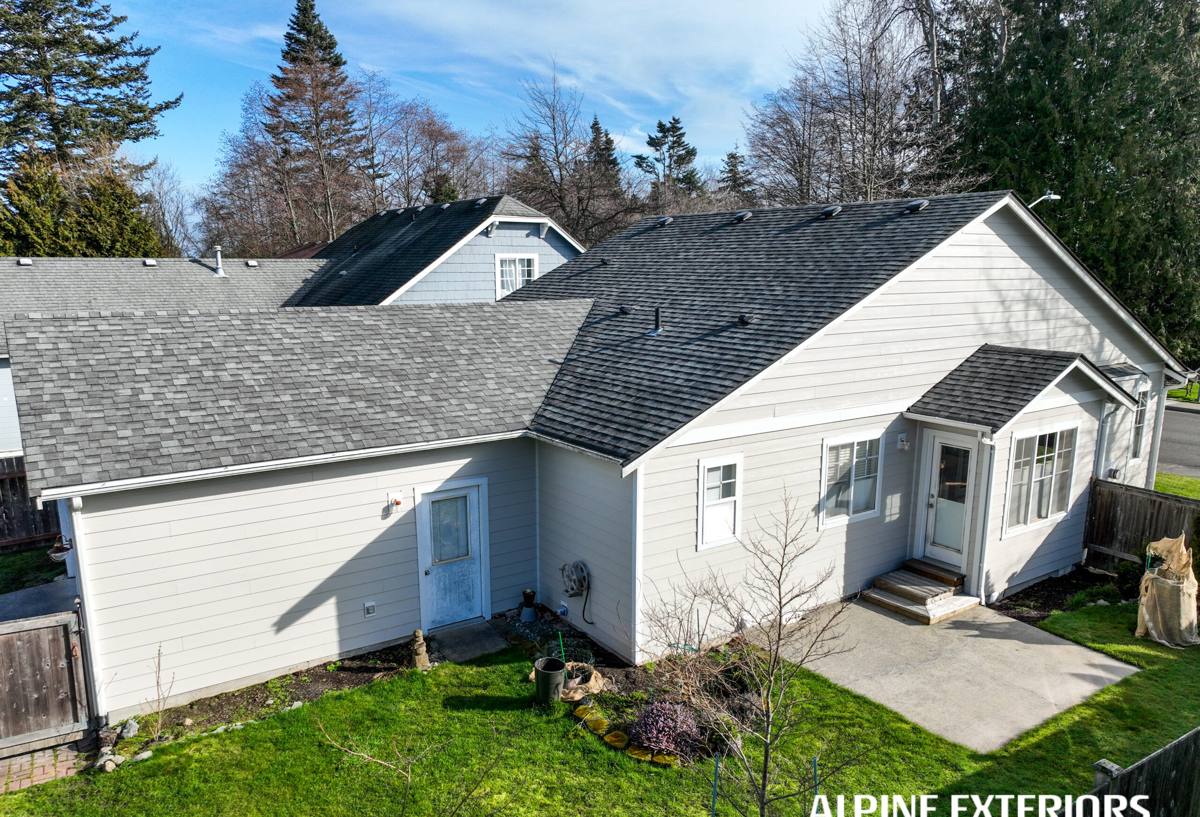
What Local Homes Are Up Against
Salt Air and Moisture
Proximity to Bellingham Bay and the Strait of Georgia means airborne salt is a real factor for homes on the western and northern edges of Whatcom County, Ferndale included. Salt-laden moisture accelerates corrosion on fasteners, flashing, and any metal components on a house's exterior, and it speeds up the breakdown of paint films and porous wood siding products. It's a slow, cumulative process — you don't notice it in year one, but by year eight or ten on an unprotected material, it shows.
Driving Rain
Whatcom County's weather pattern brings sustained, wind-driven rain, not just the occasional downpour. That matters because wind-driven rain doesn't just fall on a wall — it gets pushed into laps, seams, and butt joints that would stay dry in calmer conditions. Siding systems and installation details that work fine in a low-wind climate can fail here if they weren't designed with that lateral water pressure in mind.
Moss and Sustained Dampness
Long stretches of overcast, damp weather are exactly the conditions moss and algae need to establish themselves on north-facing walls, rooflines, and anywhere sunlight and airflow are limited. On porous or wood-based siding, moss holds moisture directly against the material, which shortens its service life. On a well-sealed, factory-finished fiber cement surface, moss can still grow on the surface but it doesn't have the same avenue to work moisture into the material underneath.
Why We Install Only James Hardie Fiber Cement
We get asked fairly often why we don't offer vinyl, LP SmartSide, or other fiber cement brands like Cemplank or Allura. It's a fair question, and the honest answer is that we made a standardization decision based on what holds up in this specific climate with the least maintenance burden on the homeowner.
Vinyl
Vinyl siding is affordable and low-maintenance in the sense that it doesn't need painting, but it's a thin, flexible material that can warp, crack, or fade under UV exposure over time, and its seams and panel joints give wind-driven rain more opportunities to find a way behind the cladding. In a climate with the rain patterns Whatcom County sees, that's a real trade-off, not a hypothetical one.
LP SmartSide and Other Engineered Wood
Engineered wood siding has improved a lot over the years, but it's still a wood-based product at its core, which means its long-term performance depends heavily on the caulking, flashing, and paint maintenance being kept up perfectly, year after year. In a coastal, high-moisture climate, any lapse in that maintenance schedule opens the door to swelling and rot faster than it would in a drier region.
Other Fiber Cement Brands
Cemplank and Allura are legitimate fiber cement products, and we don't have anything negative to say about the category. Our decision to standardize on James Hardie specifically comes down to their climate-engineered HZ5 product line (built for the Pacific Northwest's wet-and-mild weather profile), the factory-applied ColorPlus finish, and a warranty and support structure we've found to be consistently strong. Standardizing on one manufacturer also means our crews install it the same correct way on every job, instead of learning the quirks of several different product lines.
Why James Hardie Fits This Region
- Non-combustible fiber cement composition — doesn't feed a fire the way wood-based products can
- ColorPlus factory finish resists fading and holds up better against salt air and UV than field-applied paint
- HZ5 formulation is engineered specifically for wet, freeze-thaw-variable climates like Western Washington
- Dimensionally stable — doesn't swell, warp, or cup the way wood and engineered wood products can when they take on moisture
- Strong transferable warranty that adds real value if you sell the home down the road
Siding Installed the Way It's Supposed to Be Installed
Fiber cement siding is only as good as its installation. James Hardie's own specifications call for specific fastener patterns, clearances above rooflines and decks, proper flashing at every penetration and joint, and correct gapping to allow for the material's minor expansion and contraction. Skipping or rushing any of those details is how a good product ends up with a bad outcome — trapped moisture behind the siding, premature caulk failure, or water finding its way into the wall assembly.
In a climate with the driving rain Ferndale sees, those installation details aren't optional extras — they're the difference between siding that performs for decades and siding that causes problems in five years. That's why we train our crews to Hardie's installation standards and don't cut corners to save an afternoon.
Roofing, Windows, and Decks
Siding doesn't work in isolation — it's one part of a building envelope that also includes the roof, windows, and any attached structures like decks. We handle all four because they interact with each other more than most homeowners realize.
Roofing
A roof in poor condition sends water down onto siding and trim in ways that accelerate wear on materials that would otherwise be fine. Moss on a roof, in particular, holds moisture against shingles and can contribute to granule loss and shortened roof life, which is why moss management matters as much on the roof as it does on siding.
Windows
Window flashing and integration with the siding plane is one of the most common failure points we see on older homes. A window that isn't properly flashed and sealed into the surrounding siding gives wind-driven rain a direct path into the wall, regardless of how good the siding itself is.
Decks
Decks attached to a house need proper ledger board flashing and clearance from the siding above — the same driving-rain and moisture concerns that affect siding apply to the deck-to-house connection, often more so, since that joint sees concentrated water flow.
Cost Factors to Expect
| Factor | Why It Matters Locally |
|---|---|
| Home size and wall complexity | More corners, gables, and dormers mean more cuts, flashing details, and labor time |
| Removal of existing siding | Tear-off and disposal of old material, plus any sheathing repair found underneath |
| Moisture or rot damage found during tear-off | Common on homes with prior wood or vinyl siding that trapped moisture over the years |
| Trim and accessory selections | Corner boards, window trim, and fascia details affect both material and labor cost |
| Flashing and window integration work | Proper flashing at every penetration adds labor but is non-negotiable in this climate |
| ColorPlus color and profile choice | Some Hardie profiles and finishes carry different material costs |
What to Check Before Hiring a Contractor
- Ask specifically what siding brand and product line they install, and why
- Ask whether they're manufacturer-trained or certified on the specific product they're proposing
- Get the fastener, flashing, and clearance details in writing, not just a verbal assurance
- Ask how they handle rot or moisture damage discovered once old siding comes off
- Confirm licensing, insurance, and whether they pull the required permits
- Ask about their warranty structure — both on labor and on the manufacturer's material warranty
A Local Crew That Knows This Weather
Whatcom County's exterior contractors deal with a specific combination of salt air, sustained rain, and moss pressure that a crew from a drier region simply doesn't have daily experience with. We work in this climate year-round, which shapes how we sequence jobs around weather windows, how we detail flashing, and which products we're willing to put our name behind. Ferndale homeowners get the benefit of that local, climate-specific experience on every project, whether it's a full siding replacement or a roof, window, or deck project alongside it.
If you're weighing your options for siding, roofing, windows, or a deck project in Ferndale, we're happy to take a look and give you a straightforward, no-pressure estimate — just fill out the form below.