 Sudden Valley Siding
 Storm Damage Roof Repair for Happy Valley Homes
Happy Valley sits inside the broader Sudden Valley community, and like the rest of Whatcom County it takes a beating from the same weather pattern year after year: heavy Pacific storms rolling in off the water, driving rain that hits roofs sideways more often than straight down, and moist marine air that lingers on shaded roof planes for months at a time. That combination is hard on roofing in ways that don't always show up as a dramatic leak. Sometimes it's a slow drip in the garage after a windstorm. Sometimes it's a shingle in the yard the morning after a blow. Sometimes it's just moss creeping up from the north-facing eaves, holding moisture against the roof deck long after the sun comes back out.
We work Happy Valley and the surrounding Sudden Valley streets regularly, so we already know the roof pitches, tree cover, and exposure patterns common to this pocket of the county. That local familiarity matters when you're trying to figure out whether a storm did real damage or just cosmetic damage — and it matters even more when you're dealing with an insurance adjuster who isn't from here.
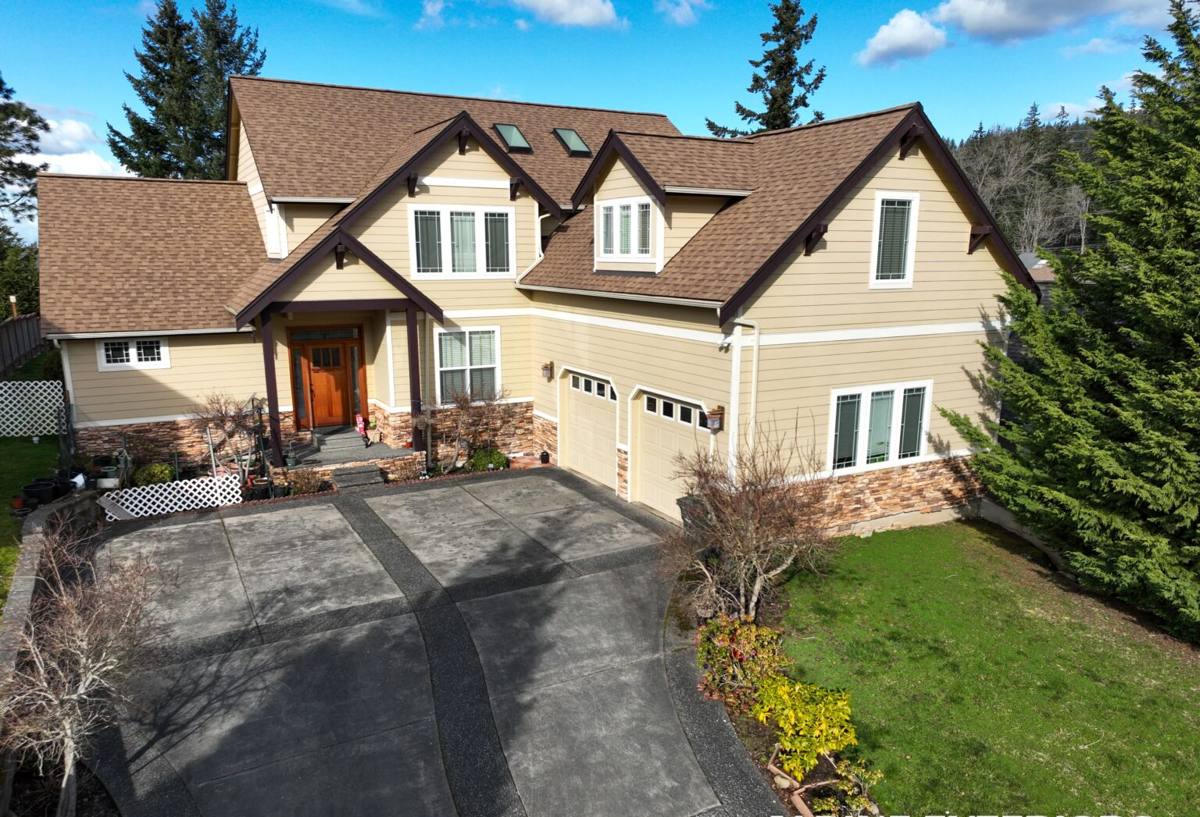
What Storms Actually Do to a Roof Here
Not all storm damage looks the same, and homeowners often miss the early signs because they're not dramatic. Here's what we typically find after wind and rain events in this area:
- Lifted or creased shingle tabs from wind gusts that don't fully tear a shingle off but break its seal, leaving it vulnerable to the next storm
- Granule loss on asphalt shingles from driving rain and wind-blown debris, which shows up as bald-looking patches and accelerates aging
- Flashing pulled loose around chimneys, vents, and roof-to-wall transitions — usually the first place a wind-driven rain event finds a way in
- Fastener back-out where repeated wind loading works nails or screws up and out of the deck over multiple storms, not just one
- Moss and debris damming in valleys and along shaded eaves, which traps rainwater against the roofing material during the wet season
- Impact damage from branches or debris, which can crack shingles or dent metal roofing without an obvious hole
The tricky part is that most of these can sit quietly for a season or two before they turn into a ceiling stain. A roof that "looks fine from the driveway" after a storm isn't the same as a roof that's actually sound.
Why Moss Season Complicates Storm Repairs
Western Washington's long moss season doesn't cause storm damage directly, but it makes storm damage worse and harder to spot. Moss holds water against shingles and roof decking well after a storm has passed, which means wind or impact damage that would dry out and cause no further harm in a drier climate can turn into rot or deck damage here. When we're called out for storm damage, checking for moss buildup in valleys, under ridge caps, and along shaded slopes is a standard part of the inspection — not an upsell.
Our Storm Damage Assessment Process
We don't start with a sales pitch — we start with an honest look at the roof.
- Ground-level and roof-level inspection. We check the full roof, not just the area you think was hit, because wind damage is often worse on the slope you can't see from the ground.
- Documentation. We photograph and note specific damage — lifted shingles, exposed nail heads, flashing separation, deck moisture where accessible — so you have a clear record.
- Honest scope discussion. We tell you plainly whether you're looking at a spot repair, a partial re-roof of the damaged slope, or something that doesn't need immediate action at all.
- Insurance support if needed. If the damage is significant enough to involve your homeowner's policy, we can walk the roof with your adjuster and point out what we found, in plain terms.
- Repair or replacement, done right. Matching shingle repairs where possible, proper flashing reinstallation, and re-securing anything that came loose — using fasteners and techniques sized for wind exposure, not just what's fastest.
Repair vs. Replacement: How We Make the Call
Storm damage doesn't automatically mean a new roof. It also doesn't automatically mean a quick patch is enough. The right call depends on a few honest factors:
| Factor | Leans toward repair | Leans toward replacement |
|---|---|---|
| Age of existing roof | Roof is under roughly 10-12 years old | Roof is near or past its expected service life |
| Extent of damage | Isolated to one slope or a small area | Spread across multiple slopes or repeated storm events |
| Shingle matching | Matching shingles are available or damage is minor | Discontinued product or heavy fading makes matching impossible |
| Deck condition | Decking is sound underneath | Soft spots or rot found during inspection |
| Moss/moisture history | Minimal moss, roof drains well | Chronic moss buildup with signs of trapped moisture |
We'll tell you where your roof falls on that table honestly. A repair that's done well can add years of service life at a fraction of replacement cost — but a roof with underlying deck damage or repeated storm hits needs to be treated as what it is.
What a Correct Storm Repair Actually Involves
A quick patch job and a correct repair can look similar from the ground and perform very differently over the next few winters. A repair we stand behind includes:
- Removing and replacing damaged shingles rather than just sealing over lifted tabs
- Inspecting and, where needed, replacing underlayment in the repaired area — not just the visible shingle layer
- Reinstalling flashing correctly at penetrations and transitions rather than caulking over a gap
- Checking the roof deck underneath damaged areas for soft spots or moisture before closing it back up
- Clearing moss and debris from valleys and eaves as part of the job so trapped moisture doesn't undo the repair
- Using fasteners and shingle sealing appropriate for wind exposure, not the minimum code allows
Post-Storm Checklist for Homeowners
After a significant wind or rain event, a few minutes of ground-level checking can catch problems early:
- Walk the yard and gutter line for shingle pieces or granules
- Check the attic (if accessible) for new water stains or damp insulation
- Look at gutters and downspouts for debris blockage that could back water up under the roof edge
- Note any new staining on ceilings, especially near chimneys, skylights, or roof valleys
- Call for an inspection before the next storm rolls through, not after a second one makes it worse
Why a Crew That Already Works Happy Valley Matters
Storm damage repair isn't a job you want to hand to whoever knocks on your door with a truck full of tarps the week after a big windstorm. A crew that already works this specific area brings a few real advantages:
- Familiarity with the roof styles, pitches, and tree exposure common to Happy Valley and Sudden Valley homes
- An understanding of how the local moss season and rain patterns interact with storm damage over time, not just at the moment of inspection
- Accountability — we're not a storm-chasing outfit that leaves the county once the insurance checks clear
- Faster response because we're already working in the area, not driving in from across the region
Whatcom County sees enough wind and rain events every year that "storm damage" isn't a one-time emergency for most homes — it's an ongoing maintenance reality. Working with a local crew means the same people who repair the damage today are still around if a follow-up question comes up next winter.
What to Watch For Before It Becomes a Bigger Problem
Some warning signs are easy to dismiss because they seem minor:
- A single shingle in the yard after a windy night
- A faint musty smell in an upstairs closet or attic space
- Moss thickening along a north-facing roof edge
- A small, intermittent drip that only shows up during heavy rain
None of these guarantee a major problem, but all of them are worth a look before the next storm system moves through. Catching a lifted shingle or a loose flashing seam early is a small repair. Catching it after two more storms have worked at it is often a much bigger one.
Get an Honest Look at Your Roof
If a recent storm has you wondering about your roof — or you just want a professional set of eyes on it before the next system rolls in — we're glad to take a look. We'll give you a straight answer about what we find, what it means, and what your options are, with no pressure either way. Reach out below for a free estimate.