 Sudden Valley Siding
 Roofing Built for What Alger Actually Deals With
A roof in Alger doesn't fail the same way a roof fails in a dry climate. Out here, the enemy isn't one big storm — it's the slow, steady grind of moisture that never fully lets up. Salt-tinged air off the Sound, driving rain that comes in sideways more often than straight down, and a moss season that can stretch from fall through spring all work on a roof year after year. A roof that's merely "installed correctly" on paper can still underperform if it wasn't built with this specific climate in mind. That's the gap we work to close on every Alger project.
When we talk about a new roof installation for an Alger home, we're not just talking about swapping old shingles for new ones. We're talking about the underlayment system, the ventilation, the flashing details, and the material choice all working together to shed water fast, resist moss colonization, and hold up to wind-driven rain without letting moisture sneak underneath.
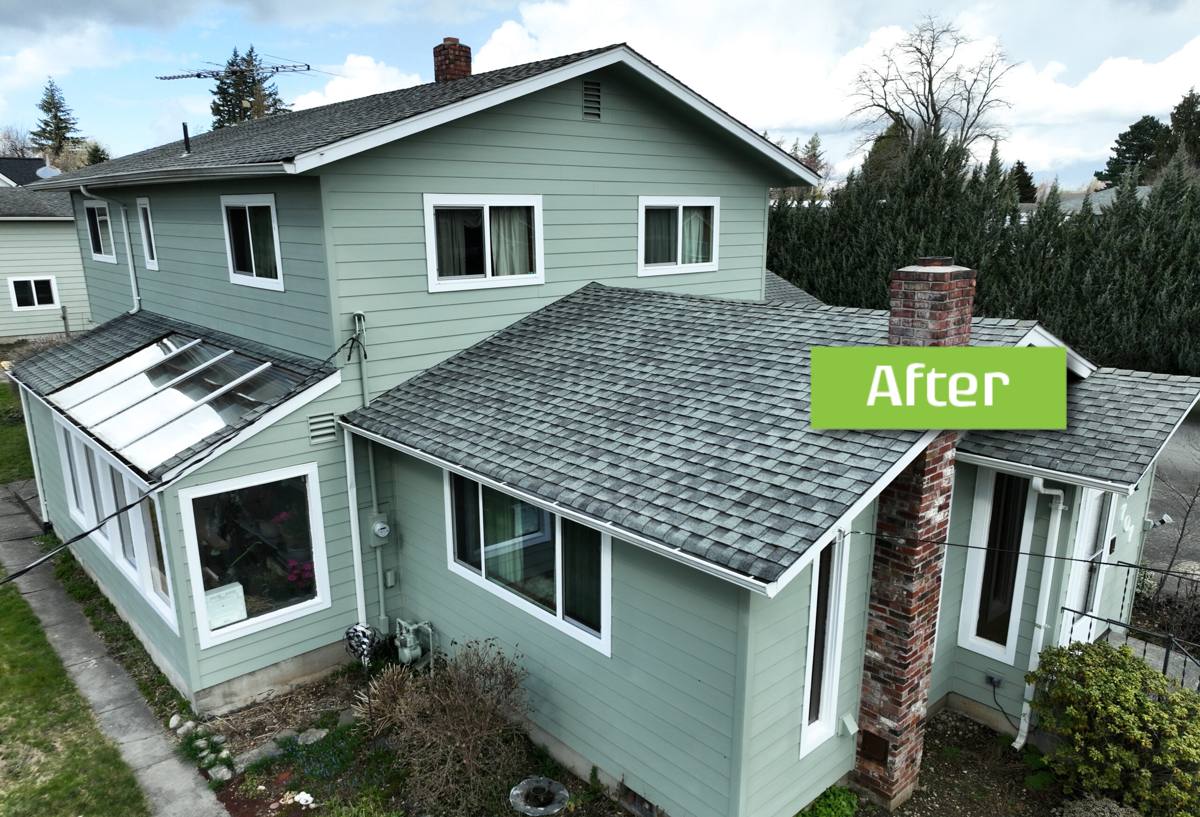
What Alger's Climate Actually Does to a Roof
Salt Air and Metal Fatigue
Homes closer to the water deal with a fine salt content in the air that accelerates corrosion on exposed metal — flashing, fasteners, gutters, and vents. Untreated or low-grade metal components corrode faster here than they would inland, which is why fastener and flashing selection matters more in this area than a lot of homeowners realize.
Driving Rain and Wind-Driven Moisture
Rain that falls straight down is easy to shed. Rain that's pushed sideways by wind finds every gap, lap, and fastener line a standard installation might leave marginal. Roofs here need tighter laps, properly sealed penetrations, and underlayment that's rated to handle wind-driven water, not just vertical drainage.
The Long Moss Season
Shade, moisture, and mild temperatures are exactly what moss wants, and this region gives it all three for months at a stretch. Moss isn't just cosmetic — it holds moisture against the roofing surface, lifts shingle edges, and works its way into seams over time. A roof that isn't designed to discourage moss growth from day one will need more aggressive maintenance later, or will age faster than its rated lifespan suggests.
What a Correct Installation Actually Involves
"New roof" gets used loosely, but a correct installation is a system, not a single product. Skipping or shortcutting any layer below is the most common reason a roof underperforms its expected lifespan in a climate like this one.
Tear-Off and Deck Inspection
We remove the old roofing down to the deck rather than layering over it, because you can't evaluate what you can't see. Water-damaged or soft sheathing gets identified and replaced before anything new goes down — installing over a compromised deck just hides a problem that will resurface.
Ice and Water Barrier, Then Underlayment
Vulnerable areas — eaves, valleys, and roof-to-wall transitions — get a self-adhering ice and water membrane before the field underlayment goes on. This is the layer that protects the deck if wind-driven rain or ice damming ever pushes water backward under the roofing material.
Ventilation That Actually Balances
Intake at the eaves and exhaust at the ridge need to work together, not just exist independently. Poor ventilation traps warm, moist attic air against the underside of the roof deck, which speeds up rot and can encourage moss and mildew from the inside out. We size and balance ventilation to the specific attic, not a generic rule of thumb.
Flashing and Penetration Detailing
Chimneys, skylights, vent pipes, and roof-to-wall junctions are where the vast majority of roof leaks originate — not the open field of shingles. Properly stepped and counter-flashed details, sealed with materials rated for this climate, are what actually keep a roof watertight for its full service life.
Choosing the Right Material for This Exposure
There's no single "best" roofing material for every home — the right choice depends on budget, roof pitch, architectural style, and how much long-term maintenance you're willing to take on. Here's how the common options stack up for a moss-prone, rain-heavy environment like Alger's:
| Material | Moss & Moisture Resistance | Typical Lifespan | Maintenance |
|---|---|---|---|
| Architectural asphalt shingle | Good with proper ventilation and zinc/copper strips | 25–30 years | Low to moderate; periodic moss treatment recommended |
| Standing seam metal | Excellent — sheds moss growth naturally on steep pitches | 40–60 years | Low; occasional fastener and sealant checks |
| Cedar shake | Requires diligent upkeep; moisture retention is a real concern | 20–30 years with maintenance | High; regular treatment and inspection needed |
| Synthetic/composite shingle | Good; engineered to resist moisture absorption | 30–50 years | Low |
We don't push one product line on every roof. We'll walk you through how each option performs specifically on your home's pitch, sun exposure, and tree coverage, and we're straightforward about the trade-offs — including where a lower-maintenance option might cost more up front but save you money and hassle over the life of the roof.
Our Installation Process, Start to Finish
- On-site assessment — we inspect the existing roof, deck condition, ventilation, and any problem areas specific to your home before quoting anything.
- Written scope and material selection — you get a clear breakdown of what's being installed and why, not a vague line item.
- Tear-off and deck repair — old material removed, deck inspected and repaired as needed.
- Underlayment and ice/water barrier installation — vulnerable areas protected first.
- Ventilation adjustments — intake and exhaust balanced to the attic's actual needs.
- Roofing material installation — installed to manufacturer specification, with attention to lap lines and fastening patterns suited to wind exposure.
- Flashing and detail work — chimneys, vents, skylights, and transitions sealed properly.
- Final walkthrough — we go over the finished roof with you before calling the job done.
Cost Factors Worth Understanding Upfront
Every roof is priced individually, but the variables that move the number are consistent. Understanding them helps you compare quotes honestly instead of just comparing bottom-line totals.
| Factor | Why It Matters |
|---|---|
| Roof size and complexity | More valleys, hips, and dormers mean more flashing, labor, and material waste |
| Pitch and access | Steeper roofs require more safety setup and slower, more careful installation |
| Number of layers to remove | Tearing off multiple old layers adds labor and disposal cost |
| Deck condition | Rotted or soft sheathing found during tear-off adds repair cost, but skipping it costs more later |
| Material choice | Asphalt, metal, and composite options carry different material and labor costs |
Be cautious of any quote that's dramatically lower than the others without a clear explanation — it usually means a layer of the system above is being skipped, not that you found a better deal.
Signs an Alger Home Needs Replacement, Not Another Repair
Patch jobs have their place, but past a certain point they stop making financial sense. Watch for these signs:
- Granules collecting in gutters or at downspout outlets in noticeable amounts
- Shingles that are curling, cupping, or cracking across multiple areas of the roof
- Persistent moss growth that returns quickly after cleaning
- Daylight visible through the roof deck from inside the attic
- Soft or spongy spots when walking the roof deck during inspection
- Recurring leaks in the same area despite prior repairs
- A roof approaching or past the upper end of its material's expected lifespan
Why Working With a Crew That Already Knows Alger Matters
A roofing crew that regularly works this area already understands how the local climate behaves — which slopes tend to hold moss longest, how wind moves across open versus tree-sheltered lots, and what ventilation setups actually perform well here versus just on paper. That local knowledge shows up in the small decisions made on-site: where to add extra underlayment, how tight to run the flashing laps, which material handles a particular roof's sun and shade pattern best. It also means we're familiar with the permitting and inspection expectations for this part of Whatcom County, so there are no surprises mid-project.
We're not interested in a one-size-fits-all installation. Your roof's pitch, tree coverage, and exposure to weather are specific to your property, and the installation should reflect that.
What to Expect During the Project
Most residential roof replacements are completed within a few days once work begins, weather permitting — this region's rain means scheduling has to stay flexible, and we won't install underlayment or roofing material in conditions that compromise the seal. We'll keep you informed if weather pushes the timeline. Debris and disposal are handled as part of the job, and we walk the property afterward to check for stray fasteners or material. Warranty coverage varies by manufacturer and material, and we'll go over exactly what's covered — both material and workmanship — before any work starts, in writing.
If your roof is showing its age or you just want an honest read on where it stands, we're happy to take a look. Reach out through the form below for a free, no-pressure estimate on your Alger home.