 Sudden Valley Siding
 Why Fairhaven Decks Wear Out Faster Than You'd Expect
A deck in Fairhaven doesn't fail the way a deck does in a drier inland climate. Here, the damage is driven by three things working together: salt-laden air off the water, long stretches of driving rain, and a moss and algae season that can run most of the year in shaded or north-facing spots. None of these alone would be a big deal. Combined, over years, they quietly break down fasteners, ledger boards, and decking surfaces long before most homeowners notice a problem.
Salt air accelerates corrosion in anything metal — nails, screws, joist hangers, bolts. Once a fastener starts rusting, it loses grip strength and can stain the wood around it, which is often the first visible clue that something underneath is wrong. Driving rain, especially wind-blown rain that hits at an angle, gets pushed into joints, under flashing, and along ledger connections that were never designed to handle water moving sideways. And moss doesn't just look bad — it holds moisture against the deck surface for weeks at a time, which is exactly the condition that rots wood and degrades composite decking's wear layer.
We work decks throughout the Sudden Valley and Fairhaven area regularly, and the pattern is consistent: decks built or last maintained more than eight to ten years ago are the ones showing structural issues now, usually at the ledger board, the support posts, and wherever two pieces of wood meet and trap moisture.
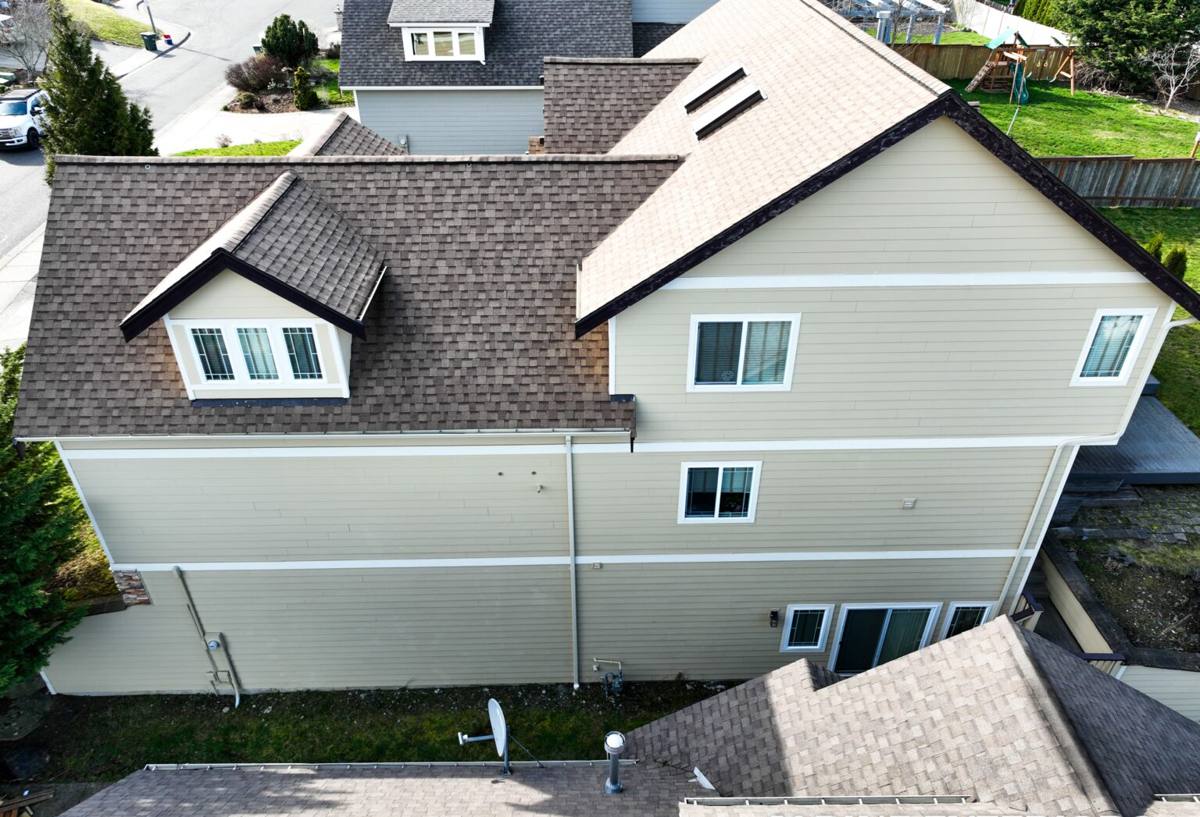
Signs a Fairhaven Deck Needs Repair
Most deck problems don't show up as one dramatic failure — they show up as small warning signs that get ignored because the deck still "feels fine" to walk on. By the time a board actually breaks underfoot, the surrounding structure has usually been compromised for a while. Here's what we look for, and what you can check yourself before calling anyone.
Surface-Level Warning Signs
- Boards that feel spongy, soft, or slightly bouncy when you walk across them
- Dark staining or streaking running down from fastener heads
- Persistent moss, algae, or green-black film that comes back within weeks of cleaning
- Gaps opening up between boards, or boards cupping (edges higher than the center)
- Paint or stain that's peeling in sheets rather than wearing evenly
Structural Warning Signs
- Any movement or flex at the point where the deck attaches to the house (the ledger board)
- Rust streaks or visibly corroded joist hangers, bolts, or post bases
- Wood that's soft enough to push a screwdriver into with light pressure
- Railings or posts that wiggle more than a small amount
- Stairs that feel less solid than they used to
Surface issues are often repairable with board replacement and refinishing. Structural issues — especially anything at the ledger, posts, or footings — need a proper inspection before anyone puts weight back on that section.
What a Correct Deck Repair Actually Involves
A repair that only addresses what's visible on top tends to fail again within a couple of seasons, because the cause of the damage — trapped moisture, a bad flashing detail, corroding fasteners — is still there. A correct repair works from the structure outward.
1. Structural Assessment
Before replacing a single board, we check the ledger board connection, the posts and footings, and the joists underneath. This is the part of the deck that carries the load, and it's also the part most exposed to trapped water because it's hidden from view and airflow. Any repair plan starts here, not at the surface.
2. Fastener and Hardware Replacement
In a salt-air environment, corroded fasteners are one of the most common failure points we find, even on decks that otherwise look in decent shape. Repairs should use hot-dip galvanized or stainless hardware rated for coastal exposure — standard fasteners will start showing rust streaks again within a couple of years in this environment.
3. Moisture Path Correction
If water was getting somewhere it shouldn't — behind flashing, into end grain, under a ledger board — that path needs to be closed, not just dried out. This might mean adding or correcting flashing at the house connection, improving drainage under the deck, or changing how boards are spaced to let water and air move through instead of pooling.
4. Board and Component Replacement
Damaged decking, rim joists, or railing components get replaced with material matched to the rest of the structure, cut and sealed on all sides — including the cut ends, which is where most future rot starts if skipped.
5. Protective Finish
Wood surfaces get a penetrating sealer or stain suited to a high-moisture, high-UV-cycling climate. This isn't cosmetic — it's the layer that slows the next round of moisture absorption and moss colonization.
Our Process
We keep the process straightforward and try not to waste your time or ours guessing at a scope of work.
Inspection and Diagnosis
We walk the full deck, not just the area you called about. A soft board near the stairs is sometimes a symptom of a moisture problem that started at the ledger board on the other side of the deck. We'll point out what's cosmetic, what's structural, and what can reasonably wait.
Honest Scope and Options
You'll get a plain explanation of what needs to happen, roughly why, and what it involves — not a pressure pitch toward a full rebuild when a targeted repair will genuinely hold up. If a full rebuild really is the better long-term value, we'll explain why, including the trade-offs, and let you decide.
The Repair Itself
We work section by section so the deck stays usable as much as possible, matching materials and fastener spacing to the existing structure so repaired areas don't stand out or perform differently than the rest of the deck.
Walkthrough and Care Guidance
Before we leave, we walk the finished work with you and go over basic seasonal care — what to hose off, what to watch for, and roughly when a follow-up cleaning or resealing makes sense given how exposed your particular deck is to rain and shade.
Repair or Replace? A Straight Comparison
This is the question almost every deck owner in this climate eventually asks. There's rarely a single right answer — it depends on how much of the structure is affected, the age of the deck, and what you want out of it going forward.
| Factor | Repair Usually Makes Sense | Replacement Usually Makes Sense |
|---|---|---|
| Structural damage | Limited to one section or a few boards | Ledger, multiple joists, or posts affected |
| Deck age | Under 15 years, built to reasonable standards | Older, or built with undersized/outdated framing |
| Fastener condition | Isolated rust or wear | Widespread corrosion throughout the structure |
| Moisture history | One identifiable, fixable cause | Chronic, whole-deck moisture problems |
| Budget approach | Lower upfront cost, targeted fix | Higher upfront cost, resets the clock on the whole deck |
As a rough guide, straightforward board and hardware repairs on an otherwise sound deck often run in the low thousands of dollars, while structural repairs involving the ledger, posts, or multiple joists cost more and start to close the gap with a partial or full rebuild. We'll give you real numbers after we've actually looked at your deck — broad ranges without an inspection aren't much use to anyone.
Moss and Algae: Prevention Between Repairs
Whatcom County's damp, shaded conditions mean moss isn't a one-time cleanup — it's an ongoing maintenance item, especially on decks with tree cover or a north-facing orientation. A repair that isn't paired with some ongoing prevention will usually need attention again sooner than it should.
- Sweep debris and organic buildup off the deck regularly, especially in fall
- Keep nearby vegetation trimmed back to improve airflow and sun exposure where possible
- Clean moss and algae with a deck-safe cleaner rather than a pressure washer alone, which can damage wood fibers and drive water deeper into the surface
- Reseal or restain on the schedule appropriate to your product and exposure, not just when it visibly looks worn
- Check and clear gaps between boards so water and debris can pass through instead of collecting
Material Considerations for This Climate
Both wood and composite decking can perform well in Fairhaven's conditions, but each comes with trade-offs worth understanding rather than a one-size-fits-all recommendation.
Pressure-treated and cedar decking are affordable and repairable board-by-board, which is part of why they remain common here — a damaged section can be replaced without touching the rest of the deck. The trade-off is that they need regular sealing or staining to keep performing well in a wet, moss-prone environment; skip that maintenance for a few years and you'll see it in the wood.
Composite decking resists rot and doesn't need staining, which appeals to a lot of homeowners tired of the upkeep. Our professional standard is to be upfront that composite isn't maintenance-free in this climate — it still needs regular cleaning to prevent moss and algae from staining or degrading the surface, and it's more sensitive to correct spacing and ventilation during installation, since trapped moisture underneath can still cause problems with the substructure even if the boards themselves resist rot. It's also a different repair profile: full boards typically need replacing rather than patching, and matching an older composite run's color exactly can be difficult if the product has been discontinued or faded.
Neither material is the "right" answer in every case — it comes down to your budget, how much upkeep you're willing to do, and what the existing structure can support.
Why Hire a Crew That Already Works Fairhaven
Deck repair isn't uniform across a region. A crew used to working in a dry inland climate will make different assumptions about moisture, flashing, and fastener choice than one that repairs decks facing salt air and driving rain every week. Knowing which failure points show up first in this specific environment — the ledger connection, the fastener corrosion pattern, the shaded corners where moss sets in — means less time spent diagnosing and more time spent fixing the actual problem.
It also means we're realistic with you. We're not going to recommend a full teardown when a targeted structural repair will genuinely last, and we're not going to patch over a ledger board problem just to save you money today and hand you a bigger bill in two years. We live and work in this county, and we'd rather do a repair once, correctly, than come back to redo it.
Ready for a Straight Answer on Your Deck?
If your deck has soft spots, rust staining, stubborn moss, or just feels like it's not holding up the way it used to, we're happy to take a look. We offer free, no-pressure estimates for deck repair throughout the Fairhaven and Sudden Valley area — we'll tell you honestly what needs fixing, what can wait, and what it'll take to do it right. Fill out the form below to get started.