 Sudden Valley Siding
 Siding Replacement Built for Lake Whatcom's Conditions
Homes around Lake Whatcom sit in one of the more demanding microclimates in Whatcom County. The lake itself keeps humidity elevated year-round, tree cover along the shoreline holds moisture against exterior walls, and the combination of driving rain off the water and cooler shaded lots creates ideal conditions for moss, mildew, and slow rot to take hold on siding that isn't built to handle it. Add in the salt-laden air that moves inland from the Puget Sound corridor during storm systems, and you have an environment that is genuinely harder on exterior materials than a typical inland Washington neighborhood.
This page is specifically about siding replacement for Lake Whatcom properties — not new construction, not repair patches, but the full process of removing failing siding and installing a system that's actually engineered for this lake environment. We install only James Hardie fiber cement siding, and on this page we'll explain what that looks like in practice for a home in this specific area.
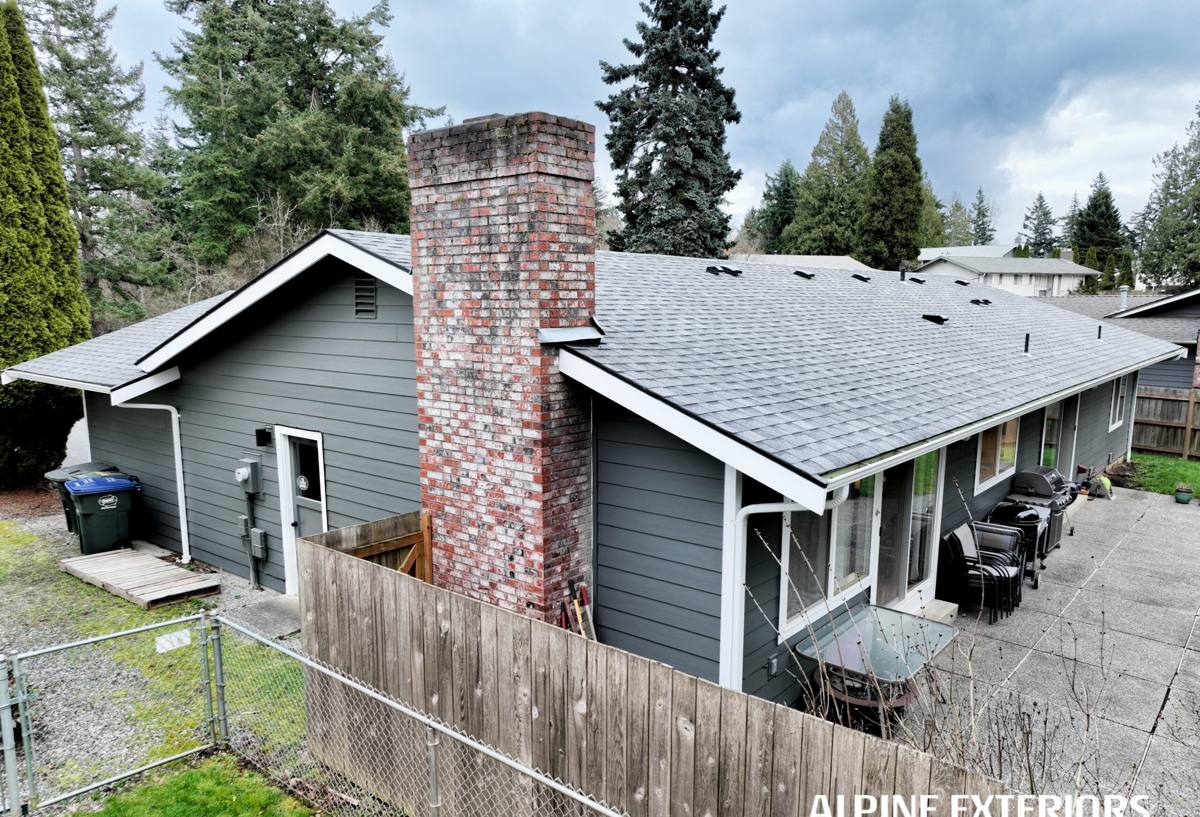
Why Siding Fails Faster Near the Lake
Moisture That Doesn't Let Up
Lake-adjacent lots hold humidity longer than open, sun-exposed properties. Morning fog off the water, shaded north-facing walls, and dense tree canopy all slow down how fast a home's siding actually dries out after rain. Wood-based and wood-composite siding products depend on drying time to stay ahead of rot — when that drying window shrinks, moisture gets trapped behind paint or sealant and starts breaking the material down from the inside, often before any problem is visible from the ground.
Moss, Algae, and Constant Shade
Shoreline properties with mature trees get less direct sun on at least one elevation of the house, sometimes most of it. That shade, combined with high ambient moisture, is exactly what moss and algae need to establish themselves on siding, trim, and fascia. On porous or textured materials, moss doesn't just sit on the surface — it holds water against the wall assembly and accelerates whatever moisture damage is already happening underneath.
Driving Rain and Wind-Driven Exposure
Storms moving across the lake can push rain sideways into exposed elevations with more force than you'd get on a sheltered inland lot. That kind of wind-driven rain finds every weak seam, gap, or failed caulk joint in a siding system. It's also why correct flashing and water-resistive barrier work matters more here than almost anywhere else in the county — a siding replacement that looks right but skips the water-management details underneath will fail early in exactly this kind of exposure.
Signs Your Lake Whatcom Home Needs a Siding Replacement — Not Just a Patch
Not every siding problem calls for a full tear-off, but in this climate, small issues tend to be a sign of something bigger happening underneath. Here's what should push you toward a real inspection:
- Soft or spongy spots when you press on the siding, especially near the bottom courses or below windows
- Persistent moss or algae growth that returns within a season or two of cleaning
- Paint that's bubbling, peeling, or won't hold for more than a couple of years
- Visible warping, cupping, or separation at the seams and butt joints
- Staining or dark streaking that tracks with where rain hits the wall hardest
- Gaps or cracks around window and door trim that weren't there a few years ago
- A musty smell in rooms along an exterior wall, which often points to moisture already inside the wall cavity
If you're seeing two or more of these on a lake-facing or shaded elevation, that's usually not a maintenance issue anymore — it's a sign the siding system itself has stopped doing its job.
Why We Only Install James Hardie Fiber Cement Here
We've made a deliberate decision as a company to install James Hardie fiber cement siding exclusively — not vinyl, not LP SmartSide, not primed spruce or cedar. In a climate like Lake Whatcom's, that decision matters more than it would somewhere drier.
Fiber cement is non-combustible and dimensionally stable, meaning it doesn't expand, contract, warp, or absorb water the way wood-based products do. James Hardie's ColorPlus finish is baked on at the factory under controlled conditions, which gives it a harder, more UV- and moisture-resistant surface than field-applied paint can match — that matters directly here, since repainting siding on a shaded, hard-to-access lake lot is exactly the kind of maintenance homeowners want to avoid. Hardie also engineers specific product lines by climate zone (HZ5 for the Pacific Northwest's wet, moderate conditions), which means the plank itself is formulated for the moisture load our winters and shoulder seasons actually deliver.
We're not going to tell you other products are junk — vinyl is inexpensive and low-maintenance in the right setting, and engineered wood has real fans. But in a high-moisture, moss-prone, shaded lake environment, we've seen enough of how those materials perform over a full lifecycle that we don't put our name behind installing them. Fiber cement's resistance to moisture intrusion, pests, and fire, paired with a strong transferable warranty, is what we're willing to stand behind on a Lake Whatcom home.
What a Correct Siding Replacement Actually Involves
Tear-Off and Inspection
Replacement starts with full removal of the old siding, not installation over it. That's the only way to actually see what's happening underneath — sheathing condition, existing moisture damage, insulation state, and any rot that's been hiding behind the old material. On lake-adjacent homes, this step often reveals more moisture damage than the exterior alone suggested, which is exactly why patch jobs and over-cladding don't hold up long-term here.
Water-Resistive Barrier and Flashing
Once the sheathing is exposed, a new weather-resistive barrier goes on, and every penetration — windows, doors, vents, hose bibs — gets properly flashed and sealed before a single piece of siding goes up. This is the layer that actually keeps water out; the siding itself is the second line of defense, not the first. Given how much wind-driven rain this area sees, we don't shortcut this step.
Installation to James Hardie Spec
Correct nailing patterns, proper clearances from grade, decks, and roof lines, and correctly sized joint gaps all affect how the siding performs over the following decades — not just how it looks on installation day. Hardie publishes detailed installation requirements for a reason: siding installed outside spec can void the manufacturer warranty even if the product itself is right for the job.
Trim, Caulking, and Final Details
The finishing details — corner trim, caulk joints, touch-up paint on cut edges — are where a lot of lesser installs fall short. On a shaded, moisture-heavy lot, a poorly sealed joint is where the next round of rot starts. We treat this stage as part of the water-management system, not just cosmetics.
How Our Process Works for Homes in Lake Whatcom
We work regularly in the Lake Whatcom and Sudden Valley area, which shapes how we plan a job here compared to a more open, in-town lot.
- Site walk and assessment: We look at sun exposure, tree cover, drainage around the foundation, and existing moisture signs before quoting anything.
- Material and access planning: Many lake lots have limited driveway space, steep grades, or shared/private roads. We plan staging and material drop-off around that ahead of time rather than figuring it out on install day.
- HOA and community standards: Sudden Valley and similar lake communities often have exterior design guidelines. We can work within documented color and material requirements as part of the proposal.
- Weather-aware scheduling: Tear-off exposes bare sheathing to the elements, so we schedule and sequence work to minimize how long any wall goes uncovered, which matters more here than on a drier site.
- Final walkthrough: We review the completed job with you before calling it done — trim lines, caulking, paint touch-up, and site cleanup included.
Cost Factors for a Lake Whatcom Siding Replacement
Every home is different, and we won't quote a number without seeing the property, but these are the factors that most often move the price up or down on a job in this area:
| Factor | Why It Matters Here |
|---|---|
| Extent of hidden moisture damage | Shaded, lake-adjacent walls more often need sheathing repair once old siding comes off |
| Home access and staging | Steep driveways, shared roads, and limited lot space in lake communities can add labor time |
| Siding profile and trim complexity | Lap width, shingle-style accents, and trim detail all affect material and labor cost |
| Story height and roofline complexity | Multi-story lake-view homes and steep or complex rooflines require more scaffolding and time |
| Color and finish choice | Factory-finished ColorPlus vs. field-painted Hardie changes both cost and long-term maintenance |
| HOA-required specifications | Approved color palettes or material requirements can affect ordering lead time |
How Fiber Cement Compares to the Alternatives
We get asked why we don't offer other options, so here's an honest comparison of how the common choices hold up in a high-moisture, moss-prone lake environment specifically:
| Material | Moisture Behavior | Maintenance in This Climate |
|---|---|---|
| James Hardie fiber cement | Dimensionally stable; doesn't absorb water or warp; HZ5 formulated for wet climates | Low — factory finish resists moss staining and UV fade |
| Vinyl | Doesn't rot, but can warp under heat and gaps at seams can let moisture behind it | Low cost but limited lifespan and repair options if damaged |
| Engineered wood (LP SmartSide) | Wood-based core is more moisture-sensitive; edge sealing is critical and easy to compromise | Moderate to high — edge and seam maintenance matters in wet climates |
| Cedar / primed spruce | Natural wood absorbs and releases moisture constantly; prone to rot and moss without upkeep | High — regular refinishing and moisture monitoring needed |
Maintaining a New Fiber Cement Installation on a Lake Property
James Hardie siding is low-maintenance, not no-maintenance, and lake lots benefit from a little extra attention given the moisture and shade. A yearly rinse to keep moss and organic buildup from establishing on the surface, keeping gutters clear so water isn't running down the wall face, and trimming back vegetation that's holding shade and moisture directly against the siding will all extend the life of the installation well beyond what a neglected wall would achieve. None of this is heavy work — it's the kind of upkeep that takes an afternoon and pays off over years.
Get a Free, No-Pressure Estimate
If your siding is showing signs of wear, or you just want an honest read on whether repair or full replacement makes sense for your Lake Whatcom home, we're happy to take a look. There's no pressure and no obligation — just a straight assessment from a crew that already knows what this lake does to exterior siding. Fill out the form below to get started.