 Sudden Valley Siding
 Deck Repair Built for Silver Beach's Lakeside Climate
Silver Beach sits right along Lake Whatcom, which means decks here take on a different kind of punishment than a deck on the dry side of town. Between the moisture coming off the lake, driving rain through the fall and winter, and a moss season that can stretch from October into May, wood and fasteners in this neighborhood age faster than most manufacturers' warranty language assumes. We've worked on decks up and down this stretch of Whatcom County long enough to know which failure points show up first here, and what it actually takes to fix them so they hold.
This page is about deck repair specifically — not full rebuilds, not new construction. If your deck is structurally sound but showing its age, this is the service that gets it back to safe and solid without paying for a full replacement you don't need yet.
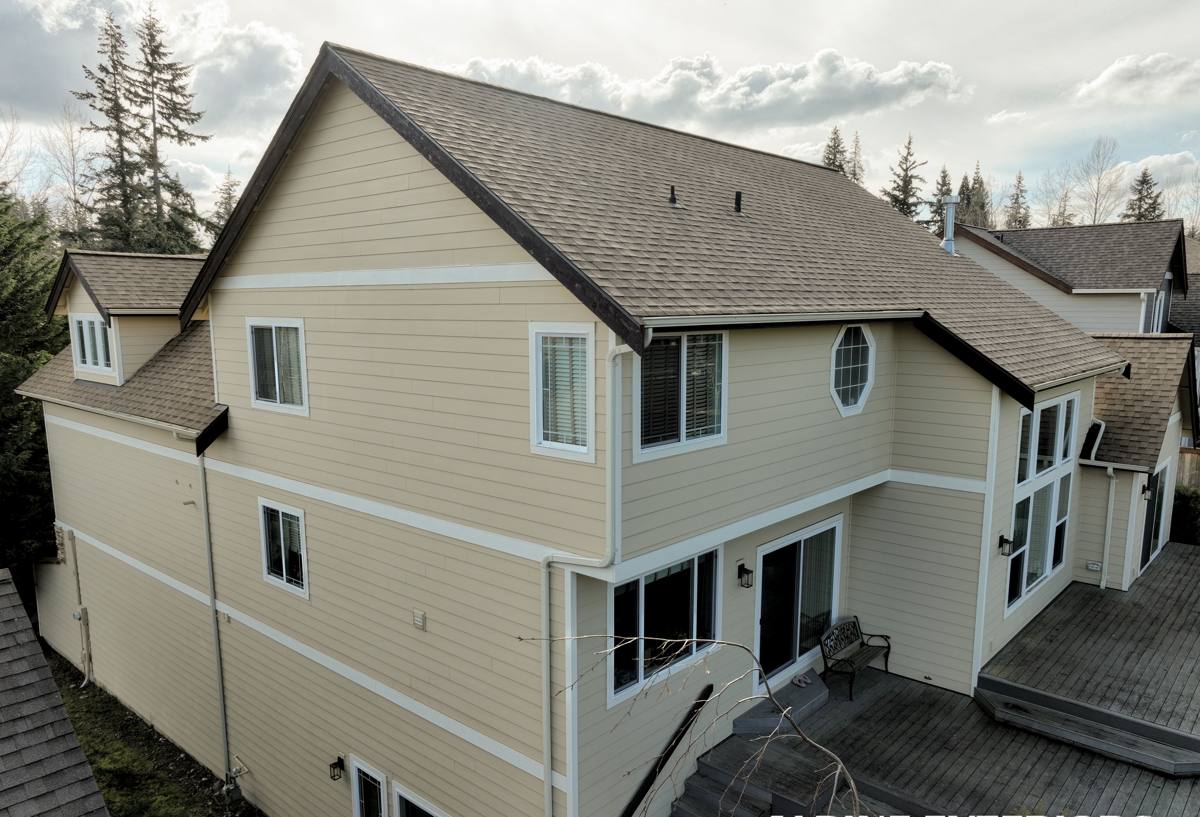
Why Silver Beach Decks Fail Differently
Moisture from Two Directions
Most neighborhoods only deal with rain from above. Silver Beach decks also sit near enough to the lake that humidity and ground moisture work on the underside of the structure — the ledger board, the joists, and the posts — even on days it isn't raining. That two-sided exposure is why we see rot show up in framing members here before it shows up in the decking boards themselves, which is the opposite of what homeowners usually expect.
Moss Season Isn't Just Cosmetic
A long moss season does more than make a deck look neglected. Moss holds water against the wood surface for weeks at a time, keeps boards from drying out between rain events, and works its way into any hairline crack in the finish. Left alone through a full wet season, moss-covered boards can go from "needs a cleaning" to "needs replacing" faster than a homeowner checking in once or twice a year would guess.
Fastener Corrosion
Older decks in this area were often built with standard galvanized fasteners rather than the coated or stainless hardware that's now standard practice near water. Those older fasteners corrode from the inside of the wood outward, so a deck can look fine on the surface while the nails or screws holding it together are failing underneath. This is one of the most common issues we find on repair calls in Silver Beach that the homeowner didn't know was there.
What a Correct Deck Repair Actually Involves
A repair that's done right starts with an honest structural check, not just a look at the worst boards. We check these areas on every job:
- Ledger board attachment to the house — the single most safety-critical connection on the deck
- Joists and beams for soft spots, rot, or fastener pull-through
- Post bases and any concrete footings for movement or water pooling
- Railing posts and connections, since these take direct lateral load
- Surface boards for cupping, splitting, and moss or algae staining
- Stair stringers and treads, which see concentrated foot traffic and weather exposure
- Flashing where the deck meets the house siding or trim
Most repair calls turn out to be a mix of a few of these, not just one. A deck that "needs a board or two replaced" often also has a ledger connection or a post base that needs attention — and that's the part that actually matters for safety.
Board Replacement Done Right
When we replace decking boards, we match spacing and fastening pattern to the original construction so the repair doesn't stand out or create a new weak point. We also use this as a chance to check the joist underneath — there's no point installing a new board over a joist that's already soft.
Ledger and Framing Repair
If the ledger board or framing has rot, this isn't a patch job — the affected wood gets cut out and replaced with properly treated lumber, and we re-flash the connection to the house so water doesn't have the same path back in. This is the repair that protects against the deck pulling away from the house, which is the failure mode that actually causes injuries.
Railing and Fastener Upgrades
Where we find corroded fasteners, we replace them with hardware rated for coastal or high-moisture exposure, even if that wasn't what the deck was originally built with. It costs a little more up front and saves the homeowner from having the same repair call again in a few years.
Repair vs. Replace: How We Help You Decide
| Condition | Usually Repairable | Usually Needs Replacement |
|---|---|---|
| Structural framing | Isolated rot in one or two joists | Widespread rot across most of the frame |
| Ledger board | Localized rot, flashing failure | Full-length rot or separation from house |
| Decking boards | Scattered cupped or split boards | Majority of boards failing at once |
| Railings | Loose posts, worn balusters | Posts rotted at the base, code non-compliance throughout |
| Fasteners | Spot corrosion, easy access | Systemic corrosion across the structure |
The honest answer for most decks we see in Silver Beach is repair — the framing lumber itself tends to outlast the fasteners and surface boards if it's been kept reasonably dry. We'll tell you straight if we think you're better off putting the money toward a rebuild instead of patching something that's going to keep failing.
Cost Factors for Deck Repair in This Area
Every deck is different, but the price of a repair here is driven by a handful of factors more than by square footage alone:
- Extent of hidden rot — what we find once boards come up matters more than what's visible from the top
- Access to the underside — decks close to grade or built over sloped lake-facing lots take more time to work under
- Fastener condition — full hardware replacement adds labor but prevents repeat problems
- Ledger and flashing work — anything touching the house connection takes more care and time than surface repairs
- Material matching — matching existing decking (especially older or discontinued profiles) can add cost versus a full re-deck
We give a firm number after we've actually opened up the problem areas, not before — a phone estimate on a deck repair is a guess, and we'd rather give you an accurate one.
Our Process for Silver Beach Deck Repairs
1. On-Site Inspection
We walk the deck, check underneath, probe suspect boards and framing, and test railing and post stability by hand. This is where most of the real findings happen — not from a distance.
2. Written Scope and Estimate
You get a clear breakdown of what's failing, what we recommend fixing now versus monitoring, and a price before any work starts. No surprise change orders for problems we could have found during inspection.
3. Repair Work
We replace only what needs replacing, match materials and fastening patterns where we can, and upgrade hardware in any spot exposed to standing moisture or lake-driven humidity.
4. Final Check and Cleanup
Before we leave, we test railings, stairs, and any structural repair under load, and we walk you through what was done and what to watch for going forward — including how to keep moss from taking hold again over the next wet season.
Maintenance That Extends the Life of a Repair
A repair holds up longer if a few basic habits happen between our visits:
- Sweep leaves and debris off the deck surface before the fall rains set in — trapped organic matter is what feeds moss growth
- Keep gutters and downspouts near the deck clear so runoff isn't draining directly onto or under it
- Check railing posts for wobble once a year, especially after a hard winter
- Reseal or restain exposed wood on the schedule the product calls for — skipped coatings are one of the fastest ways moisture gets back into the wood
- Look underneath the deck occasionally, not just at the surface — that's where problems start in this climate
Why a Crew That Works Silver Beach Regularly Makes a Difference
Deck repair advice that's generic to the Pacific Northwest isn't always right for a lakefront neighborhood specifically. A crew that already works in Silver Beach knows which fastener upgrades are worth the extra cost here, which framing areas fail first given the lake-side moisture exposure, and how aggressive the moss season really gets on this side of Whatcom County versus other parts of our service area. That local pattern recognition is what keeps a repair from being a repeat call in two years.
We're a Sudden Valley-based crew, so getting to Silver Beach isn't a special trip — it's part of the area we already work in every week, which matters when you need someone back out quickly to check a follow-up question or handle a small item we flagged during the original repair.
If you've got a deck in Silver Beach that's showing rot, loose railings, soft spots, or just years of moss buildup, we're happy to take a look and give you a straight, no-pressure estimate — use the form below to get started.