 Sudden Valley Siding
 Why Siding Repair Looks Different in Silver Beach
Silver Beach sits in one of the more exposed pockets of Whatcom County when it comes to what the weather actually does to a house. Homes here take a steady combination of salt-laden air, wind-driven rain that gets pushed sideways into wall assemblies, and a moss and algae season that can run most of the year in the shaded, damp spots around a lot. None of that is dramatic on its own. What it does is slow and cumulative — a caulk joint that dries out a little faster than it should, a panel edge that stays damp two days longer after a storm, a north-facing wall that never quite gets the sun exposure to dry out between rains. Over a few winters, those small differences add up to real siding problems.
That's the reason a "generic" siding repair approach doesn't hold up well out here. A repair that's correct for a dry inland neighborhood can fail within a season or two on a Silver Beach lot that sits closer to the water, gets more direct wind exposure, or has heavy tree cover holding moisture against the walls. Repairing siding in this area means understanding which failure mode you're actually dealing with before you touch a panel.
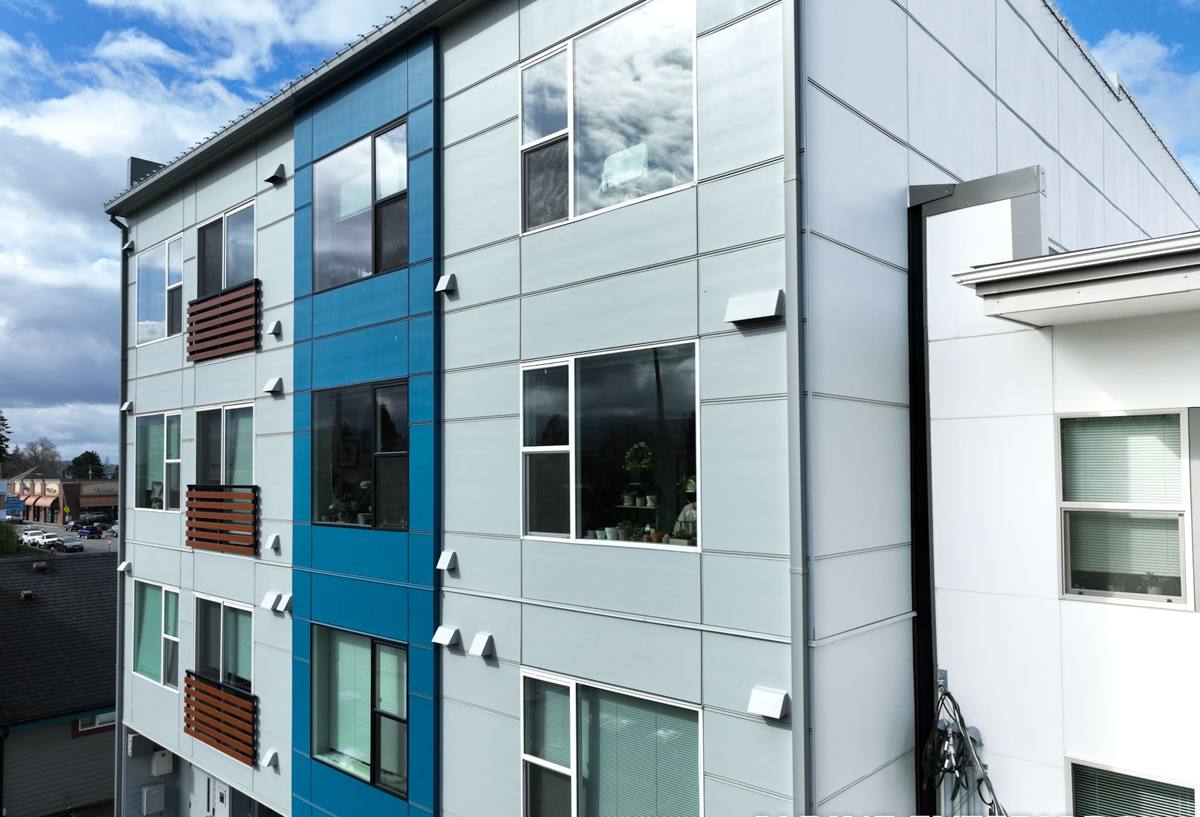
Common Siding Failures We See in Silver Beach Homes
Moisture Intrusion at Seams and Penetrations
Most of the repair calls we get aren't about siding that failed on its own — they're about water finding a way behind it. Butt joints that were never properly flashed, caulk that's shrunk and pulled away from trim, and old nail penetrations that were never sealed are the usual entry points. Once moisture gets behind the siding, it can sit against the sheathing for weeks in our wet season before anyone notices a visible problem.
Moss, Algae, and Staining
Whatcom County's damp, mild climate is close to ideal for moss and algae growth on anything that stays shaded and moist — which describes a lot of north- and west-facing walls in Silver Beach, especially under overhangs or near mature trees. This isn't just cosmetic. Moss holds moisture against the siding surface far longer than bare material would, and on the wrong substrate that constant dampness accelerates rot, paint failure, and joint breakdown.
Caulk and Sealant Failure
Sealant is the first line of defense at trim boards, corners, and penetrations, and it's also the first thing to give out under repeated wet-dry cycling and salt exposure. Once it cracks or pulls away, the panel behind it is exposed to exactly the kind of driving rain this area gets regularly.
Panel Warping, Cracking, and Delamination
What this looks like depends heavily on what's actually on the wall. Older wood-based composite sidings can swell, delaminate, and lose their shape once moisture gets in. Vinyl can crack or warp with temperature swings and impact. Even fiber cement can crack if it was installed without the correct gaps and fasteners. Diagnosing which of these you're looking at — and why it happened — is the difference between a repair that lasts and one that doesn't.
What a Correct Repair Actually Involves
A siding repair that's done right starts with figuring out the cause, not just patching the symptom. Replacing a cracked or stained panel without addressing why it failed just means paying for the same repair again in a few years. Our process on every repair call looks at three things before any material comes off the wall:
- Where the moisture or damage is actually coming from — a failed seam, missing flashing, a clogged gutter dumping water onto a wall, or grade sloping toward the foundation
- What's behind the siding — checking for soft or damp sheathing, compromised house wrap, or insulation that's already wet
- Whether the surrounding material is sound enough to tie a repair into, or whether the damage has spread further than the visible section
Only after that diagnosis do we talk about materials, fasteners, and finish. Skipping straight to "replace the bad-looking board" is how a lot of repairs end up needing to be redone within a couple of years — especially in a climate that doesn't give damaged material much chance to dry out on its own.
Repair vs. Replacement: How We Make the Call
Not every damaged section needs a full re-side, and we don't push replacement when a targeted repair will genuinely hold up. But we're also not going to patch a wall that's failing broadly just to keep the job small. Here's roughly how we weigh it:
| Factor | Favors Repair | Favors Replacement |
|---|---|---|
| Extent of damage | Isolated to a few panels or one wall section | Recurring across multiple walls or the whole exterior |
| Underlying sheathing | Dry, solid, sound | Soft, delaminated, or showing rot |
| Age of existing siding | Still within its useful life, good overall condition | Near or past expected service life |
| Material match | Matching material is available and will blend acceptably | Discontinued product, no reasonable color/profile match |
| Root cause | Localized issue (one failed flashing, one bad seam) | Systemic issue (original installation defects, chronic moisture path) |
We'll always tell you honestly which side of that table your house falls on. If a repair is the right call, that's what we'll quote — a full re-side isn't the answer to every problem, and we're not interested in selling you one you don't need.
Our Repair Process, Start to Finish
- On-site inspection: We look at the damaged area and the surrounding walls, check for moisture with a meter where it matters, and identify the cause, not just the visible symptom.
- Honest diagnosis and options: You get a plain explanation of what's happening, why, and whether repair or replacement makes sense — with a written estimate, no pressure.
- Removing only what needs to come off: We pull damaged material back to sound substrate, checking sheathing and house wrap as we go.
- Correcting the cause: Re-flashing a penetration, fixing a drainage path, re-sealing a joint properly — whatever actually caused the failure gets addressed, not just covered up.
- Installing the repair: New material is fit, fastened, and sealed to manufacturer spec, with attention to the gaps and clearances that let the wall dry properly.
- Finish and cleanup: Paint or factory-finish matching where applicable, and the site left clean.
Why We Repair With Fiber Cement, Not Whatever's Already on the Wall
We install and repair with James Hardie fiber cement siding exclusively — we don't install vinyl, LP SmartSide, or other composite products, and that shapes how we approach repairs, too. When we're patching into an existing non-Hardie wall, we'll tell you plainly what your options are: match the existing material if a reasonable match exists, or, if the damage is widespread enough that replacement makes more sense, move that section (or the whole exterior) to Hardie rather than continuing to chase failures in a product we don't stand behind long-term.
That's not a sales pitch dressed up as a repair recommendation — it's the same reasoning that led us to standardize on fiber cement in the first place. Hardie's HZ5 product line is engineered for exactly the wet, moderate-humidity climate Whatcom County sits in, it's non-combustible, it holds its factory ColorPlus finish far longer than field-applied paint on most alternative sidings, and it doesn't absorb and swell with moisture the way wood-based composites can. When a repair does call for new material, that's what we use, and it's backed by a transferable manufacturer warranty when installed to spec.
What This Means If Your Home Isn't Hardie Already
We won't tell you your existing siding is worthless if it isn't. Plenty of sound siding just needs a properly diagnosed repair. But if you're facing recurring failures — the same wall needing attention every couple of years — that's usually a sign the underlying material or original installation has a structural weakness that a patch can't fix, and it's worth talking about a longer-term plan.
Maintenance Checklist for Silver Beach Homeowners
A lot of repair calls can be prevented, or at least caught early, with a simple seasonal check. Here's what we recommend walking your exterior for, especially after the wet months:
- Caulk lines at trim, corners, and window/door edges that have cracked, shrunk, or pulled away
- Moss or algae growth on shaded walls, especially under overhangs and near tree cover
- Soft spots, bubbling, or discoloration near the bottom courses of siding close to grade
- Gutters and downspouts directing water away from walls, not onto them
- Panels that have shifted, cracked, or show gaps at the seams
- Paint that's peeling or chalking heavily on one side of the house more than others
Catching any of these early is almost always cheaper and less invasive than waiting until moisture has worked its way behind the siding.
Why Hiring a Crew That Already Works in Silver Beach Matters
Siding repair isn't a one-size-fits-all trade, and the details that matter change with the microclimate. A crew that's worked walls in Silver Beach and around Sudden Valley knows which orientations take the worst of the driving rain, how aggressively moss establishes itself in the shaded lots near the water, and which older installation habits in this part of Whatcom County tend to cause the recurring failures we get called out for. That local pattern recognition shortens the diagnosis and means fewer surprises once a wall is opened up.
It also means straight answers about what's realistic for your specific property instead of a generic repair script. If your home's exposure and history point toward a repair holding up fine, we'll say so. If it points toward a bigger problem, we'll say that too, with the reasoning behind it.
If you've got a siding issue in Silver Beach — whether it's a section that's clearly failing or just something that doesn't look right — we're glad to come take a look. Estimates are free, there's no pressure to do more work than your home actually needs, and you'll get a straight answer about what's causing the problem before we talk about fixing it.