 Sudden Valley Siding
 Board & Batten Siding, Built for Silver Beach's Climate
Board and batten has become one of the most requested siding styles around Silver Beach, and it's easy to see why. The vertical lines read as clean and modern on newer builds, but they also sit comfortably on the cabins and lake cottages that have been part of this shoreline for decades. It's a look that works whether a home is going for a contemporary remodel or a more traditional Pacific Northwest feel.
But board and batten is not a forgiving style to get wrong. The vertical seams, the battens themselves, and the exposed joints all create more opportunities for water to find a way in than a standard lap siding job does. In a climate like Whatcom County's — with salt-laden marine air, long stretches of driving rain, and a moss season that can run most of the year — those details matter more here than they would somewhere drier. We install board and batten the same way on every Silver Beach home: as a drainage system first, and a design element second.
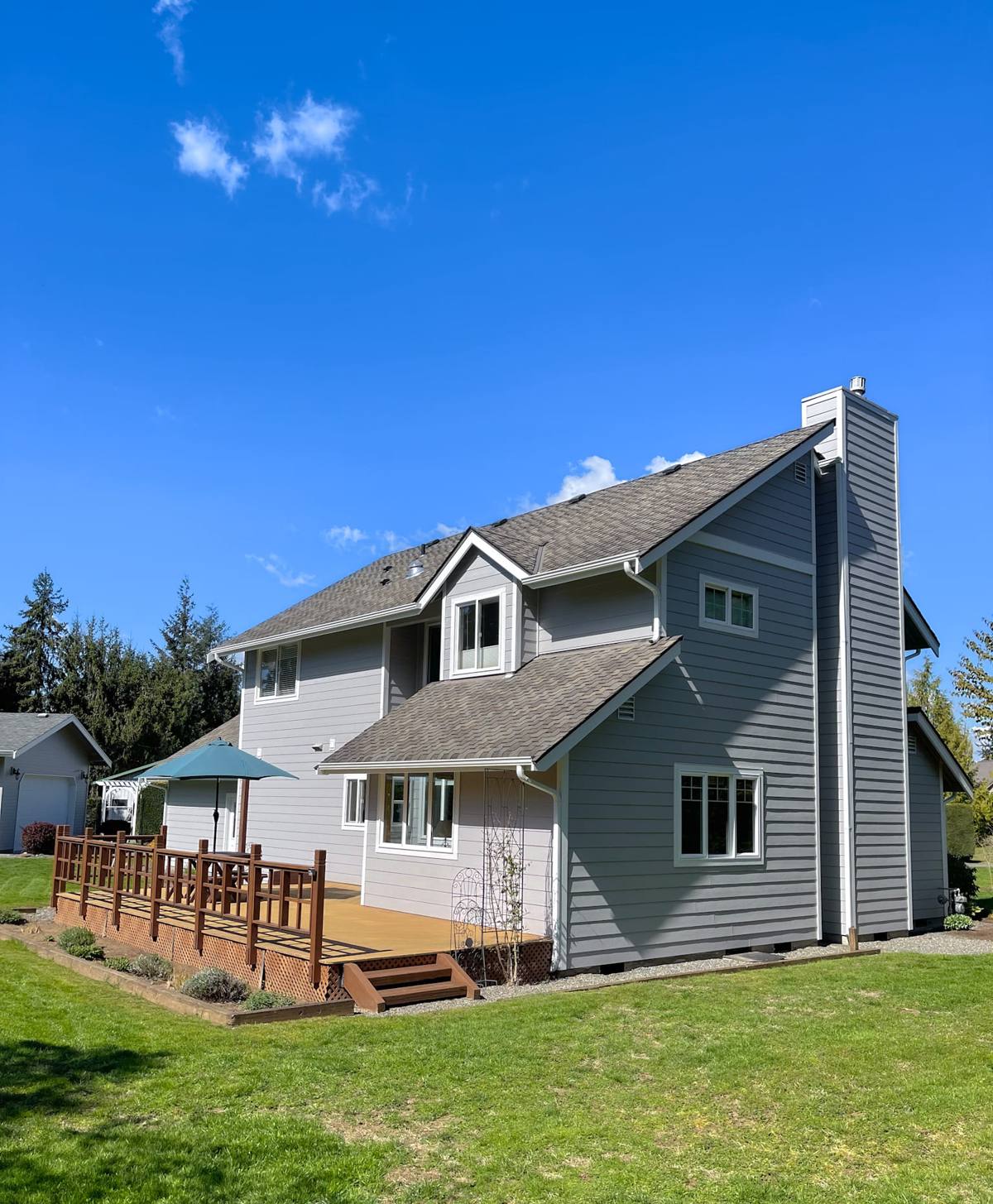
Why Salt Air, Driving Rain, and Moss Season Take a Toll
Homes near the water in Whatcom County deal with a combination of stresses that inland siding jobs don't see nearly as often. Understanding each one is what separates a board and batten job that looks good for two years from one that holds up for decades.
Salt Air
Salt-bearing air is corrosive to metal fasteners, flashing, and trim hardware. Cheap or improperly rated fasteners can start staining or weakening years before the siding itself shows any wear, which is why fastener selection isn't something we treat as an afterthought on lakefront and near-shore jobs.
Driving Rain
Wind-driven rain doesn't just fall straight down — it gets pushed sideways into seams, under battens, and behind trim. On a board and batten wall, that means every batten-to-panel joint and every horizontal transition needs to shed water outward, not funnel it inward. A wall assembly without proper drainage behind it will trap that moisture instead of letting it escape.
A Long Moss Season
Shaded, north-facing walls and roof lines around Silver Beach can stay damp for months at a time. Moss and algae don't just look bad — they hold moisture against the siding surface, which accelerates rot in wood products and breaks down cheaper coatings faster than manufacturers advertise. Siding material and finish quality make a real difference in how much of that growth takes hold in the first place.
Why We Only Install Board & Batten in James Hardie Fiber Cement
What Wood and Vinyl Board & Batten Get Wrong Here
Traditional wood board and batten can look great on day one, but it's a wood product living in a climate that stays wet for a large part of the year. It needs regular repainting or restaining, is vulnerable to rot at the batten edges and panel seams, and gives moss and mildew an organic surface to grip. Vinyl board and batten avoids the rot problem but introduces its own: it expands and contracts with temperature swings, can warp or bow over time, and the panels themselves are not something you repaint or refinish — once the color fades or a panel cracks, you're replacing sections rather than restoring them.
The Hardie System We Use Instead
We install board and batten using James Hardie fiber cement — vertical HardiePanel with true battens, finished in the factory with ColorPlus Technology. Fiber cement doesn't rot, doesn't feed moss the way wood does, and holds its shape in temperature swings the way vinyl can't. The factory-applied finish is baked on and warranted separately from the substrate, so the color holds up under UV and salt exposure without the recoat cycle wood siding demands. It's also engineered in Hardie's HZ5 product line specifically for climates with more moisture exposure, which matters more here than in a lot of the country.
What a Correct Board & Batten Installation Actually Involves
The style is simple. The execution is not. Most board and batten failures we get called out to fix trace back to a handful of shortcuts taken during install — not a defect in the siding material itself.
Rainscreen Gap and Drainage
A board and batten wall needs a drainage gap behind the panel, not a panel nailed flat against the weather barrier. That gap lets any moisture that does get behind the siding drain and dry out instead of sitting against the sheathing. Skipping it is the single most common shortcut that leads to hidden rot years down the road.
Batten Spacing and Fastening
Battens have to be spaced and fastened according to Hardie's engineering specs — not eyeballed for a "clean" look. Fastener type and placement affect how the panel handles expansion and how well it resists wind-driven rain at the seams. This is also where corrosion-resistant fasteners rated for coastal and marine-influenced environments matter, given the salt air this area sees.
Flashing and Trim Details
Every horizontal transition — window heads, roof-to-wall intersections, deck ledgers — needs flashing that directs water out and away from the wall assembly, not siding that simply butts up against the trim and hopes for the best.
Factory Finish vs. Field-Applied Paint
Cut edges and field cuts get sealed per manufacturer spec so the fiber cement's factory protection isn't compromised at every joint. This is a small step that a lot of crews skip because it slows the job down — and it's one of the first places moisture damage shows up when it's missed.
Comparing Board & Batten Materials for a Silver Beach Home
| Material | Moisture & Moss Resistance | Maintenance | Realistic Lifespan Here | Finish |
|---|---|---|---|---|
| James Hardie Fiber Cement | Strong — non-organic, engineered for wet climates | Occasional wash; no repainting cycle | Decades with correct install | Factory ColorPlus, separately warranted |
| Cedar / Wood | Weak — organic surface feeds moss and rot | Repaint/restain every few years | Shortened by rot risk at seams | Field-applied, fades and needs upkeep |
| Vinyl | Moderate — doesn't rot but traps moisture behind it if installed poorly | Low, but panels aren't repairable/refinishable | Variable — warping and fading are common | Molded-in color, fades with UV |
| LP SmartSide | Wood-based composite — better than raw cedar, still organic core | Periodic recoating recommended by manufacturer | Depends heavily on edge sealing and upkeep | Factory-primed, field top-coat needed |
Our Process, Start to Finish
Assessment and Moisture Check
We start by looking at what's actually happening behind the existing siding, not just what's visible on the surface. On lake-influenced properties, we pay particular attention to north- and west-facing walls where moss growth and driving rain exposure tend to be worst.
Installation
Panels and battens go up over a proper drainage gap, with flashing detailed at every transition before the next course goes on. We don't caulk over problems that should be flashed — caulk is a finish detail, not a waterproofing strategy.
Final Details and Cleanup
Trim, corners, and any transitions to existing siding or masonry get finished to match the factory ColorPlus finish, and the site is cleaned up before we walk it with the homeowner.
What Owning Hardie Board & Batten Looks Like Afterward
One of the real advantages of switching to fiber cement in this climate is how little ongoing work it asks for compared to wood. That said, no siding is entirely maintenance-free here — a few habits go a long way toward getting the full lifespan out of the material.
- Rinse siding with a garden hose once or twice a year to keep salt residue and organic buildup from accumulating, especially on shaded walls
- Keep gutters clear so overflow isn't running down the wall face during heavy rain events
- Trim back vegetation and tree cover that keeps a wall shaded and damp for extended periods
- Check caulking at trim joints periodically and have any cracked or missing sealant addressed before winter rains set in
- Have a professional take a look if you notice a seam, corner, or batten edge that looks like it's separating — small fixes are cheap; water damage behind the wall isn't
Why a Crew That Already Works Silver Beach Matters
Board and batten installed to spec looks the same on paper anywhere in the country. What changes from job to job is how much the local climate is going to test that installation, and how well the crew putting it up understands the specific conditions of the property. A contractor who works Silver Beach regularly already knows which walls take the worst of the driving rain, how aggressively moss establishes itself on shaded lake-facing sides, and what fastener and flashing choices actually hold up here versus what's fine somewhere drier. That's the difference between a crew following a generic install manual and one applying it correctly to your house.
If you're weighing board and batten for a home in Silver Beach, we're happy to take a look and talk through what your specific walls need — no pressure, no obligation. Reach out for a free estimate using the form below.