 Sudden Valley Siding
 Decks in Columbia Take More Abuse Than People Expect
Homeowners in the Columbia area, tucked into the broader Sudden Valley and Lake Whatcom corridor of Whatcom County, tend to think of their deck as an outdoor living space first and a piece of exterior construction second. That's backwards from a builder's point of view. A deck out here sits under tree cover for much of the year, takes on moisture from long stretches of drizzle and driving rain, and rarely gets a full dry-out before the next system rolls through. That combination is exactly what shortens the life of a poorly built deck: trapped moisture under boards, fasteners that weren't rated for damp wood contact, and a moss layer that builds up on any surface that doesn't shed water and get sun.
We're not describing a hypothetical. It's the pattern we see on almost every deck we're called out to repair or replace in this part of the county — softened ledger boards, corroded hardware, and decking that looks fine from a distance but is spongy or delaminating where water actually collects. None of that is inevitable. It's the result of decisions made (or skipped) during the original build.
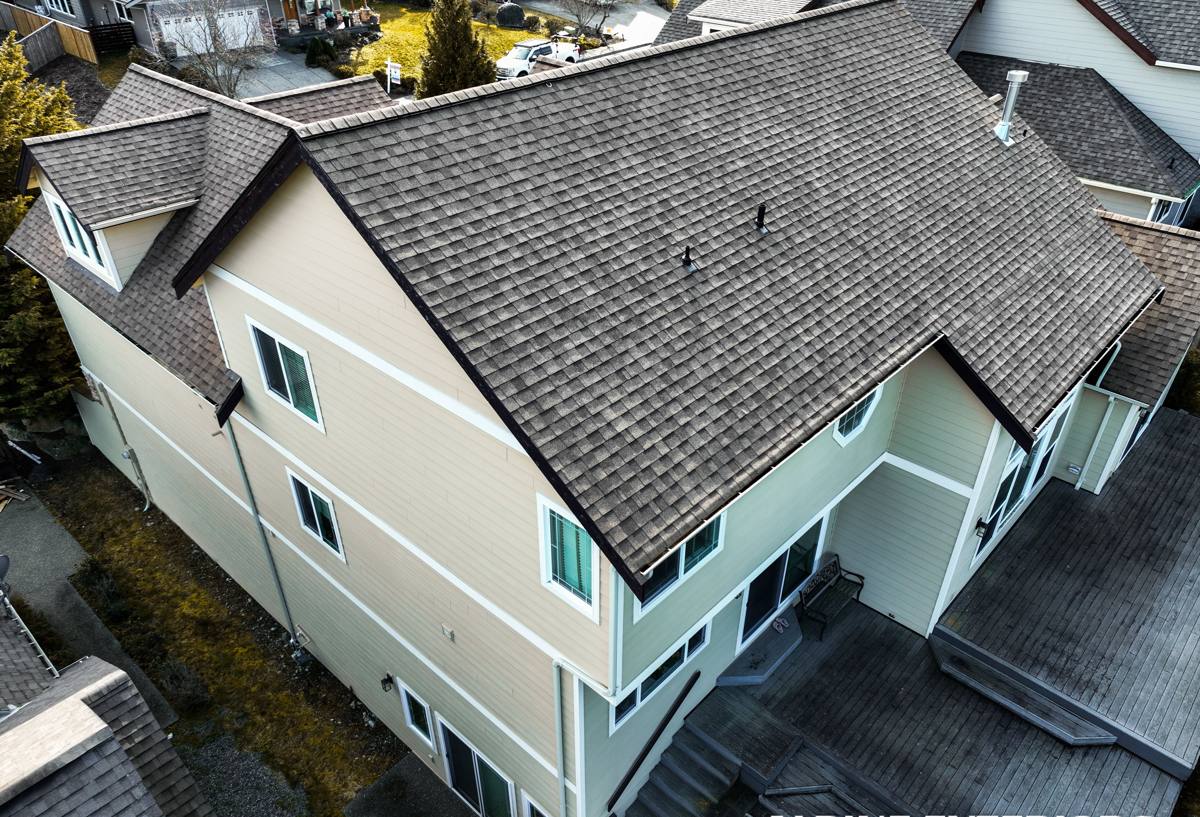
What a Deck Built for This Climate Actually Needs
A deck that's going to hold up around Columbia and the rest of the Sudden Valley area needs to be built with moisture as the default assumption, not the exception. That shows up in several places:
- Ledger board flashing that actually diverts water away from the house rim joist, not just a bead of caulk behind the board
- Stainless steel or heavy hot-dip galvanized fasteners and hardware — coated deck screws that are fine in a dry climate corrode faster here
- Joist tape or a moisture barrier on top of framing lumber so end grain and fastener holes aren't wicking water for months at a time
- Decking gap spacing sized correctly for the material, so boards can actually drain and dry between rain events instead of holding a film of water
- Airflow underneath the deck — skirting, if used, should never fully seal off ventilation
Skip any one of these and the deck will probably still look acceptable for a few years. The failures we're called to fix are almost always in the parts nobody sees during a walkthrough — framing, flashing, and fasteners — not the decking surface itself.
Moss and Algae Aren't Cosmetic Problems Here
In this part of Whatcom County, moss season isn't a few weeks in fall — it's most of the year for any deck surface that stays shaded and damp. Beyond looking bad, moss and algae hold moisture against the decking material and make the surface slick, which is a real fall hazard on stairs and ramps. Material choice, board spacing, and surrounding tree cover all affect how much of a problem this becomes, and it's something we talk through with every Columbia-area homeowner before we finalize a design.
Decking Material Options: A Straight Comparison
There's no single "best" decking material — there's the material that fits your budget, your maintenance appetite, and how much sun versus shade the deck actually gets. Here's how the common options stack up for this climate specifically:
| Material | Moisture Behavior Here | Maintenance | Typical Lifespan |
|---|---|---|---|
| Pressure-treated wood | Absorbs and releases moisture readily; needs to breathe and dry | Annual cleaning, periodic staining/sealing | 15–20 years with upkeep |
| Cedar | Naturally moisture- and rot-resistant, but still needs sealing in shaded, damp spots | Regular cleaning, sealing every 1–2 years | 20+ years if maintained |
| Capped composite (e.g., Trex, TimberTech-style) | Doesn't rot, but uncapped edges and poor drainage can still trap moisture underneath | Periodic washing; no staining or sealing | 25–30 years |
| PVC decking | Fully synthetic, sheds water well, least moisture absorption | Lowest maintenance of the group | 25–30+ years |
We install both wood and composite/PVC systems. Our standard isn't to push everyone toward one product — it's to make sure whatever material you choose is installed with the drainage, fastening, and ventilation details that let it perform the way the manufacturer intends. A premium composite board installed over unventilated framing will still trap moisture and cause problems; it just hides them longer than wood does.
Structural Basics That Get Skipped on Cut-Rate Jobs
Most of the deck failures we see didn't start with the decking boards — they started with shortcuts in the structure underneath. A few things worth understanding as a homeowner, even if you're not doing the work yourself:
Footings
Footings need to be sized and set to local frost depth and soil conditions, not just "deep enough to look right." Ground conditions vary across the Sudden Valley area — some lots have rockier or clay-heavy soil that behaves differently than sandy soil when it comes to frost heave and drainage. We check soil conditions on-site rather than assuming a standard footing depth will work everywhere.
Ledger Attachment
The ledger board — where the deck ties into the house — is the single most common point of structural failure in older decks. Lag bolts or through-bolts sized to code, proper flashing, and correct spacing all matter here. This connection carries a significant share of the deck's total load, so it's not a place to save time.
Joist Spacing and Hardware
Joist spacing needs to match the decking material's span rating — composite and PVC boards often require tighter joist spacing than solid wood decking to avoid flexing or long-term sagging. Joist hangers and structural connectors should be rated for exterior, damp-use conditions.
Design Considerations for Columbia-Area Homes
Lots in this part of the county are often sloped, wooded, or close to the lake, which changes how a deck should be designed:
- Multi-level decks are common on sloped lots and need engineered stair and landing transitions, not just stacked framing
- Tree cover means factoring in shade patterns for moss control and, in some cases, planning for future tree trimming access
- Railing height and baluster spacing need to meet current code, especially on elevated decks over steep grades
- Ventilation and skirting design matter more on lots where the deck sits low to the ground, since airflow underneath is already limited
Our Process From First Call to Final Walkthrough
We keep the process straightforward:
- On-site assessment — we look at the existing structure (if there is one), the soil, drainage, sun/shade exposure, and how the deck will connect to the house
- Design and material discussion — we walk through decking material trade-offs based on your budget and maintenance preferences, not a one-size answer
- Permit handling — we prepare and submit what's required through Whatcom County for your project
- Build — framing, flashing, and fastening done to the standards outlined above, with inspections at the appropriate stages
- Final walkthrough — we go over the finished deck with you, including basic maintenance expectations for the first year
Permits and Local Code
Sudden Valley and the surrounding Columbia area fall under Whatcom County's building jurisdiction rather than a city building department. Most decks attached to a house, and many freestanding decks above a certain height, require a permit and inspection. Requirements can shift over time and depend on specifics like deck height, size, and attachment method, so we confirm current requirements for your specific project rather than relying on what applied to a job we did last year. Skipping permits on an attached deck isn't just a code issue — it can also complicate things if you sell the house later or file an insurance claim.
Maintenance and Moss Season: Keeping It Looking Right Year-Round
Whatever material you choose, a little seasonal attention goes a long way in this climate. A basic maintenance routine we recommend to Columbia-area clients:
- Sweep debris and standing leaves off the deck regularly in fall — trapped organic matter feeds moss and holds moisture
- Rinse or lightly scrub moss and algae buildup before it gets established, rather than after it's thick and slick
- Check and clear gaps between boards so water can drain instead of pooling
- Inspect visible fasteners and hardware once a year for rust or loosening
- Reseal or restain wood decking on the schedule appropriate to the product — don't wait until it's visibly gray and dry
- Confirm underneath ventilation isn't blocked by stored items, plants, or debris
None of this is complicated, but it's the difference between a deck that looks and performs well at year fifteen and one that's showing rot and failure by year eight.
Why Hire a Crew That Already Works in Columbia and Sudden Valley
Deck construction that works fine in a dry inland climate doesn't automatically work here. A crew that builds mostly in low-moisture regions may not default to the flashing, fastener, and ventilation details that matter most around Lake Whatcom and the Columbia area specifically. We build and repair decks in this part of Whatcom County regularly, which means we're not guessing at how much moisture exposure a given lot gets or how fast moss establishes on a shaded north-facing deck versus one that gets afternoon sun. That local familiarity shows up in fewer callbacks and decks that are still solid well past when a corner-cut job would be showing problems.
If you're planning a new deck or dealing with an aging one that's starting to show rot, soft spots, or heavy moss buildup, we're happy to take a look and talk through honest options — no pressure, no upsell. Reach out using the form below for a free estimate.