 Sudden Valley Siding
 Why Silver Beach Homes Wear Out Their Siding Faster Than the Manual Says
Every siding product sold in the Pacific Northwest comes with a warranty written for average conditions. Silver Beach doesn't get average conditions. Homes here sit close enough to the water and the tree line to catch three separate stresses at once: marine air moving in off Whatcom County's waterways carrying fine salt, long stretches of driving rain that push moisture sideways into wall assemblies, and a shaded, damp microclimate that keeps moss and algae alive on north- and west-facing walls for most of the year. Any one of those is manageable. Together, they shorten the useful life of siding that wasn't built for this specific mix.
We install siding across Sudden Valley and the surrounding Whatcom County neighborhoods, and Silver Beach comes up constantly in our estimate calls for one reason: homeowners are replacing siding on houses that are nowhere near the age they expected to need it. That's not bad luck. It's a mismatch between the product and the site conditions.
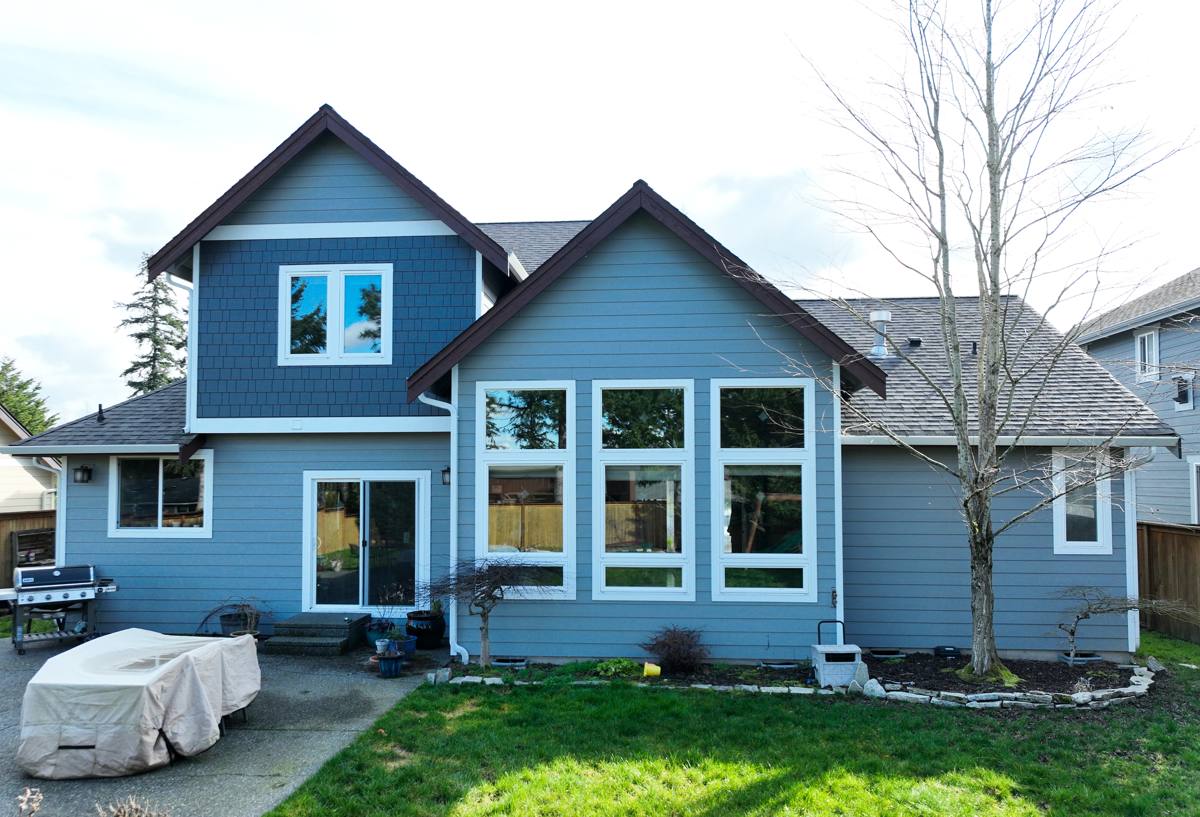
What Salt Air, Rain, and Moss Actually Do to a Wall
Salt-Laden Air
Airborne salt is corrosive to metal fasteners and trim, and it's abrasive to painted finishes over time — it accelerates chalking and fade on lower-grade coatings, especially on the sun-and-wind-exposed sides of a house. Siding that relies on a field-applied paint job has no real defense here; the finish is the first thing to degrade, and once it goes, the substrate underneath is exposed.
Driving Rain
Whatcom County doesn't just get a lot of rain — it gets a lot of wind-driven rain, which behaves differently than a straight-down shower. It gets forced up under laps, into seams, and behind trim that isn't detailed correctly. Siding materials that swell, wick, or delaminate when they take on water fail from the inside out, often years before the surface shows any obvious sign of trouble.
Extended Moss Season
Shaded lots and persistent humidity mean moss and algae have a long growing season on north- and west-facing walls. This isn't just cosmetic — moss holds moisture against the siding surface far longer than an open, sun-exposed wall would ever see, which compounds the rain problem instead of just sitting on top of it.
Signs a Silver Beach Home Actually Needs Replacement (Not Just Repair)
- Soft or spongy spots when you press on the siding, especially near the bottom courses and around window trim
- Visible swelling, bubbling, or delamination — layers separating or the board's edges puffing up
- Paint that's failing faster than a normal repaint cycle, particularly on rain- and wind-exposed elevations
- Persistent moss or dark streaking that comes back within a season of cleaning
- Gaps opening at seams, corners, or trim where caulking keeps failing no matter how often it's redone
- Interior signs — musty smell, peeling interior paint, or soft drywall near exterior walls — that point to moisture getting past the siding entirely
If you're seeing two or more of these, you're past the point where spot repair buys you meaningful time. A full replacement lets us also fix whatever water management problem allowed the damage to start in the first place — patch repairs on failing siding almost never do that.
What a Correct Siding Replacement Involves
Replacing siding is not a swap-the-boards job. Done right, it's a rebuild of the wall's entire water management system, and skipping steps here is exactly how a house ends up back in this same position in ten years instead of thirty.
Tear-Off and Inspection
Old siding comes off down to the sheathing so we can actually see what's underneath — rot, soft framing, failed old house wrap, or evidence of the moisture path that caused the original failure. You can't diagnose that from the outside.
Water-Resistive Barrier and Flashing
A new weather-resistive barrier goes on with correctly lapped seams, and flashing gets detailed at every window, door, and horizontal trim transition — the exact spots where driving rain finds its way in. This layer matters more than the siding material itself for keeping a house dry long-term.
Fastening and Clearances
Fasteners, spacing, and butt joints get installed to the manufacturer's engineered specification, not a generic "how we always do it." Ground clearance and gaps at grade, decks, and roof lines are set correctly so the siding isn't sitting in a position to wick moisture from below.
Trim and Caulking Details
Trim gets back-primed or factory-finished on all cut edges, and caulking is used only where the manufacturer specifies it — not as a substitute for correct flashing. Over-caulking is a common shortcut that traps water instead of shedding it.
Why We Install Only James Hardie Fiber Cement
We made a decision a long time ago to stop installing vinyl, LP SmartSide, and other engineered wood or composite sidings — not because every one of those products is bad in every climate, but because none of them are the right match for what Silver Beach and the rest of Whatcom County actually throw at a wall year-round. Vinyl expands, contracts, and can warp or crack in prolonged cold-and-wet cycling. Engineered wood products are more sensitive to sustained moisture exposure at cut edges and seams than most homeowners are told at the point of sale, and once moisture gets in, the failure mode is often swelling and delamination rather than something you can patch.
James Hardie fiber cement is non-combustible, doesn't support the kind of moisture-driven swelling that engineered wood does, and holds its factory-applied ColorPlus finish through the salt air and UV exposure this area sees without the chalking and fade problems we see on field-painted siding. Hardie also builds specific HZ5 formulations engineered for wetter, harsher climate zones — the Pacific Northwest is squarely the kind of environment that product line was designed to handle. The finish carries a real transferable warranty, which matters when a house eventually sells.
We're not going to tell you every other product on the market is worthless. We're telling you why, after years of tearing failed siding off of homes in this exact climate, this is the one material we're willing to put our name behind and warranty our own installation on.
Our Process, Start to Finish
- On-site assessment — we walk the exterior, check for existing moisture damage, and look at sun/shade and rain exposure by elevation before quoting anything.
- Written estimate — a clear scope, product selection (Hardie plank, panel, or shingle profile and color), and a firm price, not a range that grows once work starts.
- Tear-off and wall inspection — old siding removed, sheathing and framing checked, any rot or damage addressed before anything new goes back on.
- Water management rebuild — new barrier, flashing, and trim details installed to spec.
- Hardie installation — fastened, spaced, and finished to manufacturer requirements, including caulking and touch-up paint at cut edges.
- Final walkthrough — we go over the finished job with you on-site before calling it done.
What Drives the Cost of a Silver Beach Siding Replacement
| Factor | Why It Matters Here |
|---|---|
| House size and wall complexity | More corners, dormers, and trim transitions mean more flashing detail work, which is where quality is won or lost |
| Extent of hidden damage | Rot found at tear-off adds sheathing or framing repair before new siding can go on |
| Siding profile and finish | Lap, shingle, and panel Hardie products differ in material and labor cost; some ColorPlus colors and textures cost more than others |
| Access and site conditions | Slopes, tree cover, and tight lot lines common around Sudden Valley and Silver Beach can add setup and staging time |
| Trim and accessory work | New trim boards, soffit, or fascia done alongside siding is more efficient than doing it as a separate project later |
We won't quote a job without seeing the house, but these are the variables that actually move the number — not the size of the crew's truck.
Why Hiring a Crew That Already Works Silver Beach Matters
Siding installation instructions read the same everywhere in the country. What changes is how a crew handles the details that matter for this specific microclimate — where extra flashing attention pays off, which elevations need the most protection from wind-driven rain, and how to sequence a tear-off around a wet forecast instead of exposing open walls to it. A contractor who's done this work up and down Sudden Valley and Silver Beach isn't guessing at those calls; they've already seen what happens when they're skipped.
Local experience also shows up in smaller, practical ways: knowing realistic weather windows for tear-off scheduling, having a relationship with the same James Hardie material suppliers so color and profile availability isn't a surprise, and being reachable after the job if a question comes up — not a name from an online lead form that did one job in the area and moved on.
After Your New Siding Goes On
- Rinse siding annually with a garden hose and soft brush — avoid pressure washers, which can force water behind laps and joints
- Check caulking at trim and penetrations once a year and touch up any cracked or missing sections
- Trim back vegetation and tree cover that keeps a wall shaded and damp, to shorten the moss season on that elevation
- Keep gutters clear so overflow isn't running down the face of the siding during heavy rain
- Watch ground-contact areas near grade, decks, and planters, and keep soil and mulch from building up against the bottom edge
A correctly installed Hardie system needs very little from you beyond this — that's most of the point of choosing it.
If your Silver Beach or Sudden Valley home is showing any of the wear signs above, or you just want an honest read on how many years you've got left before replacement makes sense, we'll come take a look. The estimate is free, there's no pressure, and you'll get a straight answer either way — just fill out the form below.