 Sudden Valley Siding
 Why Acme Windows Wear Out Differently Than City Windows
Acme sits back in the timber and foothill country east of Sudden Valley, and that setting changes what a window has to deal with year-round. Homes here get less direct sun and more shade than properties out in the open valley, which means wood trim, sills, and frames stay damp longer after every rain. Add in Whatcom County's long stretch of wet months, and you've got a climate that's genuinely tough on window assemblies — not because any one storm is dramatic, but because the moisture never really lets up.
We also see more moss and algae growth on north-facing walls and window sills out here than we do on more open, wind-exposed properties. That's a maintenance issue on siding, but on a window it's a warning sign — moss holding moisture against a sill or a bottom corner is often the first place rot starts. Combine that with driving rain that gets pushed sideways during winter systems, and older or poorly flashed windows in Acme tend to fail from the bottom corners inward, well before the glass itself is the problem.
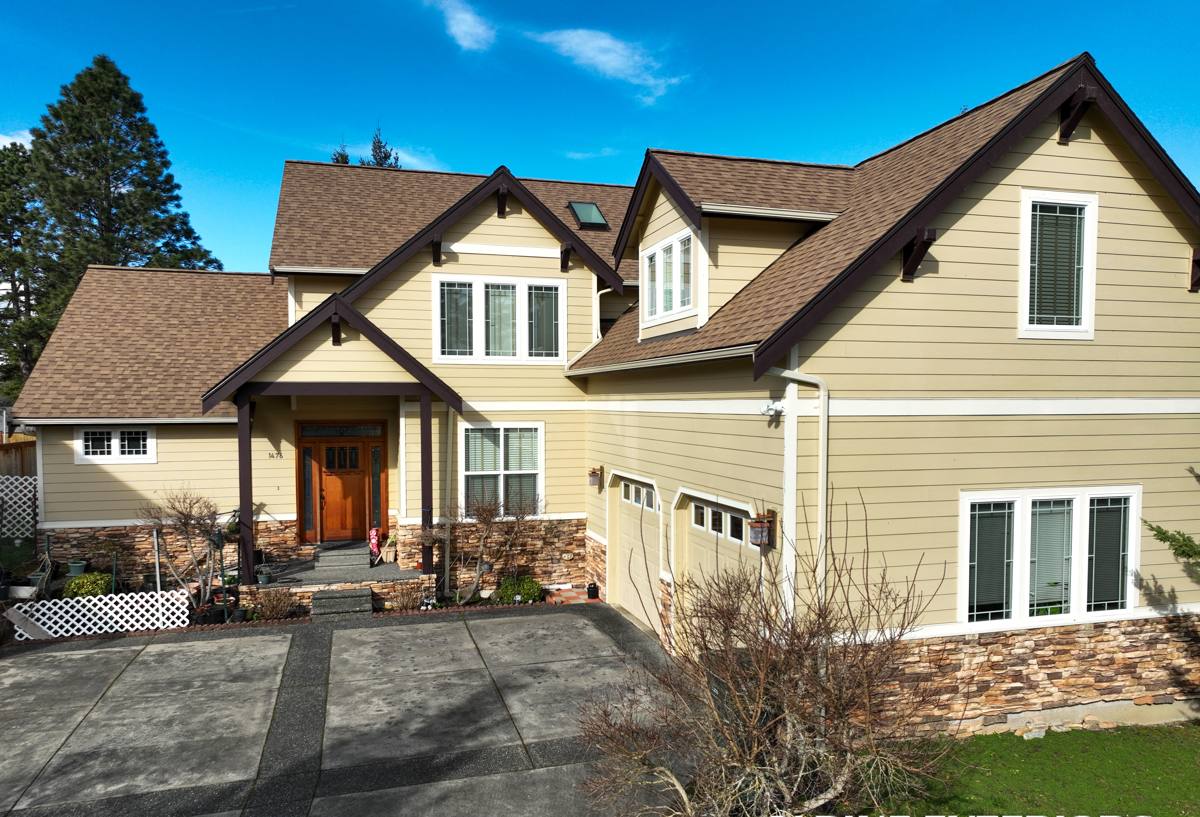
Signs an Acme Home Needs Window Replacement, Not Just Repair
Not every window problem calls for full replacement. But in this climate, certain signs mean the window and its opening have already taken on water damage that repair won't fix.
- Soft or spongy wood at the bottom corners of the sill or jamb when you press on it
- Paint that bubbles or peels repeatedly in the same spot no matter how often it's redone
- Visible gaps between the window frame and siding or trim
- Fogging or moisture between double-pane glass — a sign the seal has failed
- Windows that are noticeably harder to open, close, or lock than they used to be
- Persistent moss or dark staining on the sill that comes back within weeks of cleaning
- Drafts you can feel with a hand near the frame on a windy day
If you're only seeing cosmetic wear — dull glass, chalky paint, a stiff lock — a repair or refinish is often enough. Once the framing itself has taken on water, replacement is the more honest recommendation, because painting over damaged wood just hides the problem for another season.
What a Correct Window Replacement Job Actually Involves
Removal and Opening Inspection
The old window comes out first, and the opening gets inspected before anything new goes in. This is the step that gets skipped on rushed jobs, and it's the one that matters most in a climate like ours. If the sill or the framing around the rough opening has soft wood, water staining, or old failed sealant, that needs to be addressed before a new window is set — otherwise you're installing a good window into a bad opening, and the same failure shows up again in a few years.
Flashing and Weatherproofing
This is where most of the long-term performance of a window replacement is decided, and it's largely invisible once the job is done. Proper flashing tape and a weather-resistant barrier around the opening direct any water that gets behind the siding back out, rather than letting it pool at the sill. In an area that sees sustained rain and wind-driven moisture, this detail is not optional — it's the difference between a window that lasts and one that causes a repeat call in five years.
Fit, Shimming, and Insulation
A window needs to be plumb, level, and square in the opening, with consistent shim spacing so it doesn't bind or sag over time. The gap between the window frame and the rough opening gets insulated — usually with a low-expansion foam — to cut drafts without bowing the frame. Overfilled or underfilled gaps are a common source of both energy loss and operational problems down the line.
Interior and Exterior Finish
Once the window is set and sealed, trim and caulking finish the job on both sides. Exterior caulking in this climate should be a product rated for constant moisture exposure and UV, not a general-purpose caulk that will crack and open a path for water within a couple of seasons.
Choosing the Right Window for This Climate
Material choice matters more here than in drier parts of the state, because whatever you install is going to spend a good part of the year wet or humid. Below is how the common options compare for a wooded, moisture-prone property like the ones we see in Acme.
| Material | Moisture Behavior | Maintenance | Typical Lifespan |
|---|---|---|---|
| Vinyl | Won't rot; seams and seals still need to be watched | Low — occasional cleaning | 20-30 years |
| Fiberglass | Very stable in wet/dry cycling, resists warping | Low | 30-40 years |
| Wood-clad | Good if cladding and flashing are correct; vulnerable at cut edges and joints | Higher — finish and joints need periodic attention | 20-30 years with upkeep |
| Aluminum | Doesn't rot but conducts cold, prone to condensation in humid climates | Moderate | 20-30 years |
We lean toward vinyl and fiberglass for most Acme and Sudden Valley homes because they hold up to sustained humidity without the ongoing finish maintenance that wood-clad units demand in a climate this wet. That's not a knock on wood-clad windows as a product — they can look great and perform well — it's a matter of what most homeowners actually want to keep up with year after year. If you want the look of wood on the interior with better exterior durability, several manufacturers offer wood-interior, fiberglass or vinyl-exterior hybrids worth discussing at the estimate.
What Drives Cost on an Acme Window Replacement
We won't quote a number without seeing the job, but the honest cost factors are these:
| Factor | Why It Matters |
|---|---|
| Number and size of openings | Larger and custom-sized windows cost more per unit |
| Condition of the existing framing | Rot repair at the sill or jamb adds labor beyond the window itself |
| Material and glass package | Double vs. triple pane, low-E coatings, and gas fill all affect price |
| Access | Second-story or heavily wooded/limited-access openings take more time |
| Trim and siding tie-in | Matching existing trim profiles or siding cuts can add finish work |
The single biggest wildcard is almost always hidden rot found once the old window is out — which is exactly why a proper inspection at the start of the job, not after, is worth insisting on.
How We Handle a Window Replacement Job in Acme
- On-site assessment — we look at every window being considered, check sills and framing for soft spots, and talk through what's actually needed versus what can wait.
- Written estimate — clear pricing on materials, labor, and any framing repair we expect to find, with no surprise change orders for work we could have anticipated.
- Scheduling around weather — we plan install days around the forecast so openings aren't sitting exposed during a wet stretch, which matters more here than in drier regions.
- Removal, repair, and flashing — old units come out, any damaged framing gets replaced, and the opening is properly flashed before the new window goes in.
- Install, seal, and finish — window is set, insulated, sealed with climate-rated caulking, and trimmed to match.
- Walkthrough — we test operation, locks, and seals with you before calling the job done.
Why Hiring a Crew That Already Works Acme Matters
Window replacement isn't a one-size-fits-all job, and the right approach genuinely changes based on where a house sits. A crew that mostly works drier, more open parts of a state can underestimate how much attention flashing and moisture detailing need on a shaded, tree-covered property like the ones common around Acme. We work throughout Sudden Valley and the surrounding Whatcom County area regularly enough to know that a window opening here needs to be treated as a long-term moisture management detail, not just a hole to fill with a new unit. That shows up in small decisions — the sealant we choose, how we flash a sill, whether we push back on installing during a wet week — that add years to how long the job actually lasts.
Keeping New Windows Performing Once They're In
A correctly installed window still benefits from basic upkeep in this climate, especially given the moss and moisture exposure common in wooded settings like Acme:
- Rinse sills and tracks a couple times a year to clear moss spores and organic debris before they take hold
- Check exterior caulking annually, especially after the first winter, and touch up any spots that have opened or cracked
- Keep gutters and downspouts clear so roof runoff isn't sheeting down over window heads
- Trim back overhanging branches or brush that keep a window shaded and damp longer than necessary
- Operate locks and hardware periodically through the year so mechanisms don't seize from disuse
None of this is heavy maintenance — it's the kind of routine check that catches a small issue before it becomes a framing repair.
Get a Straight Answer on Your Acme Windows
If you're not sure whether your windows need repair, replacement, or just some attention to the flashing and caulking around them, we're glad to take a look. We'll give you a free, no-pressure estimate and a straight answer about what your home actually needs — use the form below to get started.