 Sudden Valley Siding
 Storm Damage Roof Repair for Deming Homes
Deming sits along the Nooksack River corridor in Whatcom County, close enough to Sudden Valley that the two areas share the same weather patterns: wet Pacific fronts rolling in off the Strait, wind funneling through the valley, and long stretches of overcast, moisture-heavy air for most of the year. A roof out here doesn't fail all at once. It fails a shingle at a time, a flashing seam at a time, usually after a storm nobody thought was "that bad." Our crews work storm damage repairs in Deming regularly, and the calls almost always start the same way — a homeowner noticed a stain on a ceiling weeks after the wind actually did the damage.
This page covers what storm damage repair actually means for a Deming roof, what a correct repair looks like versus a rushed one, and how our process works from the first call to the final inspection.
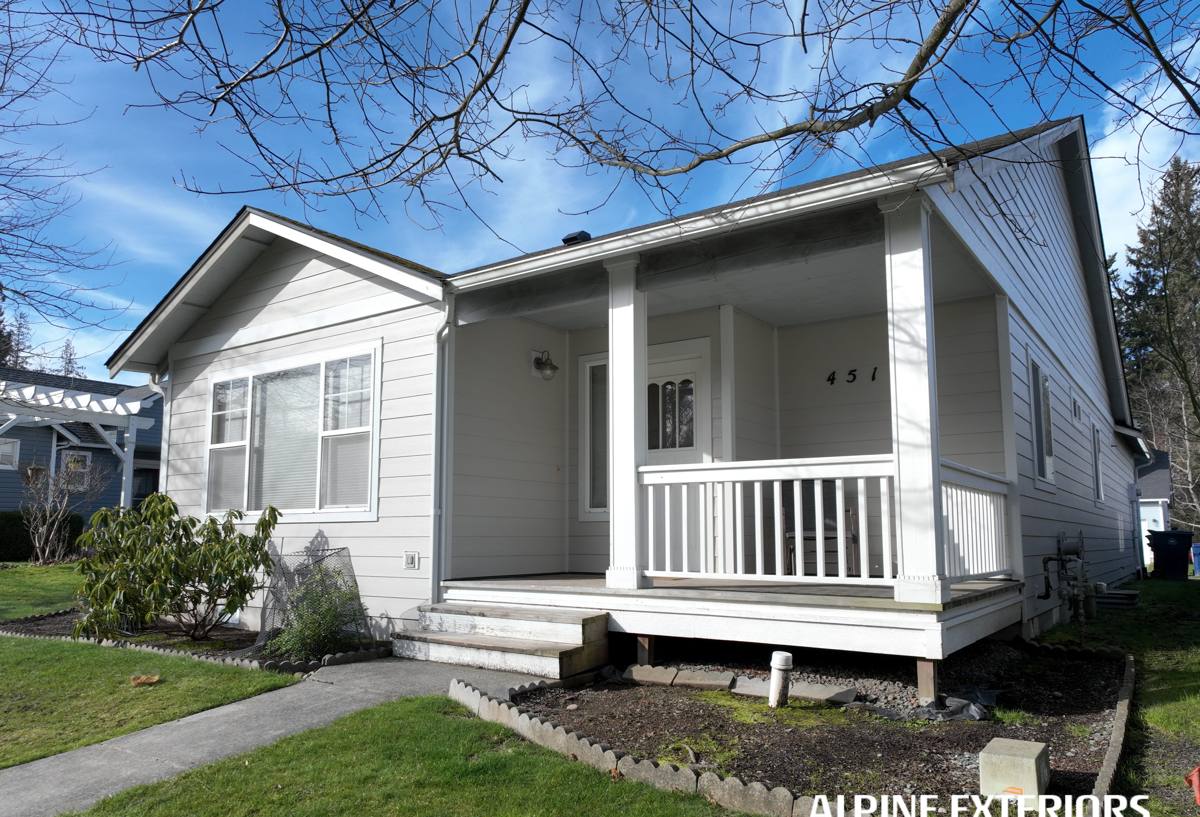
What Whatcom County Storms Do to a Roof
The damage mechanisms here aren't exotic, but they compound. Understanding them helps explain why a repair that looks fine from the ground can still be leaking underneath.
Wind
Sustained wind and gusts during winter storms lift shingle edges and tabs, breaking the factory seal. Once that seal is broken, the shingle doesn't always blow off — it just flaps in every wind event after that, working the nails loose and letting water drive up underneath it during the next rain.
Driving Rain
Rain that comes in sideways, which is common with valley wind patterns, gets pushed under flashing, into vent boots, and along ridge caps in ways that straight-down rain never would. This is why leaks often show up around chimneys, skylights, and roof-wall intersections after a storm rather than in the middle of a plain shingle field.
Long Moss Season
Between the tree cover common around Deming and the number of damp, shaded months each year, moss gets a long runway to establish itself. Moss holds moisture against the shingle surface, lifts shingle edges as it grows, and accelerates granule loss. A storm that would be a non-event on a clean roof can tear loose shingles that moss has already weakened.
Signs Your Roof Has Storm Damage
Most storm damage is not obvious from the ground. Here's what we tell Deming homeowners to check after any significant wind or rain event:
- Granules collecting in gutters or at downspout outlets — a sign of accelerated shingle wear
- Shingles that look curled, lifted at the edges, or visibly out of alignment
- Missing shingles or exposed felt/underlayment patches
- Dented or dislodged flashing around chimneys, vents, and skylights
- New water stains on interior ceilings or upper walls, even faint ones
- Moss buildup that's thicker on one side of the roof (usually the shaded, north-facing slope)
- Debris — branches, needles, or larger limbs — that struck the roof during the storm
- Sagging or soft-feeling spots noticed from the attic, if accessible
If you see two or more of these after a storm, it's worth a professional look before the next rain event finds the gap.
What a Correct Storm Damage Repair Involves
Full Inspection, Not a Glance
A correct repair starts with a full inspection — the storm-hit area plus the rest of the roof, since one wind event rarely damages just one spot. We check flashing, ridge caps, vent boots, valleys, and the attic side where accessible. Skipping this step is the single biggest reason storm repairs fail to actually stop the leak.
Temporary Protection When Needed
If a roof has active exposure — missing shingles, torn underlayment, exposed decking — the first priority is stopping additional water intrusion, typically with tarping or temporary sealing, before scheduling the permanent repair. This matters most during Whatcom County's wetter months, when even a day or two of exposure can soak insulation and drywall.
Repair vs. Replace, Honestly
Not every storm-damaged roof needs full replacement, and not every roof can be safely patched. The honest answer depends on the roof's age, how widespread the damage is, and whether the surrounding shingles are still sound enough to tie a repair into. We'll tell you plainly which category your roof falls into rather than defaulting to the more expensive option.
Materials Matched to the Climate
Repairs use materials and fastening methods suited to sustained wind and long wet seasons — proper nail placement (not staples), correctly lapped flashing, and underlayment that holds up under repeated moisture exposure. A repair that looks right but skips these details tends to fail again in the next comparable storm.
Repair Options Compared
| Approach | Best For | Typical Lifespan Added | Cost Factor |
|---|---|---|---|
| Spot patch repair | Isolated wind/impact damage on an otherwise sound, newer roof | Matches remaining roof life | Lowest — limited materials and labor |
| Section/slope replacement | Damage concentrated on one slope, or roof nearing but not at end of life | 10–15+ years on that section | Moderate — depends on slope size and access |
| Full roof replacement | Roof at or past expected service life, or damage widespread across multiple slopes | Full new roof lifespan | Highest — but resets the whole roof, including flashing and ventilation |
We'll walk the actual numbers for your roof during the estimate rather than quoting from a table — every roof's access, pitch, and material differ.
Insurance Claims and Storm Damage
Many storm repairs in this area go through homeowners insurance, and a few things make that process smoother:
- Documentation matters — photos and a written scope of damage tied to a specific storm date help support a claim
- Adjusters appreciate a contractor who can point to a specific wind or rain event, not just general wear
- Not all damage is storm-related — an adjuster (and a straight-shooting contractor) will distinguish new damage from pre-existing wear like moss or age-related granule loss
- Getting an inspection soon after the storm strengthens the claim and limits secondary water damage
We provide the documentation homeowners need for their claim, but we don't inflate a scope of work to chase a bigger payout — that approach causes problems with adjusters and with future claims on the same roof.
Our Process for Deming Storm Repairs
- Call or request an estimate. Tell us what you noticed and when the storm hit — that timeline helps us prioritize active leaks.
- On-site inspection. We assess the storm-affected area and the full roof, checking flashing, vents, and valleys, not just the obvious spot.
- Written scope and options. You get a clear explanation of what's damaged, what's optional, and what repair level actually fits the situation — patch, section, or full replacement.
- Temporary protection if needed. Active leaks or exposed decking get covered before the permanent repair is scheduled.
- Repair work. Done with materials and methods suited to sustained wind and wet-season exposure, not just whatever's fastest.
- Final walkthrough. We confirm the repair is sealed and show you what was done before we consider the job finished.
Why Moss and Salt Air Change the Long-Term Picture
A storm repair that ignores moss and airborne salt is a repair that's likely to need revisiting. Moss left in place near a repair site will continue lifting shingle edges around the patched area. Salt-carrying air moving inland from the Strait accelerates corrosion on exposed metal flashing and fasteners over time, which is part of why we favor corrosion-resistant flashing and fastener choices on repairs in this region rather than whatever's cheapest at the yard. Addressing the storm damage without addressing what made the roof vulnerable in the first place — moss buildup, aging flashing, ventilation issues — just delays the next repair call.
Why Hire a Crew That Already Works Deming and Sudden Valley
A roofer who works this specific stretch of Whatcom County already knows which storm patterns cause which failures locally — which slopes catch the worst of the wind, how moss behaves under the tree cover common in this area, and what flashing details tend to fail first in homes built to older regional codes. That local pattern recognition shortens the inspection and improves the accuracy of the repair scope. It also means faster response after a widespread storm event, since we're not routing a crew in from across the county when several Deming and Sudden Valley homes need attention at once.
If a recent storm left you with a stain on the ceiling, missing shingles, or just a nagging feeling something's not right up there, we're glad to take a look. Request a free, no-pressure estimate using the form below and we'll walk the roof with you and give you a straight answer.