 Sudden Valley Siding
 Why Silver Beach Needs a Siding Plan Built for This Climate
Homes in the Silver Beach area near Sudden Valley face a specific combination of weather that a lot of siding crews treat as an afterthought: near-constant moisture, long stretches without direct sun on shaded elevations, and salt-tinged air moving in from the Sound and settling into low, tree-covered lots along the lake. Fiber cement siding handles this combination better than almost any other cladding material available, but only when it's installed correctly for the conditions it's actually going into. A lap board fastened the way it would be in a dry inland climate can fail here years before it should — not because the material is wrong, but because the installation didn't account for where the water goes once it hits the wall.
This page is about one thing: installing James Hardie fiber cement siding on homes in and around Silver Beach, done by a crew that already works this stretch of Whatcom County. It's not a general overview of fiber cement — it's what this specific job looks like when it's done right, here.
What Whatcom County's Marine Climate Does to Siding
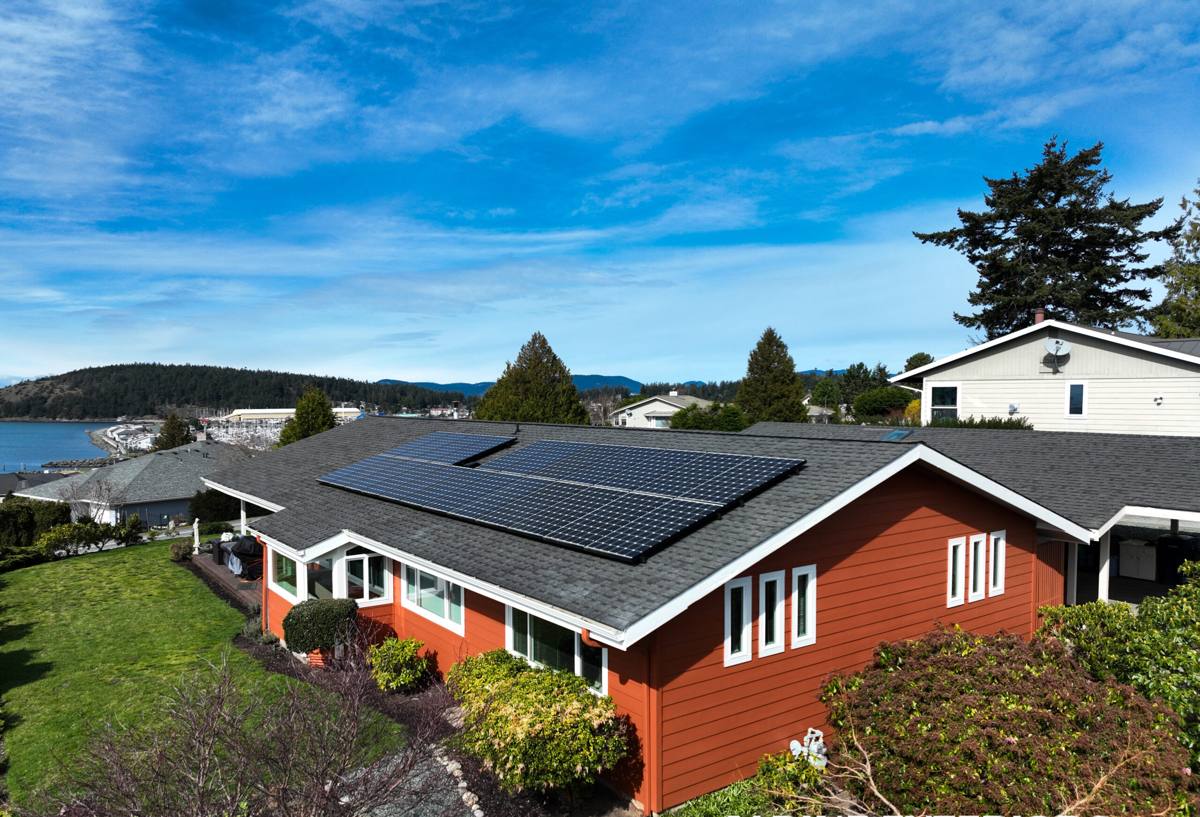
Whatcom County sits in a marine climate zone, and the shaded, lake-adjacent neighborhoods around Sudden Valley and Silver Beach get the fuller version of it: wind-driven rain that hits the wall sideways rather than straight down, salt-laden air drifting in from the Sound, and a moss season that can run eight months or longer on north-facing exposures under tree cover. None of this is unique to any one house — it's the baseline every exterior on this side of the county has to work against.
Moss and Biological Growth
Moss, algae, and mildew need moisture and shade to take hold, and Silver Beach's tree cover and lake humidity supply both in abundance. On wood-based siding, biological growth doesn't just sit on the surface — it holds moisture against the substrate and accelerates rot from the outside in. Fiber cement doesn't feed mold or moss the way wood-based products do, but growth can still develop on the surface if water is allowed to sit against the board, which is why detailing at the bottom edge and behind trim matters as much as the material choice.
Driving Rain and Wind-Driven Moisture
Rain that comes in at an angle finds every gap in a siding system — at butt joints, around window and door trim, and anywhere flashing was skipped or shortcut. Over a wet season, small gaps compound into real water intrusion behind the cladding, which is where most siding failures actually start, regardless of brand.
Salt Air and Corrosion
Salt-tinged air moving inland from Bellingham Bay and the Sound accelerates corrosion on fasteners, flashing, and metal trim components. Using the wrong fastener material, or leaving cut edges and fastener heads uncoated, shortens the useful life of an otherwise good siding job.
What Correct Fiber Cement Installation Actually Involves
Fiber cement is a forgiving, durable material, but it isn't a "nail it up and walk away" product. James Hardie publishes specific installation requirements for a reason — most siding call-backs and premature failures trace back to a handful of installation shortcuts, not the material itself.
Clearance and Drainage
- Minimum ground clearance to keep splash-back and standing moisture off the bottom edge of the siding
- Proper clearance from roof lines, decks, and walkways so water sheds away from the wall instead of wicking upward
- A drainage plane or weather-resistive barrier behind the siding so any moisture that gets past the cladding has somewhere to go
Flashing and Sealing
Every horizontal trim piece, window head, and roof-to-wall intersection needs flashing detailed to shed water outward, not into the wall assembly. Kick-out flashing where a roofline meets a sidewall is one of the most commonly skipped details in the trade — and one of the most common sources of hidden rot when it's missing.
Fastening and Field-Cutting
Fastener type, spacing, and depth all affect how the siding performs over time, and cut edges need to be sealed and primed before they're closed up, not caulked over after the fact. In a climate that stays damp for most of the year, an unsealed cut edge is an open door for moisture.
James Hardie HZ5 and ColorPlus: Why the Product Matters Here
James Hardie engineers its siding by climate zone. Western Washington falls into the HZ5 zone, formulated for damp, wet-freeze conditions rather than the hot-dry formulation sold in other parts of the country. That distinction matters more in Whatcom County than in most places — it's the difference between a product engineered for this rainfall pattern and one that just happens to be sold locally.
ColorPlus factory finish is the other piece of why we install only this product. It's baked on at the factory under controlled conditions, rather than field-applied paint that has to cure on-site in whatever weather shows up that week. In a location where dry, calm painting windows are limited for a good part of the year, a factory finish takes weather out of the equation and carries its own finish warranty separate from the substrate warranty.
Comparing Siding Materials for a Lake-Country Climate
Every cladding material has trade-offs. Here's how the main options typically hold up under Silver Beach's combination of rain, shade, and salt-tinged air:
| Material | Moisture & Moss Behavior | Salt Air Exposure | Typical Maintenance |
|---|---|---|---|
| James Hardie fiber cement | Does not rot or feed biological growth; needs correct flashing to shed surface moisture | Non-combustible and dimensionally stable; fasteners and trim need the right materials | Occasional wash; no repaint cycle with ColorPlus finish |
| Cedar / wood siding | Absorbs moisture, prone to rot and moss growth in shaded, damp exposures | Salt air accelerates weathering and finish breakdown | Regular staining or sealing, more frequent repairs |
| Vinyl siding | Does not rot, but can trap moisture behind it if not detailed correctly | Can become brittle and fade faster under UV and salt exposure over time | Low, but panels can warp, crack, or discolor |
This is part of why we standardized on James Hardie fiber cement rather than offering several product lines: it's the option best matched to this specific climate, and it lets us install to one consistent, well-documented spec on every job.
What Affects the Cost of a Fiber Cement Project in Silver Beach
| Factor | Why It Moves the Estimate |
|---|---|
| Total wall area and home shape | More corners, dormers, and trim detail mean more cutting, flashing, and labor time |
| Condition under the existing siding | Moisture or rot damage found during tear-off has to be repaired before new siding goes on |
| Siding profile chosen | Lap, shingle, and panel styles each require different trim and installation time |
| Site access | Sloped, lake-facing, or tightly set lots common around Sudden Valley can add staging and access time |
| Trim and color package | Factory ColorPlus finishes and custom trim details add material cost but reduce future painting |
Our Process for Silver Beach Homes
- On-site inspection of the existing siding, sheathing, and any signs of moisture or moss-related damage
- Assessment of drainage, flashing, and clearance issues specific to the home's exposure and lot
- A written proposal specifying product line, profile, color, and trim details before any work starts
- Removal of old siding and repair of any compromised sheathing found underneath
- Installation following James Hardie's HZ5 fastening, clearance, and flashing requirements
- Final trim, caulking, and a walkthrough before closing out the job and registering the manufacturer warranty
Why a Crew That Already Works Silver Beach Matters
Siding failures in this area rarely come from a bad batch of material — they come from installation details that ignored the local climate: no kick-out flashing where a roof meets a sidewall, ground clearance skipped on a tight lot, or cut edges left unsealed because the crew was used to a drier region. A crew that has already worked homes around Sudden Valley and the surrounding lake communities has seen how moss establishes on shaded elevations, how driving rain behaves against a lake-facing wall, and where salt-tinged air does the most damage to fasteners and trim over time. That local pattern recognition shows up in the details that don't get noticed until years later — or don't get noticed at all, because they were done right the first time.
Checklist: What to Verify Before You Hire
- Installer is trained and experienced specifically with James Hardie's fastening, clearance, and flashing requirements
- Written scope of work includes ground clearance, kick-out flashing, and weather-resistive barrier details
- References or completed work from other homes in Whatcom County's lake or coastal-adjacent areas
- Clear plan for moisture or rot repair if it's found during tear-off, priced separately from the base estimate
- Manufacturer warranty registration handled as part of the job, not left for the homeowner to do afterward
- A cleanup and debris removal plan included in the proposal, not treated as an afterthought
If you're planning a siding project for a home in the Silver Beach area, we're happy to take a look and walk you through what your home specifically needs. The estimate is free, there's no pressure, and you'll get a straight answer about what the job involves before you decide anything.