 Sudden Valley Siding
 The Ferndale Roofing Challenge: Salt Air, Rain, and Moss
Ferndale sits close enough to Bellingham Bay and the Strait of Georgia that salt-laden air is a daily fact of life here, not an occasional coastal breeze. Add Whatcom County's long, wet fall-through-spring stretch and the shaded, tree-lined lots common around town, and you've got a roofing environment that's harder on materials than most manufacturer warranty testing accounts for. Salt air accelerates corrosion on exposed fasteners and metal flashing. Driving rain, often pushed sideways by wind off the water, finds every gap in flashing and underlayment that a fair-weather installation would never expose. And moss — which here isn't a seasonal nuisance but a near year-round presence on north-facing and shaded slopes — holds moisture against shingles long after a storm has passed, breaking down granules and lifting edges from underneath.
None of this means a roof in Ferndale is doomed to fail early. It means the installation has to account for these conditions from the first nail, not patch around them later.
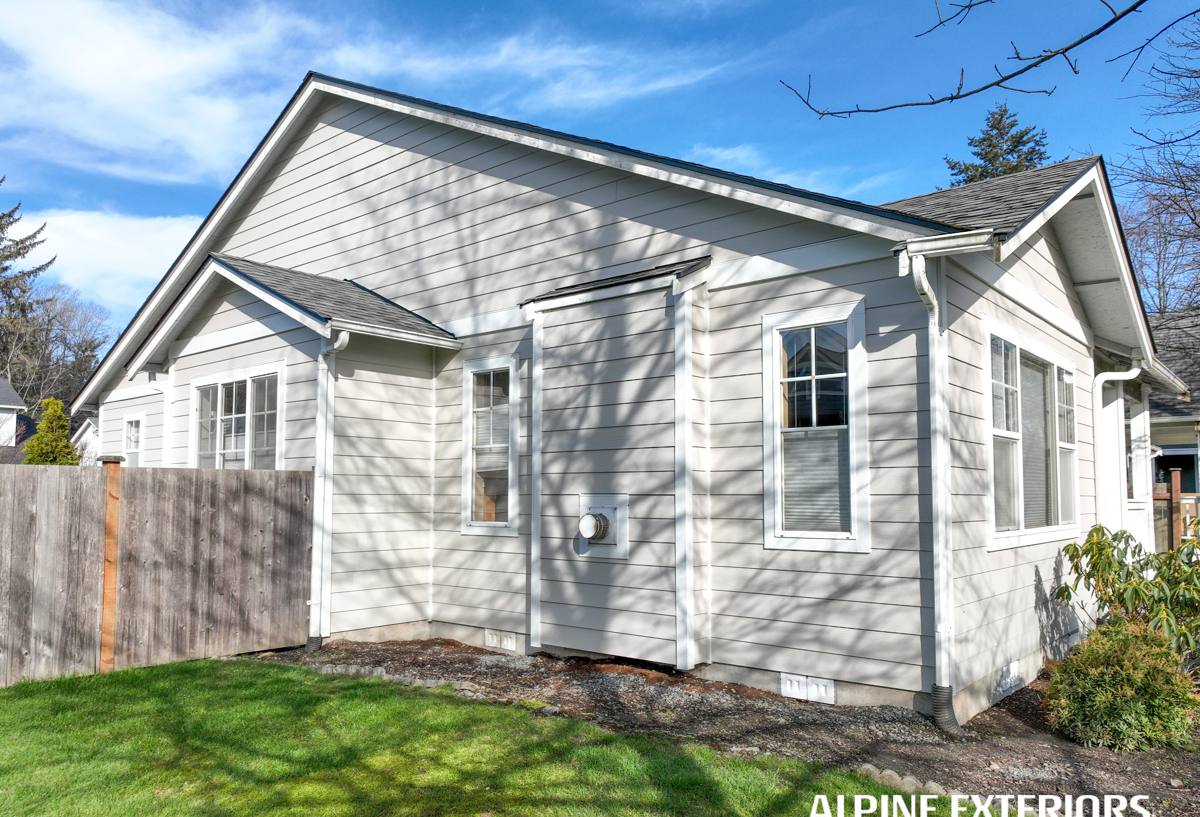
Signs It's Time for a New Roof, Not Another Repair
Most homeowners call about a leak. The leak is rarely the real problem — it's a symptom of a roof system that's reached the end of its useful life. Here's how to tell the difference between "this needs a repair" and "this needs to be replaced."
Age and material wear
Standard architectural and three-tab asphalt shingles in this climate typically show real wear at 18-22 years, sometimes sooner on roofs with heavy moss exposure or poor attic ventilation. If your roof is in that range and you're already patching more than once every year or two, replacement is usually the more honest recommendation, even if it costs more up front than another repair.
Moss, granule loss, and deck damage
Thick moss mats, shingle edges that curl or lift, and granules collecting in gutters are all signs the shingle's protective layer is breaking down. Left long enough, moisture works past the shingle into the roof deck itself — plywood or OSB sheathing that's gone soft or delaminated can't be fixed with a patch. That's a full tear-off, not a repair.
What Goes Into a Correct New Roof Installation
A roof is only as good as the layers nobody sees once it's finished. In a climate like this, those hidden layers matter more than the shingle brand on the outside.
Tear-off and deck inspection
We remove the old roofing down to the deck on every full replacement. Roofing over an existing layer hides deck damage and voids most manufacturer warranties outright. Once the deck is exposed, any soft, delaminated, or rotted sheathing gets replaced before anything new goes down — not covered up.
Underlayment and water-shedding details
Synthetic underlayment across the whole roof, with self-adhered ice-and-water barrier at eaves, valleys, and around every penetration, gives the roof a second line of defense when wind-driven rain gets past the shingle surface — which it will, eventually, on an exposed slope. Valleys, chimney flashing, and pipe boots are where most leaks actually originate, so these get more attention than the open field of shingles.
Ventilation and moisture control
A roof that can't breathe traps heat and moisture in the attic, which shortens shingle life from underneath and feeds the exact conditions moss needs to establish. Balanced intake and exhaust ventilation isn't an upgrade — it's part of a correct installation, and it's one of the most common things we find missing or blocked on older Ferndale roofs.
Roofing Materials for Whatcom County Conditions
There's no single "best" roofing material — there's the material that fits your home's exposure, your budget, and how much upkeep you're willing to keep up with. Here's how the common options compare for this specific climate.
| Material | Moss Resistance | Wind/Rain Performance | Typical Lifespan | Relative Cost |
|---|---|---|---|---|
| Architectural asphalt shingle | Moderate (better with zinc/copper strips) | Good when properly fastened and flashed | 20-30 years | $ |
| Standard 3-tab asphalt | Lower | Adequate | 15-20 years | $ |
| Metal (standing seam) | High | Excellent | 40-50+ years | $$$ |
| Synthetic/composite shake | Moderate-high | Good | 30-40 years | $$ |
We install a limited range of these systems, by design. Every product we put on a roof needs a manufacturer-backed installation method our crew can execute consistently and warranty in good conscience — that rules out some lower-cost systems whose warranty terms depend on installation details that are hard to guarantee in high-moisture, high-moss conditions. If a material isn't on our list, we'll tell you why, and point you toward what does hold up here.
Our New Roof Installation Process
- On-site inspection and estimate. We walk the roof, check the attic for ventilation and moisture issues, and give you a written estimate with material options — no pressure, no inflated "today only" pricing.
- Material selection. We walk through the comparison above in the context of your specific roof: slope, sun exposure, tree cover, and budget.
- Permitting. We handle the local permit application so you don't have to track it down yourself.
- Tear-off and deck repair. Full removal of old roofing, deck inspected and repaired as needed, debris hauled off same-day where possible.
- Underlayment and flashing. Ice-and-water barrier at vulnerable points, synthetic underlayment across the field, new flashing at every valley, chimney, and penetration.
- Shingle or panel installation to manufacturer spec, with attention to nailing pattern and exposure — the details that actually determine wind and water performance, not just appearance.
- Ventilation check and correction, so the finished roof and attic work as one system.
- Final walkthrough with you, plus warranty paperwork and maintenance guidance specific to your roof and lot.
Why a Ferndale-Experienced Crew Makes a Difference
A roofing crew that mostly works dry, inland climates learns different habits than one that works Whatcom County full time. Wind direction off the water, which slopes on a given lot hold moss longest, how much ice-and-water barrier a valley actually needs versus a manufacturer's bare minimum — that's knowledge built by doing dozens of roofs in the same conditions, not by reading a spec sheet once. It shows up in smaller ways too: knowing which local permit office to call, recognizing when a shaded north slope needs a different underlayment strategy than the sunny side of the same roof, and not being caught off guard by a hard rain showing up mid-tear-off.
We're a local siding and exteriors company first, which means we already think about your home's whole weather envelope — roof, siding, flashing, ventilation — as one connected system rather than isolated trades that don't talk to each other. A roof that sheds water perfectly but dumps it against poorly flashed siding just moves the problem, it doesn't solve it.
Protecting Your New Roof Through Moss Season
A correct installation buys you decades, but a little seasonal attention keeps it performing the way it should. After your new roof goes in, here's what we recommend:
- Keep gutters and downspouts clear, especially going into fall — Whatcom County's leaf and needle drop combined with heavy rain overwhelms clogged gutters fast.
- Have moss growth addressed early, before it mats thick enough to lift shingle edges — a light treatment is routine maintenance; scraping off established moss risks granule loss.
- Trim back overhanging branches to cut down on shade and debris, both of which extend how long moss and moisture sit on the roof surface.
- Check that attic ventilation isn't blocked by insulation or storage — this gets disturbed easily and is easy to forget to recheck.
- Schedule a walk-through inspection every couple of years, or after any major windstorm, rather than waiting for a visible leak.
Warranties, Manufacturers, and What We Stand Behind
Manufacturer warranties on roofing materials are only as good as the installation behind them — most are voided by tear-off shortcuts, incorrect nailing, or skipped flashing details, regardless of what the paperwork promises. We install to manufacturer specification as a baseline, not a ceiling, and we back our own labor separately from the material warranty, so you're not left arguing between two parties if something goes wrong. When we steer you away from a particular product, it's because its installation tolerances or moisture behavior haven't held up well to Whatcom County's rain and moss exposure in our experience — not because the product is bad everywhere, just not the right fit for a roof that has to perform in this specific climate, year after year.
If your Ferndale home's roof is showing its age — or you just want an honest read on whether it's a repair year or a replacement year — we're glad to come take a look. The estimate is free, there's no pressure, and you'll get a straight answer either way. Use the form below to get started.