 Sudden Valley Siding
 Why Lake Whatcom Homes Wear on Their Own Schedule
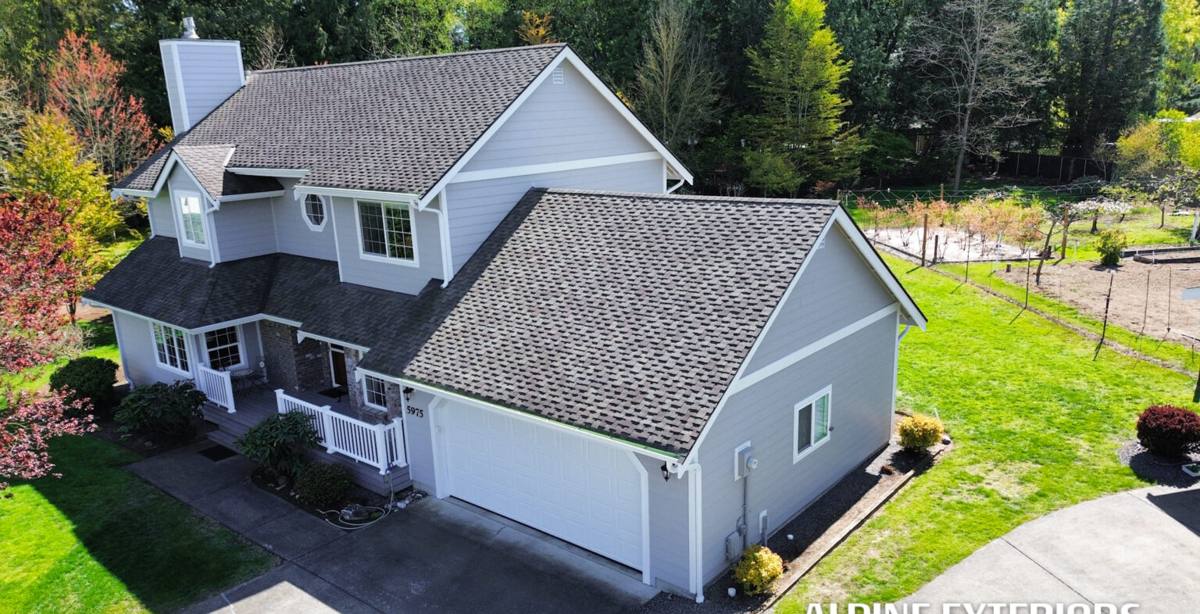
Siding around Lake Whatcom doesn't age the same way siding does three miles away in downtown Bellingham, and it doesn't age the same way it does on a wide-open lot with full sun exposure either. Homes in Sudden Valley sit close to the water, often tucked under mature conifers, on lots with steep grade changes and a mix of sun and deep shade across a single wall. That combination matters more than most homeowners realize when it comes to siding condition.
The broader Whatcom County climate already asks a lot of exterior materials — marine air moving in off Bellingham Bay, long stretches of driving rain from fall through spring, and a moss season that can run most of the year in shaded spots. Lake Whatcom adds its own layer on top of that regional pattern: humidity that lingers near the water, tree canopy that keeps north- and east-facing walls from ever fully drying out, and organic debris (needles, pollen, leaf litter) that collects in siding laps and behind trim far more than it does on an unshaded lot. The result is siding that can look fine from the street while quietly holding moisture at the joints, corners, and butt seams where failure actually starts.
What "Siding Repair" Actually Means
Siding repair isn't a single task — it's a category that covers everything from a single cracked board to a section of wall that needs to come off and be rebuilt from the sheathing out. Doing it right starts with an honest diagnosis, not a quick patch over whatever is visible.
Cosmetic Damage vs. Moisture Damage
Some damage is purely cosmetic: impact dings, a cracked corner from a fallen branch, fading or chalking on older painted material. That kind of damage can often be addressed with a targeted board or trim replacement. Moisture damage is a different problem entirely — it means water has already gotten behind the siding plane, and the visible crack or gap is just the entry point, not the actual failure. On lake-adjacent, shaded lots, we see moisture damage far more often than the visible symptom would suggest, which is why we don't just replace what's obviously broken and move on.
What We Check Before We Touch Anything
A correct repair starts with pulling back enough material to see what's actually happening behind the siding — house wrap condition, flashing at windows and penetrations, and whether the sheathing itself has taken on moisture. Repairing over a wet or compromised substrate just locks the problem in and guarantees a repeat call in a year or two.
Common Failure Points We See Around Sudden Valley
- Butt joints and end cuts — unsealed or poorly caulked ends are the single most common entry point for water on lap siding, especially on walls that stay damp longer under tree cover.
- Corner boards and trim — gaps open up as material moves seasonally, and shaded corners hold moisture behind them longer than sun-exposed ones.
- Bottom courses near grade — splash-back from landscaping, sloped lots, and lake-side drainage patterns can keep the lowest courses wet more of the year than siding higher up the wall.
- Around penetrations — hose bibs, vents, light fixtures, and deck ledger boards are common spots where flashing was skipped or installed incorrectly the first time.
- North- and east-facing walls — the sides that get the least sun and the most tree shade are almost always the first to show moss, algae staining, and soft or delaminating material.
- Old caulk joints — caulk has a service life, and failed caulk at trim-to-siding transitions is an easy, affordable fix if it's caught before water gets behind it.
Our Repair Process
We treat every repair call the same way regardless of how small it looks from the driveway, because the small ones are often where the real problem is hiding.
- Inspect the full elevation, not just the damaged spot. If one board failed, we check the boards around it and the wall assembly behind it, because failures rarely happen in isolation.
- Check for moisture intrusion. We look at sheathing and house wrap condition wherever we open up a section, and we're honest with you if what we find changes the scope of the job.
- Correct the water management, not just the surface. Flashing, kick-out flashing at roof-wall intersections, and proper lap sequencing get fixed as part of the repair, not left as-is.
- Match or replace with James Hardie fiber cement. We repair using the same product system we install new — more on why below.
- Finish and seal correctly. Caulk joints, paint touch-up or factory-matched ColorPlus panels, and a final check that the repaired section sheds water the way the rest of the wall does.
Repair vs. Replace: What Actually Decides the Call
Homeowners often ask whether a problem area can just be patched or whether it's a sign the whole wall — or the whole house — needs new siding. There's no universal answer, but there are consistent factors that point one way or the other.
| Factor | Points Toward Repair | Points Toward Replacement |
|---|---|---|
| Extent of moisture damage | Isolated to one section or wall | Found at multiple elevations or deep in the wall assembly |
| Age of existing siding | Newer material, otherwise sound | Original siding is decades old and near end of service life |
| Underlying sheathing condition | Dry, solid substrate once opened up | Soft, delaminated, or rotted sheathing |
| Existing material type | Existing James Hardie or comparable fiber cement in good shape | Aging vinyl, LP SmartSide, or cedar showing widespread wear |
| Cause of the damage | A single event — impact, one failed flashing detail | Systemic issue — chronic moisture, poor original installation |
When damage is contained and the substrate underneath is still sound, a proper repair is the honest, cost-effective answer — we're not going to sell a full re-side when a wall doesn't need one. When we find the same problem repeating across multiple areas, or the underlying structure is compromised, we'll tell you that plainly and explain why a repair would just be a short-term fix.
Why We Only Repair and Install James Hardie
This matters more for repair work than people expect. When we patch a section of siding, that patch needs to perform the same way for the next twenty-plus years as the material around it — not fail again in a wet Whatcom County winter because it was a mismatched product or a lower-grade fix.
James Hardie fiber cement is non-combustible, dimensionally stable, and engineered specifically for high-moisture climates through its HZ5 product line, which is built for exactly the wet, freeze-thaw-adjacent conditions we get in this part of Washington. It holds paint and factory ColorPlus finish far longer than wood-based alternatives, doesn't provide the food source that feeds moss and algae growth the way some materials do, and comes with a strong transferable warranty when installed to Hardie's specifications.
We made the decision years ago not to install or repair with LP SmartSide, vinyl, cedar, or primed spruce. Each of those has legitimate strengths — LP SmartSide is engineered wood with a lower material cost, vinyl is low-maintenance and inexpensive, cedar has a natural look many homeowners love. But on lake-adjacent, shaded, moisture-heavy lots like the ones common around Sudden Valley, the trade-offs (moisture sensitivity at cut edges, shorter service life, more frequent recoating, or vulnerability to the same rot patterns we're called out to repair) are exactly what we're trying to get homeowners out of, not back into. Repairing a wall with a different product than what's already there also creates a visible seam in material, texture, and long-term weathering — so when the existing siding isn't Hardie, we'll walk you through what that means for a repair versus a full re-side.
Why a Crew That Already Works Lake Whatcom Matters
Siding repair is detail work, and the details that matter change by neighborhood. A crew that regularly works Sudden Valley and the Lake Whatcom shoreline already knows which elevations tend to hold moisture longest under tree cover, how lake-effect humidity behaves differently than it does a few miles inland, and what correct flashing and water management look like on the kind of sloped, wooded, close-to-the-water lots that are common here. That's knowledge you don't get from a crew that mostly works flat suburban lots and treats every job the same way.
It also matters for something more practical: access and logistics. Narrow lake-access roads, steep driveways, and properties with limited staging space all affect how a repair job gets scheduled and executed. A crew unfamiliar with the area burns time — and your money — relearning that on your job.
After the Repair: What Keeps It Fixed
A correct repair should hold, but a few habits extend the life of both the repair and the surrounding siding, especially with the tree cover common around the lake.
- Keep branches and shrubs trimmed back from siding so walls can dry between rain events instead of staying shaded and damp.
- Clear needles, leaves, and debris out of siding laps and behind trim once or twice a year, particularly on north- and east-facing walls.
- Rinse off moss or algae growth early with a soft wash rather than letting it establish — pressure washing can drive water behind laps and cause the exact problem you're trying to prevent.
- Watch caulk joints at trim and penetrations; recaulking every few years is far cheaper than the water damage that follows a failed joint.
- Have any new cracks, gaps, or soft spots looked at promptly rather than waiting for a full inspection cycle — small repairs stay small when they're caught early.
Getting an Honest Look at Your Siding
Not every siding problem needs a sales pitch — sometimes it needs a straight answer about whether a repair will actually hold or whether you're better off addressing a wall while it's already open. If you're seeing damage, staining, or soft spots on a Lake Whatcom home, we're happy to come take a look, explain what we find, and give you a free, no-pressure estimate for the repair that actually fits the problem. Use the form below to get started.