 Sudden Valley Siding
 Fairhaven's Siding Problem Isn't Like Everywhere Else
Fairhaven sits close enough to Bellingham Bay that salt-laden air is a daily fact of life, not an occasional nuisance. Add the long wet season that defines western Whatcom County weather, and you've got a combination that's genuinely harder on exterior cladding than what most siding products were designed to handle. Homeowners here don't need a generic siding job — they need an installation that was planned around salt exposure, wind-driven rain, and the shaded, damp conditions that let moss and algae take hold for months at a time.
We install siding across Sudden Valley, Bellingham, and the surrounding Whatcom County area, and Fairhaven is one of the neighborhoods where we see the clearest evidence of what happens when siding is installed without accounting for the local climate. This page covers what that means in practice — for the material, the installation details, and the maintenance that follows.
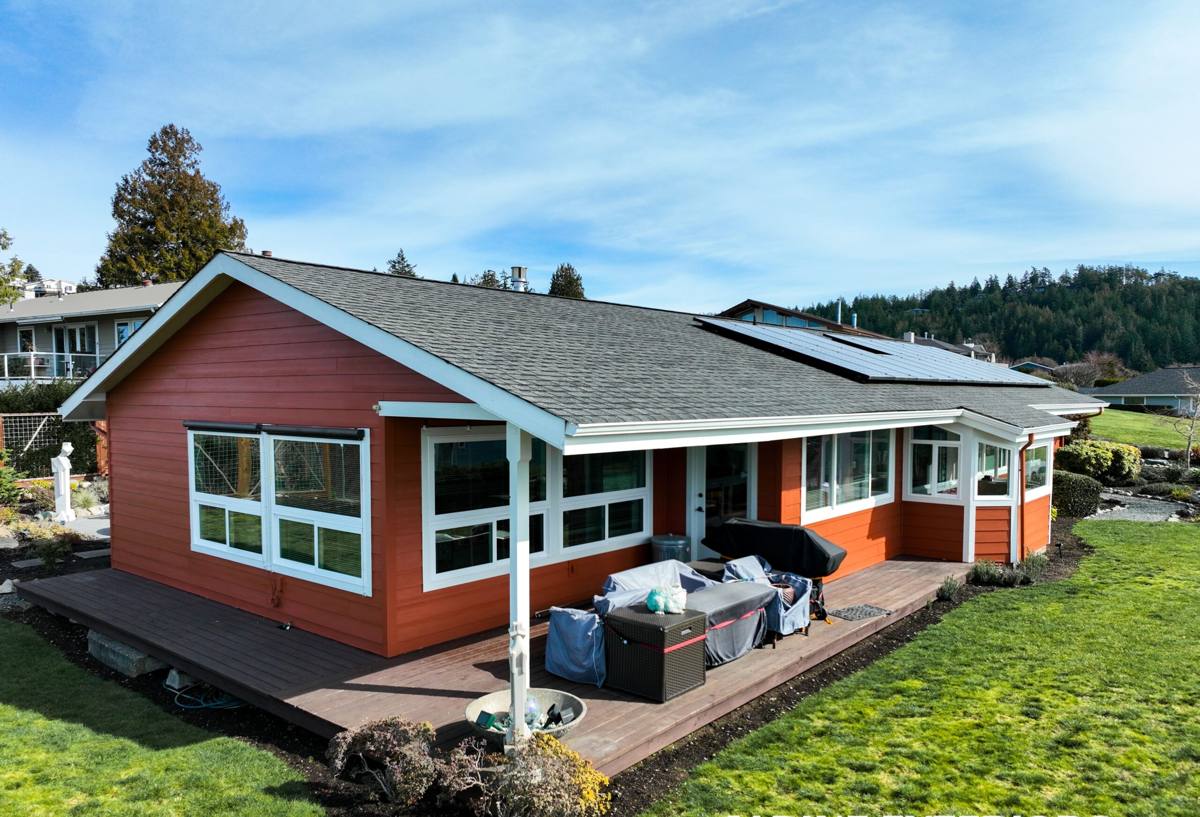
What Salt Air, Rain, and Moss Actually Do to Siding
Salt-Laden Marine Air
Airborne salt is corrosive to metal fasteners, trim flashing, and any hardware that isn't rated for coastal exposure. It also accelerates the breakdown of lower-grade paint finishes, causing chalking, fading, and premature peeling years before a homeowner would expect to repaint. Over time, salt residue combines with moisture to hold water against the siding surface longer than it would in a drier inland location, which compounds every other problem on this list.
Driving Rain and Wind
Whatcom County storms frequently arrive with enough wind to drive rain sideways into wall assemblies rather than straight down. That means water finds its way into laps, seams, butt joints, and anywhere flashing is missing or undersized. A siding installation that would hold up fine in a calmer climate can fail here specifically because the water intrusion path was never sealed or flashed correctly for wind-driven exposure.
Moss and Algae Season
Shaded lots, tree cover, and long stretches of damp weather give moss and algae a real foothold on siding surfaces, especially on north-facing walls and anywhere siding sits close to landscaping. Beyond the cosmetic issue, moss and algae growth trap moisture against the siding face, which is exactly the condition that causes rot in wood-based products and coating failure in lower-grade finishes.
What a Correct Installation Involves
Getting siding right in this climate isn't about the cladding material alone — it's about everything behind and around it. A proper installation addresses moisture management at every layer of the wall assembly, not just the visible surface.
Weather-Resistive Barrier and Flashing
Every installation starts with a continuous weather-resistive barrier, properly lapped and sealed, with flashing integrated at every window, door, and penetration. This is the layer that actually stops water that gets past the siding face — and it's the layer that gets skipped or rushed on jobs that don't account for wind-driven rain.
Fastening and Clearances
Fasteners need to be corrosion-resistant given the salt exposure, driven to the manufacturer's specified depth and spacing — not just "close enough." Siding also needs proper clearance from grade, roofing, decks, and other horizontal surfaces so water has somewhere to go instead of wicking up into the bottom edge of the panels.
Ventilation Behind the Cladding
A rainscreen gap or proper ventilation behind the siding lets any moisture that does get through dry out instead of sitting against the wall sheathing. In a climate with this much sustained dampness, that airflow is what separates siding that lasts decades from siding that starts showing problems in five or six years.
Why We Install Only James Hardie Fiber Cement
We standardized on James Hardie fiber cement siding, and we don't install vinyl, LP SmartSide, Cemplank, Allura, or primed wood products. That's not a marketing position — it's a decision built around what actually holds up in salt air, sustained rain, and moss conditions over the long term.
Fiber cement is non-combustible and dimensionally stable, so it doesn't expand, contract, or absorb moisture the way wood-based products can. James Hardie's ColorPlus factory finish is baked on under controlled conditions, which gives it better resistance to fading and chalking than field-applied paint — a real advantage against salt air specifically. And James Hardie makes climate-engineered HZ product lines built for exactly this kind of wet, coastal Pacific Northwest exposure, with a strong transferable warranty behind the product when it's installed to spec.
We're not going to tell you every other product on the market is worthless — plenty of them have real strengths. But for a neighborhood dealing with salt air, driving rain, and months of moss pressure every year, we've found the maintenance burden and moisture performance of the alternatives isn't where we want to put our name and our warranty. Fiber cement is.
Our Process for a Fairhaven Installation
- On-site assessment. We walk the exterior, check the current siding and sheathing condition, and note any moisture damage, rot, or existing flashing problems before we ever quote the job.
- Tear-off and inspection. Old siding comes off and we inspect the wall sheathing underneath. Any soft or water-damaged sheathing gets addressed before new siding goes on — covering up rot with new siding just hides the problem.
- Weather barrier and flashing. A continuous weather-resistive barrier goes up, with flashing detailed at every window, door, and penetration point.
- Rainscreen or ventilation gap. Depending on the wall assembly, we install furring or a rainscreen product to keep air moving behind the siding.
- James Hardie installation. Panels, planks, or trim go up to manufacturer spec — correct fastener type, spacing, and clearances throughout.
- Final detailing and walkthrough. We check caulking, trim, and clearances, then walk the finished job with the homeowner.
Comparing Siding Options for This Climate
| Factor | James Hardie Fiber Cement | Vinyl | Untreated / Primed Wood |
|---|---|---|---|
| Salt air resistance | Strong — factory finish holds up well | Can become brittle and fade over time | Vulnerable to moisture and finish breakdown |
| Wind-driven rain tolerance | Good when flashed and installed to spec | Prone to gaps and warping under wind loads | High risk of water absorption at seams |
| Moss/algae resistance | Cleans well, doesn't feed growth | Cleans well but can crack when scrubbed | Traps moisture, feeds rot under growth |
| Fire resistance | Non-combustible | Combustible | Combustible |
| Typical maintenance | Occasional wash, repaint on a long cycle | Low, but repairs are visible and hard to color-match | Regular repainting and moisture monitoring |
Signs Your Current Siding Is Losing the Fight
- Bubbling, peeling, or chalking paint, especially on walls facing prevailing wind and rain
- Soft or spongy spots when you press on the siding near the bottom edge or around windows
- Persistent moss or algae staining that comes back quickly after cleaning
- Visible gaps, warping, or buckling at seams and butt joints
- Rising energy bills that suggest the wall assembly isn't sealing the way it should
- Staining or discoloration around window and door trim, a common sign of flashing failure
Why Hiring a Crew That Already Works This Area Matters
Siding installation isn't generic — the right details change based on exposure, wind direction, tree cover, and how close a home sits to the water. A crew that regularly works Fairhaven and the surrounding Whatcom County communities already knows which walls typically take the worst weathering, where moss tends to establish first, and how much clearance and ventilation a given lot actually needs. That local pattern recognition shows up in fewer callbacks and a job that's built for the conditions it will actually face, not a textbook average.
It also matters for warranty support. James Hardie's transferable warranty is only as good as the installation behind it — proper installation is part of what keeps that warranty valid, so working with a crew that installs to spec consistently is part of protecting that coverage long term.
Maintenance After Installation
James Hardie siding is low-maintenance, not no-maintenance. A periodic gentle wash keeps salt residue and early moss growth from building up, and it's worth doing an annual visual check of caulking and trim, particularly around windows, doors, and any spot where two materials meet. Catching a small caulking gap early is a five-minute fix; ignoring it for a few wet seasons can turn into a much bigger repair. Because ColorPlus finish is factory-applied and warrantied, most homeowners find they're not repainting on the same aggressive cycle field-painted products require.
Getting Started
If your Fairhaven home's siding is showing salt staining, persistent moss, soft spots, or you're just planning ahead before it becomes a problem, we're happy to take a look. We offer a free, no-pressure estimate — walk the exterior with us, ask questions, and get a straight answer about what your home actually needs. There's a form below to get that started.