 Sudden Valley Siding
 Roofing in Happy Valley Isn't the Same as Roofing Somewhere Dry
Happy Valley sits inside the Sudden Valley community along Lake Whatcom, and that setting shapes what a roof has to survive out here. Homes in this part of Whatcom County deal with a combination that drier inland areas never see: salt-tinged marine air moving in off the Sound, long stretches of driving rain that comes in sideways as much as straight down, and heavy tree cover that keeps roofs shaded and damp for months at a time. Add it up over a Pacific Northwest winter and you get a roofing environment that's genuinely harder on materials than a national average roof ever has to handle.
A new roof installation here isn't just about swapping old shingles for new ones. It's about building a roof system — deck, underlayment, ventilation, flashing, and surface material — that's matched to this specific combination of moisture, shade, and salt exposure. Get any one of those layers wrong and you're not looking at a 20-25 year roof anymore; you're looking at a callback in five or seven.
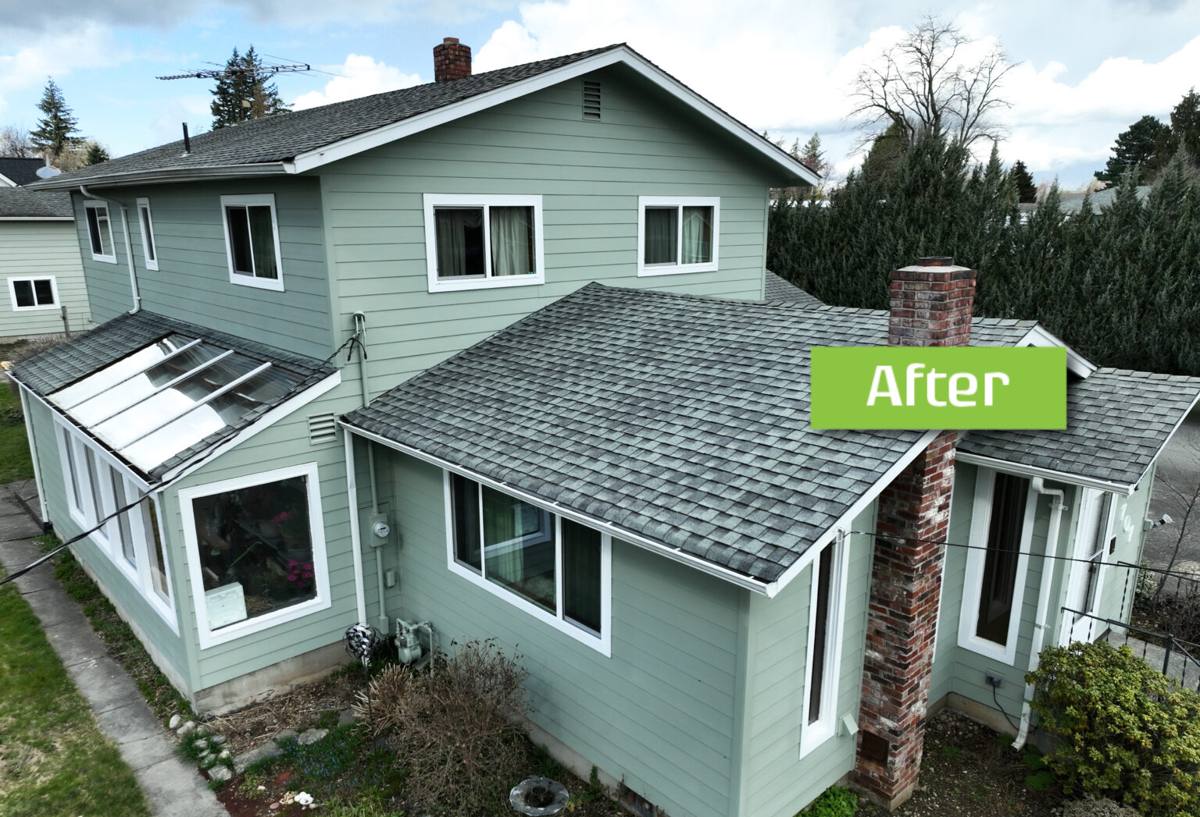
What Happy Valley's Climate Actually Does to a Roof
Moss Season Runs Long
Between the tree canopy typical of Sudden Valley lots and the region's wet, mild winters, north-facing and shaded roof slopes here can stay damp for weeks without a real drying window. That's exactly the environment moss and algae need to take hold. Once moss establishes itself under shingle tabs, it lifts them, holds water against the roof deck, and accelerates granule loss — all of which shortens the life of an otherwise sound roof.
Driving Rain Finds Weak Points
Wind-driven rain off the lake and the surrounding terrain doesn't just fall on a roof — it pushes sideways into laps, seams, and flashing details that a calmer climate might never test. Roofs installed with minimum-code underlayment and loose flashing work tend to hold up fine in mild weather and then leak the first time a real winter storm rolls through sideways.
Salt Air Is Slow but Real
Sudden Valley isn't oceanfront, but the marine air that moves through Whatcom County still carries enough salt to accelerate corrosion on exposed metal — nail heads, flashing, vent stacks, and gutter hardware. Over a couple of decades, that steady low-level corrosion is often what fails first on an otherwise intact roof, well before the shingles themselves wear out.
Signs a Happy Valley Home Needs a New Roof, Not Another Repair
Not every roof problem calls for a full tear-off. But there's a point where patching stops making financial sense and a full replacement becomes the honest recommendation. Watch for:
- Granules collecting in gutters and at downspout outlets, especially on shaded, moss-prone slopes
- Shingles that are cupping, curling, or cracking rather than lying flat
- Moss or dark algae streaking that keeps coming back within a season or two of cleaning
- Soft or spongy spots underfoot when walking the roof, which usually means the deck itself is compromised
- Daylight visible through the roof deck from inside the attic
- Repeated flashing leaks around chimneys, skylights, or valleys despite prior patch repairs
- A roof that's approaching or past the expected service life of its material, especially on the shaded north or east slopes
If a roof is showing two or more of these at once, a repair is usually a short-term fix on a system that's failing as a whole — and that's worth saying plainly rather than selling another round of patching.
What a Correct New Roof Installation Involves
Full Tear-Off and Deck Inspection
We remove the existing roofing down to the deck rather than layering over it. That's the only way to actually see the plywood or plank sheathing underneath, which is where moisture damage from years of trapped condensation or slow leaks tends to hide. Any soft, delaminated, or rotted deck sections get replaced before anything new goes down — installing new roofing over a compromised deck just guarantees an early failure.
Ice-and-Water Protection Where It Matters Most
Eaves, valleys, and areas around chimneys and skylights get self-adhering ice-and-water membrane, not just standard felt. In a climate with as much sustained wet weather as this one, these are the spots where wind-driven rain and ice damming are most likely to force water backward under the shingle line.
Balanced Ventilation
Intake at the eaves and exhaust at the ridge need to work together to keep the attic space dry and temperature-balanced year-round. Poor ventilation traps moisture against the underside of the deck, which both shortens the life of the roof from below and feeds the same moss and algae growth that's already a problem from above. This is one of the most commonly skipped details on cut-rate installs, and it's one of the most consequential.
Flashing Done in Metal, Not Caulk
Chimneys, skylights, sidewalls, and roof-to-wall transitions get properly formed step and counter-flashing. Caulk and roofing cement are a maintenance item, not a permanent seal — in a climate this wet, relying on sealant instead of correctly lapped metal flashing is one of the most common causes of recurring leaks.
Choosing a Roofing Material for This Climate
There's no single "best" roofing material — the right choice depends on the home's roof pitch, the amount of shade it gets, the budget, and how the homeowner weighs upfront cost against long-term maintenance.
| Material | Moss & Moisture Resistance | Maintenance | Relative Upfront Cost |
|---|---|---|---|
| Architectural asphalt shingle | Good with proper ventilation and algae-resistant granules | Periodic moss removal on shaded slopes | Low to Moderate |
| Standard 3-tab asphalt shingle | Fair — shorter lifespan in heavy shade | More frequent moss and granule loss issues | Low |
| Standing seam metal | Excellent — sheds moisture and resists moss | Low; occasional fastener and sealant checks | High |
| Composite / synthetic shake | Good — engineered to resist moisture uptake | Low to moderate | Moderate to High |
For most Happy Valley homes, a quality architectural asphalt shingle with algae-resistant granules and correct ventilation is the practical middle ground — it holds up well to this climate without the upfront cost jump of metal. Metal roofing earns its higher price on steep or heavily shaded slopes where moss pressure is worst, since it gives moss very little to hold onto. We'll walk through the tradeoffs honestly for your specific roof rather than defaulting to whatever's easiest to sell.
What Drives the Final Cost
Beyond the material itself, a few factors move the price of a new roof installation more than anything else:
- Roof size and number of facets, valleys, and penetrations (chimneys, skylights, vents)
- Pitch — steep roofs take longer and require more safety setup
- How many layers of old roofing need to be torn off
- Deck repair needs discovered once the old roofing is removed
- Tree cover and access, which affect staging and cleanup
Because those variables swing so much from house to house, an honest number only comes from an on-site look — anything quoted sight unseen is a guess.
Our Installation Process
- On-site inspection. We walk the roof and attic, check the deck, ventilation, and flashing, and confirm whether a full replacement is actually the right call.
- Written estimate. A clear scope of work and price based on your roof's actual size, pitch, and condition — no guessing.
- Material selection. We go over the tradeoffs for your specific slope, shade level, and budget.
- Tear-off and deck repair. Old roofing comes off completely; any compromised sheathing is replaced before new material goes down.
- Underlayment, flashing, and ventilation installed to spec. The parts you won't see once the roof is finished are the parts that determine how long it lasts.
- New roofing installed and inspected. Final walkthrough with the homeowner before we consider the job done.
- Cleanup. Full site cleanup, including a magnetic sweep for stray fasteners.
Why Hiring a Crew That Already Works Happy Valley Matters
A roofing crew that regularly works Sudden Valley and the surrounding Whatcom County communities isn't guessing about how this climate treats a roof — they've seen the same moss patterns, the same wind-driven leak points, and the same salt-related corrosion on enough local homes to know what actually holds up here versus what looks fine on paper. That local pattern recognition shows up in small decisions during the job: where to add extra ice-and-water protection, which slopes need better ventilation, and which flashing details are worth doing right the first time in a climate that doesn't forgive shortcuts.
It also matters for accountability after the job is done. A local, licensed crew is easy to reach if a question comes up two winters from now, and stands behind its work in the same community it lives and operates in.
Get a Free, No-Pressure Estimate
If your roof in Happy Valley or elsewhere in Sudden Valley is showing its age, worth getting an honest, on-site look before deciding between another repair and a full replacement. Fill out the form below for a free estimate — no pressure, no obligation, just a straight assessment of where your roof actually stands.