 Sudden Valley Siding
 Metal Roofing Built for Acme's Conditions
Acme sits in one of the wetter, more tree-covered pockets of Whatcom County, and that combination shapes what a roof needs to do here. Homes tucked under fir and cedar canopy get less direct sun on the roof deck than open lakefront lots, which means shingles stay damp longer after every rain and moss gets a longer head start each year. Add in the driving, wind-pushed rain that rolls through this part of Western Washington much of the fall and winter, and you've got a climate that rewards a roofing material that sheds water fast, doesn't give moss much to grab onto, and can take repeated wetting and drying without breaking down. Metal roofing checks those boxes better than most alternatives, which is why we install a fair amount of it in and around Acme and the broader Sudden Valley area.
This page is specifically about metal roofing for Acme properties — not a general product overview. We'll cover what the local climate actually does to a roof, which metal roofing approaches make sense here, what a correct installation looks like, and what to watch for when you're hiring someone to do the work.
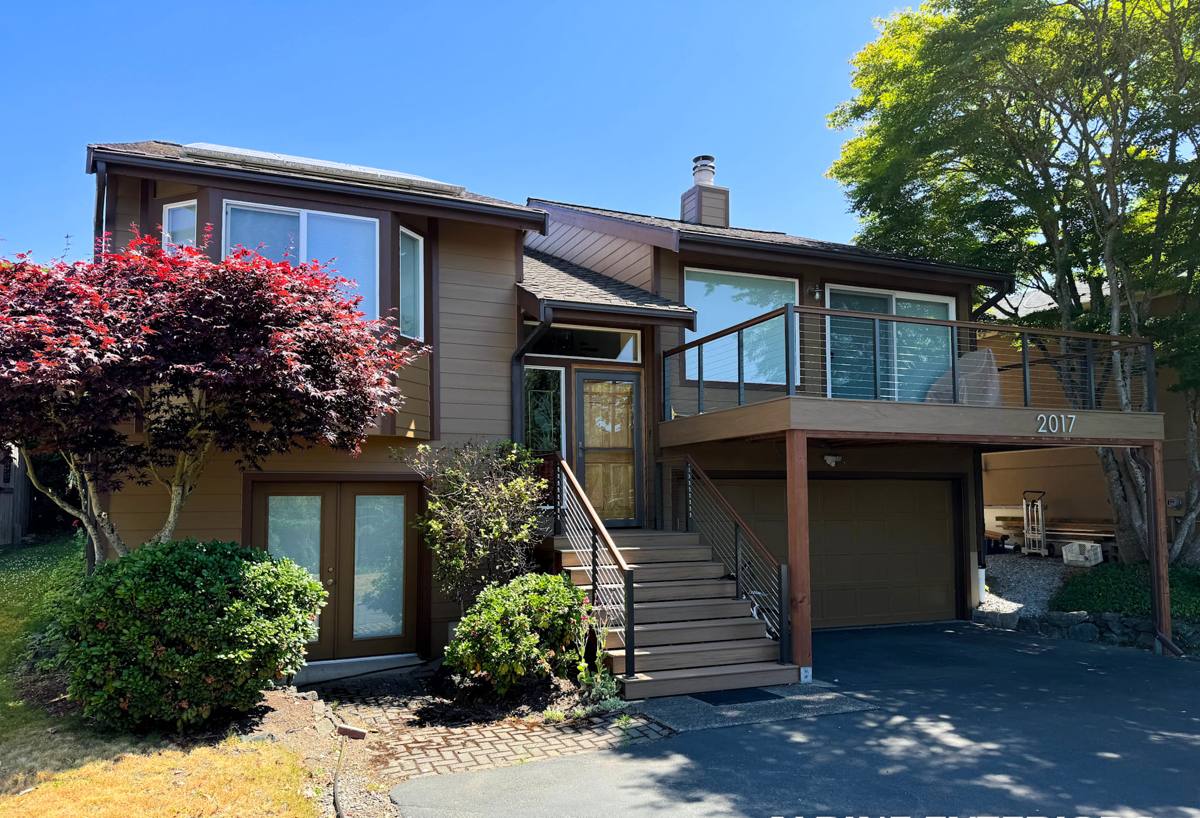
What Acme's Climate Does to a Roof Over Time
Three conditions do most of the damage to roofs in this area, and they compound each other:
- Canopy shade and slow drying. Roofs under mature trees dry out slower after rain, which keeps organic growth — moss, lichen, algae — active for a bigger chunk of the year than a roof out in the open.
- Wind-driven rain. Rain that comes in at an angle instead of straight down finds its way under poorly lapped materials, around fasteners, and into any gap in flashing. This is a bigger factor in exposed and elevated lots than most homeowners expect.
- Moss and needle debris buildup. Moss doesn't just look bad — it holds moisture against the roof surface, lifts shingle edges as it grows, and clogs valleys and gutters with debris that backs water up under the roofing.
Asphalt shingles are especially vulnerable to all three, since their granulated surface gives moss something to root into and their layered construction traps moisture underneath. Metal roofing gives moss and lichen a much harder surface to colonize, sheds needle and leaf debris more readily because of its smooth, low-friction surface, and handles repeated wet-dry cycling without the granule loss and mat degradation that ages shingles.
Metal Roofing Options That Make Sense in Acme
Not all metal roofing is the same product wearing different colors. The two broad categories homeowners in this area typically choose between are standing seam and exposed-fastener panel systems, with stone-coated steel as a third option for those who want a metal roof's durability with a more traditional shingle or shake profile.
| Type | How it's fastened | Best fit for Acme |
|---|---|---|
| Standing seam | Concealed clips under raised interlocking seams — no exposed fasteners | Best long-term choice under canopy; nothing for moisture to exploit at the fastener, handles thermal movement cleanly |
| Exposed-fastener panel | Screws driven through the panel face with rubber-washer seals | Lower upfront cost; works fine on simpler roofs but washers age and need eventual re-torquing or replacement |
| Stone-coated steel | Interlocking steel panels with a granule-coated surface, profiled to look like shake or tile | Good option where you want a traditional look with metal's moss resistance and lifespan |
For roofs with heavy shade or steep pitches feeding into valleys, we lean toward standing seam because there are no exposed penetrations for wind-driven rain to work into over time. Exposed-fastener panels are a legitimate, lower-cost option for simpler roof shapes, but they carry a real maintenance item — those washers are a wear part, not a permanent seal — and we tell homeowners that plainly rather than glossing over it.
What a Correct Metal Roof Installation Involves
Metal roofing has a longer service life than shingles, but only if the parts underneath and around it are done right. A metal panel is not more forgiving of a bad installation — in some ways it's less forgiving, because a mistake stays sealed under the panel for decades instead of showing up as an obvious leak within a season.
Underlayment
Given how much moisture this area's canopy and rain patterns put on a roof, we use a high-temperature synthetic or peel-and-stick underlayment rated for metal roofing, with extra coverage at eaves, valleys, and any low-slope transitions where water sits longest.
Fastening and expansion
Metal panels expand and contract with temperature swings more than shingles do. Standing seam clips need to allow that movement instead of pinning the panel rigidly; exposed-fastener screws need to be driven straight and to correct torque so the washer seals without over-compressing and cracking.
Flashing and penetrations
Valleys, chimneys, vent stacks, and skylight curbs are where wind-driven rain finds weaknesses. Flashing details have to be built for the specific panel profile being used, not adapted loosely from a shingle-roof approach.
Ventilation
Trapped attic moisture condensing against the underside of metal panels is a common cause of hidden deck damage. Intake and exhaust ventilation needs to be sized correctly for the home, especially where tree cover already keeps humidity higher near the roof surface.
Where We See Installation Mistakes
Most metal roof problems we get called out to inspect trace back to shortcuts taken during install, not the material failing on its own:
- Underlayment not rated for the sustained heat metal roofing can reach in direct sun, leading to premature breakdown
- Fasteners over- or under-driven, either cracking washers or leaving gaps for water intrusion
- Valley flashing that wasn't sized for the volume of water this area's rain events actually produce
- Panels fastened rigidly with no allowance for thermal movement, causing oil-canning or fastener backout over time
- Ventilation left as-is from the old roof without reassessing whether it's adequate for a metal system
Our Process for Acme Metal Roofing Projects
- On-site assessment — we look at pitch, existing decking condition, tree exposure, valley locations, and current ventilation before recommending a panel type.
- Written proposal — panel type, underlayment spec, flashing approach, and ventilation plan spelled out, not left vague.
- Tear-off and deck inspection — we check for soft or rotted decking before anything new goes down; this is not a step to skip on an older roof.
- Underlayment and flashing installation — done to the standard the panel manufacturer specifies for this climate, with extra attention at valleys and eaves.
- Panel installation — fastened or clipped per manufacturer spec, with correct thermal movement allowance.
- Final walkthrough — we go over what was done and what maintenance, if any, the system will need going forward.
What Affects Cost
Metal roofing costs more upfront than asphalt shingles, and the range for a given home depends on several factors more than on "metal vs. shingle" alone:
| Factor | Why it matters |
|---|---|
| Roof pitch and complexity | More valleys, dormers, and penetrations mean more flashing labor and material |
| Panel type | Standing seam runs higher than exposed-fastener panel systems due to labor and clip hardware |
| Tear-off vs. overlay | Removing old roofing and inspecting the deck adds cost but is usually the right call on aging roofs |
| Underlayment spec | Full peel-and-stick coverage costs more than partial synthetic underlayment but performs better under heavy shade and rain |
| Access and site conditions | Steep driveways, tree-crowded roof access, or tight lots can add setup and safety costs |
We'd rather walk a homeowner through these factors honestly during an on-site look than quote a number sight unseen — metal roofing is enough of an investment that guesswork doesn't serve anyone.
Maintenance and Expected Lifespan
One of the real advantages of metal roofing in a moss-prone, tree-shaded area like Acme is how little ongoing maintenance it needs compared to shingles. That said, "low maintenance" isn't "no maintenance":
- Keep valleys and gutters clear of needle and leaf debris so water has a clear path off the roof
- Do a visual check after major windstorms for lifted flashing or debris buildup, especially on canopy-covered sections
- If you chose an exposed-fastener system, plan on periodic inspection of fastener washers over the years
- Trim overhanging limbs where practical to reduce both shade-driven moisture retention and debris load
Done right, a metal roof in this climate should significantly outlast a shingle roof, with far less moss-related deterioration along the way.
Why Local Experience in Acme Matters
Acme's roofs deal with a different moisture and shade profile than open lakefront homes elsewhere around Sudden Valley, and a crew that's worked both knows the difference matters — the same panel spec that's fine on a sun-exposed roof can be under-built for a heavily shaded one. Knowing which valleys in this area tend to carry more water in a given storm, how much shade a given lot actually gets through the seasons, and where wind-driven rain typically causes problems on local rooflines isn't something you get from a spec sheet. It comes from doing the work here, on these roofs, in this weather, more than once.
If you're weighing metal roofing for a home in Acme, we're glad to come take a look, walk you through what your specific roof needs, and give you a straightforward, no-pressure estimate — just fill out the form below to get started.