 Sudden Valley Siding
 Roof Repair Built for Deming's Climate
Deming sits along the Nooksack River corridor in Whatcom County, where roofs deal with a different mix of stress than homes closer to town. You're farther from the salt air of Bellingham Bay but not spared from it entirely on windy days, you get heavier tree cover and shade that keeps roofs damp longer, and winter brings a steady grind of driving rain off the foothills followed by a long moss season that can run from October through May. A roof here doesn't fail all at once. It fails one soft spot, one lifted shingle edge, one clogged valley at a time, and by the time water shows up on a ceiling, the damage has usually been building for months.
We repair roofs in Deming and the surrounding Whatcom County communities regularly, which means we're not guessing at what your roof is up against. We know which slopes hold moss the longest, which roof styles trap needle debris in valleys, and which repair shortcuts don't hold up to a full Pacific Northwest wet season. This page is about roof repair specifically — not full replacement, not siding, not gutters — so you can get a straight answer on what your roof actually needs.
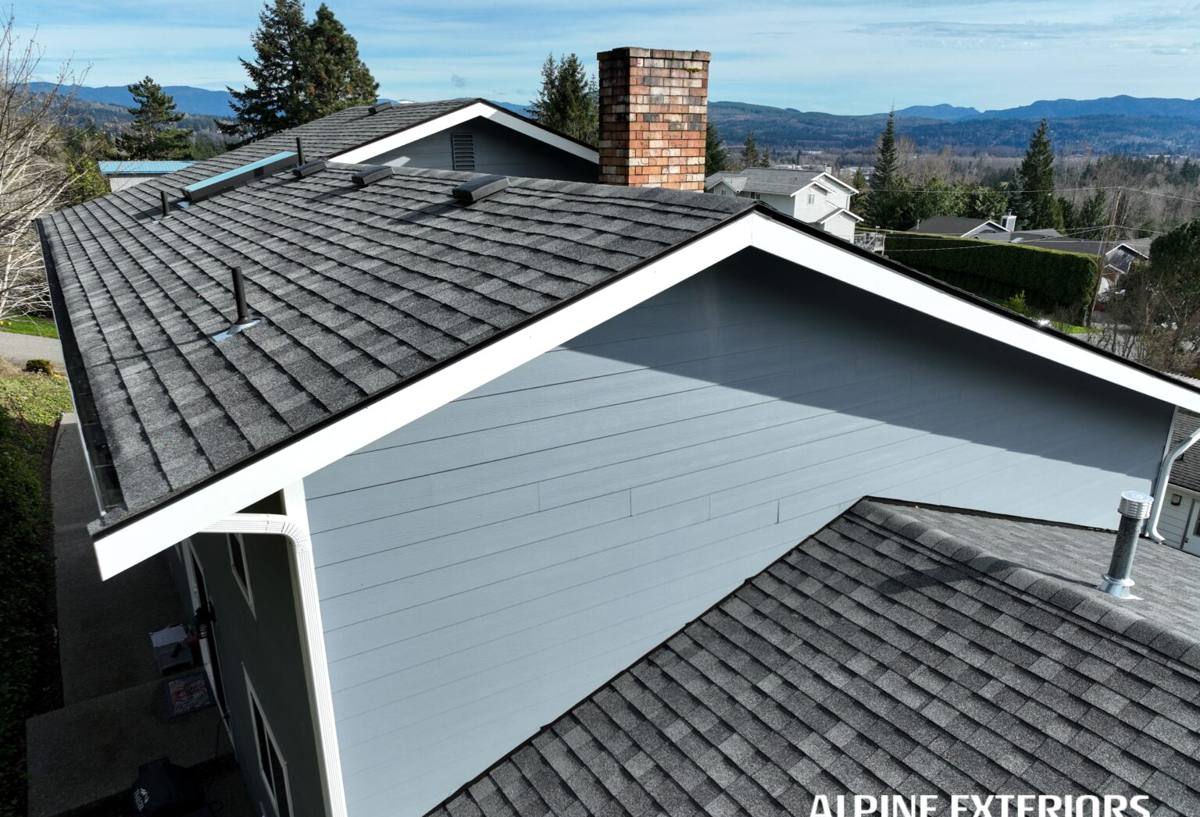
Why Deming Roofs Wear the Way They Do
A few things combine to shape roof damage patterns in this part of Whatcom County:
- Tree cover and shade. Properties near the river and foothills often sit under mature conifers, which means roofs stay damp longer after rain and collect more organic debris in valleys and behind chimneys.
- Long moss season. Cool, wet conditions for much of the year let moss and lichen establish on north-facing slopes and shaded eaves, working under shingle edges and lifting them over time.
- Driving rain. Wind-driven rain off the foothills doesn't just fall straight down — it gets pushed sideways into flashing laps, vent boots, and any gap that would stay dry in a calmer climate.
- Seasonal temperature swings. Freeze-thaw cycles, even mild ones, stress cracked caulking and worn flashing seals that were already marginal.
None of this means Deming roofs are unusually fragile. It means the maintenance and repair schedule needs to match the conditions, and a roof that would be fine for another ten years in a drier climate can develop real problems here if small issues go unaddressed.
Signs a Deming Roof Needs Repair, Not Replacement
Most of the roofs we look at don't need a full tear-off. They need someone to correctly diagnose and fix the specific failure point. Common issues we find on local repair calls include:
- Lifted or cracked shingles along moss-covered ridges and valleys
- Failed or corroded flashing around chimneys, skylights, and roof-to-wall transitions
- Deteriorated pipe boots and vent seals letting water track down into the attic
- Granule loss and thinning on south- and west-facing slopes from sun and wind exposure
- Clogged or damaged valleys from accumulated needles and debris holding moisture against the roof deck
- Isolated soft spots or discoloration on the underside of the roof deck, visible from the attic
If your roof is showing one or two of these issues and the rest of the field is sound, targeted repair is almost always the right call — it's faster, less disruptive, and a fraction of the cost of replacement.
When Repair Isn't Enough
We'll tell you plainly if a repair is just delaying an inevitable replacement. Widespread granule loss across the whole roof, multiple soft spots in the decking, or a roof already past its expected service life are signs that patching one area will just shift the leak somewhere else next season. Honest assessment matters more to us than selling a repair that won't hold.
What a Correct Roof Repair Actually Involves
A roof repair is only as good as the diagnosis behind it. Sealing over a symptom without finding the source is the most common reason a "fixed" roof leaks again the next winter. Our approach:
- Full roof and attic inspection. We walk the roof surface and check the attic from the inside, since interior staining often points to a leak source several feet away from where water is entering.
- Trace the actual water path. Water travels along the underlayment before it drips through, so the wet spot on your ceiling isn't always directly under the failure point on the roof.
- Repair the source, not just the symptom. This might mean replacing a section of flashing, re-bedding a vent boot, swapping damaged shingles, or clearing and reshaping a valley — whatever the actual cause turns out to be.
- Check surrounding material condition. We look at the shingles, underlayment, and decking immediately around the repair area to confirm they're sound enough to tie the fix into.
- Address moss and debris at the source. If moss or accumulated debris contributed to the failure, we clear it and talk through options for slowing regrowth, rather than just patching around it.
Materials and Repair Approach
We match repair materials to what's already on your roof whenever possible — same shingle type and weight, compatible flashing metal, underlayment rated for the same conditions. Mismatched materials can create galvanic corrosion between metals or uneven wear patterns that show up as a new problem in a few years. Where the existing material or original installation was part of what caused the failure, we'll explain that clearly and recommend a better approach for that specific spot, rather than repeating the same setup.
A Note on Coatings and Quick Fixes
Roof sealant in a tube and reflective coatings have their place, but we don't use them as a substitute for a proper repair on a failure point like flashing or a vent boot. Coatings can mask a leak's location temporarily while trapping moisture underneath, which makes the eventual real repair more expensive. Our standard is to fix the mechanical cause first.
Repair Cost Factors
Every roof repair is priced based on the specific problem, not a flat rate — but the table below outlines what typically drives cost up or down on a Deming repair call.
| Factor | Lower Cost | Higher Cost |
|---|---|---|
| Access | Single-story, low pitch, ground access | Steep pitch, multi-story, limited ladder access |
| Cause | Isolated flashing or vent boot failure | Multiple failure points or decking damage |
| Material match | Common shingle type still available | Discontinued or specialty material needing a close match |
| Debris/moss condition | Light buildup, easy cleanup | Heavy moss requiring careful removal to avoid granule damage |
| Decking condition | Sound decking under the repair area | Soft or rotted decking requiring sheathing replacement |
We give a firm, written estimate after inspection — not a phone-quote guess — because the range between a simple flashing repair and a repair that uncovers deck damage is wide, and we don't think it's fair to quote before we've actually seen the roof.
Our Process, Start to Finish
- Call or request a free estimate. We'll ask a few questions about what you're seeing — location of any leak, when it started, roof age if known.
- On-site inspection. We check the roof surface and attic, take photos of the problem areas, and identify the root cause.
- Written estimate. You get a clear scope of work and price before anything is scheduled, no pressure to decide on the spot.
- Scheduled repair. We work around Whatcom County's wet-season weather windows to avoid opening up a roof section when rain is imminent.
- Cleanup and walkthrough. We clear debris from the property and show you what was repaired and why.
Why a Crew That Already Works Deming Matters
Roof repair is a trade where local knowledge shortens the diagnosis time and improves the outcome. A crew that's worked roofs throughout Whatcom County — including the river corridor communities like Deming — already knows how moss and shade patterns behave on similarly situated homes, which flashing details tend to fail first on older roofs in this area, and how to schedule work around this region's rain patterns instead of guessing at a dry window. That familiarity means fewer surprises during the job and a repair that's built for what your roof will actually face next winter, not a generic fix pulled from a drier climate's playbook.
We also stand behind the work with a straightforward warranty on labor and materials, and we're reachable afterward if something doesn't look right — not a crew that finishes the job and disappears.
Maintaining Your Roof Between Repairs
A few habits extend the life of a repair and reduce the odds of needing another one soon:
- Have gutters and valleys cleared of debris at least once a year, more often under heavy tree cover
- Address moss buildup before it spreads across a full slope, not after
- Trim back overhanging branches that keep sections of the roof shaded and damp
- Check the attic after major storms for any new staining, even faint
- Have flashing and vent boots inspected every few years, since these fail well before shingles typically do
If you're dealing with a leak, moss damage, or storm-related wear on a Deming-area roof, we're happy to take a look and give you a straight answer on what it needs. Request a free, no-pressure estimate below and we'll schedule a time to inspect the roof in person.