 Sudden Valley Siding
 Roofing in Yew Street: A Different Set of Demands
Yew Street sits inside the Sudden Valley community on Lake Whatcom, and that location shapes what a roof there actually has to survive. It isn't just "Pacific Northwest weather" in the abstract — it's a specific combination of lake-effect moisture, tree cover, and long stretches of shaded, damp roof surface that don't get much direct sun to dry out between rain events. Add in the salt-laden air that moves inland off the Puget Sound corridor and settles into Whatcom County's low-lying, tree-sheltered neighborhoods, and you get a roofing environment that's harder on materials and fasteners than a drier, more open site would be.
None of that means a roof in Yew Street needs to be exotic or overbuilt. It means the details that get skipped on a rushed job — proper ventilation, correct fastener choice, real flashing work instead of caulk-and-hope — matter more here than they would somewhere drier. A roof replacement done right in this neighborhood should last as long as the same job done in a less demanding climate, because it's built to account for the conditions instead of ignoring them.
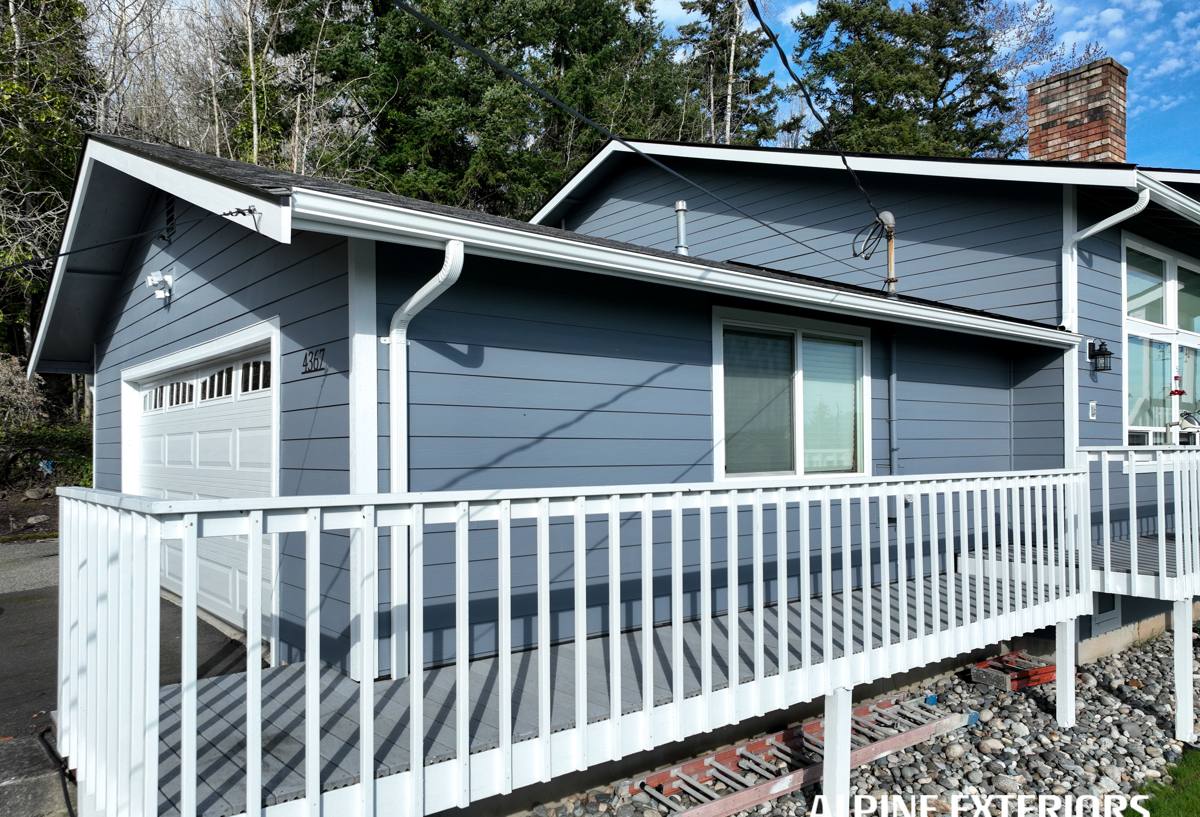
What Driving Rain and Salt Air Actually Do to a Roof
Driving Rain
Wind-driven rain off the lake doesn't just fall straight down — it gets pushed sideways under shingle tabs, around poorly sealed flashing, and into any gap in the underlayment. Over years, that's how leaks start at valleys, chimneys, and skylights long before the shingles themselves look worn out. The roof's field surface can look fine while the real damage is happening at the seams.
Salt Air
Salt-bearing moisture accelerates corrosion on exposed metal — nails, flashing, vent stacks, and gutter hardware — faster than it would inland. Standard electro-galvanized fasteners can start showing rust streaks and weakening well before a roof's expected service life is up. This is a fastener and flashing-material decision, not a shingle decision, and it's one of the most common corners cut on lower-bid jobs.
Moss Season
Sudden Valley's tree cover and shade mean roof surfaces stay damp longer after every rain, and moss gets a real foothold on north-facing and shaded slopes. Moss holds moisture against the roofing material, lifts shingle edges as it grows, and works its way under tabs and around fasteners. A roof replacement that doesn't account for airflow and drying will grow moss again within a few seasons, regardless of the shingle brand used.
What a Correct Roof Replacement Involves
A roof replacement is more than swapping old shingles for new ones. Done properly, it's a system — deck, underlayment, ventilation, and flashing all working together. Skipping any one of them shortens the life of the whole roof, even if the shingles themselves are top quality.
Decking and Sheathing
Once the old roofing is stripped, the plywood or OSB decking underneath gets inspected for soft spots, delamination, or water staining — all common where slow leaks have been running unnoticed. Any compromised sheathing gets replaced before anything new goes down. Roofing over bad decking is one of the most common shortcuts in this trade, and it's the one that causes the earliest failures.
Underlayment and Water Protection
In a climate with this much sustained rain, underlayment is not a formality. Self-adhered ice-and-water membrane at eaves, valleys, and around penetrations gives a second line of defense if wind-driven rain gets past the shingles — which, over enough years and enough storms, it eventually will at some point on any roof.
Ventilation
Balanced intake (soffit) and exhaust (ridge or box vents) ventilation keeps the attic space dry and temperature-regulated. Without it, moisture gets trapped under the deck, which rots sheathing from underneath and voids many manufacturer warranties outright. On heavily shaded lots like much of Yew Street, ventilation is also part of what keeps the roof surface drying out between rains instead of staying damp — which is directly tied to how fast moss comes back.
Flashing and Penetrations
Chimneys, skylights, vent stacks, and roof-to-wall transitions are where the overwhelming majority of leaks originate — not the open field of shingles. Correct flashing means properly lapped metal integrated with the underlayment and shingle courses, not sealant troweled over old flashing to save a step.
Choosing Roofing Materials for a Sudden Valley Home
Material choice affects how a roof handles this specific climate — not just how it looks. Here's how the common options compare for a home like those in Yew Street, dealing with sustained moisture, shade, and salt-influenced air.
| Material | Moisture & Moss Resistance | Fastener/Metal Considerations | Typical Service Life |
|---|---|---|---|
| Architectural asphalt shingle | Good, especially with algae-resistant granules | Corrosion-resistant nails recommended in this climate | 25–30 years |
| Standing seam metal | Excellent — sheds moisture fast, minimal moss foothold | Panel and fastener alloy matters near salt air | 40–50+ years |
| Basic 3-tab shingle | Fair — less algae resistance, shorter margin for error | Same fastener concerns as architectural shingle | 15–20 years |
| Composite/synthetic shake | Good, engineered for moisture cycling | Manufacturer-specific fastening requirements | 30–40 years |
We don't push one product on every roof. The right call depends on the home's roof pitch, sun exposure, budget, and how the homeowner weighs upfront cost against long-term maintenance. What we won't do is install a system without the moisture-management details this climate requires, regardless of which material is chosen.
Signs a Yew Street Roof Needs Replacement, Not Repair
Not every roof problem calls for a full replacement, and an honest contractor should tell you when a repair is the right call. That said, a few signs usually mean repair is just delaying the inevitable:
- Granule loss heavy enough that shingles look patchy or bald in sun-exposed areas
- Moss established across multiple shade-facing slopes, not just isolated patches
- Soft or spongy spots underfoot when walking the roof, indicating deck damage
- Daylight visible through the attic roof deck, or staining on attic sheathing
- Shingles cupping, curling, or cracking across large sections rather than a few spots
- Repeated leaks in different locations each season instead of one recurring spot
- Roof age approaching or past the material's expected service life
If a roof shows one or two of these in isolation, targeted repair often makes sense. When several show up together, that's usually the system telling you it's past the point where patching pencils out.
Our Process for a Yew Street Roof Replacement
The process is straightforward, but the sequence matters:
- On-site inspection — we assess the existing roof, attic ventilation, and any visible deck or flashing issues before quoting anything.
- Written estimate — a clear scope of work and material options, with no pressure to decide on the spot.
- Tear-off and deck inspection — old roofing removed, sheathing checked and repaired where needed.
- Underlayment and flashing installation — ice-and-water membrane, felt or synthetic underlayment, and new flashing at every penetration and transition.
- Ventilation check — intake and exhaust venting confirmed or corrected to current balanced-airflow standards.
- Material installation — shingles, metal panels, or composite roofing installed to manufacturer specification.
- Final walkthrough — cleanup, magnetic sweep for stray fasteners, and a review of the finished work with the homeowner.
Why a Crew That Already Works Yew Street Matters
Roofing crews unfamiliar with Whatcom County conditions sometimes apply the same specs they'd use on a drier, more open site — standard fasteners, minimal underlayment, ventilation sized without accounting for shade and moisture load. That approach might hold up fine elsewhere and fall short here. A crew that regularly works Sudden Valley and the surrounding lake-adjacent neighborhoods already knows which slopes tend to hold moss, where wind-driven rain causes the most trouble, and which flashing and fastener choices actually hold up against the salt air and sustained dampness this area sees. That local pattern recognition doesn't replace a proper inspection of your specific roof, but it does mean fewer surprises and fewer corners that get cut out of unfamiliarity.
Maintaining a New Roof in This Climate
A correctly installed roof still benefits from basic upkeep in a climate like this one. Keeping gutters clear so water doesn't back up under the eaves, trimming back tree limbs that shade roof sections and feed moss growth, and having the roof looked at after major windstorms are all reasonable habits for a Sudden Valley home. None of this is about babying the roof — it's the same kind of routine attention any home in a wet, tree-covered lake community should get, and it goes a long way toward hitting the full service life of whatever material was installed.
Ready for a Straight Answer on Your Roof
If you're seeing granule loss, moss buildup, or recurring leaks on a Yew Street home, it's worth having someone look at the roof before winter's driving rain finds every weak point. We offer free, no-pressure estimates — no obligation, just a clear look at what your roof actually needs and what it would take to fix it right. Reach out using the form below to get started.