 Sudden Valley Siding
 Why Ferndale Roofs Wear Differently Than You'd Expect
Ferndale sits close enough to Bellingham Bay and the Salish Sea that homes here deal with a combination most inland Washington roofs never see: salt-laden air, near-constant fall and winter rain, and a moss season that can run eight months or longer. None of these alone is unusual for the Pacific Northwest. Together, on the same roof, year after year, they change how a roof ages and what kind of repair actually fixes the problem instead of just covering it up.
Salt Air and Metal Fasteners
Roofs a few miles from the water take in fine salt particles carried on the wind. Over time that salt accelerates corrosion on exposed metal — nail heads, flashing edges, gutter fasteners, and any exposed screws on a metal roof or accessory. A repair that reuses corroded fasteners or bare galvanized nails in a coastal-influenced spot like Ferndale tends to fail again within a season or two. We factor fastener choice into every repair here, not just on brand-new installs.
Moss Season and Its Slow Damage
Whatcom County's wet season gives moss and algae a long runway to establish on north-facing slopes and shaded valleys where roofs stay damp longest. Moss itself doesn't just sit on top of shingles — its root structure works into the granule surface and shingle mat, lifting edges and holding moisture against the roof deck. By the time moss is visible from the ground, it has usually already compromised the shingles underneath it. A repair that only scrapes surface moss without addressing what's happening at the shingle edge and underlayment is a short-term fix.
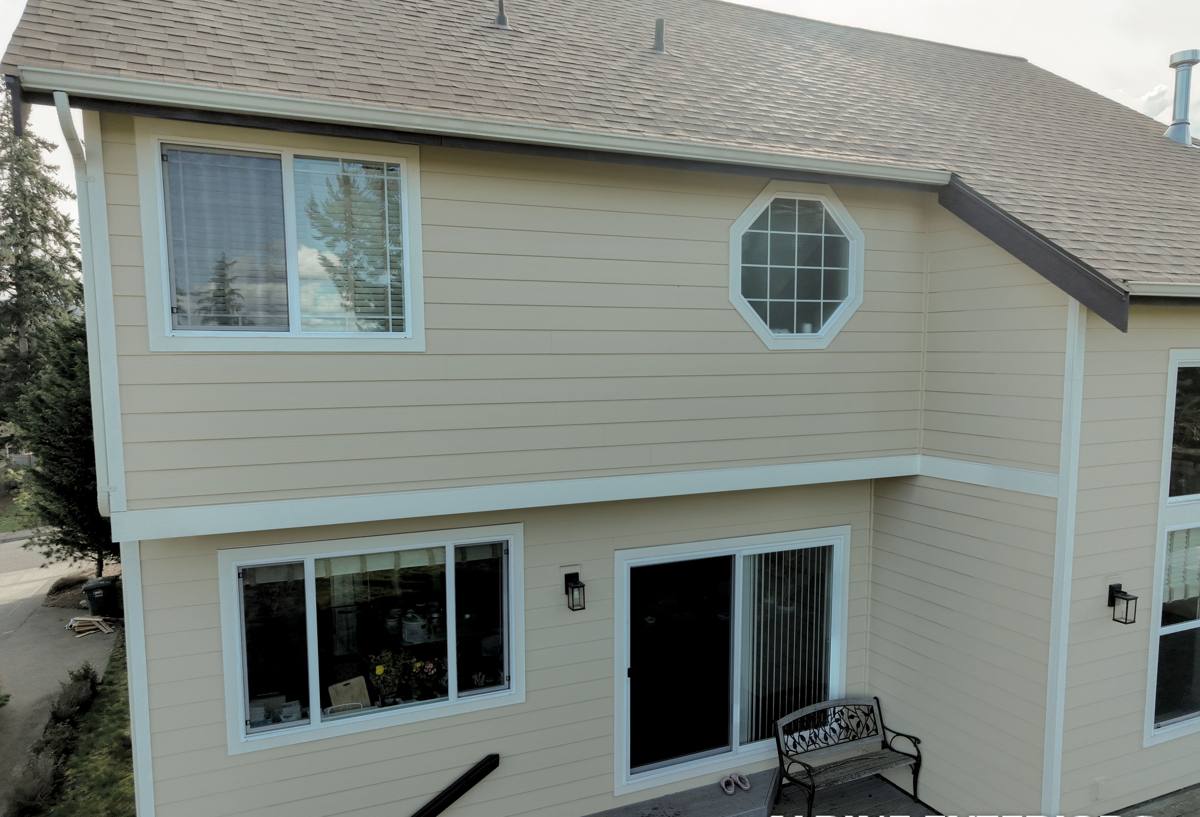
Common Roof Repair Needs We See in Ferndale
Most of the repair calls we run in this area fall into a handful of categories. Recognizing them early is the difference between a contained repair and a much larger one.
- Moss and algae growth along ridge lines and north-facing slopes, especially on roofs with heavy tree cover
- Lifted or curling shingle edges where trapped moisture has worked underneath
- Corroded or loosened flashing around chimneys, skylights, and roof-to-wall transitions
- Granule loss and bare spots from years of driving rain and wind-blown debris
- Clogged or sagging gutters contributing to water backing up under the roof edge
- Soft spots or discoloration on interior ceilings that trace back to a small, hard-to-see roof leak
- Nail pops and fastener failure on older roofs, worsened by salt-air corrosion
None of these are unusual problems for the region. What matters is catching them before a small area of damage spreads to the roof deck or interior framing, which turns a repair into a much bigger job.
What a Correct Roof Repair Actually Involves
A roof repair is more than swapping out a few visibly damaged shingles. Done correctly, it means understanding why that section failed in the first place and making sure the fix addresses the cause, not just the symptom. That usually means checking the underlayment condition, the flashing details around the repair area, and how water is currently moving across that part of the roof before any new material goes down.
| Step | What It Involves | Why It Matters in Ferndale's Climate |
|---|---|---|
| Inspection | Walk the roof, check attic or ceiling for moisture staining, assess deck condition under damaged areas | Confirms whether damp underlayment or a soft deck is hiding under surface-level damage |
| Moss and debris removal | Careful removal without scraping granules or gouging shingles | Prevents further shingle damage while eliminating trapped moisture sources |
| Underlayment check | Inspect and replace compromised underlayment beneath the repair area | Long wet seasons make underlayment condition, not just shingle condition, the real question |
| Flashing repair | Reseat, reseal, or replace flashing at penetrations and transitions | Salt air corrodes flashing faster than shingles wear, and flashing failures cause most leaks |
| Material match and install | Match shingle type, color, and exposure to blend with the existing roof | A visibly mismatched patch signals a rushed repair and can affect resale appearance |
| Fastener selection | Corrosion-resistant nails and screws appropriate for the roof type | Standard fasteners corrode faster this close to the water |
Our Roof Repair Process
We keep the process straightforward because most homeowners just want to know what's wrong, what it will cost to fix, and how long they'll have a crew on the roof.
- Free on-site assessment. We look at the damaged area, but we also check the rest of the roof, gutters, and any interior signs of moisture, so nothing gets missed.
- Honest explanation. We tell you what we found, what caused it, and whether it's a contained repair or a sign of a bigger issue developing elsewhere on the roof.
- Written estimate. A clear scope of work and price before anything starts, with repair and replacement options laid out separately when both are reasonable choices.
- Scheduled repair. Most single-area repairs are completed in a day, weather permitting. We work around Whatcom County's rain windows rather than rushing a repair into wet conditions.
- Cleanup and walkthrough. We clear debris, check the work with you, and note anything worth keeping an eye on going forward.
Repair vs. Replacement: How We Help You Decide
Not every damaged roof needs full replacement, and not every repair is worth doing if the roof is near the end of its service life. We walk through the same set of factors on every job to give a straight answer.
| Factor | Leans Toward Repair | Leans Toward Replacement |
|---|---|---|
| Roof age | Under roughly two-thirds of expected shingle lifespan | Near or past the manufacturer's expected service life |
| Extent of damage | Isolated to one section, slope, or penetration | Spread across multiple slopes or recurring in the same spots |
| Deck condition | Solid, dry decking under the damaged area | Soft, rotted, or repeatedly wet decking |
| Moss and algae history | First or occasional occurrence, manageable with cleaning | Chronic moss regrowth despite repeated treatment |
| Material availability | Matching shingles or panels still available | Discontinued product with no reasonable match |
When a roof is borderline, we'd rather tell you honestly that a repair will likely buy a few more years than push a replacement you don't need yet — or the reverse, if we think a repair is going to be money spent on a roof that's already failing structurally.
Materials We Use and Why
For most repairs, matching your existing roofing material is the right call — it keeps the roof's appearance and performance consistent and avoids creating a weak seam between old and new material. When we do recommend an upgrade during a repair, it's usually around flashing and fasteners rather than the shingle or panel itself, since those are the components most affected by salt air and constant moisture. We use corrosion-resistant flashing and fastener options appropriate to the roofing type, and we're straightforward about why: a repair that looks fine for a year but corrodes at the fasteners within three isn't a repair worth doing. We'd rather tell you the honest cost of doing it right than sell a quick patch that creates a callback.
Why a Crew That Already Works Ferndale Matters
A roofer who works across Whatcom County regularly knows which slopes in this area tend to hold moss longest, which roof styles common in local construction are prone to flashing issues at certain transitions, and how to schedule repair work around the region's rain patterns instead of guessing. That local familiarity shows up in small but real ways — knowing to check for salt-air corrosion on a roof that's only a few years old, or recognizing that a leak pattern matches something we've seen on similar roofs nearby rather than treating every job as a blank slate. It also means we're not learning the area's climate on your roof.
Maintenance Tips Between Repairs
A repair holds up longer when it's not fighting the same conditions that caused the original damage. A few habits go a long way in this climate:
- Clear gutters and downspouts at least twice a year, more often under heavy tree cover
- Trim back overhanging branches to reduce shade, debris, and moss-friendly moisture
- Have moss treated or removed before it spreads rather than after it's visible from the street
- Check attic ventilation — poor airflow traps moisture and speeds up deck and shingle wear
- Walk the roofline visually after major storms and note anything that looks different
- Schedule a professional inspection every year or two, even without an obvious problem
None of these prevent every issue, but together they slow the wear that salt air, rain, and moss cause, and they help catch small problems while they're still small.
Getting a Straight Answer About Your Roof
If you're dealing with a leak, visible moss, missing shingles, or just want a second opinion on something another contractor flagged, we're glad to take a look. Our estimates are free and there's no pressure to sign anything on the spot — we'd rather you have accurate information about your roof than a rushed sales pitch. Fill out the form below and we'll set up a time to come take a look at your Ferndale roof.