 Sudden Valley Siding
 Why Deming Roofs Wear Differently Than Roofs Inland
Deming sits in one of the wetter corners of Whatcom County, and the roofs here take a beating that homeowners further inland just don't deal with. Between the driving rain that blows in off the coast, the salt-laden air that works its way up the valley, and a moss season that can run eight months or longer in a shaded, tree-heavy lot, an asphalt shingle roof in this area is under near-constant moisture pressure. That's not a scare tactic — it's just the physical reality of roofing in a maritime climate with heavy tree cover.
None of this means asphalt shingles are the wrong choice. They remain one of the most cost-effective, proven roofing materials available, and when installed correctly for this specific climate, they hold up well for decades. The key phrase is "installed correctly for this climate." A shingle roof detailed the same way you'd detail one in a dry, sunny region will underperform here — the underlayment choices, ventilation, flashing, and even the shingle line itself need to account for constant moisture and heavy shade.
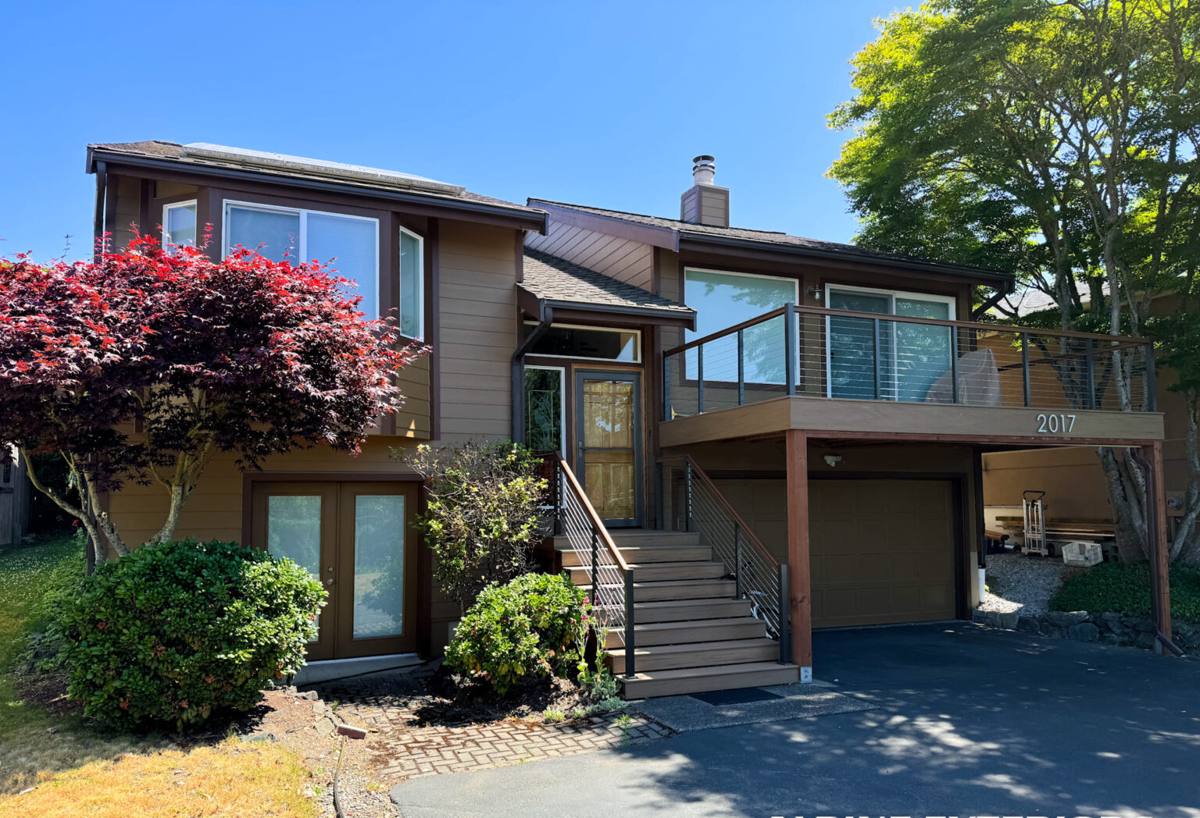
What Sudden Valley's Climate Actually Does to a Shingle Roof
Driving Rain and Wind-Driven Moisture
Rain that comes in at an angle, rather than straight down, finds its way under shingle tabs, around flashing, and into any gap that a fair-weather installation might get away with elsewhere. Proper nailing patterns, sealant strip activation, and flashing overlap all matter more here than in drier climates.
Moss and Algae
Shaded roof sections — especially north-facing slopes and areas under mature trees, which are common around Sudden Valley — stay damp long after the rest of the roof has dried. That sustained moisture is exactly what moss and algae need to take hold. Left unchecked, moss doesn't just look bad; it lifts shingle edges, holds water against the roof deck, and shortens the life of the roofing system.
Salt Air and Corrosion
Homes closer to the water deal with airborne salt that accelerates corrosion on exposed metal — flashing, fasteners, vents, and gutter hardware. Over time, ungalvanized or poorly coated metal components fail faster in this environment, which is why material selection on the metal accessories matters as much as the shingle itself.
What a Correct Asphalt Shingle Job Involves Here
A roof that's going to hold up in Whatcom County weather isn't just "shingles nailed to plywood." Every layer under the visible shingle does real work:
- Roof deck inspection and repair — soft, delaminated, or water-stained sheathing gets replaced before anything new goes down, not covered up.
- Ice-and-water shield at vulnerable points — eaves, valleys, and roof-to-wall transitions get a self-adhering waterproof membrane, not just standard felt.
- Synthetic underlayment across the field — more tear-resistant and consistently waterproof than old-style felt paper, especially valuable through a wet install season.
- Proper flashing at every penetration — chimneys, vents, skylights, and wall intersections are the most common failure points on any roof, in any climate.
- Balanced attic ventilation — intake at the eaves and exhaust at the ridge, sized to the attic volume, so moist air doesn't get trapped against the underside of the deck.
- Correct nailing — the right number of nails, in the right zone of the shingle, driven flush (not overdriven or underdriven) so the shingle can do what it's designed to do in wind and rain.
Skip or shortcut any one of these and the visible shingles can still look fine for a year or two while problems build underneath. That's part of why roof issues so often get discovered only after they've become expensive.
Signs a Deming Roof Needs Attention
| What You See | What It Usually Means |
|---|---|
| Dark streaking or green/black patches | Algae or moss growth, often starting on shaded north-facing slopes |
| Granules collecting in gutters | Shingle surface wearing down, reducing UV and weather protection |
| Curling or lifted shingle edges | Aging shingles, trapped moisture underneath, or ventilation problems |
| Soft or spongy spots underfoot | Deck moisture damage — usually needs immediate attention |
| Interior ceiling stains or musty attic smell | Active leak or long-term moisture buildup in the attic space |
| Moss visibly growing between shingle tabs | Moisture retention that's actively lifting the shingle over time |
Any one of these is worth a look before the next wet season, not after.
Choosing a Shingle for This Climate
Not every asphalt shingle product performs the same way in constant damp shade. Here's how the common options compare for a Deming-area roof:
| Shingle Type | Strengths | Trade-offs Here |
|---|---|---|
| 3-tab shingles | Lowest upfront cost, simple profile | Thinner, shorter lifespan under heavy moss/moisture pressure |
| Architectural (dimensional) shingles | Thicker, better wind rating, longer warranty, better shadow line | Higher upfront cost, but generally the better value in this climate |
| Algae-resistant (copper/zinc-infused) shingles | Granules formulated to resist algae staining longer | Slight cost premium; still needs proper ventilation and periodic cleaning |
| Impact-rated shingles | Better resistance to debris and hail impact | Higher cost; most relevant on properties with heavy overhanging trees |
For most Sudden Valley homes, an architectural shingle with algae-resistant granules strikes the right balance between upfront cost and how the roof will actually hold up through repeated wet seasons. We'll talk through the honest trade-offs for your specific roof rather than steering everyone toward the same product.
Our Process, Start to Finish
1. Inspection and Honest Assessment
We start by walking the roof (weather permitting) and the attic, not just eyeballing it from the ground. You get a clear picture of what's actually going on — repair, partial replacement, or full replacement — before we talk about cost.
2. Prep and Protection
Landscaping, gutters, and the ground around the house get protected before tear-off begins. This matters more here than in dry-climate regions, since a job that drags on in wet weather needs the work area kept dry and controlled throughout.
3. Tear-Off and Deck Repair
Old material comes off down to the deck so we can see the real condition of the sheathing. Any water-damaged or soft plywood gets replaced — this is not an optional upsell, it's the difference between a roof that lasts and one that fails early from underneath.
4. Waterproofing Layers
Ice-and-water membrane goes down at eaves, valleys, and penetrations; synthetic underlayment covers the rest of the field. This is the layer doing most of the actual water-shedding work over the life of the roof.
5. Shingle Installation
Shingles go down with correct nailing patterns and exposure, working around chimneys, vents, and skylights with properly formed flashing — not just sealant smeared over gaps.
6. Ventilation Check
We confirm intake and exhaust airflow is balanced for the attic, adding or correcting vents where needed. Poor ventilation is one of the most common causes of premature shingle failure in this region, and it's often invisible from the ground.
7. Cleanup and Final Walk-Through
Magnetic sweep for stray nails, full site cleanup, and a walk-through so you know exactly what was done and what to watch for going forward.
Moss and Algae Prevention Checklist
Once a new roof is on, a little routine attention goes a long way in this climate:
- Keep overhanging branches trimmed back to reduce shade and debris buildup on the roof surface
- Clear gutters and valleys of leaves and needles at least twice a year
- Have moss physically removed (not scraped or pressure-washed, which damages granules) rather than left to spread
- Check zinc or copper strips near the ridge if installed — they release trace metal that helps deter regrowth as rain washes over the roof
- Watch north-facing and heavily shaded slopes more closely than sun-exposed ones
- Schedule a roof check after major storms, not just on a calendar reminder
Why a Crew That Already Works Deming and Sudden Valley Matters
Roofing crews that mostly work drier, sunnier regions can do fine work and still under-detail a roof for a place like this — not out of carelessness, but because their default habits are calibrated for a different climate. A crew that regularly works Whatcom County roofs already knows which slopes on a given lot tend to hold moss, how much ice-and-water coverage is worth the extra material cost given the local rain patterns, and which ventilation setups actually keep attics dry through a Pacific Northwest winter. That local pattern-recognition doesn't show up on a spec sheet, but it shows up in how long the roof lasts.
It also matters for scheduling and material planning — knowing the realistic wet-weather windows for tear-off and install, and keeping the right waterproofing materials on hand rather than treating them as an occasional add-on.
Maintenance Schedule for a Long-Lasting Roof
| Task | How Often |
|---|---|
| Visual roof inspection | Twice a year (spring and fall) |
| Gutter and valley clearing | Twice a year, more with heavy tree cover |
| Moss removal | As needed, ideally before it spreads past a few patches |
| Attic ventilation check | Every few years, or after any noticeable moisture/musty smell |
| Full professional inspection | Every 3-5 years, or after any major windstorm |
What This Costs
Every roof is different, and pricing depends on the roof's size, pitch, current condition of the deck, and shingle selection. Broadly speaking, a straightforward asphalt shingle replacement on an average home in this area runs from the lower five figures up into the mid five figures once deck repair, flashing, and ventilation upgrades are factored in — but the only way to give you an honest number is to actually look at your roof. We'd rather give you an accurate estimate than a low one that changes once we're up there.
If your roof is showing moss, granule loss, or you're just not sure what condition it's in, we're happy to take a look. Fill out the form below for a free, no-pressure estimate — no obligation, just an honest read on where your roof stands.