 Sudden Valley Siding
 Why Geneva Decks Wear Out Faster Than You'd Expect
Geneva sits close enough to Lake Whatcom and the broader Whatcom County weather pattern that decks here take a different kind of beating than decks in drier parts of the state. It's not one big storm that does the damage — it's the slow, steady combination of salt-tinged coastal air drifting in from the Sound, long stretches of driving rain from fall through spring, and a moss season that can run half the year on shaded, north-facing structures. Wood and fasteners exposed to that cycle don't fail all at once. They fail quietly, one soft board or one rusted screw at a time, until a homeowner notices a spring underfoot or a railing that wiggles more than it used to.
A deck built or repaired without that climate in mind will show problems years before it should. That's the gap we work to close: repairs that account for how a Geneva deck actually gets used and weathered, not a generic patch job.
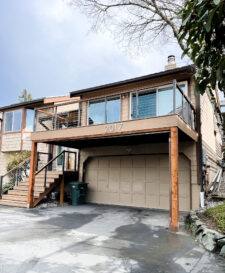
Signs Your Deck Needs Repair — And What They Actually Mean
Most deck problems announce themselves in small ways before they become safety issues. Knowing what to look for saves money, because catching a problem early is almost always a repair, while ignoring it turns into a rebuild.
- Soft or spongy decking boards — usually moisture intrusion at fastener points or board ends, often accelerated by trapped moss and debris.
- Rust streaks around screws or nails — a sign the original fasteners weren't rated for exterior/coastal exposure and are corroding from the inside out.
- Wobbly or loose railings — frequently a post-to-rim-joist connection that's rotted or was never properly through-bolted.
- Gaps or separation at the ledger board — where the deck attaches to the house; this is the single most safety-critical connection on any deck.
- Green or black film on boards, especially in shaded corners — moss and algae holding moisture against the wood surface far longer than open, sun-exposed areas.
- Discoloration or staining underneath the deck — often the first visible clue that water is draining somewhere it shouldn't.
What a Correct Deck Repair Actually Involves
It starts underneath, not on top
A repair that only replaces what's visible from the top down is a repair that misses the point. Surface boards are the last thing to fail, not the first. Before we touch a single deck board, we get underneath and check the framing: joists, beams, the ledger connection, and any support posts. If the substructure is sound, a surface-level repair will actually hold. If it isn't, no amount of new decking on top will fix the real problem.
The ledger board deserves special attention
The ledger — the board that bolts the deck to the house — is where the majority of serious deck failures start, and it's also the connection most often installed incorrectly the first time. In a climate with this much sustained rain, proper flashing behind and above the ledger is non-negotiable. We check for correct flashing, adequate bolting (not just nails), and any signs of water having worked its way behind the board into the rim joist or sheathing.
Fasteners matter more here than in drier climates
Standard interior-grade or even basic galvanized fasteners corrode faster in coastal, high-moisture environments. Every repair we do uses fasteners rated for exterior, high-corrosion exposure — typically stainless steel or heavy hot-dip galvanized, matched to whatever decking material is being repaired.
Common Repair Issues We See on Geneva Decks
| Issue | Typical Cause | Repair Approach |
|---|---|---|
| Soft decking boards | Trapped moisture from debris/moss, worn finish | Replace affected boards, clear drainage gaps, refinish or seal |
| Loose railings/posts | Rotted post base or under-fastened connection | Sister or replace post, through-bolt to framing |
| Rusted fasteners | Original hardware not rated for exterior/coastal exposure | Remove and replace with stainless or heavy-galvanized fasteners |
| Ledger board separation | Missing or failed flashing, inadequate bolting | Re-flash, re-bolt to code, verify house-side moisture damage |
| Moss/algae buildup | Shaded areas, poor drainage, infrequent cleaning | Clean and treat surface, improve airflow/drainage where possible |
| Cracked or checked posts/beams | Sun-rain cycling over years, inadequate original sealing | Sister structural members or replace, reseal exposed wood |
Repair or Rebuild? An Honest Way to Decide
Not every deck problem calls for a full rebuild, and not every deck is worth repairing indefinitely. The honest answer usually comes down to how much of the structure — versus the surface — is affected.
- Repair usually makes sense when: the framing and ledger are structurally sound, damage is limited to specific boards, railings, or fasteners, and the deck's overall footprint and layout still work for how you use the space.
- Rebuild usually makes sense when: multiple structural members (joists, beams, ledger) show rot or failure, the deck was undersized or under-built for current code, or repair costs are approaching a significant share of what a rebuild would cost.
We'll tell you plainly which category your deck falls into. A contractor who always recommends the bigger job isn't doing you any favors, and one who patches over structural problems to save you money up front is setting you up for a bigger bill later.
Our Deck Repair Process
- On-site assessment. We inspect from the top down and, just as importantly, from underneath — framing, ledger, posts, and fasteners.
- Written scope and honest pricing. You'll know what's being replaced, what's being repaired, and why, before any work starts.
- Structural work first. Any framing, ledger, or post issues get corrected before cosmetic repairs, so the fix actually holds.
- Board and railing repair or replacement. Matched as closely as possible to existing decking, or upgraded material if you're ready for that conversation.
- Fastener and hardware upgrade. Corrosion-resistant hardware throughout the repaired area, not just where it's visible.
- Final walkthrough. We check railings, stairs, and connections by hand before calling the job done — not just by eye.
Materials: Matching the Repair to the Climate
Wood species and fastener choice both affect how long a repair actually lasts in this environment. Pressure-treated lumber remains the standard for structural framing because it's rated for ground and moisture contact and it's straightforward to match to existing framing. For visible decking boards, we'll talk through pressure-treated versus cedar versus composite honestly: cedar looks great and resists rot naturally but needs more upkeep in a wet climate; composite costs more up front but trades maintenance time for material cost, and it behaves differently at fastener points and expansion joints than wood does, so it needs to be installed to its own spec, not treated like lumber. There's no universally "right" answer — it depends on your budget, how much maintenance you want to do, and what the rest of the deck is built from.
Maintenance That Actually Extends the Life of a Repair
- Sweep debris and needles off the deck surface regularly, especially in shaded corners where moss takes hold first.
- Keep gutters and downspouts clear so runoff isn't draining directly onto or under the deck.
- Reseal or refinish wood decking on the schedule the product calls for — don't wait until it looks dry and gray.
- Check railings and stair connections by hand once or twice a year; a wobble you catch early is a tightened bolt, not a rebuild.
- Have a professional look underneath the deck every few years, not just at the surface.
Why a Crew That Already Works in Geneva Makes a Difference
Deck repair isn't just carpentry — it's carpentry that has to survive a specific set of conditions. A crew that already does this work around Geneva and the greater Sudden Valley area has already seen how moss builds up in the shaded, tree-covered lots common here, how the driving rain off the lake finds its way into ledger connections that looked fine on a dry day, and which fastener grades actually hold up over years of coastal-influenced weather rather than just the first season. That's not something you get from a crew doing one repair a year in this climate. It shows up in the details — where flashing goes, which hardware gets specified, how drainage is handled — the parts of the job that aren't visible until they fail.
If your deck has a soft board, a loose railing, or you just want an honest read on whether it needs a repair or a bigger conversation, we're happy to take a look. Reach out for a free, no-pressure estimate using the form below.