 Sudden Valley Siding
 Building Decks for Edgemoor Homes Near Sudden Valley
A deck in this part of Whatcom County lives a harder life than most homeowners expect. Between the long wet season, the moss that creeps into every shaded corner, and the salt-tinged air moving in off the water, an outdoor structure here needs to be built differently than the same deck would be built somewhere dry and inland. We build and repair decks for homes in and around Edgemoor and the greater Sudden Valley area, and this page walks through what that actually means in practice — not marketing language, just what holds up and what doesn't.
A deck isn't just a place to put a grill and a couple of chairs. It's a structure exposed to the harshest conditions your house faces, sitting low to the ground, often shaded by trees, and frequently damp for months at a stretch. Get the fundamentals wrong and you're looking at soft boards, rusted fasteners, and a substructure that's rotting from underneath before anyone notices a problem on the surface.
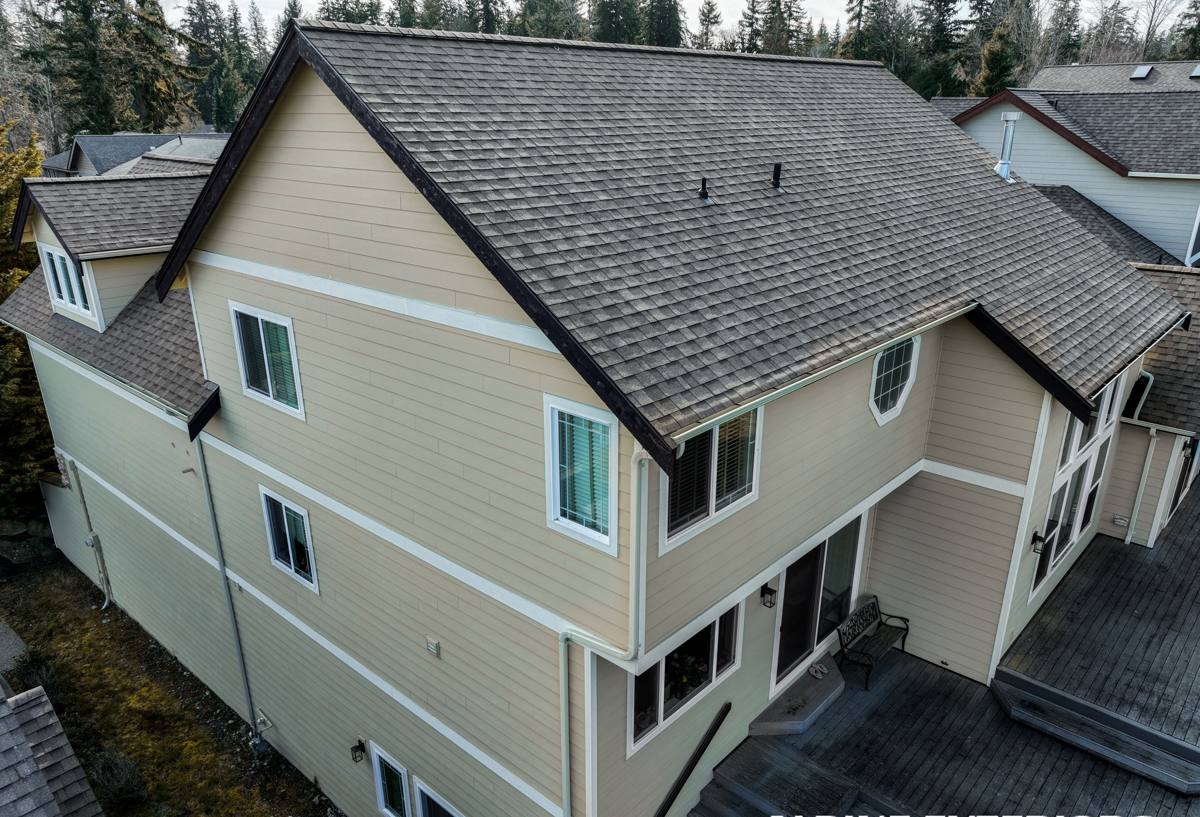
What This Climate Does to a Deck
Moisture That Doesn't Let Up
Whatcom County doesn't get flash floods — it gets months of steady, low-grade dampness. That's arguably worse for a deck than a hard rain now and then. Wood, fasteners, and connectors here spend long stretches at or near saturation, especially on decks with limited sun exposure or heavy tree cover. Any spot where water can pool, or where two pieces of material sit tight against each other without a way to dry out, becomes a rot or corrosion starting point over a few seasons.
Moss and Organic Growth
The long moss season here isn't just a cosmetic nuisance. Moss and algae hold moisture directly against decking boards, ledger connections, and stair treads, extending the time wood stays wet well beyond what the weather alone would cause. On shaded decks, moss can establish itself within a year or two if the board spacing, drainage, and finish aren't set up to discourage it. Once it's established, it also makes surfaces genuinely slick — a real safety issue on stairs and landings.
Salt Air and Metal Fasteners
Properties with any exposure to marine air deal with accelerated corrosion on fasteners, brackets, and hardware. Standard hot-dip galvanized hardware can start showing rust streaking and pitting years earlier near the water than it would further inland. This matters most at structural connections — ledger bolts, joist hangers, post bases — because a corroded fastener you can't see is a much bigger problem than a corroded one you can.
What a Correctly Built Deck for This Area Looks Like
There's no single "right" deck design — it depends on the site, the budget, and how the space will be used. But for this climate, a handful of details separate a deck that lasts from one that becomes a maintenance headache within five years.
- Ledger board flashing that actually sheds water away from the house rim joist, not just a bead of caulk behind the ledger
- Joist tape or flashing on the tops of all framing members before decking goes down
- Stainless steel or high-grade coated fasteners and structural hardware in any area with salt air exposure
- Board spacing sized for airflow and drainage, not just visual tightness
- Post bases that keep wood posts elevated off concrete, out of standing water
- Ventilated skirting or open substructure design so air can move underneath and dry things out between rain events
- A decking material and finish schedule matched to how much shade and moss pressure the specific site actually has
None of these add dramatically to the cost of a project when they're planned in from the start. They get expensive when they're skipped and have to be corrected after rot or corrosion has already set in.
Decking Material Choices for Edgemoor Conditions
There's no universally "best" decking material — every option is a trade-off between upfront cost, maintenance, and how it behaves in sustained moisture. Here's how the common choices actually compare for this climate specifically.
| Material | Moisture Behavior | Moss/Algae Resistance | Maintenance |
|---|---|---|---|
| Pressure-treated wood | Good if detailed and finished correctly; prone to cupping if neglected | Low — needs regular cleaning and treatment in shaded spots | Annual cleaning, periodic re-staining or sealing |
| Cedar | Naturally moisture-resistant, but still needs finish upkeep | Moderate — better than PT wood untreated, still needs care in shade | Regular sealing to maintain appearance and resistance |
| Composite decking | Doesn't absorb water like wood; core matters — capped composites resist moisture better than uncapped | Moderate to good depending on product; surface texture affects moss grip | Periodic washing; no staining or sealing needed |
| PVC/cellular decking | Essentially impervious to moisture absorption | Good, especially with a smoother surface profile | Lowest — occasional washing |
We'll walk through these trade-offs honestly for your specific site — a heavily shaded deck under mature trees has different needs than one that gets full sun most of the day, even a few hundred feet apart.
Substructure and Framing: Where Problems Actually Start
Most deck failures we get called out to inspect aren't decking-surface problems — they're substructure problems that went unnoticed for years because the surface still looked fine. The ledger connection to the house, the condition of joists and beams, and the footing and post setup are what actually determine whether a deck is safe and how long it will last.
In this climate, we pay particular attention to:
- Ledger flashing integrity — this is the single most common source of hidden rot on older decks in wet climates
- Post-to-footing connections that keep wood from sitting in standing water
- Joist hanger condition, especially on decks more than a decade old that may have older, less corrosion-resistant hardware
- Beam and joist sizing appropriate for actual spans and loads, not just what was minimally code-compliant when it was built
On a rebuild or major repair, we'll open up and inspect these areas rather than just replacing what's visible from the top. It's the difference between fixing the problem and covering it up for a few more years.
Our Process for Edgemoor and Sudden Valley Deck Projects
Site Assessment
We start by looking at the site itself — sun exposure, tree cover, drainage patterns, proximity to the water, and the condition of any existing structure. This tells us what the deck will actually be up against, not just what a generic spec sheet would assume.
Design and Material Selection
We talk through material options honestly, including the maintenance commitment each one carries. A lower-maintenance material often costs more upfront but less over ten years; a traditional wood deck costs less upfront but needs consistent upkeep to hold up in this climate. We'll lay out the real trade-offs so you can choose based on your budget and how much yard maintenance you actually want to do.
Build
Framing, flashing, and fastener choices are matched to the site conditions we found in the assessment — more corrosion-resistant hardware near the water, more attention to ventilation on shaded builds, drainage-conscious footing placement wherever the site has poor natural drainage.
Walkthrough and Care Guidance
Before we consider the job finished, we walk the deck with you and go over what maintenance it actually needs — cleaning schedule, what to watch for as moss season sets in each year, and how to spot early signs of trouble before they become structural.
Deck Maintenance Checklist for This Climate
- Clear leaves, needles, and debris from between boards before they trap moisture through winter
- Clean moss and algae off decking and stairs at least once a year, more often in heavily shaded areas
- Check ledger flashing and any visible fastener heads annually for rust staining or gaps
- Keep gutters and downspouts clear so roof runoff isn't dumping extra water onto or near the deck
- Re-seal or re-stain wood decking on the manufacturer's recommended schedule, not just when it looks faded
- Watch stair treads and landings closely — these accumulate moss fastest and are the highest-risk spot for a slip
Why a Crew That Already Works This Area Matters
Building a deck that lasts in Whatcom County isn't about a special product or a proprietary system — it's about knowing which details actually matter here and not skipping them under time or budget pressure. A crew that hasn't worked much in areas with this much sustained moisture and salt exposure can build a technically code-compliant deck that still runs into moss, corrosion, and rot problems years earlier than it should.
We work regularly on homes in Edgemoor and the wider Sudden Valley area, so we've seen firsthand how a shaded, low-airflow deck behaves differently from a sun-exposed one just down the road, and how different a build needs to be for a property with direct marine exposure versus one set back from the water. That local pattern recognition is what keeps us from treating every deck as a generic spec-sheet project.
Get an Honest Estimate
Whether you're planning a new deck, replacing an aging one, or dealing with soft spots, moss buildup, or rusted hardware on an existing structure, we're happy to take a look and give you a straight assessment of what it needs. Reach out for a free, no-pressure estimate using the form below.