 Sudden Valley Siding
 Custom Windows Built for Barkley's Weather, Not Just Its Openings
Barkley homes sit close enough to open water and low-lying, tree-shaded terrain that windows here take a different kind of beating than windows twenty miles inland. Whatcom County's marine climate means Barkley properties deal with salt-laden air drifting off the water, long stretches of driving, wind-pushed rain, and a moss and mildew season that can run eight months or more in shaded lots. Standard, off-the-shelf replacement windows are built to a national average. Custom windows are sized, sealed, and specified for the actual opening and the actual exposure — which in Barkley usually means the north and west-facing walls that catch the worst of the weather.
"Custom" doesn't necessarily mean expensive or exotic. Most of the time it means a window built to the precise rough opening of an older home instead of forcing a stock size to fit, with flashing and sealant details chosen for how much wind-driven rain that specific wall sees. Getting this wrong is why so many window complaints in this area aren't about the glass at all — they're about water finding its way in around a poorly flashed frame.
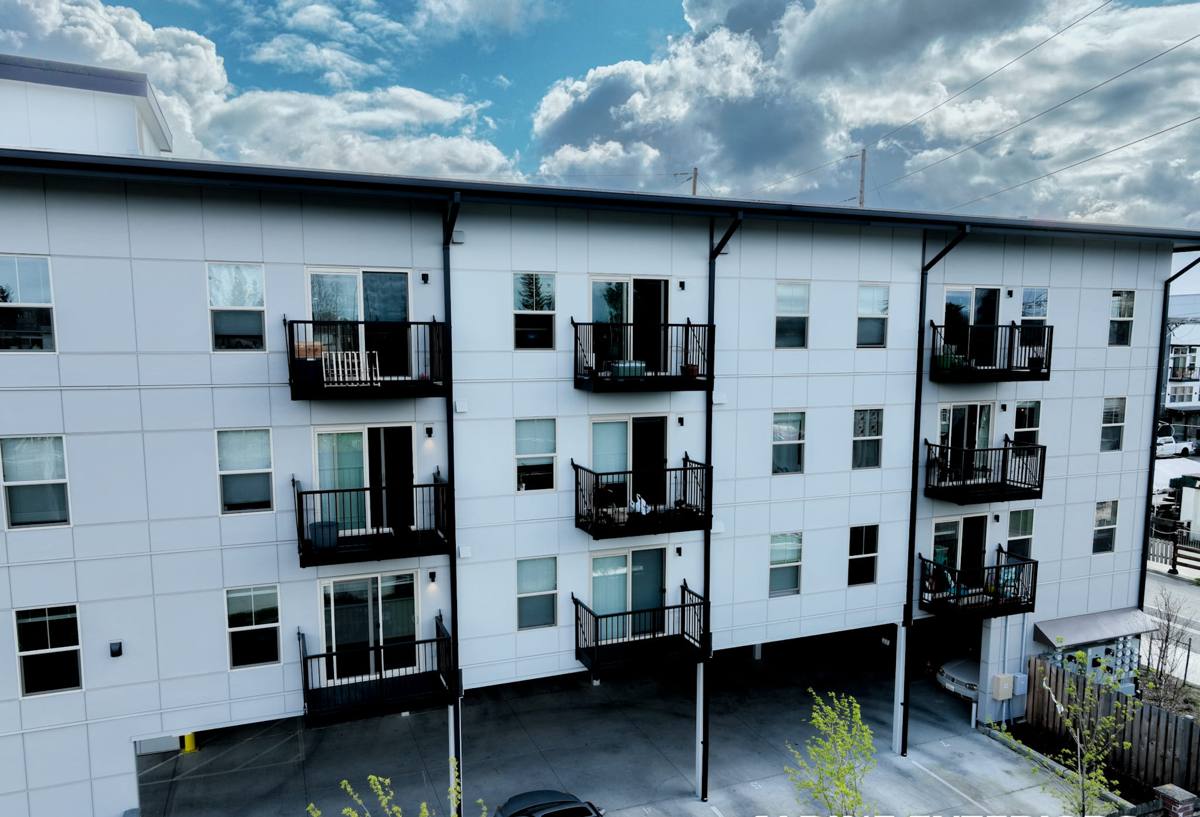
Why Barkley's Housing Stock Calls for a Custom Approach
Barkley has a mix of home ages and builders, which means window openings are rarely uniform even within the same block. Some homes have settled slightly over the decades, which throws rough openings out of square. Others were built with window sizes that manufacturers stopped stocking years ago. Trying to force a big-box stock window into an opening that's a half-inch out of true is one of the most common causes of the drafts, sticking sashes, and slow leaks we get called out to fix.
A custom window is measured and built (or ordered) to match the actual opening, not the nominal one. That matters more here than in a newer, uniform subdivision because:
- Older Barkley homes often have wood-framed openings that have shifted slightly over time
- Additions and remodels sometimes introduced non-standard sizes
- Homes closer to tree cover or water exposure need different weatherstripping and drainage detailing than homes on more sheltered lots
- Mixing old single-pane or early dual-pane units with modern replacements means matching sightlines and trim, not just glass
What "Correct" Actually Means Here
A window installed correctly in Barkley has to do three jobs at once: stop air infiltration, manage bulk water that hits the wall during a driving rain event, and resist the slow corrosion and staining that salt-influenced air causes on hardware and finishes over years. Skipping any one of those is how you end up with a window that looks fine for two years and then starts failing at the sill.
What a Proper Window Job Involves
Replacing a window is more than pulling the old sash and dropping in a new unit. On a home exposed to this region's rain and humidity, the installation sequence is what actually determines whether the window performs for the next twenty years.
The Opening
Before anything new goes in, we check the rough opening for square, rot, and existing water damage. This is often where problems that have nothing to do with the old window itself get found — soft sill framing, deteriorated house wrap, or sheathing that's been slowly absorbing moisture. A custom window can't fix a compromised opening; the opening has to be corrected first or the new window will fail the same way the old one did.
Flashing and Drainage
This is the step most likely to get shortcut on a budget install and the one most responsible for future leaks. Proper flashing creates a shingled, drainage-plane path so any water that gets past the exterior trim runs back out instead of into the wall cavity. In an area that sees sustained driving rain off the water, this detail is not optional — it's the difference between a window that sheds water and one that slowly rots the framing around it.
Sealing and Insulation
Low-expansion foam or backer rod and sealant around the frame perimeter closes air gaps without bowing the frame out of square — a real risk with standard expanding foam on a custom-fit unit. Interior air sealing matters as much as exterior caulking; most heat loss around a window happens through air leakage, not through the glass.
Hardware and Finish
Locks, hinges, and cranks see accelerated wear in salt-influenced air. We spec hardware finishes and fasteners rated for coastal or marine-adjacent exposure rather than standard interior-grade hardware, which can start showing corrosion within a couple of seasons in this environment.
Frame Material Comparison for Barkley Conditions
There's no single "best" window material — the right choice depends on the wall's exposure, the home's style, and how much upkeep an owner wants to take on. Here's how the common options hold up under Sudden Valley's conditions specifically.
| Material | Moisture & Salt Air Behavior | Maintenance | Typical Fit |
|---|---|---|---|
| Vinyl | Won't rot or corrode; performs well in damp, salt-influenced air | Low — occasional cleaning | Most Barkley replacement projects |
| Fiberglass | Very stable dimensionally; excellent moisture and salt resistance | Low | Homes wanting a slimmer sightline or paintable frame |
| Wood (clad exterior) | Good if the exterior cladding is intact; interior wood needs protection from condensation | Moderate to high — finish upkeep matters | Homes prioritizing a traditional wood-frame interior look |
| Aluminum | Prone to condensation and, without a thermal break, more susceptible to corrosion near salt air | Moderate | Limited use; we typically steer owners toward vinyl or fiberglass for exposed walls instead |
We don't install every material on every wall. On the north- and west-facing exposures that take the brunt of Barkley's weather, we lean toward vinyl or fiberglass because both resist the moisture cycling and salt exposure that shortens the life of untreated wood or bare aluminum. That's a maintenance and longevity call, not a knock on any product — wood-frame windows still make sense on sheltered elevations where an owner wants that look and is willing to keep up the finish.
How Our Process Works
- On-site assessment. We look at every opening individually — square, condition of the surrounding framing, and how exposed that particular wall is to wind and rain.
- Precise measurement. Each window is measured to the actual opening, not a catalog size, so the custom unit fits without gaps that have to be papered over with excess sealant.
- Material and glass selection. We walk through frame material, glass package (including low-E coatings and gas fills where they make sense for the home's orientation), and hardware finish.
- Removal and opening prep. Old units come out carefully so we can inspect and, if needed, repair the framing and drainage plane before the new window goes in.
- Installation with full flashing detail. Shingled flashing, backer rod and sealant, and low-expansion insulation — done in that order, not skipped or compressed to save time.
- Interior and exterior finish work. Trim, caulking, and touch-up so the new window matches the surrounding wall cleanly.
- Final check. We test operation, confirm weatherstripping contact, and walk the job with the homeowner before we call it done.
Signs a Barkley Home Needs New Windows
Not every window problem means full replacement, but these are the signs worth having a professional look at before they turn into structural repairs:
- Fogging or moisture between the panes — the seal has failed and the insulating gas is gone
- Soft or discolored trim or sill wood, especially on north- or west-facing walls
- Visible mold or persistent mildew on the interior frame, a common sign of condensation and poor sealing
- Drafts you can feel with a hand near the frame on a windy day
- Windows that are difficult to open, close, or lock — often a sign the frame has shifted or swollen
- Paint or finish that's failing faster around the window than on the rest of the wall
- Visible green or black staining that keeps returning after cleaning, a sign moisture is lingering in that area
What Affects the Cost
We won't quote a number without seeing the home, but these are the factors that actually move the price on a Barkley window project:
| Factor | Why It Matters |
|---|---|
| Frame material | Vinyl is typically the most cost-effective; fiberglass and clad wood cost more upfront |
| Opening condition | Rot or out-of-square framing adds repair work before the window can even go in |
| Glass package | Low-E coatings, gas fills, and impact-resistant glass all add cost but also performance |
| Number and size of openings | Larger or custom-shaped windows cost more to fabricate and install than standard sizes |
| Exposure level | Walls with heavier rain and wind exposure sometimes call for upgraded flashing details |
| Access and site conditions | Second-story or hard-to-reach openings add labor time |
Why It Matters That We Already Work in Barkley
A crew that works this specific area regularly knows which walls in Barkley take the worst of the weather, which building styles are common enough that we've already seen their typical trouble spots, and how much moss and moisture buildup to expect on a shaded lot versus an open one. That's not something you can look up — it comes from doing the work here repeatedly. It also means we're not guessing at flashing details or hardware specs; we're applying what's already worked on homes with the same exposure a few streets over.
Being local also means we're accountable in a way an out-of-area crew isn't. If a seal needs a second look after the first hard rain of the season, we're not driving in from across the county to check it.
Living With Custom Windows in a Moss-Season Climate
Even a correctly installed window needs a little seasonal attention in this climate. Keeping weep holes and drainage tracks clear of moss, leaf debris, and dirt lets the window do the drainage job it was built for. A soft brush and a garden hose, a couple of times a year, is usually enough. Owners should also periodically check exterior caulking for cracking, since UV exposure and constant damp-dry cycling break down sealant faster here than in drier climates. Catching a hairline gap in caulking early is a five-minute fix; ignored for a season or two, it becomes a rot repair.
If you're weighing new windows for a Barkley home, we're happy to take a look and talk through what actually makes sense for your specific walls and budget — no pressure, no upsell. Reach out for a free estimate using the form below.