 Sudden Valley Siding
 Composite Decking Built for Sehome's Weather, Not Just Its Looks
Sehome sits close enough to the water and the hills around Bellingham Bay that its homes deal with a specific combination of stress: salt-tinged air rolling in off the Sound, long stretches of driving rain from fall through spring, and shaded, damp corners that stay green with moss well past when other parts of Whatcom County have dried out. A deck here isn't decorative for most of the year — it's outdoor living space that has to survive months of wet weather before anyone sits on it in the sun. Composite decking, installed correctly, handles that combination better than most wood options. Installed carelessly, it fails in the same ways wood does — just slower, and often more expensively to fix.
This page is about what a composite deck actually needs to hold up in Sehome specifically: the climate factors at play, what a correct installation looks like underneath the boards, how we run the job, and what ongoing care actually involves once it's built.
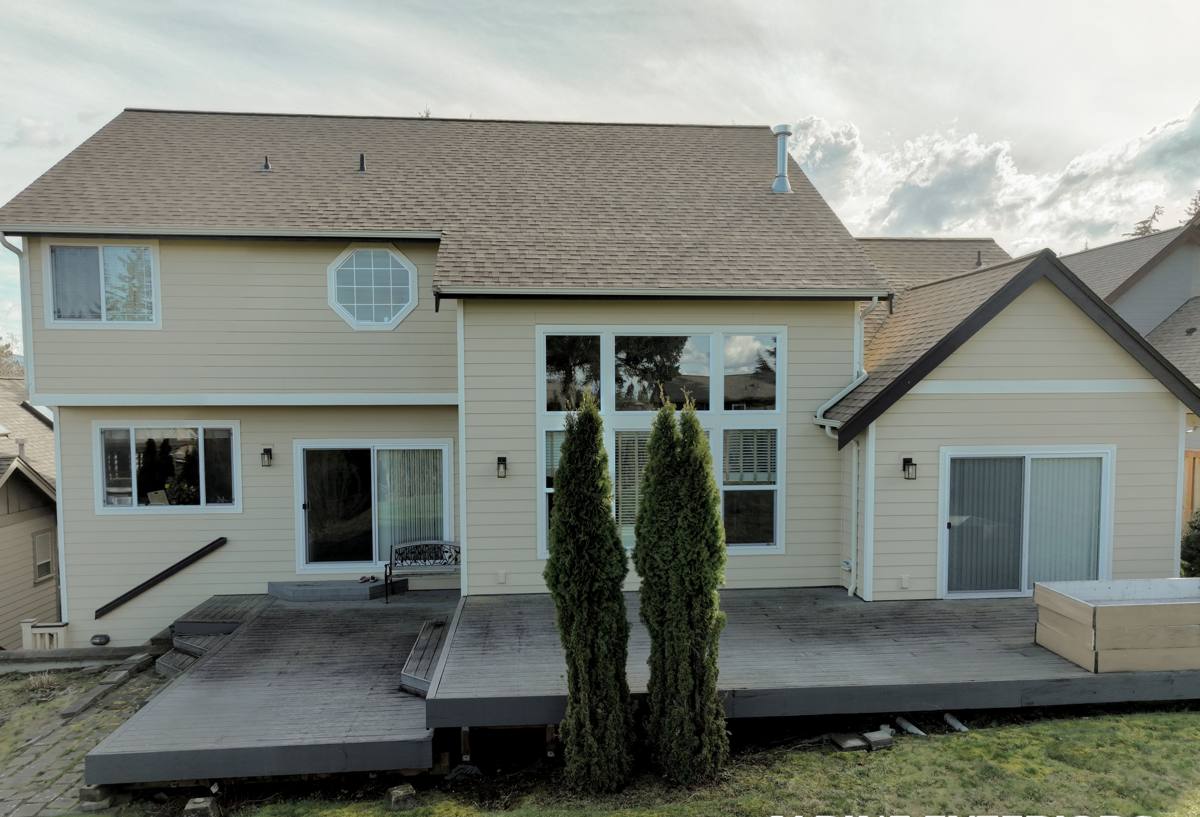
What Whatcom County Weather Actually Does to a Deck
Composite boards are more resistant to rot and insect damage than raw lumber, but "low maintenance" doesn't mean "no factors to plan for." Three things matter most in this area:
Salt Air and Moisture Cycling
Proximity to the water means metal fasteners, brackets, and ledger connections see more corrosion pressure over time than the same hardware would inland. Cheap or mismatched fasteners are one of the most common failure points we find on decks built by crews unfamiliar with coastal Whatcom conditions — the boards look fine, but the hidden hardware holding everything together is compromised.
Driving Rain and Drainage
Whatcom County's rain doesn't just fall — a lot of it comes in sideways during winter storms, which means water gets under and behind decking in ways that vertical-only drainage planning misses. Ledger boards, rim joists, and any point where the deck meets the house siding need proper flashing and a drainage gap, or water finds its way into the framing and the wall assembly behind it.
Moss and Shade
Tree cover and cooler, damp air mean moss and algae growth is a longer-running problem here than in drier climates — often visible on north-facing or shaded sections of a deck nearly year-round. Moss holds moisture against the surface and, on the wrong composite product or a poorly ventilated substructure, that trapped dampness accelerates staining and mildew growth even on capped boards.
None of these are reasons to avoid composite decking. They're reasons the installation details matter more here than they would in a drier, inland climate.
Choosing the Right Composite Product for This Climate
Not all composite decking is built the same way, and the differences matter more in a wet coastal climate than manufacturers' marketing usually lets on. Our standard is to use fully capped composite boards — meaning the wood-plastic core is wrapped in a protective polymer shell on all sides — rather than uncapped or partially capped products, because the cap is what actually resists moisture absorption, staining, and mold growth at the surface.
| Decking Type | Moisture Behavior | Maintenance Load | Best Fit |
|---|---|---|---|
| Fully capped composite | Resists moisture absorption; low swelling at cut ends if properly sealed | Periodic washing; no staining or sealing | Most Sehome yards, especially shaded or rain-exposed areas |
| Uncapped or side-capped composite | More prone to moisture wicking at exposed edges, especially on cut ends | Needs closer inspection at joints over time | Budget-driven projects with realistic expectations set upfront |
| PVC decking | Fully synthetic; essentially no moisture absorption | Very low; can run warmer underfoot in direct sun | High-moisture, low-sun areas near water or heavy shade |
| Pressure-treated wood | Absorbs and releases moisture constantly; prone to cupping and splintering | Regular sealing/staining required, especially in wet climates | Homeowners who prefer real wood and accept the upkeep |
We don't push one product on every job. We do explain the honest trade-offs — an uncapped or budget composite board will cost less upfront but shows its age faster in a climate this wet, and that's a decision a homeowner should make with the full picture, not find out about after a few winters.
What a Correctly Built Composite Deck Involves
The boards get the attention because they're what you see, but most of what determines whether a deck lasts is underneath them.
Substructure and Framing
Composite boards are heavier than wood and behave differently under load and temperature change, so joist spacing has to match the manufacturer's specification for that specific product — not a generic "16 inches on center" assumption carried over from wood-deck habits. Using the wrong spacing is a common cause of bounce, sagging, or premature board stress.
Ledger Attachment and Flashing
Where the deck attaches to the house is the single highest-risk point for water intrusion, particularly with Whatcom County's sideways winter rain. Proper flashing — installed so water sheds away from the house rather than behind the ledger board — is non-negotiable, regardless of what decking material sits on top.
Fasteners and Hardware
Given the salt air this area sees, we use corrosion-resistant fasteners and connectors rated for the coastal exposure, not generic hardware pulled off a shelf because it's cheaper. Hidden fastener systems also matter for composite specifically — they reduce the number of surface penetrations where moisture could otherwise work into the board over time.
Drainage and Airflow Underneath
A deck built low to the ground or without ventilation gaps traps moisture underneath, which is exactly the environment moss and mildew thrive in. Proper joist spacing, gapping between boards, and clearance underneath all matter for keeping air moving through the structure.
Board Layout and Expansion
Composite material expands and contracts with temperature more than most homeowners expect. Board gapping has to account for that movement — installed too tight, boards buckle; installed too loose, they gap unevenly as the seasons change.
How Our Process Works
- On-site assessment: We look at the existing structure (if there is one), drainage patterns, sun/shade exposure, and how the deck ties into the house before recommending anything.
- Honest product discussion: We walk through composite tiers and trade-offs in plain terms — no upselling based on square footage alone.
- Written estimate: Scope, materials, and timeline in writing before any work starts.
- Structural work first: Framing, ledger flashing, and fastener selection get done to spec before a single composite board goes down.
- Decking installation: Boards installed with proper gapping, hidden fasteners where applicable, and attention to cut-end sealing on any exposed edges.
- Final walkthrough: We go over the finished deck with the homeowner, including what maintenance (if any) the specific product needs going forward.
Cost Factors for a Sehome Composite Deck Project
Every deck is different, but the variables that move the price are consistent. We give firm written quotes after the on-site assessment rather than a number over the phone, because the factors below can shift the total significantly.
| Factor | Why It Matters |
|---|---|
| Deck size and shape | Square footage plus complexity — angles, curves, and multiple levels add labor beyond simple material cost |
| Substructure condition | Building on existing framing versus full rebuild changes the scope substantially |
| Height and railing requirements | Taller decks need engineered railing and stair systems; local code requirements apply |
| Composite tier chosen | Fully capped premium boards cost more upfront than entry-level composite or uncapped products |
| Site access | Sloped lots, tree cover, and limited equipment access common in this area can add time |
| Drainage and flashing needs | Ledger and flashing work done properly takes more time than a shortcut approach, but it's what prevents water damage later |
Maintenance: What Composite Still Needs in This Climate
Composite decking cuts down on maintenance dramatically compared to wood, but "low maintenance" in a marketing brochure and "zero maintenance" in a wet coastal climate are two different things. In Sehome's conditions, here's what actually keeps a composite deck looking and performing well:
- Sweep debris and standing leaves regularly, especially in shaded areas where moss takes hold fastest
- Wash the deck surface a couple of times a year with mild soap and water to prevent moss and algae buildup before it sets in
- Check that gaps between boards stay clear of debris so water and airflow can move through as designed
- Inspect railing posts, stairs, and ledger flashing annually for any signs of movement or water staining
- Avoid pressure-washing at high pressure directly into board seams, which can drive water into places it shouldn't go
- Keep gutters and downspouts near the deck clear so runoff isn't dumping directly onto or under the deck surface
Why Local Experience in Sehome Matters
A crew that works this specific area regularly knows things a generalist contractor has to relearn on every job: which fastener grades hold up against the salt exposure closer to the water, how much drainage capacity a deck needs given how hard the rain comes down here, and how much shade a given lot actually gets through the year before moss becomes a maintenance headache instead of an occasional chore. That local pattern recognition shows up in decisions made before a single board is cut — framing layout, flashing detail, board selection — not in anything that's easy to see after the fact.
We also know the practical side of building here: what inspection and permitting steps typically apply to a residential deck project in Whatcom County, and how to sequence work around the wetter months so framing isn't sitting exposed to rain longer than it needs to be.
Signs Your Current Deck Needs Attention
If you already have a deck in Sehome and are weighing repair versus replacement, a few signs point toward a bigger problem than the surface suggests:
- Soft or spongy spots in the decking surface, particularly near the house or in shaded corners
- Persistent moss or dark staining that returns quickly after cleaning
- Visible gaps, rust streaks, or movement at the ledger board where the deck meets the house
- Boards that have cupped, warped, or separated at the fasteners
- Railings or stairs that feel less solid than they used to
Any of these can be a surface-level fix or a sign of moisture damage in the framing underneath — that's usually not something to guess about from a visual inspection alone.
If you're weighing a new composite deck or wondering whether an existing one is holding up the way it should, we're happy to take a look and give you a straightforward assessment. The estimate is free, there's no pressure attached to it, and you'll get a clear answer about what your project actually needs — just fill out the form below to get started.