 Sudden Valley Siding
 Storm Damage Roof Repair Built for the Alger Climate
Homes in the Alger area near Sudden Valley take a different kind of beating than roofs on the dry side of the state. It isn't usually one dramatic storm that causes the damage homeowners call us about — it's the cumulative effect of wind-driven rain off the water, salt-laden air, and a moss season that can run eight months out of the year. A roof here can look fine from the ground and still be quietly failing underneath. Our storm damage repair work in this area is built around that reality: find what the weather actually did, fix it correctly, and leave the roof better prepared for the next system that rolls through.
This page covers storm damage roof repair specifically — not a full re-roof pitch, not general maintenance. If a storm just came through Alger, or you're dealing with the slow-motion damage from a wet winter, this is what you need to know before you call anyone.
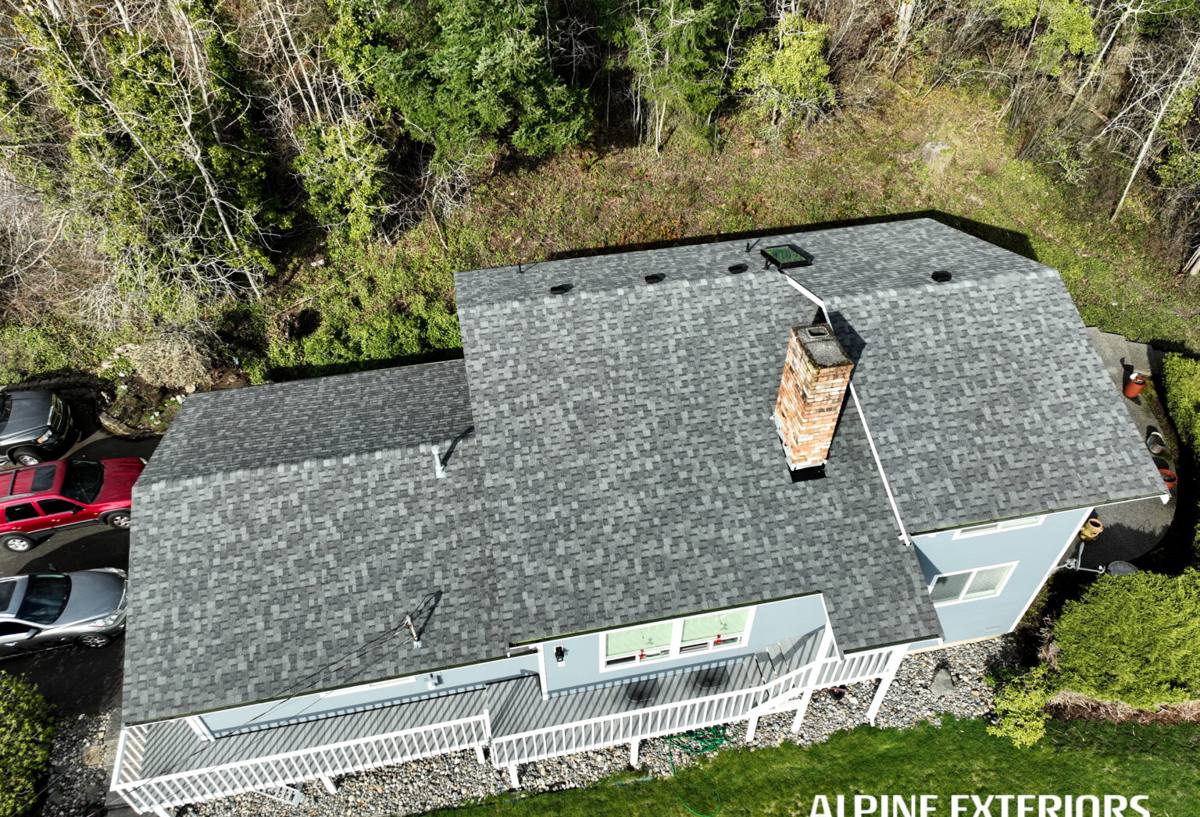
What Pacific Northwest Storms Do to a Whatcom-Area Roof
Sudden Valley and the surrounding Alger area sit close enough to the water and the foothills that roofs see a specific combination of stresses most inland homes don't deal with:
- Wind-driven rain: Storms here rarely come straight down. Sideways rain gets pushed up under shingle tabs, around flashing, and into any gap that a calm-weather roof would never notice.
- Salt air: Proximity to Puget Sound and Bellingham Bay means metal flashing, fasteners, and gutter systems corrode faster than the manufacturer's spec sheet assumes. Corrosion at a nail head or flashing seam is how small leaks start.
- Long moss season: Shade, moisture, and mild temperatures give moss and algae most of the year to establish. Moss doesn't just look bad — it lifts shingle edges, holds water against the roof deck, and breaks down the granule surface that protects asphalt shingles from UV and weather.
- Wind gusts and falling limbs: Mature conifers are everywhere in this part of Whatcom County. A gust doesn't need to be a named storm to snap a limb onto a roof plane or tear a section of ridge cap loose.
- Freeze-thaw cycling: It doesn't happen every winter, but when a cold snap follows a soaking wet stretch, any water already trapped under moss or behind failed flashing can freeze, expand, and widen the damage.
None of this is unusual for the region — it's just what a roof in this climate has to withstand every year, storm or no storm. The difference between a roof that handles it and one that doesn't usually comes down to whether the flashing, underlayment, and ventilation were done right the first time.
Signs Your Alger Roof May Have Storm Damage
Storm damage isn't always obvious. Some of it announces itself with a leak in the ceiling; a lot of it doesn't show up indoors until the damage has been developing for months. Here's what we tell homeowners to watch for after any significant wind or rain event:
- Shingles that look cupped, curled, or creased, especially on the roof plane that faces the prevailing wind
- Granules collecting in gutters or at the base of downspouts after a storm
- Bent, lifted, or missing flashing around chimneys, skylights, and roof-to-wall transitions
- Soft or spongy spots when the roof deck is walked, which usually means water has already reached the sheathing
- Visible daylight through the attic at roof penetrations or the ridge
- New or spreading moss growth in a spot that used to be clean, which often means a shingle edge has lifted enough to trap moisture
- Water stains on interior ceilings or in the attic, even faint ones that dry between storms
- Dented or displaced ridge cap and hip cap shingles after high wind
- Gutters pulled away from the fascia or sagging under debris and standing water
If you notice more than one or two of these, it's worth having someone look before the next storm, not after.
What a Correct Storm Damage Repair Actually Involves
A lot of "storm repairs" in this region amount to a quick patch — a bead of sealant over a lifted shingle, a new piece of flashing tacked over the old one. That kind of fix can hold for a season, but it doesn't address why the damage happened, and in a climate this wet, an incomplete repair tends to resurface as a leak somewhere else within a year or two.
Diagnosis Before Repair
Every storm repair starts with figuring out what actually failed, not just where the water showed up inside the house. Water travels along rafters and sheathing before it drips through a ceiling, so the visible stain and the actual entry point are often several feet apart. We trace it back to the source before doing any work.
Matching the Fix to the Damage
Depending on what we find, a proper repair can include:
- Replacing damaged or missing shingles with matching material, not a mismatched patch
- Re-securing or replacing corroded flashing at chimneys, valleys, skylights, and sidewalls
- Repairing or replacing sections of underlayment where wind-driven rain got underneath the shingle field
- Sistering or replacing damaged roof decking where moisture has caused rot or delamination
- Resetting or replacing gutters and downspouts damaged by wind or debris
- Clearing moss and treating the roof surface where growth has compromised shingle performance
The goal is to fix the actual failure point with materials that match the existing roof system, so the repair blends in and performs as well as the roof around it — not a visible patch that becomes the next weak spot.
Our Storm Damage Repair Process in Alger
- Initial contact and scheduling: We get details on the storm event and any visible or suspected damage, and get a crew out promptly — sooner if there's an active leak.
- On-roof inspection: We walk the roof (weather permitting) and check the attic from inside, looking at decking, insulation, and ventilation for signs of moisture beyond the obvious damage.
- Written assessment: You get a clear explanation of what we found, what caused it, and what repair options make sense — including if a full section replacement is a better long-term call than a patch.
- Repair work: We complete the agreed repair using materials matched to your existing roof, with attention to the flashing and underlayment details that matter most in this climate.
- Final check: We confirm the repair area is sealed and weathertight and walk you through what was done before we consider the job finished.
If your claim involves insurance, we can document damage clearly enough to support that conversation, though the claim itself is between you and your carrier.
Repair vs. Replacement: How We Help You Decide
Not every storm-damaged roof needs to come off. But sometimes a repair is a short-term fix on a roof that's already near the end of its service life, and that's worth knowing before you spend money on it. Here's how we generally think through it:
| Factor | Favors Repair | Favors Replacement |
|---|---|---|
| Roof age | Under 12-15 years, asphalt shingle | Approaching or past manufacturer service life |
| Extent of damage | Localized to one section or plane | Spread across multiple planes or the whole roof |
| Decking condition | Solid, no rot found | Soft spots or rot found in more than one area |
| Moss history | Minor, recent, hasn't compromised shingles broadly | Long-term moss damage affecting granule loss across the roof |
| Shingle match availability | Matching shingle still available | Discontinued product, visible mismatch unavoidable |
We'll tell you honestly which side of that line your roof falls on. If a repair is the right call, that's what we'll recommend — a roof doesn't need to be replaced just because it was damaged in a storm.
Materials and Methods Suited to This Climate
Because salt air and moisture are constants here, not occasional stressors, the materials and details used in a repair matter more in Alger than they would in a drier part of the state.
Flashing and Fasteners
We use corrosion-resistant flashing and fasteners rather than the cheapest available option, because standard galvanized material can start showing rust streaks and pinhole corrosion faster this close to salt water. It costs a little more up front and holds up considerably longer, which matters on a repair you don't want to redo in three years.
Underlayment
In wind-driven rain, the underlayment is doing more of the actual waterproofing than people realize — the shingles shed most of the water, but underlayment is the backup layer when wind pushes rain sideways or under a tab. On any repair where we open up the roof, we use underlayment rated for the exposure, not just whatever matches the existing roof if the existing product wasn't well suited to the conditions.
Moss Management
Where moss has contributed to the damage, we don't just scrape it and move on. Moss removed the wrong way can tear granules off the shingle surface and shorten its life further. We treat the surface appropriately for the material and, where it makes sense, talk through longer-term moss prevention — because in this climate, moss isn't a one-time problem, it's an ongoing maintenance item.
Storm Damage Repair Cost Factors
Every roof and every storm is different, so we don't quote a number sight unseen — but the cost of a storm damage repair in this area is generally driven by a handful of factors:
| Factor | Why It Matters |
|---|---|
| Size of the damaged area | A single lifted section costs far less than damage spread across a whole roof plane |
| Decking condition | Rotted sheathing requiring replacement adds material and labor beyond the surface repair |
| Roof pitch and access | Steeper roofs and difficult access take more time and safety setup |
| Material match | Older or discontinued shingle products can be harder and pricier to source a match for |
| Flashing complexity | Chimneys, skylights, and multiple valleys involve more detail work than a simple field repair |
Most straightforward storm repairs are a modest, bounded cost; jobs that uncover deck rot or widespread moss damage run higher because they involve more than the visible symptom. We'll always walk you through the "why" behind a quote before you approve it.
Why Hire a Crew That Already Works the Alger Area
Storm damage repair is one of those jobs where local experience actually changes the outcome, not just the sales pitch. A crew that regularly works roofs in and around Sudden Valley and the broader Whatcom County area already knows how wind tends to move across this terrain, which roof details fail first in this kind of weather, and what a properly weatherized flashing detail needs to look like here versus in a milder climate. That's the difference between a repair that's cosmetically fine and one that's actually built to hold up through the next wet season.
There's also a practical side to it: after a storm, response time matters. A crew already working the area can typically get to your roof faster than one traveling in from farther out, which matters when there's an active leak and every additional wet day adds to the interior damage.
Get a Free, No-Pressure Estimate
If a recent storm left you with a leak, missing shingles, or damage you're not sure how serious, an honest look from someone who works roofs in this climate is worth more than guessing. Use the form below to request a free estimate — we'll look at what the weather actually did to your roof and tell you plainly what it needs, whether that's a targeted repair or something more.