 Sudden Valley Siding
 Storm Damage Roof Repair for the Yew Street Area of Sudden Valley
Homes around Yew Street sit inside the same weather pattern that shapes all of Sudden Valley: wet winters off the water, wind that funnels through the trees and rooflines, and a moss season that can run most of the year if a roof isn't kept clean. When a storm comes through, it rarely damages a roof in one obvious way. More often it's a lifted shingle here, a cracked pipe boot there, a gutter pulled loose at one corner — small failures that don't show up as a leak until weeks later, usually during the next heavy rain. We repair storm-damaged roofs in this neighborhood on a regular basis, and this page walks through what that actually looks like: what Whatcom County weather does to a roof, what a correct repair involves, and how we run the job from first call to final walk-through.
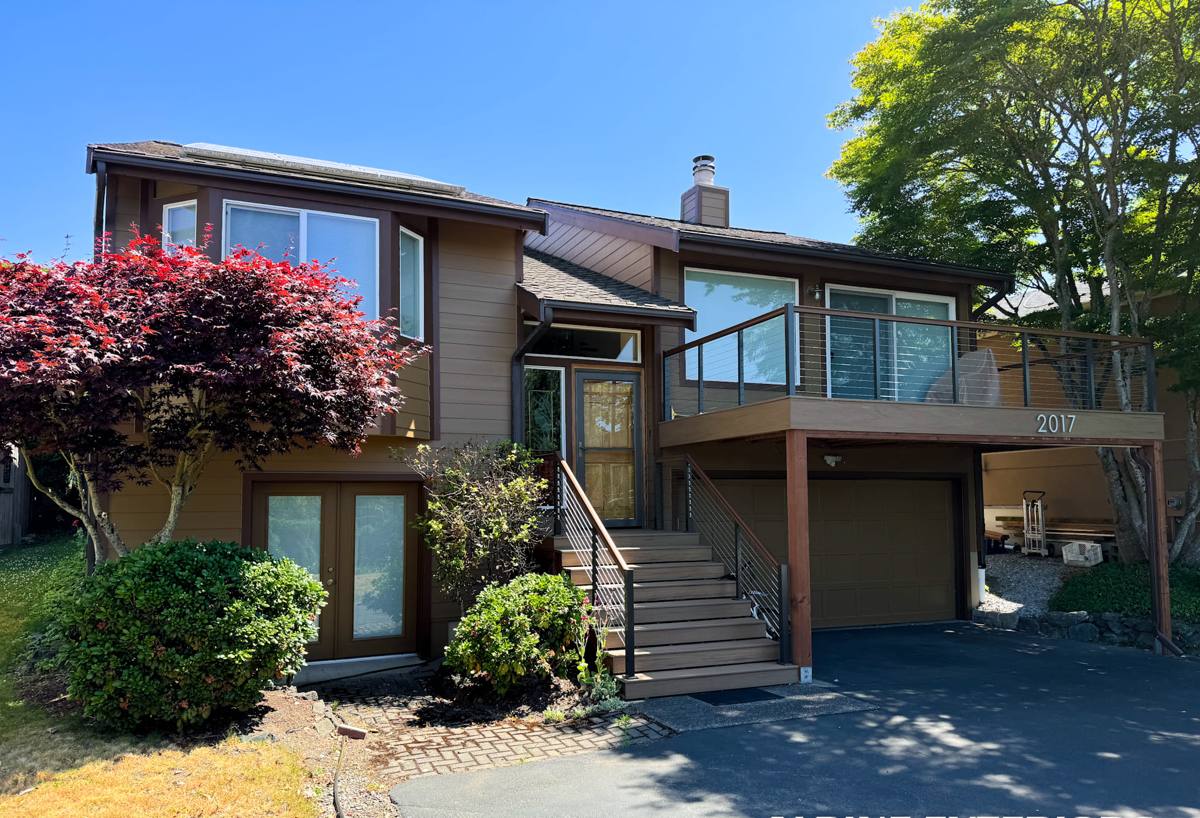
What Whatcom County Storms Do to a Roof
Sudden Valley's location means roofs here take on a specific combination of stress that inland homes don't deal with in the same way.
Wind and Driving Rain
Wind off the lake and the surrounding terrain doesn't just push rain sideways — it gets up under shingle edges and ridge caps that are already a little loose from age or a prior storm. Once wind lifts a shingle tab even slightly, the seal underneath is broken for good. It may lay back down and look fine from the ground, but the adhesive bond doesn't repair itself, and that spot is now a weak point the next time wind picks up.
Salt Air and Metal Fatigue
Being close to the water means salt-laden air reaches roofing metal — flashing, drip edge, nail heads, and any exposed fasteners. Salt air speeds up corrosion on unprotected or poorly coated metal, and corroded flashing is one of the most common hidden causes of a "mystery leak" after a storm. It's not dramatic damage, but it's exactly the kind that gets missed in a quick look from the driveway.
Moss and Trapped Moisture
Whatcom County's moss season is long, and moss does more than look bad. It holds moisture against the roofing material, works its way under shingle edges as it grows, and can lift tabs from beneath — which then gives wind and rain a foothold during the next storm. A roof with an active moss problem is more vulnerable to storm damage, not less, because the moss has already been prying at the seams.
Signs of Storm Damage Worth a Look
Most storm-related roof problems aren't visible as an obvious hole. They show up as small, easy-to-miss changes. If you can safely check from the ground or a ladder, this is what we tell Yew Street homeowners to watch for after any significant wind or rain event:
- Shingle tabs that look lifted, curled, or out of line with the row around them
- Granules collecting in gutters or at downspout outlets — a sign of shingle surface wear
- Bent, dented, or displaced flashing around chimneys, skylights, or roof-to-wall joints
- A gutter or downspout section pulled away from the fascia, or hanging at a different angle than the rest of the run
- New or worsening moss growth concentrated in one area, which often means a low spot holding water
- Water stains on interior ceilings or in the attic, especially near exterior walls or valleys
- Debris — branches, needles, moss clumps — built up in a valley or against a chimney where it can dam water
None of these on their own means the roof needs to be replaced. But any one of them left unaddressed through another wet season is how a $300 repair turns into a $3,000 one.
What a Correct Storm Damage Repair Actually Involves
A lot of "storm damage repair" in this trade is really just patching the visible symptom — a bead of sealant over a crack, a shingle nailed back down — without checking what let the damage happen in the first place. We treat storm repair as a diagnostic job first and a repair job second.
Inspection Before Repair
We look at the roof surface, the flashing, the underlayment where it's exposed, the attic from the inside if accessible, and the gutter system — not just the spot that's obviously damaged. Wind and water rarely limit themselves to one location, and a storm strong enough to lift one shingle usually stressed several others nearby.
Matching Materials, Not Guessing
Repairs should use materials that match the existing roof in type, weight, and where possible, color and age-appropriate appearance. A mismatched patch is a cosmetic problem today and can become a performance problem later if the new material sheds water differently than the old.
Flashing and Fasteners Get Real Attention
Given how salt air treats exposed metal here, we don't just re-seat damaged flashing — we check the condition of the metal itself and the fasteners holding it. Corroded flashing that's reinstalled without addressing the corrosion is a repair that's already failing.
Documentation for Insurance
Storm damage repairs often involve an insurance claim. We document what we find with photos and a written description of cause and extent before any repair work covers it up, since that record is often what determines whether a claim is approved.
Our Process, Start to Finish
- Call or estimate request: Tell us what you noticed and when the storm hit — that timing detail actually helps us look in the right place first.
- On-site inspection: We assess the full roof, not just the reported problem area, and check attic access if available.
- Written estimate: You get a clear explanation of what's damaged, what's causing it, and what the repair involves — no pressure to upgrade to a full replacement unless the roof's condition actually calls for it.
- Repair work: Scheduled around weather windows, since roof repair done in the wrong conditions doesn't seal properly.
- Final check: We walk the repair with you, and if there's an insurance claim involved, we make sure you have what you need for it.
Repair vs. Replacement: How We Help You Decide
Not every storm-damaged roof needs a full replacement, and not every roof that "just needs a patch" is actually a good repair candidate. These are the honest factors we weigh:
| Factor | Favors Repair | Favors Replacement |
|---|---|---|
| Roof age | Under roughly 12-15 years, most materials | Near or past the material's typical service life |
| Extent of damage | Isolated to one section or feature | Spread across multiple slopes or repeated storm events |
| Underlying moisture | Deck and underlayment still sound | Soft decking or saturated underlayment found during inspection |
| Moss history | Minor, manageable growth | Long-term moss damage already lifting shingles in multiple areas |
| Insurance scope | Claim covers a defined repair area | Adjuster and inspection findings support full replacement |
We'll tell you plainly which side of that table your roof falls on, even when the honest answer is "this is a repair, not a replacement" — that's a smaller job for us, but it's the right call for you.
Why a Crew That Already Works This Neighborhood Matters
Storm damage repair rewards local familiarity in ways a lot of other exterior work doesn't. A crew that's already worked roofs around Sudden Valley knows the wind exposure patterns specific to different lots, has a working sense of which flashing details tend to fail first in this salt-air environment, and isn't guessing at how a particular storm likely tracked across the neighborhood. That local knowledge shows up in small but real ways: knowing to check a specific flashing style more carefully, knowing how aggressive the moss season has been that year, and being able to get back out quickly when a repair needs a follow-up look after the next round of weather.
It also matters for response time. Storm damage doesn't wait for a convenient week, and a roof with a compromised seal or lifted flashing is vulnerable to every rain event until it's fixed — not just the one that caused it.
Working With Your Insurance Claim
If your storm damage is significant enough to involve your homeowner's insurance, the repair and the claims process need to move together, not separately. We provide the kind of documentation adjusters look for — clear photos, a description of the damage and its likely cause, and a scope of repair that matches what's actually needed. We're not a public adjuster and we don't handle the claim itself, but a well-documented inspection makes the difference between a claim that gets approved cleanly and one that gets questioned.
Keeping Storm Damage From Recurring
A repair that doesn't address why the damage happened is a temporary fix. For Yew Street homes, that usually means paying attention to a short list of ongoing factors:
- Keeping moss growth managed rather than letting it build up over multiple seasons
- Making sure gutters and downspouts are clear and securely attached before winter storm season
- Having flashing and fastener condition checked periodically, not just after visible damage appears
- Trimming back tree limbs that overhang the roof, which reduce debris buildup and impact damage during wind events
These aren't upsells — they're the difference between a roof that handles a rough winter and one that needs another repair call next season.
Get an Honest Look at Your Roof
If a recent storm has you wondering whether your roof took damage, or you've noticed one of the warning signs above, it's worth getting a professional look before the next heavy rain finds the weak spot for you. We offer free, no-pressure estimates for storm damage roof repair around Sudden Valley, including the Yew Street area — fill out the form below and we'll get back to you to schedule a look.