 Sudden Valley Siding
 Windows on Yew Street Take a Different Kind of Beating
Every window on a house eventually fails the same way: water finds a gap, sits where it shouldn't, and starts breaking things down from the inside. What changes from neighborhood to neighborhood is how fast that happens and which direction the water comes from. On Yew Street, homes deal with a steady combination of salt-laden air, wind-driven rain that hits window walls at an angle instead of straight down, and a moss season that runs long enough to keep wood trim and sills damp for weeks at a stretch. None of that is dramatic on its own. Added up over a decade or two, it's exactly the kind of slow, unglamorous exposure that rots sills, corrodes hardware, and turns a small caulking gap into a rotted stud bay.
We install windows across Whatcom County, but Yew Street homes get a specific version of this problem, and we've replaced enough windows in the area to know what tends to fail first and why. This page is about that one job — window installation — done the way it needs to be done for this specific location, not a generic rundown of window types.
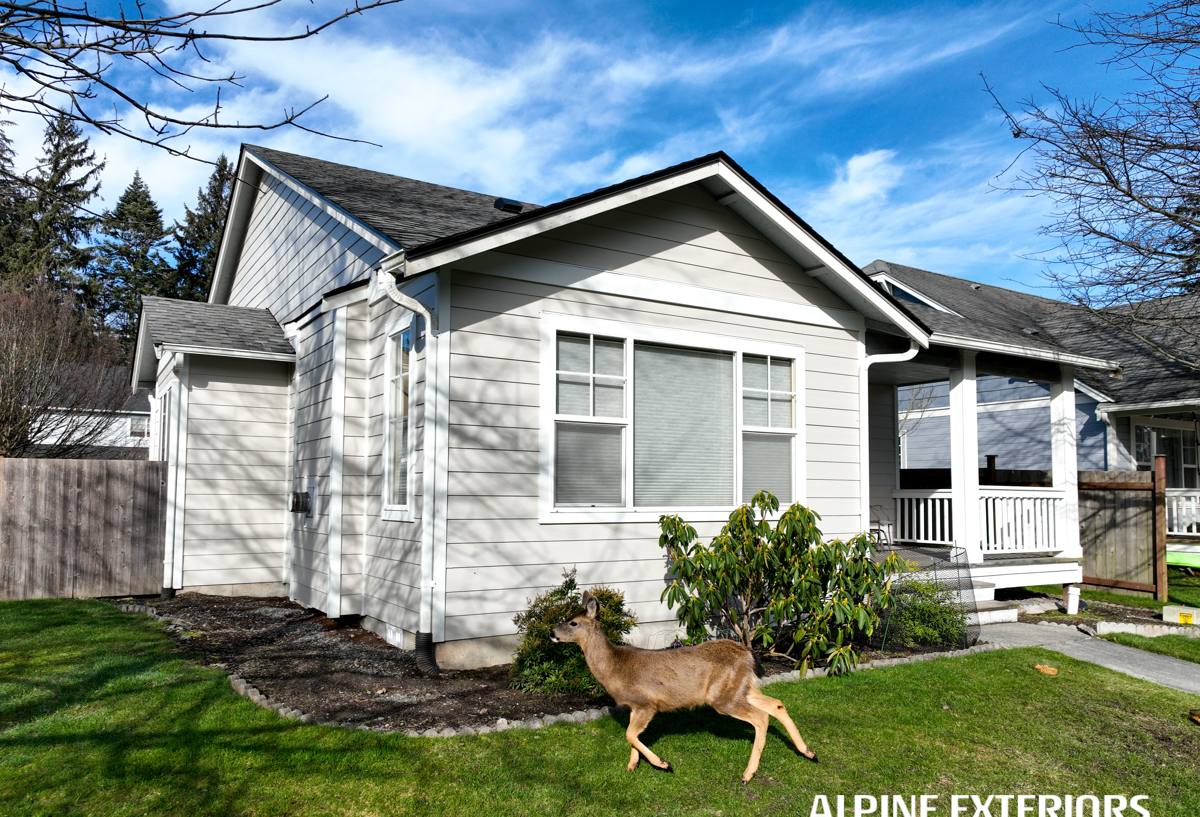
What Driving Rain, Salt Air, and Moss Actually Do to a Window
Driving Rain
Wind-driven rain doesn't just run down glass and drip off the sill — it gets pushed sideways and upward into any gap it can find, including under trim, behind J-channel, and into nail fin penetrations that weren't flashed correctly the first time. A window that would be fine in a calm rain can leak for years in a home that regularly takes rain at an angle, and most of that leaking happens invisibly, inside the wall, long before it shows up as a stain on the drywall.
Salt Air
Salt in the air accelerates corrosion on anything metal — window balances, screen hardware, cranks on casement windows, and the fasteners holding trim in place. It also breaks down some sealants and finishes faster than a dry inland climate would. This doesn't mean windows can't hold up here; it means the hardware and fastener choices matter more than they would somewhere without the salt exposure.
Moss and Prolonged Dampness
A long moss season means more than moss on the roof. Moss holds moisture against whatever it's growing on, and it tends to establish on the north- and shade-facing sides of a house — often the same sides with less sun to dry things out after a storm. Wood sills and trim in those damp, shaded spots are the first place we find soft, punky wood on an older window.
Signs a Yew Street Home Needs a Window Replaced
- Soft or spongy wood at the sill or lower corners of the frame when you press on it
- Fogging or a permanent haze between the panes of a double- or triple-pane unit — a sign the seal has failed
- Visible daylight or a noticeable draft around the frame when it's windy
- Paint that keeps bubbling or peeling at the same spot no matter how often it's redone
- Windows that are hard to open, close, or lock, especially older aluminum or wood units
- Persistent moss or dark staining on the trim or sill that keeps coming back after cleaning
- Noticeably colder rooms near certain windows in winter, or condensation forming on the inside of the glass
Any one of these can be a minor fix. Several at once, especially combined with visible rot, usually means it's cheaper in the long run to replace the window and the surrounding trim than to keep patching it.
What a Correct Window Installation Actually Involves
Window installation looks simple from the outside — pull the old one, drop in the new one — but the work that actually determines whether a window leaks in five years happens in steps most homeowners never see.
Removal and Opening Inspection
Once the old window is out, we inspect the rough opening: the framing, the sheathing, and the house wrap behind it. This is where we find hidden rot or water damage from years of a poorly sealed window, and it needs to be dealt with before anything new goes in. Installing a good window into a compromised opening just hides the problem for a while.
Flashing and Water Management
This is the step that matters most in a driving-rain climate. Flashing tape and sill pans need to be layered correctly — sill pan first, then side flashing lapped over it, then the housewrap lapped over the top flashing — so that any water that does get past the window sheds down and out, never behind the wall. This shingle-style layering is standard building practice, but it's also the step that gets rushed or skipped on cheap installs, and it's invisible once the trim goes back on.
Sealing and Insulation
The gap between the window frame and the rough opening gets sealed with a proper backer rod and sealant or low-expansion foam — not just caulk smeared around the outside trim. Caulk alone on the exterior face, without correct flashing behind it, is the single most common reason we see leaks in windows that are otherwise in decent shape.
Finish and Hardware
Trim goes back on, exterior caulking gets tooled properly so it sheds water instead of holding it, and hardware gets checked for smooth operation. In a salt-air area, we pay attention to fastener and hardware material here specifically because standard-grade hardware corrodes faster near the coast.
Choosing a Window Material for This Climate
There's no single "best" window material — the right choice depends on budget, maintenance tolerance, and how exposed a particular window is to weather. Here's how the common options hold up for a Yew Street home specifically:
| Material | Moisture Resistance | Maintenance | Notes for This Area |
|---|---|---|---|
| Vinyl | Very good — won't rot | Low | Our standard recommendation for most replacements here; handles rain and humidity well, budget-friendly |
| Fiberglass | Excellent | Low | More dimensionally stable in temperature swings, higher upfront cost, holds paint well if a custom color is wanted |
| Aluminum | Fair | Moderate | Prone to corrosion in salt air unless it's a marine-grade finish; we don't recommend it as a first choice here |
| Wood / Wood-clad | Poor to good (clad is better) | High | Beautiful but needs consistent upkeep in a damp, moss-prone climate; the exterior cladding has to be intact everywhere or moisture gets behind it |
We're generally cautious about all-wood exterior windows in this specific climate — not because wood is a bad material, but because the maintenance schedule needed to keep it sealed in a long, damp moss season is more than most homeowners want to keep up with. If the look of wood matters, a wood-interior/clad-exterior window gets most of the appearance with far less upkeep.
Our Process for a Yew Street Window Project
1. On-Site Assessment
We look at each window individually — not every window on a house needs the same solution. Some may need full replacement, others just better sealing or hardware repair.
2. Measuring and Ordering
Windows are measured precisely for the existing openings. Lead times vary by manufacturer and size, and we'll give an honest timeline up front rather than a guess.
3. Installation Day
Work areas are protected, old windows are removed, openings are inspected and repaired if needed, and new windows go in with full flashing and sealing — not shortcuts to save an afternoon.
4. Final Check
Every installed window gets operated, checked for square and level, and inspected for a clean, sealed exterior finish before we consider the job done.
What Affects the Cost
We won't quote a price without seeing the job, but these are the main factors that move the number up or down on a typical window installation:
| Factor | Why It Matters |
|---|---|
| Window material and glass package | Vinyl vs. fiberglass, and double- vs. triple-pane, carry different unit costs |
| Condition of the rough opening | Hidden rot or framing damage found during removal adds repair time before the new window can go in |
| Number of windows and access | Second-story or hard-to-access windows take more labor time and equipment |
| Trim and exterior finish work | Matching existing trim profiles or repainting/staining adds to the scope |
| Window size and style | Custom shapes, large picture windows, or operable styles like casements cost more than standard double-hungs |
As a rough guide, most single-window replacements land in the low-to-mid hundreds to low thousands of dollars depending on these factors, with whole-house projects scaling from there. An on-site estimate is the only way to get a number that actually reflects your windows.
Why Local Experience on Yew Street Actually Matters
A window installer who's worked in your specific area already knows which side of a typical house takes the worst weather, how long moss season realistically runs, and what kind of hidden rot to expect when a wall is opened up. That's not something you can fully substitute with a general checklist — it comes from having done the work here before. It also means faster, more accurate estimates, because we're not guessing at how this climate behaves; we've seen it firsthand on homes near yours.
We also know the value of not overselling. Not every window needs full replacement — sometimes proper resealing and hardware repair is the honest answer, and we'll tell you that instead of pushing a bigger job than the house needs.
Protecting Your Windows After Installation
- Clean moss and debris off nearby siding, trim, and sills a couple of times a year, especially on shaded sides of the house
- Check exterior caulking annually for cracking or gaps, particularly after a hard winter
- Keep gutters clear so overflow doesn't run down onto window trim below
- Operate hardware occasionally in winter so mechanisms don't seize from disuse and moisture
- Address small paint failures or soft spots on wood trim early, before they spread
A correctly installed window with reasonable upkeep should hold up well against this area's rain and moss for decades. The upkeep list above is short on purpose — the real protection happens during installation, not after.
If you're dealing with drafty, foggy, or aging windows on your Yew Street home, we're happy to take a look and give you a straightforward, no-pressure estimate — just fill out the form below.