 Sudden Valley Siding
 Why Siding Installation Is Different in Sunnyland
Homes in Sunnyland and the surrounding Sudden Valley area deal with a specific combination of punishment that most siding products were never designed to handle indefinitely: salt-laden air moving in off the water, long stretches of driving, wind-blown rain, and a moss season that can run the better part of the year on shaded north- and west-facing walls. None of these factors alone is unusual for Western Washington. Together, over years, they expose every weak point in a siding job — every under-caulked seam, every panel installed too close to grade, every place where water was allowed to sit instead of shed.
That's the lens we use when we talk about siding installation here. It's not just about picking a product and nailing it up. It's about understanding how this specific neighborhood's exposure — tree cover, lake-effect humidity, and coastal air moving through Whatcom County — will act on that product for the next 30 to 50 years, and installing accordingly.
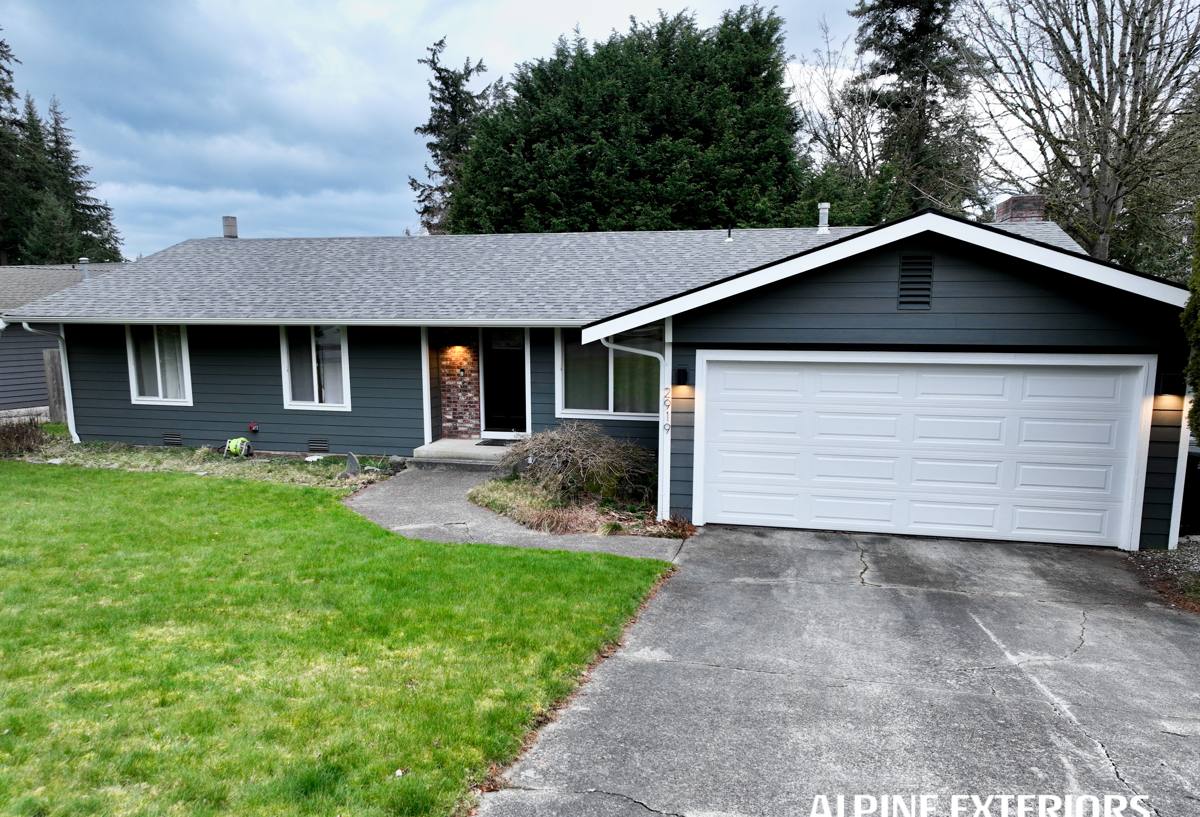
What Sunnyland Homes Actually Need From Their Siding
Moisture Management First
Driving rain doesn't just fall straight down — wind pushes it sideways, up under laps, and into any gap that isn't properly flashed or lapped. A correct installation assumes water will reach the wall assembly and gives it a way out: a drainage plane behind the siding, correct lap orientation, and flashing at every horizontal interruption — window heads, deck ledgers, roof-to-wall intersections, and trim boards.
Resistance to Moss and Mildew
Long moss seasons mean organic growth gets a foothold on any surface that stays damp and shaded for weeks at a time. Siding material matters here — some products absorb moisture and effectively feed the growth cycle, while others shed water and resist the surface staining that moss and mildew leave behind. Color and finish quality also matter, since a factory-cured finish holds up to repeated pressure washing far better than a field-applied coat.
Salt Air Durability
Salt air accelerates corrosion on fasteners and trim, and it breaks down poorly formulated paints and coatings faster than inland exposure would. Fastener selection, flashing material, and finish quality all need to account for this, not just the siding panel itself.
Why We Only Install James Hardie Fiber Cement Here
We don't install vinyl, LP SmartSide, primed spruce, cedar, or other fiber cement brands like Cemplank or Allura. That's a deliberate standard, not a sales pitch, and it's worth explaining honestly rather than just asserting it.
Vinyl is inexpensive and low-maintenance in mild climates, but it expands and contracts significantly with temperature swings, can warp or crack under impact in cold weather, and its seams and J-channels give wind-driven rain more opportunities to work behind the cladding over time. LP SmartSide and other engineered wood products perform well when detailing is perfect, but they're wood-based — any breach in the factory coating that lets moisture in can lead to swelling and rot, and that risk compounds in a climate with this much sustained dampness. Cedar and primed spruce are attractive but require ongoing refinishing, and untreated end cuts or nail penetrations become entry points for moisture and, eventually, rot or insect damage.
James Hardie fiber cement is non-combustible, dimensionally stable across temperature and moisture swings, and comes with a factory-applied ColorPlus finish that's baked on rather than sprayed on site, which holds color and resists fading, chalking, and moisture intrusion far longer than field-applied paint. Hardie also engineers specific product lines (their HZ5 line, for example) for climates like ours, accounting for moisture exposure in the manufacturing spec rather than leaving it to installer judgment alone. It's not the cheapest option up front, but it's the one we're willing to put our name behind for a wall assembly that has to survive Whatcom County weather for decades.
What Correct Installation Actually Involves
The siding panel itself is maybe 40% of what determines how a job performs over time. The rest is in the details most homeowners never see once the job is finished:
- A weather-resistant barrier installed and lapped correctly, with all penetrations sealed
- Proper clearance between the bottom of the siding and grade, decks, patios, and roof lines — a common source of long-term rot on older homes
- Flashing at every window, door, and horizontal trim intersection, installed to shed water outward, not trap it
- Correct fastener type, spacing, and depth — Hardie specifies exact nailing patterns, and improper fastening voids warranty coverage and shortens the panel's working life
- Proper joint treatment at butt seams, with caulking rated for the exposure this location sees
- Ventilation behind the cladding so any moisture that does get in has somewhere to go
Skipping any one of these doesn't usually cause a visible problem in year one. It shows up in year eight or twelve, as staining, soft trim, or a panel that's started to separate — by which point it's a repair job, not a five-minute fix.
Our Process, Start to Finish
- On-site assessment — we inspect the existing wall assembly, check for hidden moisture or rot behind the current siding, and note anything unique about sun and wind exposure on the property
- Product and color selection — choosing the right Hardie profile and ColorPlus color for the home's style and this neighborhood's typical exposure
- Tear-off and substrate repair — removing old siding, replacing any damaged sheathing or framing found underneath, and addressing the root cause of that damage before it gets covered up again
- Weather barrier and flashing installation — the drainage plane and flashing details that do most of the long-term work
- Siding installation to manufacturer spec — correct fastening, spacing, and lap orientation throughout
- Trim, caulking, and final detailing — the finish work that determines how clean the job looks and how well it sheds water at every joint
- Final walkthrough — reviewing the completed job with the homeowner before we consider it done
Timeline Expectations
Most single-family re-sides in this area run from several days to a couple of weeks depending on square footage, how much substrate repair is needed, and weather windows — driving rain doesn't stop a project, but it does slow certain phases like tear-off and barrier installation, which is one more reason scheduling with a crew that plans around this climate matters.
Common Problems We Find on Older Sunnyland Homes
Re-siding an existing home here often uncovers issues that predate the current siding entirely:
| Issue Found | Why It Happens Here | What Correct Installation Does |
|---|---|---|
| Rot at the base of walls | Siding installed too close to grade or decks, trapping moisture | Rebuild clearance gaps to code minimums during re-side |
| Moss staining on north walls | Shade and long damp seasons feed sustained growth | Factory-finished, water-shedding material resists staining longer |
| Corroded or popped fasteners | Salt-air exposure and non-rated fasteners | Corrosion-resistant fasteners installed to manufacturer spec |
| Soft trim around windows | Missing or failed flashing letting driving rain in | Proper head flashing and sealant at every opening |
Cost Factors for a Siding Installation Project
Every home is different, but the same handful of factors drive most of the cost variation we see on Sunnyland and Sudden Valley projects:
- Total square footage of exterior wall area
- Condition of the substrate underneath the existing siding
- Number of stories, roof lines, and architectural detail (dormers, bay windows, multiple gables)
- Hardie product line and profile selected (lap width, panel vs. plank, shingle-style accents)
- Trim scope — window and door casing, corner boards, fascia
- Access and site conditions (steep lots, limited driveway access, mature landscaping to work around)
We give honest, project-specific numbers after seeing the home in person — broad online estimates rarely account for what's actually happening behind the existing siding.
Maintenance After Installation
One advantage of a correctly installed James Hardie system is how little ongoing maintenance it asks for compared to wood or vinyl. That said, a few habits extend its life even further in this climate:
- Rinse siding periodically to keep moss and mildew from establishing on shaded walls
- Keep gutters clear so overflow doesn't run down the wall face during heavy rain
- Trim back vegetation that keeps siding shaded and damp longer than necessary
- Inspect caulking at trim joints every couple of years and have any cracked sealant redone before water finds its way behind it
Why Hiring a Crew That Already Works This Neighborhood Matters
Siding installation is unforgiving of shortcuts, and the failure modes take years to show up — which means a homeowner often can't tell the difference between a correct install and a mediocre one until long after the crew is gone and the invoice is paid. A contractor who already works regularly in Sudden Valley and Sunnyland has seen how homes in this specific area age, knows which older builds tend to have clearance or flashing issues hiding under the current siding, and plans installation timing around the region's rain patterns instead of fighting them. That local pattern recognition is worth more than a lower bid from a crew unfamiliar with how this climate actually treats a wall assembly over time.
If you're weighing a siding replacement or new installation on a Sunnyland or Sudden Valley home, we're happy to take a look and walk you through what your house specifically needs — no pressure, no obligation. Request a free estimate below and we'll go from there.