 Sudden Valley Siding
 Why Sunnyland Homes Need a Different Approach to Windows
Sunnyland sits close enough to the water and the marine weather patterns that roll through Whatcom County that its windows take a beating most inland homes never see. Salt-laden air corrodes hardware and finishes faster than it does even ten or fifteen miles inland. Driving rain, pushed sideways by wind off the water, finds its way into any gap in flashing or sealant that a drier climate would let slide for years. And the long moss season here — often eight or nine months of the year with enough moisture and shade to keep growth active — doesn't stop at the roofline. It creeps into window sills, tracks, and the wood trim around older frames if those areas stay damp too long.
None of this means Sunnyland homes need exotic solutions. It means the details that get skipped in easier climates can't get skipped here: proper flashing integration, the right sealant for a marine environment, and glass and frame packages that actually perform in cold, wet, low-sun-angle winters instead of just looking good on a spec sheet.
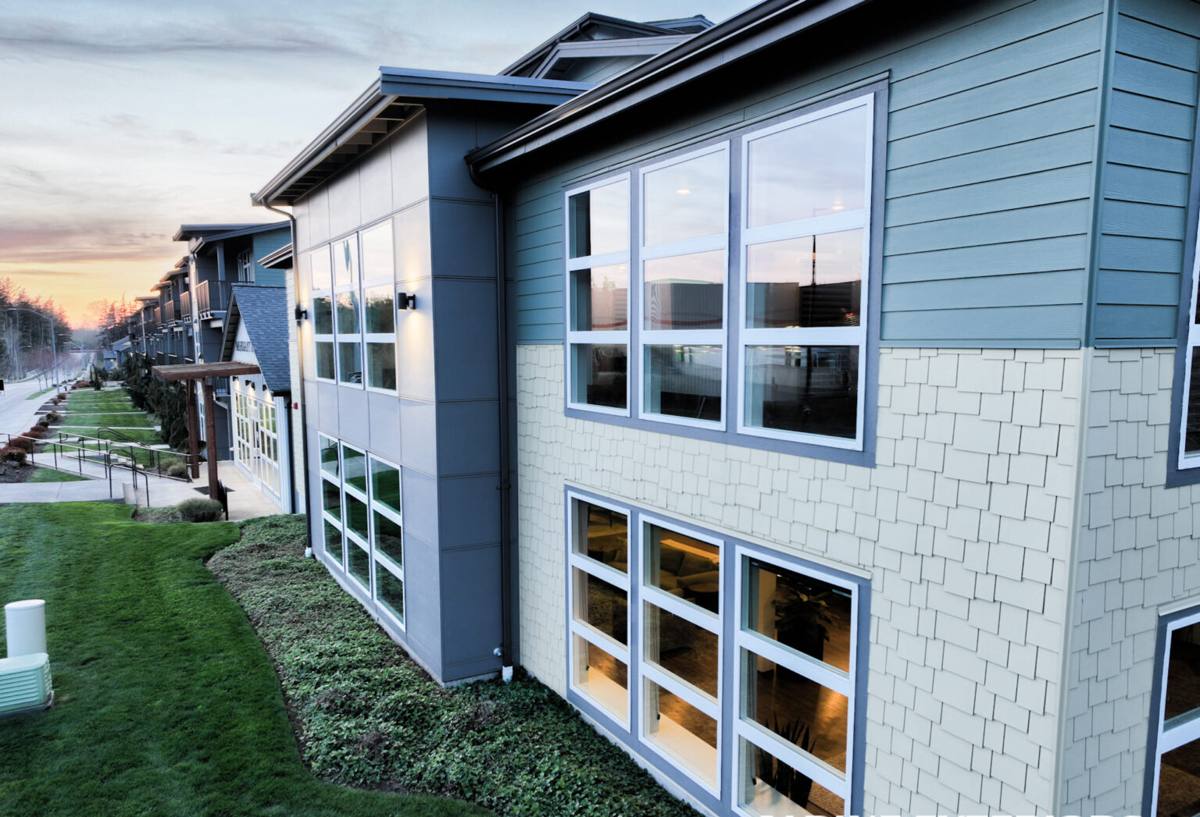
What "Energy-Efficient" Actually Means for This Climate
Energy efficiency in a window is not one number. In Whatcom County's climate — mild but persistently damp, with a real heating season and relatively few days of extreme heat — the two ratings that matter most are U-factor (how well the window resists heat loss) and the window's air infiltration rating. Solar heat gain coefficient matters less here than it would in a sunnier climate, since most Sunnyland homes are heating-dominated rather than cooling-dominated.
What a Correct Job Involves
- Frame material suited to sustained moisture exposure, not just cold — vinyl, fiberglass, or clad-wood, chosen based on the home's exposure and the owner's maintenance preference
- Dual or triple-pane glass with a low-E coating tuned for a heating-dominated climate
- Warm-edge spacer systems that resist condensation at the glass edge, which is where most fogging and seal failures start in wet climates
- Correct rough-opening prep, including sill pan flashing that directs any incidental water back outside instead of into the wall cavity
- Weather-resistant sealants and backer rod sized for the gap, not just caulk smeared over a joint
- Hardware and cladding rated for coastal/marine air exposure, since standard hardware can pit and stick within a few seasons here
Skipping any one of these doesn't usually show up on install day. It shows up eighteen months later as a drafty sash, a fogged pane, or soft trim — after the invoice has already been paid.
Signs a Sunnyland Home's Windows Are Underperforming
Homeowners often assume a window is fine as long as it opens and closes. In this climate, that's not a reliable test. Watch for:
- Condensation forming between the panes (not just on the inside surface) — this means the seal has failed and the insulating gas argument is gone
- A cold draft near the frame edge even when the window is fully latched
- Visible moss or dark streaking building up on the sill or in the track, especially on north- or west-facing units
- Wood trim that feels soft, or paint that's bubbling near the frame
- Noticeably higher heating bills compared to a similarly sized, similarly oriented room elsewhere in the house
- Hardware that's stiff, corroded, or won't latch tight anymore
Any one of these on its own might be minor. Two or more on the same window usually means the unit is past the point where caulk and weatherstripping will fix it.
Repair, Reseal, or Full Replacement?
Not every underperforming window needs to be torn out. Part of doing this job honestly is telling a homeowner when a reseal or hardware repair will hold, and when it won't.
| Situation | Typical Fix | Why |
|---|---|---|
| Failed weatherstripping, otherwise sound frame and glass | Reseal / weatherstrip replacement | Cheapest fix that restores the air seal without touching the glass unit |
| Fogging between panes | Glass unit replacement (same frame) | The seal on the insulated glass has failed; the frame itself is usually still good |
| Soft or rotting frame/sill | Full window replacement | Once the frame material has taken on water damage, resealing just traps moisture behind new caulk |
| Single-pane or very old dual-pane throughout the house | Full replacement, whole-house or room-by-room | Old glass packages can't match current U-factor performance no matter how well they're sealed |
| Persistent moss/algae staining on sills | Cleaning + drainage correction, sometimes sill flashing repair | Addresses the moisture source rather than just the cosmetic symptom |
We'll say plainly when a repair is the right call, even though a full replacement is the bigger job. A homeowner who trusts that assessment on the small job is the one who calls back for the bigger one when it's actually needed.
What a Full Replacement Costs
Costs vary a lot based on frame material, glass package, and how many openings are involved, so we won't quote a number that doesn't reflect the specific home. In broad terms, a single standard-size replacement window with a quality energy-efficient package runs into the four figures per opening once installation is included, with whole-house projects scaling from there. The free estimate exists specifically so a Sunnyland homeowner gets a number based on their actual house, not a national average that doesn't account for this climate's install requirements.
Frame and Glass Choices That Hold Up Locally
Frame Material
Vinyl frames are the most common choice for good reason — low maintenance, decent insulating value, and no risk of rot. Fiberglass frames cost more but resist expansion and contraction better across our temperature swings and hold paint longer if a homeowner wants a specific color. Clad-wood windows give a traditional interior look with a protected exterior face, but they demand more attention to flashing detail since any breach in the cladding exposes wood to the same moisture that's hard on everything else here. We'll walk through the trade-offs for a specific home rather than defaulting to one material for every job — the right choice depends on sun exposure, wind exposure, and how much upkeep the owner actually wants to do.
Glass Package
Double-pane with a low-E coating and argon fill is the baseline we recommend for most Sunnyland homes. Triple-pane adds meaningful performance on north- and west-facing walls that take the brunt of wind-driven rain and cold, and it's worth discussing room by room rather than assuming every window in the house needs the upgrade.
How We Approach a Sunnyland Window Job
- On-site assessment. We look at each window's condition, orientation, and exposure — a south-facing window and a wind-exposed north window often need different specs even on the same house.
- Honest scope. We identify which openings need full replacement, which need a glass unit swap, and which just need resealing or hardware service.
- Product selection. We walk through frame and glass options against the home's specific exposure, not a one-size-fits-all package.
- Correct installation. Sill pan flashing, proper shimming, and marine-grade sealant go in on every unit, whether it's one window or twenty.
- Final check. We test operation, seal integrity, and drainage before we consider the job done — not just that the window looks straight.
Why Local Experience with This Weather Matters
A window installed correctly for a dry climate can still fail early in Whatcom County if the crew doesn't account for what this weather does over time. Salt air accelerates hardware corrosion. Driving rain exposes any shortcut in flashing within a season or two, not years. And a long moss season means anywhere water sits even briefly becomes a growth site if drainage isn't handled right the first time. A crew that works Sunnyland regularly isn't guessing at these details — they're building every job around them by default, because the alternative is callbacks.
A Simple Pre-Estimate Checklist
Before we come out, it helps to walk your own windows and note what you see:
- Any window with visible fog or moisture between the panes
- Any sill with moss, algae, or dark staining
- Any frame with soft spots, peeling paint, or visible gaps
- Rooms that feel drafty or noticeably colder near the windows in winter
- Windows that are hard to open, close, or latch
- Roughly how old the current windows are, if known
That short list gives us a head start on the assessment and helps us focus the visit on what actually needs attention.
If you're noticing drafts, fogging, or sticking windows in your Sunnyland home, we're happy to take a look and give you a straightforward, no-pressure estimate — just fill out the form below to get started.