 Sudden Valley Siding
 Deck Building in Sunnyland: Built for This Specific Ground
Sunnyland sits within the Sudden Valley community in Whatcom County, tucked against tree cover and the moisture patterns that come with the Pacific Northwest's long wet season. A deck built here doesn't fail the way a deck fails in a dry climate. It fails at the joints, the fasteners, and the shaded corners where water sits instead of running off. If you're planning a new deck or replacing an old one in Sunnyland, the design decisions that matter most aren't cosmetic — they're about managing moisture, shade, and slow-drying wood for the next fifteen to twenty-five years.
We frame every Sunnyland deck around three local realities: long stretches of driving rain, tree canopy that keeps parts of the yard shaded and damp well after a storm passes, and a moss season that runs longer here than it does in drier parts of Washington. None of that is exotic — it's just what Whatcom County does — but it changes which materials and details actually hold up.
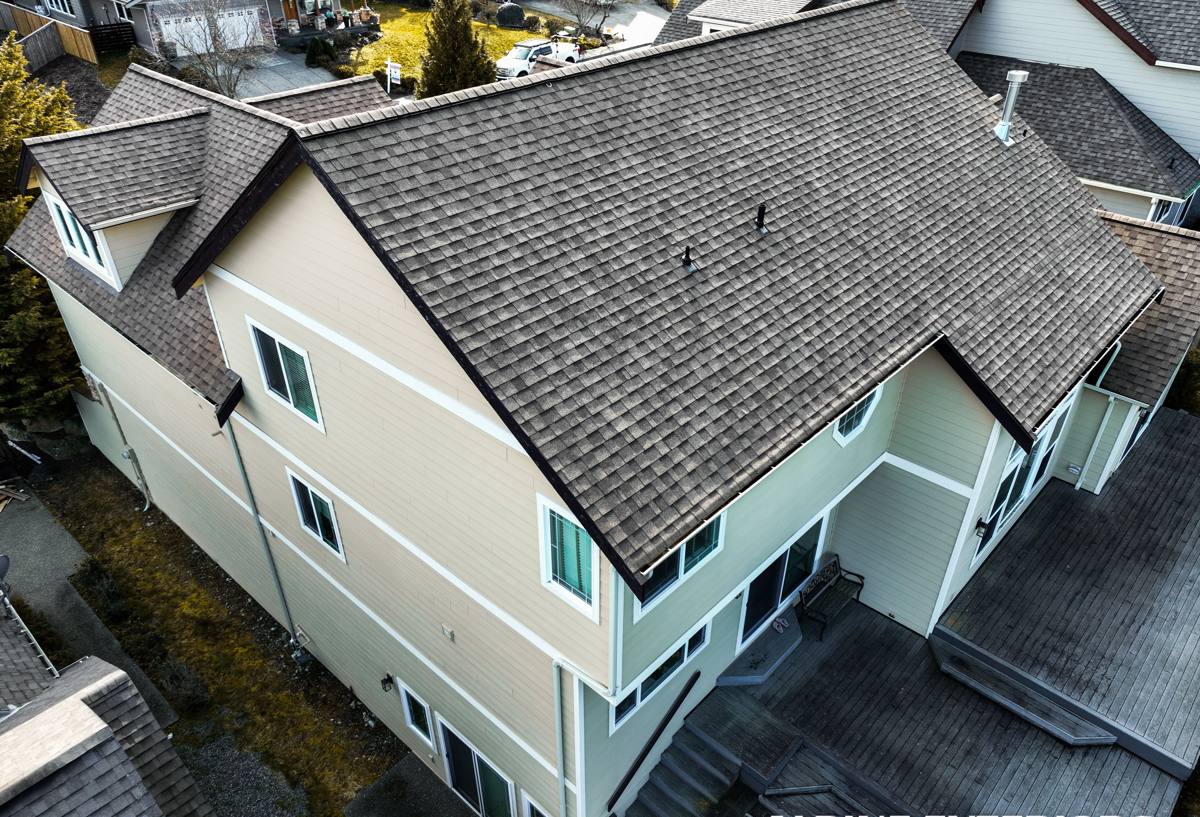
Why Sunnyland's Conditions Are Harder on Decks Than They Look
Shade and Slow Drying
A deck under open sky dries out between rain events. A deck tucked against trees or on the shaded side of a house doesn't. Water sits in the wood grain, in fastener holes, and in the gap between boards longer than it should, which is exactly the environment moss, algae, and eventually rot need to get established.
Driving Rain and Wind-Driven Moisture
Rain in this region rarely falls straight down. Wind pushes it sideways into ledger connections, stair stringers, and any spot where the deck meets the house. If flashing and gaps aren't detailed correctly at the build stage, water finds its way behind boards and into framing where it's never supposed to go.
Long Moss Season
Moss doesn't just grow on roofs. Given shade, moisture, and a rough or porous surface to grip, it will colonize deck boards, stair treads, and railing caps. Beyond looking bad, moss holds moisture against the wood surface and makes boards dangerously slick — a real safety issue on stairs and ramps.
What a Correctly Built Deck Needs Here
- Footings sized for saturated soil. Whatcom County soil holds water longer through the wet months, and footings need to be sized and set deep enough to stay stable rather than heave or settle.
- Proper ledger flashing. Where the deck attaches to the house, flashing has to shed water away from the wall, not just sit there decoratively. This is the single most common point of hidden rot on older decks we're asked to inspect.
- Gapping and airflow between boards. Boards need consistent spacing so water and debris don't pack in and hold moisture against the edges.
- Fasteners rated for exterior, wet-climate use. Under-spec screws and nails corrode and stain the decking around them within a few seasons.
- Joist protection. Uncapped or unprotected joist tops are one of the most common places rot starts, hidden from view under the decking boards.
- Stair and railing details that account for slip risk. Given the moss and algae potential, tread surface and drainage matter as much as structural strength.
Decking Material Options for a Shaded, Wet Yard
There's no single "best" decking material — there's a best material for your yard's actual sun exposure, your maintenance appetite, and your budget. Here's how the common options actually perform under Sunnyland-type conditions:
| Material | Moisture Behavior | Moss/Algae Resistance | Maintenance | Typical Lifespan |
|---|---|---|---|---|
| Pressure-treated wood | Good if sealed and re-sealed regularly; absorbs water if coating lapses | Needs regular cleaning in shaded areas | Annual cleaning, re-seal every 1-2 years | 15-20 years with upkeep |
| Cedar | Naturally moisture-tolerant, but still needs finish maintenance | Moderate — still grows moss in deep shade without cleaning | Re-oil/re-seal every 1-2 years | 20-25 years with upkeep |
| Composite decking | Doesn't absorb water or rot, but surface texture affects grip when wet | Varies by product; textured caps resist algae growth better than smooth ones | Periodic washing, no sealing needed | 25-30+ years |
| PVC decking | Fully moisture-resistant | Good, but smooth surfaces can still get slick with algae film | Occasional washing | 25-30+ years |
For heavily shaded lots in Sunnyland, we tend to steer homeowners away from smooth, low-texture composite or PVC boards near stairs and entry points, simply because moss and algae film show up faster on smooth surfaces and get slicker underfoot. A textured cap or a wood option paired with a disciplined cleaning schedule is often the more honest answer than the flashiest-looking board.
Framing and Substructure: Where Most Failures Actually Start
Homeowners usually notice deck problems on the surface — a soft board, a slick spot, discoloration. But the substructure is where the real damage happens first. Joists, beams, and posts that aren't protected properly will rot from the inside while the decking boards on top still look fine. This is why we don't just quote decking material when we scope a job — we look at:
- Post base connections and whether they're keeping wood off standing water
- Beam-to-post hardware and corrosion resistance
- Joist hanger condition on any existing structure being reused
- Ledger board condition and flashing integrity where the deck meets the house
- Grading and drainage underneath the deck itself
On a rebuild, we'll tell you plainly if the existing substructure is sound enough to reuse or if it needs to be replaced. Reusing a compromised frame under new decking just hides the problem for another season.
Permits and Whatcom County Requirements
Most decks above a certain height or attached to the structure require a permit through the county, and inspections typically check footing depth, ledger attachment, and railing height/spacing. We handle the permit process as part of the build rather than leaving homeowners to navigate it separately — it's a normal part of doing this correctly, not an upsell.
Our Process for a Sunnyland Deck Project
- On-site walkthrough. We look at sun exposure, drainage, existing structure (if there is one), and how the deck will actually get used before we talk materials.
- Design and material selection. We walk through the tradeoffs in plain terms — what a wood deck will cost you in upkeep versus what a composite deck costs upfront, based on your specific lot.
- Permit filing. We prepare and submit what the county requires before any digging starts.
- Demo and site prep, if applicable. Removal of the old deck, disposal, and grading to make sure water moves away from the new structure.
- Footings and framing. Built to spec for local soil and moisture conditions, with protected joists and properly flashed ledger connections.
- Decking, railing, and stairs. Installed with correct gapping, fastening, and attention to slip resistance on treads.
- Final walkthrough and county inspection. We don't consider the job done until it passes inspection and you've walked the finished deck with us.
Maintenance: What Actually Keeps a Sunnyland Deck Looking Good
Even the right materials, installed correctly, still need seasonal attention in a climate like this. A short annual routine prevents most of the problems we get called out to fix on other people's decks:
- Sweep debris (leaves, needles, seed pods) off the deck regularly — trapped organic matter holds moisture and feeds moss
- Wash the surface at least once a year with a deck-safe cleaner, focusing on shaded corners and under railings
- Check and re-seal wood decking on the manufacturer's recommended schedule, not just when it looks dry
- Inspect stair treads and railing caps for slickness before the wet season sets in
- Look underneath the deck once a year for standing water, soft wood, or hardware corrosion
- Trim back overhanging branches where possible to reduce shade and debris load
Why a Crew That Already Works Sunnyland Matters
A deck built to a generic national spec sheet doesn't account for how long this area stays wet, how much shade certain lots carry, or how aggressive moss growth gets here compared to drier parts of the state. A crew that already builds and repairs decks around Sudden Valley and the rest of Whatcom County has already seen which details hold up over a real Pacific Northwest wet season and which ones fail early — the ledger flashing that wasn't quite right, the joist that rotted from underneath, the smooth composite board that turned into a skating rink every November. That local pattern recognition is worth more than a lower bid from a crew building the same deck they'd build in a dry climate three states away.
Get a Straight Estimate for Your Sunnyland Deck
Whether you're planning a new deck from scratch or dealing with an existing one that's showing its age, we'll walk the site, tell you honestly what condition it's in, and lay out your material and structural options without pressure. Reach out through the form below for a free estimate.