 Sudden Valley Siding
 Decks Built for Sudden Valley's Wet, Marine Climate
Sunnyland sits in the pocket of homes in and around Sudden Valley, along Lake Whatcom, where Whatcom County's marine climate shapes almost every outdoor building decision. Salt-tinged air moving in off the Sound, long stretches of driving rain, and a moss season that can run from October well into spring all put real stress on any structure that lives outside year-round. A deck here does more work than a deck in a dry inland climate — it has to shed water fast, resist the fungal growth that thrives in shade and standing moisture, and hold up to fasteners and hardware slowly working loose from repeated wet-dry cycling.
We've built and repaired decks for homes in this immediate area long enough to know which construction shortcuts show up as problems in year two, not year twenty. This page covers what a deck in Sunnyland actually needs, what a correctly built one looks like, and how we approach the job from first call to final walkthrough.
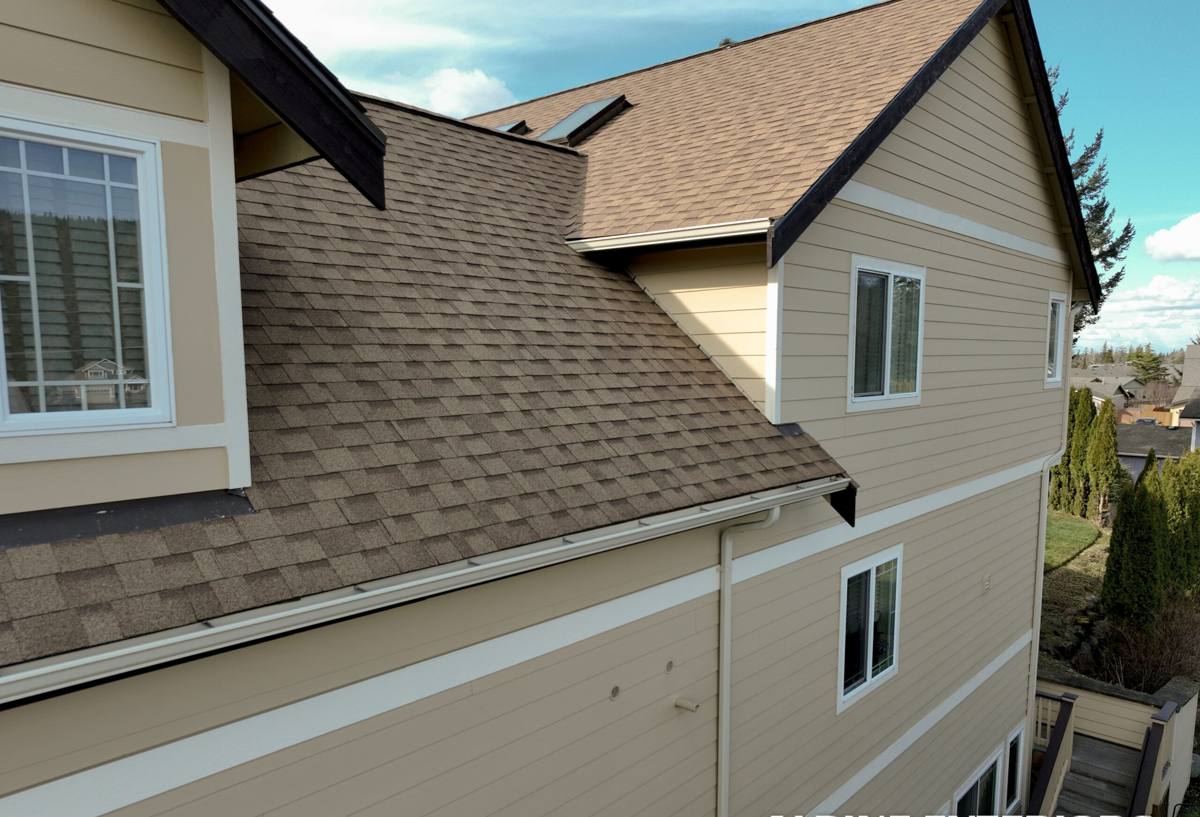
What Sunnyland Homes Need From a Deck
Moisture Movement and Moss
The single biggest difference between a deck that lasts and one that doesn't in this climate is how well it manages water. Moss and algae need three things to establish: shade, moisture, and a surface to grip. Most Sunnyland lots have at least some tree cover, which means shaded sections of decking stay damp long after the sun-exposed boards have dried out. Board spacing, airflow underneath the deck, and the texture of the decking material itself all affect how fast that moisture leaves.
Grade, Slope, and Lake-Area Terrain
Properties around Lake Whatcom and the surrounding hillsides are rarely flat. Sloped lots change how a deck's footings and support posts need to be engineered, and they change how water sheds off the structure and away from the foundation. A deck built without accounting for the site's actual grade can end up funneling runoff toward the house instead of away from it, which is a slow, expensive mistake to fix later. On a steep lot, the framing plan also affects how much of the deck ends up elevated on posts versus resting close to grade, which changes both the engineering and the long-term airflow underneath.
Sun and Shade Patterns
Tree cover common to this area creates decks with mixed exposure — part sun, part shade, sometimes shifting through the day and through the seasons. That matters for material choice and finish schedule. A stain or sealer that holds up fine on the sunny half of a deck can fail early on the shaded half, where it never gets enough dry time between rains to cure and bond properly.
Salt Air and Hardware Corrosion
The marine-influenced air common to Whatcom County carries salt further inland than most homeowners expect, and it accelerates corrosion on standard fasteners, brackets, and connectors. A deck built with hardware that isn't rated for exterior, corrosion-resistant use can show rust streaking down the decking within a couple of seasons, and corroded structural hardware is a safety issue, not just a cosmetic one. This is one of the easiest details to get right at the start and one of the most expensive to fix after the fact, since it usually means pulling boards to replace fasteners and connectors underneath.
Choosing the Right Decking Material for This Climate
There's no single "best" decking material — the right choice depends on how much maintenance you want to do, your budget, and how much shade and moss exposure the deck will actually see. Here's how the common options compare for a property in this area.
| Material | Moisture and Moss Resistance | Maintenance | Typical Upfront Cost |
|---|---|---|---|
| Pressure-treated wood | Decent when properly finished; moss can gain a foothold in shaded, unsealed sections | Annual cleaning and periodic re-staining or sealing | Lower |
| Cedar | Naturally rot-resistant but still needs finish maintenance to stay that way in constant damp | Regular cleaning and refinishing to preserve color and resistance | Mid-range |
| Capped composite | Strong resistance to moisture and moss growth thanks to the protective outer cap | Occasional washing; no staining or sealing | Higher |
| PVC decking | Very strong moisture resistance since the material contains no wood fiber for fungus to feed on | Occasional washing; no staining or sealing | Higher |
We don't push any one material on every homeowner. Real wood costs less up front and can look great, but it asks for a real maintenance commitment in a climate this wet — skip a year of cleaning and resealing and moss gets a head start that's much harder to remove than to prevent. Composite and PVC cost more initially but trade ongoing maintenance for material cost, which is often the better math for a deck in a heavily shaded, moss-prone spot. We'll walk through the honest trade-offs for your specific lot rather than defaulting to whatever is easiest to install.
What a Correctly Built Deck Actually Involves
Footings and Framing
Footings need to be sized and set to local frost depth and soil conditions, not just to whatever the plans call for on a flat, dry lot elsewhere. On sloped or uneven ground, that often means deeper or additional footings and posts engineered for the actual site rather than a generic layout.
Flashing and Ledger Attachment
Where a deck attaches to the house is the single most common failure point we see on older decks in this area. A ledger board that isn't properly flashed lets water track behind the siding and into the framing, where it can sit and rot unseen for years before it shows up as a soft spot or a stain on an interior wall. Correct flashing detail at the ledger is not optional in a climate that sees this much rain.
Fasteners and Board Spacing
Stainless or coated fasteners rated for exterior and marine-influenced environments resist corrosion far longer than standard hardware, which matters more here than in a drier inland climate. Board spacing needs to be consistent enough to look right but wide enough to let water and debris pass through instead of pooling and feeding moss growth.
Railings and Code
Guard height, baluster spacing, and stair railing requirements are set by building code, not by preference, and they get checked at inspection. Getting this right the first time avoids a failed inspection and a second trip back to fix it.
Common Problems We See on Older Decks in This Area
A lot of the repair calls we get in and around Sudden Valley trace back to the same handful of issues. Missing or undersized ledger flashing lets water into the house framing long before any rot is visible from outside. Footings sized for flat ground on a lot that actually slopes lead to settling and a deck that no longer sits level. Standard hardware left exposed to years of damp, salt-tinged air rusts and weakens well before the wood around it fails. And boards installed tight together with no gap trap moisture and debris, turning shaded sections into a moss farm within a season or two. None of these are hard to avoid at the framing stage — they're expensive and disruptive to fix once the deck is finished and in use.
Permits and Whatcom County Requirements
Most attached decks above a certain height, and many freestanding ones, require a permit through Whatcom County, and some Sudden Valley properties also fall under homeowners association design review before construction starts. Requirements depend on the size, height, and attachment method of the specific deck, so we handle that determination as part of the estimate rather than guessing. If your property is part of an HOA, we can work within their review process and timeline as part of the project schedule.
Our Process, Start to Finish
We keep the process straightforward because a deck project shouldn't feel like a mystery to the homeowner paying for it.
- On-site assessment of the lot's slope, drainage, sun and shade exposure, and how the deck will attach to the house, so the design fits the actual property instead of a generic template.
- Design and material discussion, including honest trade-offs between wood and composite options for your specific site and budget.
- Permit and, if applicable, HOA design review handling, so you're not navigating that process alone or guessing at requirements.
- Construction, starting with footings and framing, then correctly flashed ledger attachment, decking, and railings in sequence.
- Final walkthrough and inspection sign-off before we consider the job done, so you know exactly what was built and why.
Keeping Moss and Rot Off a New Deck
A well-built deck still needs some seasonal attention in this climate. A short list of habits goes a long way toward protecting the investment.
- Sweep leaves and debris off the deck surface regularly through fall, especially in shaded corners where they hold moisture.
- Clean the surface at least once a year with a deck cleaner appropriate for the material, before moss has a chance to establish.
- Check and clear the gaps between boards so water and debris can keep draining through rather than pooling.
- Reseal or restain wood decking on the manufacturer's recommended schedule, not just when it looks like it needs it.
- Inspect the ledger flashing and any spots where the deck meets the house once a year for early signs of moisture intrusion.
- Keep gutters and downspouts near the deck clear so roof runoff isn't dumping extra water onto or under the structure.
Why a Crew That Already Works Sunnyland Matters
A contractor who already works in and around Sudden Valley knows the terrain, the typical shade and drainage patterns, and the local permitting process without needing to relearn it on your project. That familiarity shows up in fewer surprises during construction and a design that's built for how this specific area actually behaves in the rain, not a generic template. We're not commuting in from across the county to figure out Sudden Valley's terrain for the first time on your job — this is the area we already build in, and it's the same crew you'll see if you ever need a repair or a maintenance check down the road.
If you're weighing a new deck or need an honest look at whether an existing one is holding up the way it should, we'll come out, walk the site, and give you a straightforward assessment and a free, no-pressure estimate. There's a form below to get that conversation started.