 Sudden Valley Siding
 Composite Decking Built for Sunnyland's Climate
Sunnyland sits close enough to Bellingham Bay that salt-tinged air is part of daily life, and like the rest of Whatcom County, it gets a long stretch of driving rain and a moss season that seems to start earlier every year. A deck out here doesn't just have to look good on a dry August afternoon — it has to hold up through eight months of wet weather, shaded ground, and the kind of humidity that keeps everything a little damp long after the rain stops. That combination is exactly why composite decking has become the practical choice for homeowners in this area who are tired of sanding, staining, and chasing rot every spring.
We install composite decking for homes in Sunnyland as part of the same service area we've worked in around Sudden Valley and the rest of Whatcom County for years. This page covers what our climate actually does to a deck, what a correct composite installation involves, and how we approach the job so it's still solid a decade from now.
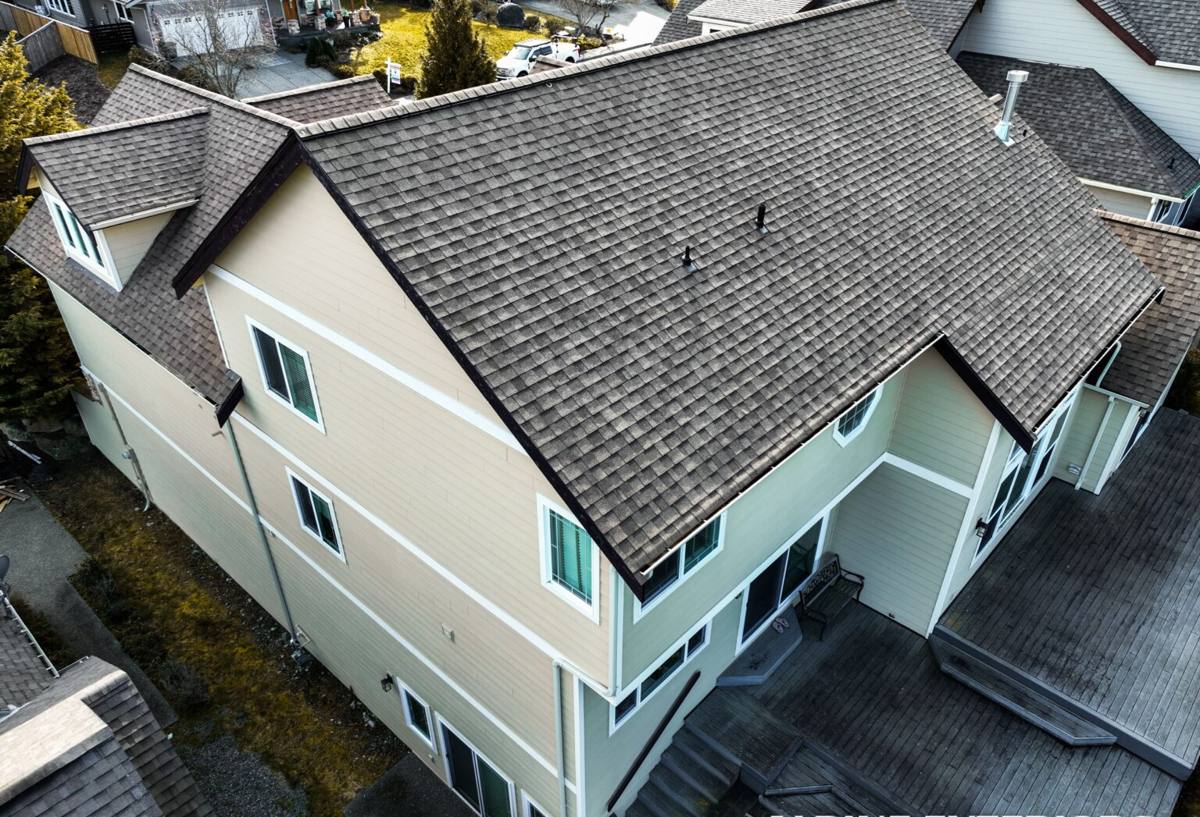
What Rain, Moss, and Salt Air Do to a Deck Over Time
Before talking about materials, it helps to understand what you're actually up against. Three things drive almost every deck failure we see in this part of Whatcom County:
Persistent Moisture
It's not one big storm that damages a deck here — it's months of low-grade dampness. Wood absorbs and releases moisture with every wet-dry cycle, and that constant swelling and shrinking is what loosens fasteners, cups boards, and eventually rots joists from the inside out, often before it's visible from the surface.
Moss and Algae
Shaded yards and long wet winters are ideal growing conditions for moss and algae on any horizontal wood surface. Beyond looking bad, moss holds moisture directly against the board, which accelerates rot underneath it and makes the surface slick and genuinely dangerous underfoot — a real concern on stairs and landings.
Salt Air and Corrosion
Proximity to the bay means airborne salt settles on exposed metal — fasteners, brackets, railing hardware — faster than it would further inland. Standard hardware can start corroding years before the decking itself shows real wear, which is why fastener and bracket selection matters as much as board selection.
Composite vs. Wood: An Honest Comparison
We still install wood decking when a homeowner wants that look and understands the upkeep. But for most Sunnyland projects, composite is the lower-maintenance, longer-term answer given what this climate does to exposed lumber. Here's how the common options actually compare:
| Factor | Pressure-Treated Wood | Cedar | Capped Composite |
|---|---|---|---|
| Moisture resistance | Moderate — treated core still absorbs water | Good naturally, degrades as finish wears | High — polymer shell resists absorption |
| Moss/algae susceptibility | High in shaded, damp spots | Moderate | Low, especially with a textured cap |
| Annual maintenance | Cleaning, sealing, spot repairs | Cleaning, staining or oiling | Periodic washing only |
| Typical lifespan here | 10–15 years before major repair | 15–20 years with upkeep | 25–30+ years, manufacturer-warrantied |
| Upfront cost | Lowest | Mid-range | Higher upfront, lower lifetime cost |
The trade-off is straightforward: composite costs more to install and isn't something you refinish to change the color later, but it isn't fighting the climate the way wood is. For a lot of Sunnyland homeowners, especially those on shaded lots or closer to the water, that trade-off is worth it.
What a Correct Composite Deck Installation Involves
Composite boards are only as good as what's underneath them. A lot of the decks we get called to repair look fine on top and are failing underneath because the substructure or fastening wasn't done right the first time.
Framing and Substructure
Composite decking is heavier than wood and behaves differently under load and temperature change, so joist spacing has to match the manufacturer's specification — not just what worked for a wood deck. We typically use pressure-treated or coated joists rated for ground contact and wet exposure, since a Sunnyland substructure sits under constant damp shade for much of the year.
Hidden Fastening and Airflow
Most composite systems use a hidden fastener clipped into a grooved edge rather than face-screwed boards. Done correctly, this leaves a clean surface with no exposed screw heads to corrode. Just as important is the airflow underneath — composite still needs ventilation below the deck surface to keep the substructure from staying perpetually wet, and we build in gapping and clearance for that.
Flashing and Ledger Details
Where a deck attaches to the house is the single most common source of long-term water damage, composite or not. Proper ledger board flashing keeps water from tracking behind the siding and into the wall assembly — something we treat as non-negotiable on every attached deck we build, especially given how much rain this area sees.
Choosing the Right Composite Board for This Climate
Not all composite decking is built the same, and the differences matter more here than in a drier climate.
Capped vs. Uncapped Composite
Capped composite has a polymer shell wrapped around a wood-plastic core, which blocks moisture absorption and resists staining and mold far better than older uncapped composite. Given our moss and algae exposure, we recommend capped boards on almost every job in this area — the small cost difference pays for itself in reduced cleaning and a much lower chance of surface mold taking hold.
Surface Texture
A wood-grain embossed texture isn't just cosmetic — it improves footing on a surface that's going to be damp more often than not. Smooth, low-texture boards look sleek but get noticeably more slick when wet, which is worth weighing on stairs, ramps, or any deck near a pool or hot tub.
Color and Heat
Darker composite colors absorb more heat on the rare hot days but also tend to show less moss shadowing and pollen film between cleanings. Lighter colors stay cooler underfoot but show dirt and organic buildup sooner. It's a real trade-off, not just a style choice, and we walk through it with homeowners before ordering material.
Our Installation Process
- Site visit and assessment — We look at drainage, sun exposure, existing structure (if replacing a deck), and how the site sheds water, since that shapes both the framing plan and board selection.
- Design and material selection — We go over board brand, color, railing, and fastening system based on your budget and how the space will be used.
- Permitting — Deck projects in Whatcom County typically require a building permit depending on size and height; we handle that paperwork rather than leaving it to you.
- Demolition and framing — Old decking and any compromised framing comes out first; substructure gets built or reinforced to spec.
- Flashing and waterproofing — Ledger flashing and any house-side waterproofing gets done before a single deck board goes down.
- Decking, railing, and fastening — Boards go down with the specified hidden fastener system and proper gapping for drainage and airflow.
- Final walkthrough — We check the whole deck with you, cover basic care, and make sure you know what the warranty covers.
Keeping a Composite Deck Looking Good Here
Composite decking is low-maintenance, not no-maintenance — especially in a climate that grows moss on nearly anything left damp and shaded. A simple seasonal routine keeps it looking new for decades:
- Sweep off leaves, needles, and debris regularly, especially in fall — trapped organic matter is what feeds moss and mildew
- Rinse the deck a few times a year with a garden hose to clear pollen, salt film, and grime before it builds up
- Use a soft-bristle brush and a composite-safe cleaner on any moss or algae spots rather than a pressure washer on high setting, which can damage the cap surface
- Check railing hardware and fasteners annually for early corrosion, particularly on decks closer to the bay
- Keep gutters and downspouts clear so runoff isn't draining directly onto or under the deck
- Trim back overhanging branches where possible to cut down shade and moss growth on the boards below
Why a Local Crew Matters for Sunnyland Decking Projects
A composite deck built to a generic spec sheet and a composite deck built for how water actually moves through a Sunnyland lot are not the same project. We've spent years working decks and siding across Sudden Valley and the surrounding Whatcom County communities, which means we already understand how shaded, damp lots here behave differently from a dry-side installation, what local permitting actually requires, and which hardware holds up against the salt air near the bay instead of corroding early. That's the kind of thing you only really learn by doing the work in this specific area, not from a manufacturer's install guide.
If you're weighing options for a new deck or replacing one that's showing its age, we're happy to take a look and walk you through what makes sense for your home. Reach out for a free, no-pressure estimate and we'll give you a straight answer on materials, scope, and cost before anything gets scheduled.