 Sudden Valley Siding
 Building a Deck That Actually Holds Up in South Hill
A deck in South Hill has to earn its keep. Between the driving rain that comes off the water, the salt-laden air that works its way into every exposed fastener, and a moss season that can stretch from October well into spring, this is not a climate that forgives shortcuts. A deck built the way it might be built in a dry inland town will show problems here within a couple of seasons — soft spots at the ledger, black streaking under the rail caps, hardware bleeding rust through the decking boards. A deck built for this specific hillside, with the right substructure and the right materials, can go decades before it needs more than routine care.
This page is about that one job, done for that one part of Sudden Valley: new deck construction and full rebuilds in South Hill, where slope, tree cover, and moisture all shape how the work should be done.
What Makes South Hill Different
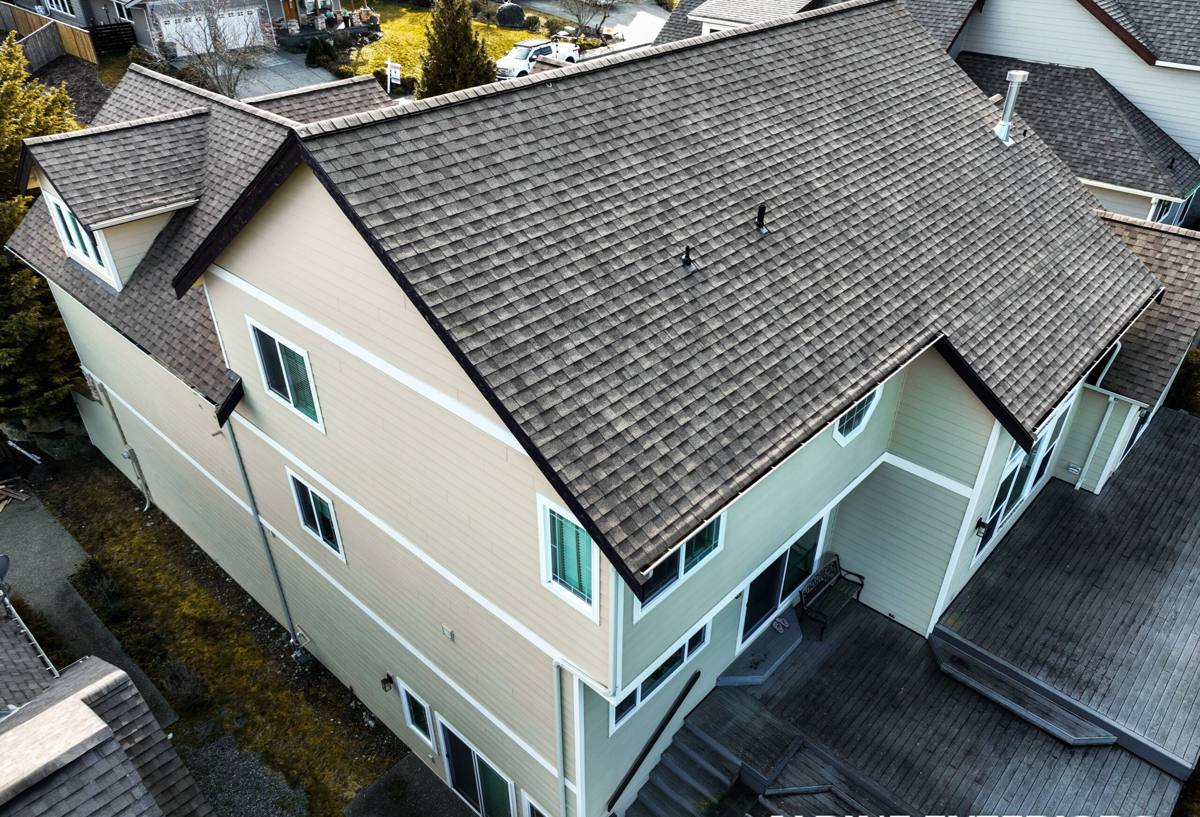
South Hill sits on grade — most lots have some slope, which changes how a deck's footings and support posts need to be engineered compared to a flat backyard. Combine that with mature evergreen cover, which keeps large sections of a deck shaded and damp for most of the day, and you get a site that dries slower than open, sunny lots elsewhere in Whatcom County. Slower drying means more time for moss and algae to take hold on decking surfaces, more time for standing water to sit against ledger boards and framing, and more opportunity for wood-boring insects to move into anything left untreated.
Add in the coastal influence common to this part of Washington — salt-bearing air that accelerates corrosion on anything metal — and you have three separate stressors (moisture, shade, salt) all acting on the same structure at once. None of them is unusual on its own. Together, on a sloped, tree-shaded lot, they're the reason a "good enough" deck build in a drier climate isn't good enough here.
What This Means for a Deck Specifically
Practically, it means we plan for standing water at the ledger connection, for slower board drying between rain events, for fastener corrosion over time, and for a support structure that can handle a sloped or uneven grade without settling unevenly. Every one of those is solvable with the right approach — but only if it's planned for from the footings up, not patched in after the fact.
The Parts of a Deck Most Homeowners Never See
The decking boards get all the attention because they're what you walk on and look at. But the parts that determine whether a deck lasts 10 years or 30 are underneath and behind the surface.
Footings and Framing
On sloped South Hill lots, footing depth and placement matter more than on flat ground — footings need to reach stable, undisturbed soil below the frost line, and post height needs to account for the actual grade rather than an assumed flat yard. We size joists and beams for the actual span and load, not just what "looks about right," and we use framing lumber rated for ground contact or above-ground exposure as appropriate for each part of the structure.
Ledger Flashing
The ledger board — where the deck attaches to the house — is the single most common failure point on decks in wet climates, and it's almost always a flashing problem, not a decking problem. Water works its way behind an improperly flashed ledger and rots the house's rim joist from the inside, often invisibly for years. We flash every ledger connection with a proper water-resistive barrier and metal or membrane flashing detailed to shed water away from the house, not toward it.
Joist Protection
Bare-cut joist tops hold water and rot from the top down, even on treated lumber, because the cut ends and fastener holes expose untreated wood fibers. We tape or cap joist tops so water sheds off instead of soaking in — a small step during framing that prevents a large repair five or ten years later.
Choosing Decking Material for This Climate
There's no single "best" decking material — there's the material that fits your budget, your maintenance appetite, and how much shade and moisture the deck will actually see. In South Hill, moisture and shade tolerance usually matter more than they would on a sunny, open lot.
| Material | Upfront Cost | Maintenance | Moisture & Moss Resistance | Realistic Lifespan Here |
|---|---|---|---|---|
| Pressure-treated pine | Lowest | Annual cleaning and re-sealing recommended | Fair — needs upkeep to resist moss and graying | 10–15 years before major repair |
| Cedar | Moderate | Regular sealing to hold color and resist moss | Good natural rot resistance, but softer surface | 15–20 years with consistent care |
| Capped composite | Higher | Occasional washing, no sealing or staining | Very good — shrugs off moisture and moss better than wood | 25+ years, backed by manufacturer warranty |
| PVC decking | Highest | Lowest — mainly occasional washing | Excellent — fully synthetic, no wood fiber to feed rot or moss | 25–30+ years, backed by manufacturer warranty |
Wood: The Trade-Off
Wood decking costs less up front and looks the part, but in a shaded, damp climate it asks for real annual maintenance — cleaning, brightening, and re-sealing — to keep moss and mildew from taking hold. Skip a season of upkeep on a shaded South Hill deck and you'll usually see it in the wood's color and grip before anything structural is at risk.
Composite and PVC: The Trade-Off
Capped composite and PVC decking cost more to install but largely remove the moss-and-moisture maintenance cycle from your yearly to-do list, since there's no exposed wood fiber for moisture to soak into. The trade-off is upfront price and, for some homeowners, a preference for the look and feel of real wood underfoot. We install both wood and composite/PVC systems and will walk through the real cost difference over 10–15 years, not just the sticker price on day one.
Our Deck Building Process
- Site evaluation: We walk the actual lot, note the slope, drainage pattern, sun/shade exposure, and how the deck will tie into the house, before any design work starts.
- Design and material selection: We size the deck to the space and household use, and walk through material options against your budget and maintenance preferences.
- Permitting: We handle the permit application and inspection scheduling with Whatcom County where the project requires it.
- Footings and framing: Footings are set to proper depth for the slope and soil, framing is built to span and load, and every joist top and ledger connection is protected before decking goes down.
- Decking, railing, and finish work: Boards, railings, and stairs are installed to code, with fasteners chosen to resist the corrosion this climate causes.
- Final walkthrough: We go over care instructions specific to whatever material you chose, so you know what upkeep — if any — to expect.
Fasteners and Metal: The Detail That Gets Skipped
Salt-influenced coastal air corrodes standard fasteners and connectors faster than most homeowners expect — a deck that looks fine can have hardware rusting away underneath it well before the wood itself fails. We use corrosion-resistant fasteners and structural connectors rated for exterior and coastal exposure throughout the build, not just at the visible surface. It costs more than standard hardware. It's also the difference between a railing that's still solid in year 15 and one that isn't.
Permits and Code, Handled for You
Most new decks and significant rebuilds in Whatcom County require a building permit, particularly once a deck is attached to the house or built above a certain height off grade — the exact thresholds and requirements are set by the county, and they're worth confirming for your specific project rather than assuming. Guardrail height, baluster spacing, and stair geometry are also governed by code, not preference. We handle the permit application and inspections as part of the build so you're not left tracking down requirements yourself.
What Keeps a Deck Going for Decades
A well-built deck in South Hill still needs some seasonal attention — the climate doesn't allow for a fully maintenance-free structure regardless of material. Here's what actually matters:
- Clear leaves and debris off the deck surface and out of gaps between boards before fall rains set in, so water and organic matter don't sit against the wood.
- Check the ledger flashing and the point where the deck meets the house once a year for any gaps, cracking sealant, or staining that suggests water intrusion.
- Wash moss and algae off the surface early in the season, before it has a chance to stain or get slick — a stiff brush and deck cleaner is usually enough.
- Re-seal or re-stain wood decking on the schedule the product calls for, generally every one to two years in this climate, more often on shaded sections.
- Look underneath periodically for soft or discolored framing, rusted hardware, or standing water that isn't draining away from the structure.
- Keep nearby vegetation trimmed back so more of the deck gets sun and airflow, which slows moss regrowth on its own.
Why Hire a Crew That Already Works South Hill
Deck building isn't exotic work, but building one that's engineered for a shaded, sloped, moisture-heavy lot near the water is a different job than building one on flat, sunny ground. A crew that already works South Hill knows the slope patterns, the moss cycle, and how far salt-air corrosion reaches into a structure over time — none of which shows up in a generic deck-building estimate. That local experience shows up in the footing depth, the flashing detail, the fastener spec, and ultimately in how the deck holds up ten winters from now, not just how it looks the day it's finished.
If you're planning a new deck or looking at replacing one that's showing its age, we're happy to come take a look and put together a straightforward, no-pressure estimate — just fill out the form below.